Fraction comparison Adding up to 100 Worksheets for Ages 4-7
6 filtered results
-
From - To
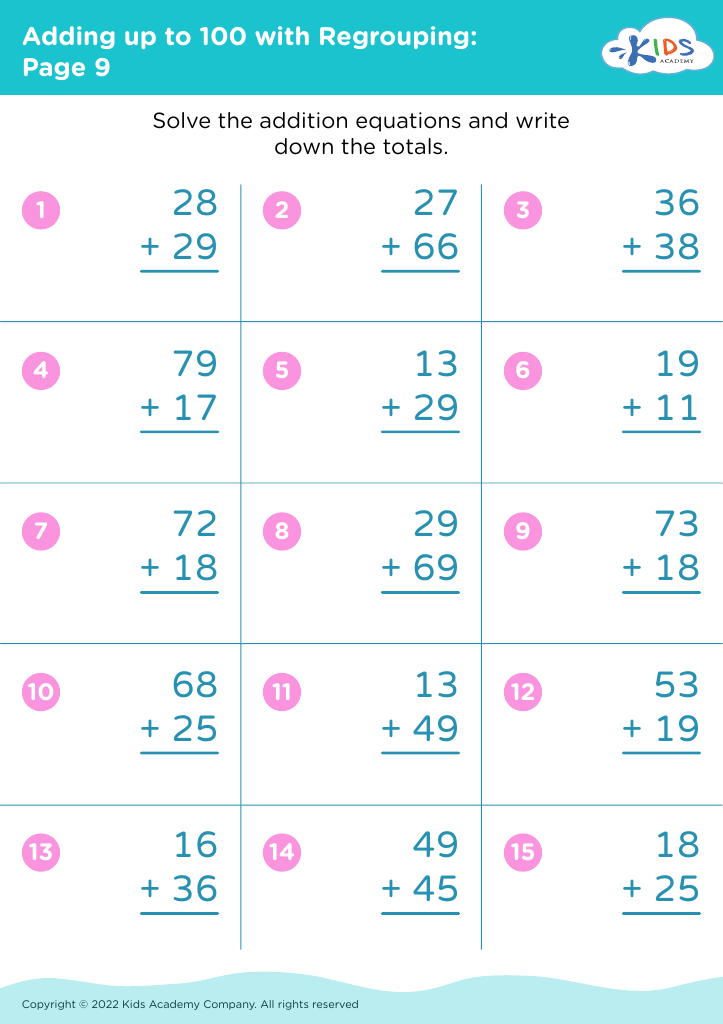
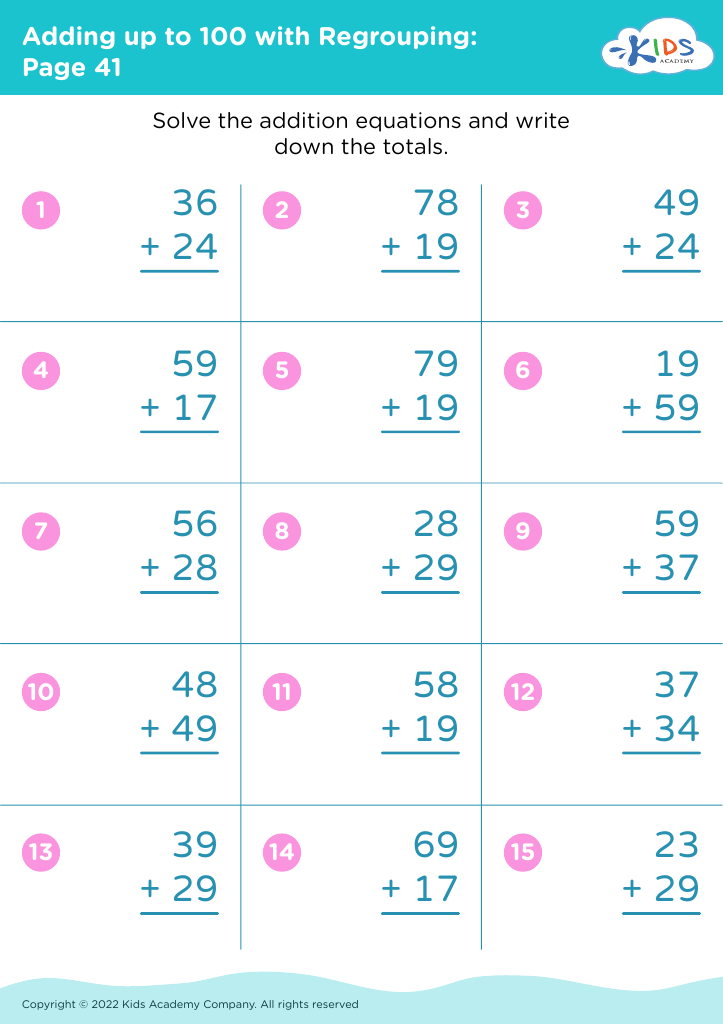
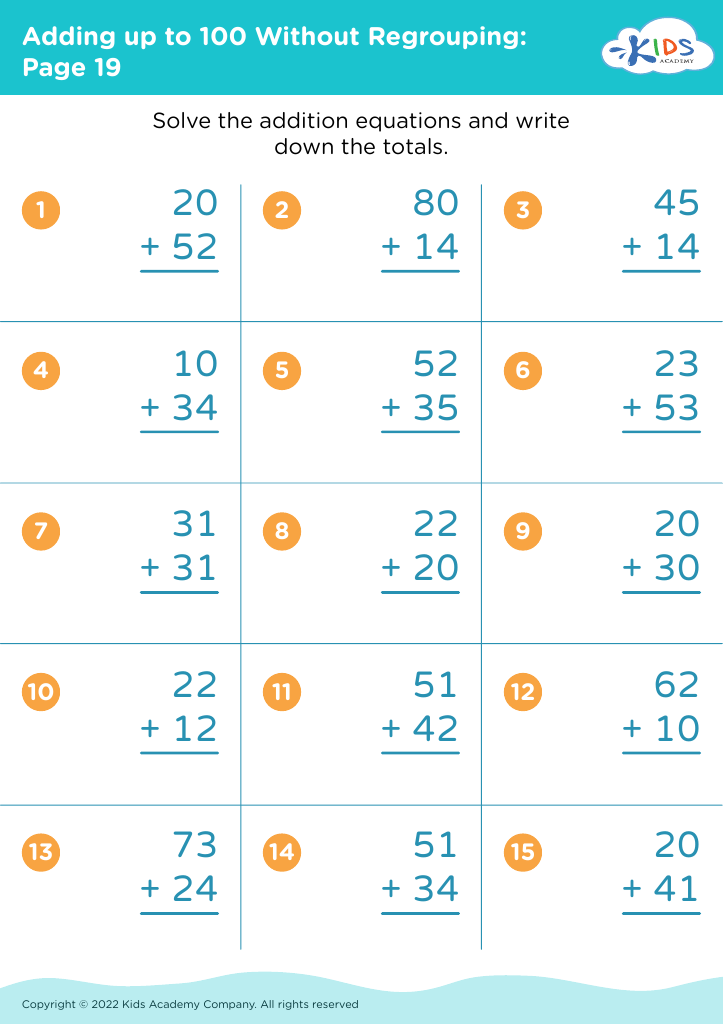
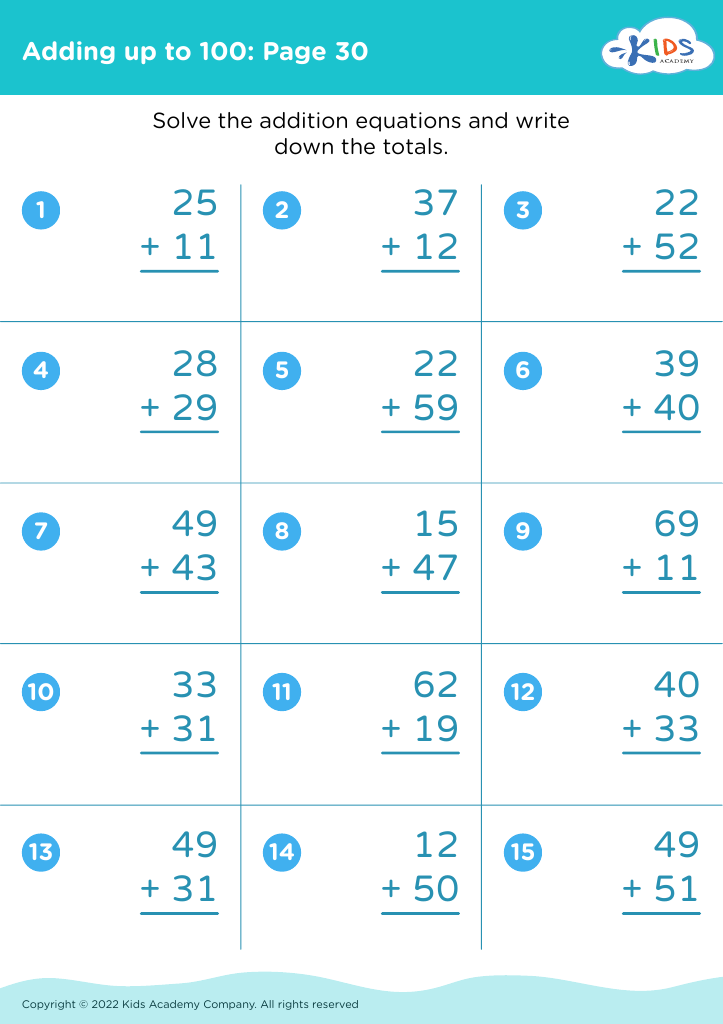
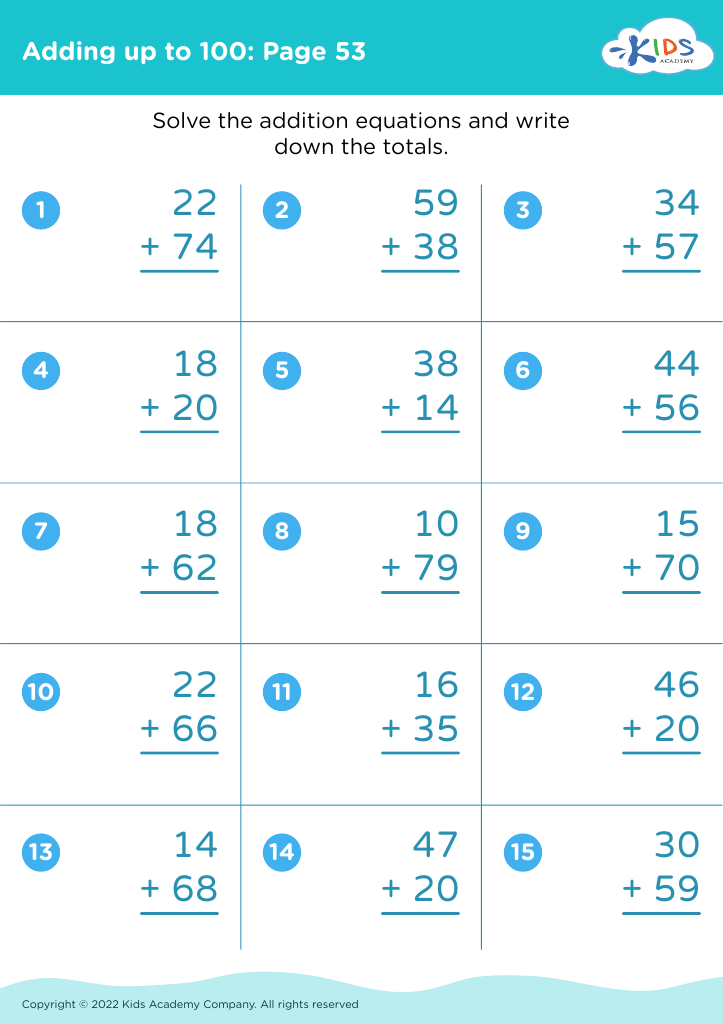
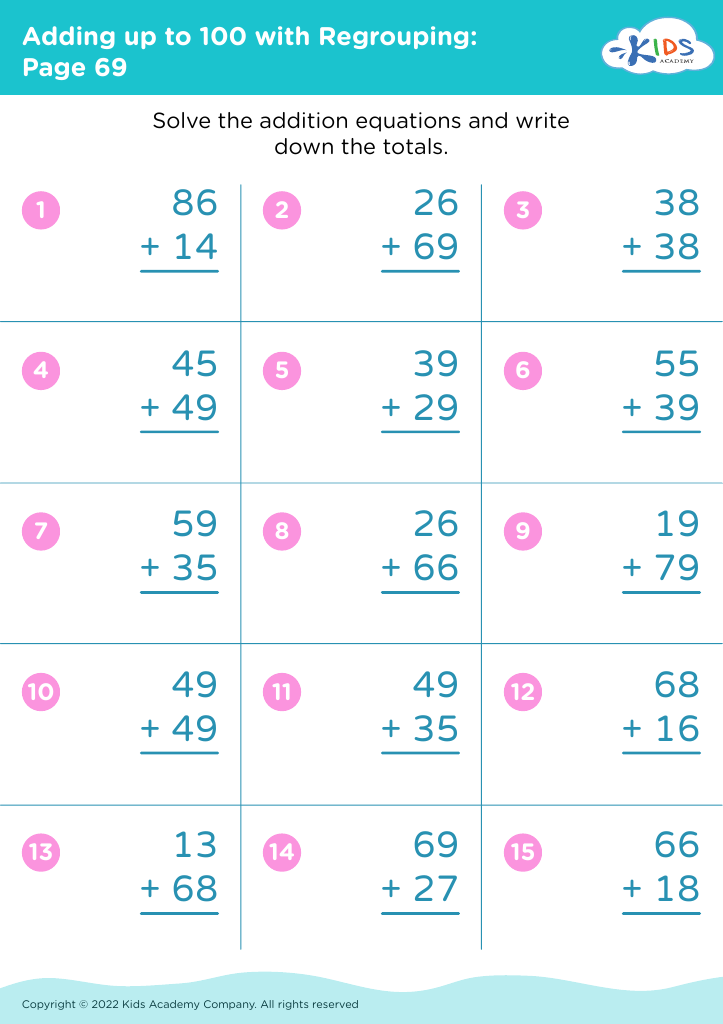
Welcome to our engaging “Fraction Comparison Adding up to 100 Worksheets” designed specifically for young learners ages 4-7! These interactive worksheets help children grasp the concept of fractions while practicing their addition skills up to 100. Through colorful visuals and fun activities, kids will learn to compare fractions and understand their values in a straightforward way. Each worksheet encourages critical thinking and boosts math confidence, making learning enjoyable for early learners. Perfect for classrooms or home education, our resources provide a unique approach to mastering foundational math concepts. Start exploring the world of fractions today with these exciting worksheets!






%20(1).jpg)
Understanding fraction comparison, particularly concepts like adding up to 100, is essential for children aged 4-7 as it lays the foundation for their mathematical proficiency. Early comprehension of fractions helps young learners develop critical thinking skills as they assess parts of a whole, a concept they will encounter in various real-life situations.
For parents and teachers, making this learning engaging and relatable can foster a positive attitude toward mathematics. Teaching fraction comparison, such as presenting halves, quarters, and tenths with visual aids like pie charts or hands-on activities with physical objects (like pizza slices or fruit), helps children visualize these concepts. This method taps into their natural curiosity and imaginative thinking.
Additionally, mastering these skills encourages patterns and relationships in numbers, essential for later cognitive development in math-related subjects. It prepares children for more complex topics such as addition, subtraction, division, and even fractions in higher grades.
Moreover, a solid grasp of fractions will empower children in real life, enabling them to understand measurements in cooking, divide items equally in sharing, and develop confidence in problem-solving. Ultimately, engaging children in fraction comparisons not only enriches their academic journey but also equips them with skills they will use throughout their lives.








