Identifying equivalent fractions Adding up to 100 Worksheets for Ages 4-7
5 filtered results
-
From - To
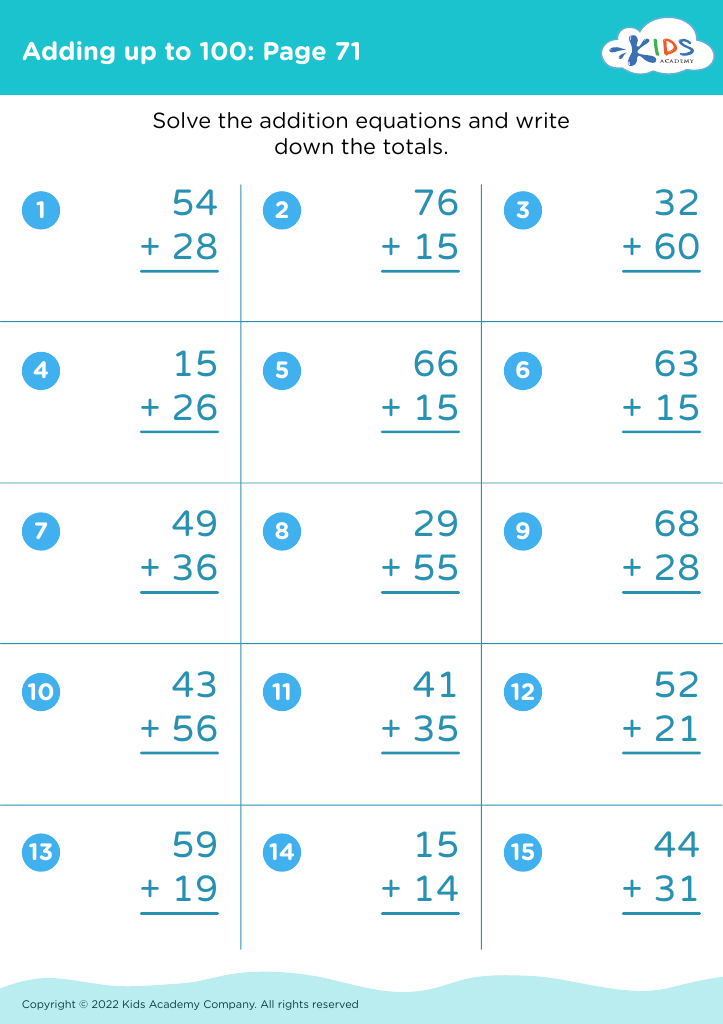
Explore the world of equivalent fractions with our engaging worksheets designed for children ages 4-7. These interactive activities help young learners grasp the concept of fractions while reinforcing their addition skills up to 100. Each worksheet is crafted to make learning fun, allowing kids to identify and create equivalent fractions through colorful visuals and easy-to-follow instructions. Ideal for classroom or home use, these resources aim to strengthen foundational math skills and boost confidence in young learners. Download our "Identifying Equivalent Fractions" worksheets today and set your child on a path to mathematical success!
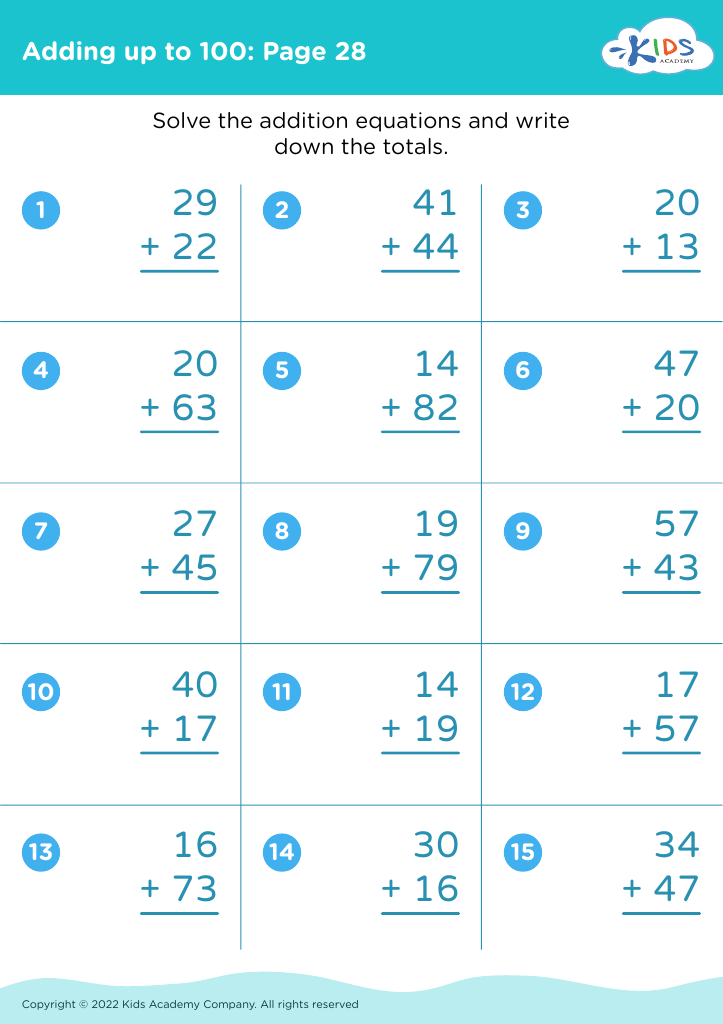
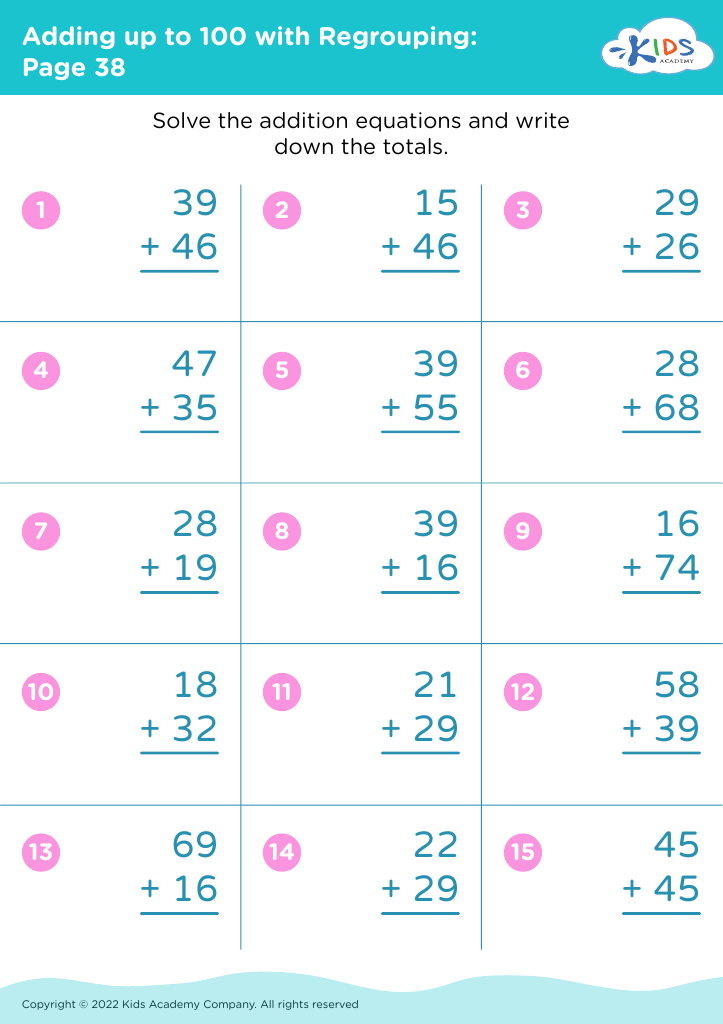
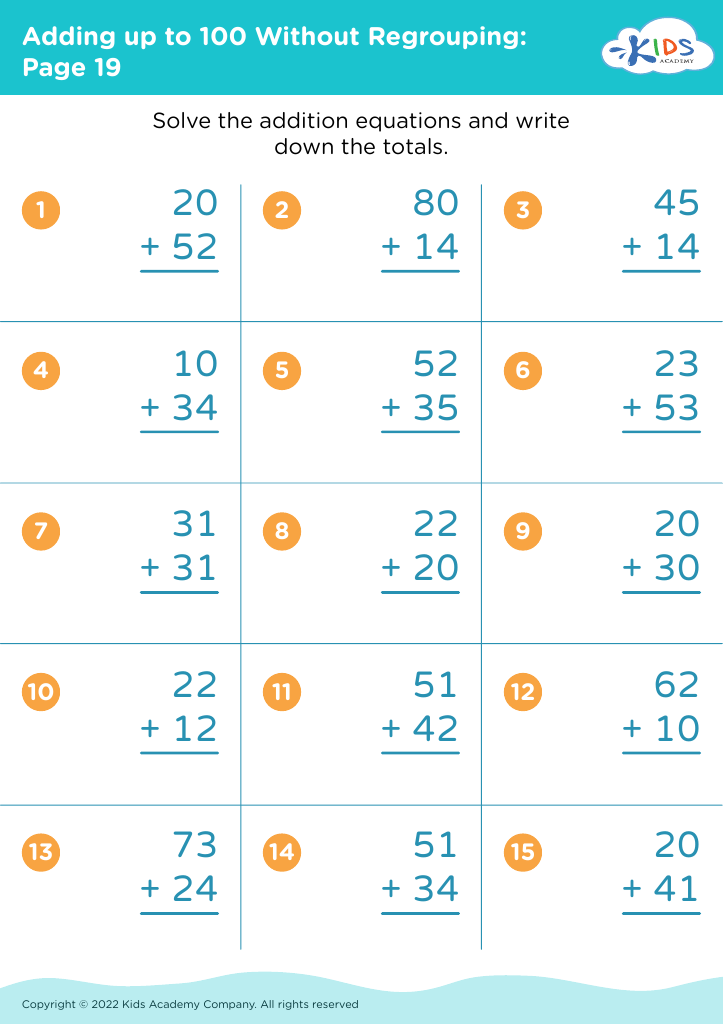
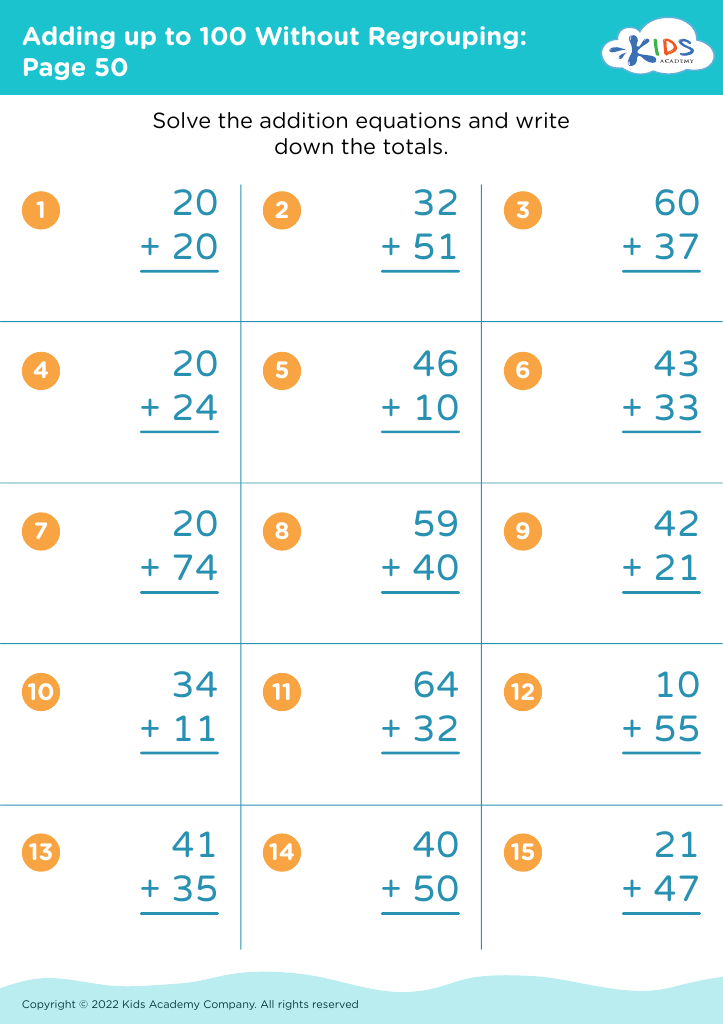


%20(1).jpg)




Identifying equivalent fractions and recognizing that they can combine to total 100 are foundational skills for young learners aged 4-7. This focus not only helps children understand the concept of fractions but also lays the groundwork for broader mathematical comprehension. Recognizing equivalent fractions fosters critical thinking, as students learn to see relationships between numbers, developing their ability to simplify or compare them effectively.
Moreover, understanding that fractions can total 100 allows children to visualize parts of a whole, an essential concept in both mathematics and real-life applications. This skill can introduce concepts such as percentages, which come into play as they progress through school. By mastering these fundamental concepts early, children gain confidence in their mathematical abilities.
For parents and teachers, supporting this learning means providing context and engaging activities that connect fractions to everyday experiences, like sharing pizza or measuring ingredients, making learning relatable and enjoyable. This engagement can nurture a love for numbers and problem-solving from an early age. Ultimately, equipping young learners with the ability to identify and work with equivalent fractions equips them with tools that will serve them throughout their academic journey and in everyday life.








