Improving math skills Adding up to 100 Worksheets for Ages 4-7
5 filtered results
-
From - To
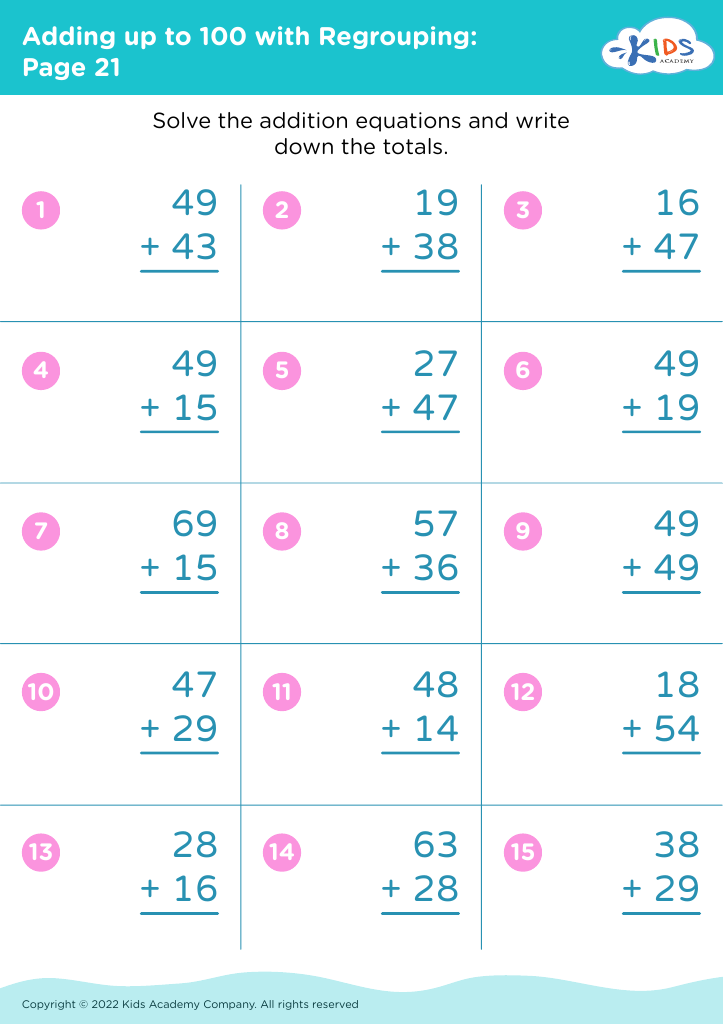
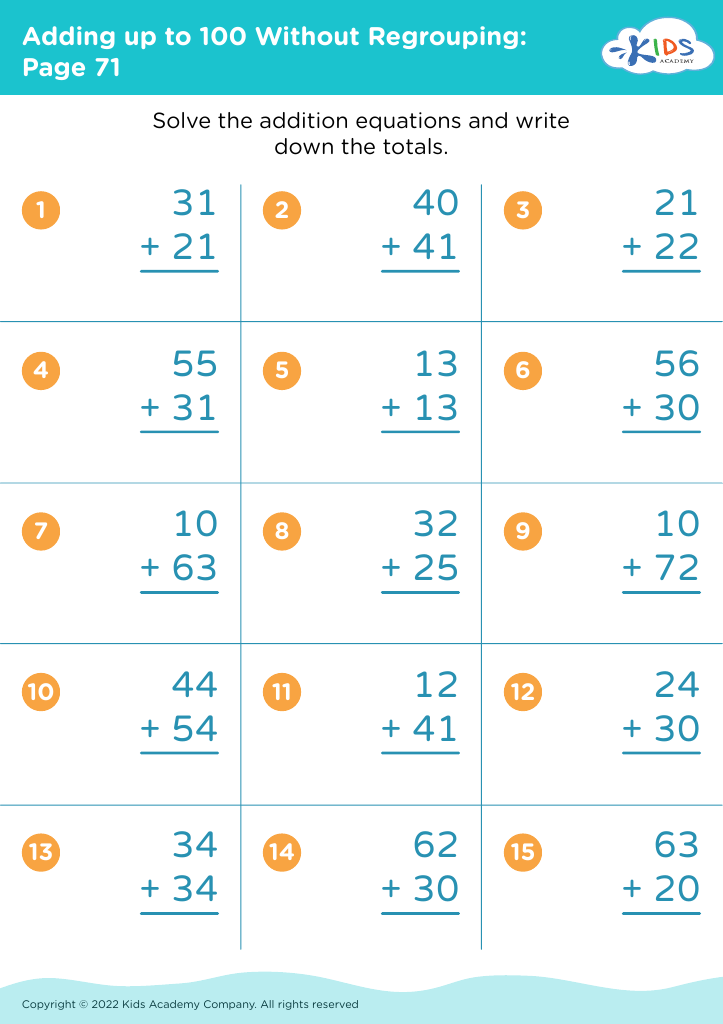
Boost your child's math skills with our engaging "Adding up to 100" worksheets, designed for ages 4-7! These fun, interactive worksheets focus on improving foundational math abilities through a variety of exercises. Each worksheet builds confidence and enhances numerical understanding, ensuring children grasp essential addition concepts. Perfect for supplementing classroom learning or for use at home, our expertly crafted resources cater to different learning paces and styles. Watch your child's math proficiency grow as they tackle challenges and develop critical thinking skills. Start them on a path to math success today with our comprehensive worksheets!









%20(1).jpg)
Parents and teachers should prioritize improving math skills that involve adding up to 100 for children aged 4-7, as it lays a crucial foundation for future mathematical understanding and problem-solving abilities. At this formative age, children are exceptionally receptive to new information and concepts. Mastering basic addition within this range not only boosts their confidence but also enhances their cognitive abilities. Early math skills are predictive of later academic success, not just in mathematics but across various subjects, as they teach logical thinking and pattern recognition.
Learning to add up to 100 also helps children develop essential life skills. They will be better equipped to handle everyday tasks like counting money, telling time, and understanding measurements, making them more self-reliant and capable. Moreover, early proficiency in math fosters a positive attitude towards the subject, counteracting the often-common math anxiety that can hinder learning in later years.
By focusing on these skills early, parents and teachers build a strong numerical foundation, making the transition to more complex math seamless and less intimidating. These abilities also encourage a child's curiosity and analytical thinking, allowing them to approach problems systematically and with an open, inquisitive mind. In essence, improving these skills during these formative years is pivotal for holistic development, future academic achievement, and day-to-day functionality.








