Practice multiplication Adding up to 100 Worksheets for Ages 4-7
4 filtered results
-
From - To
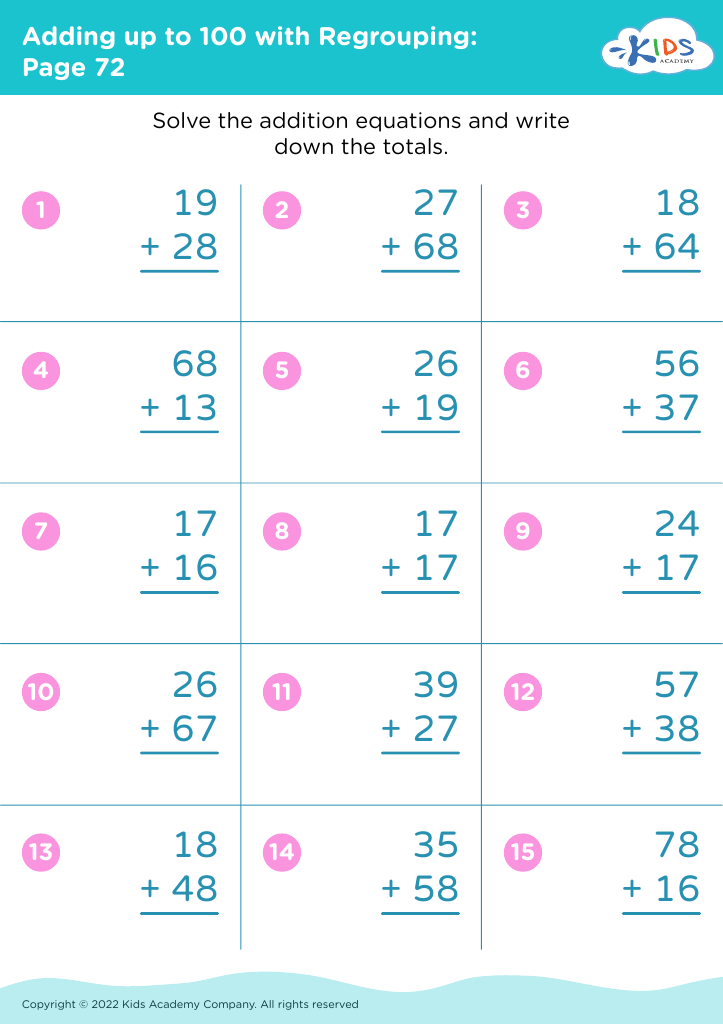
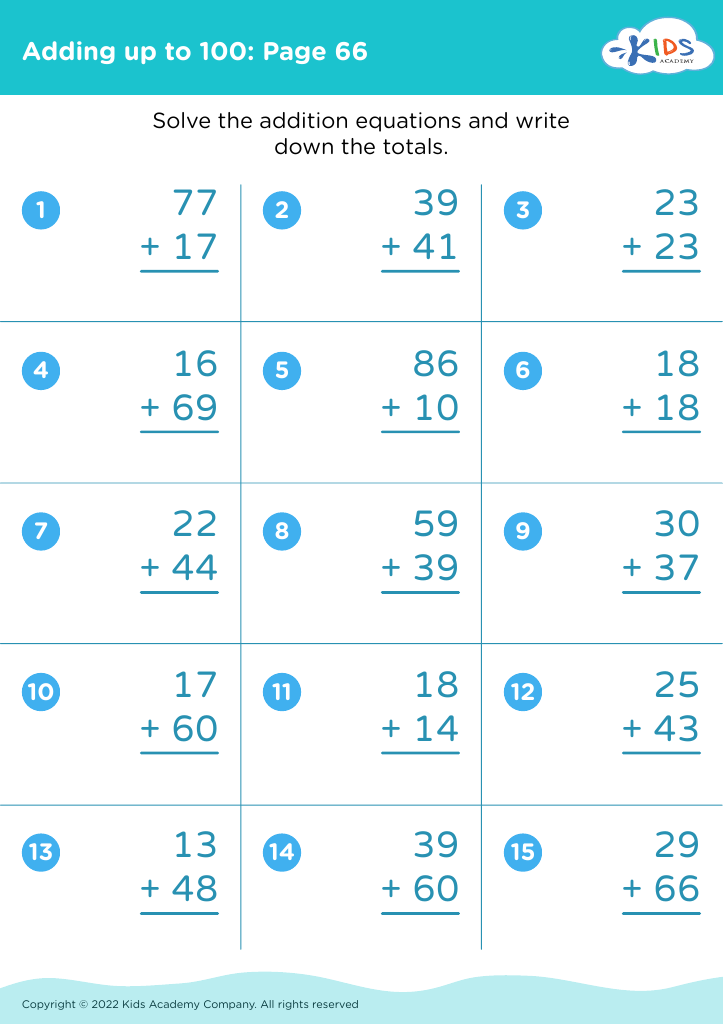
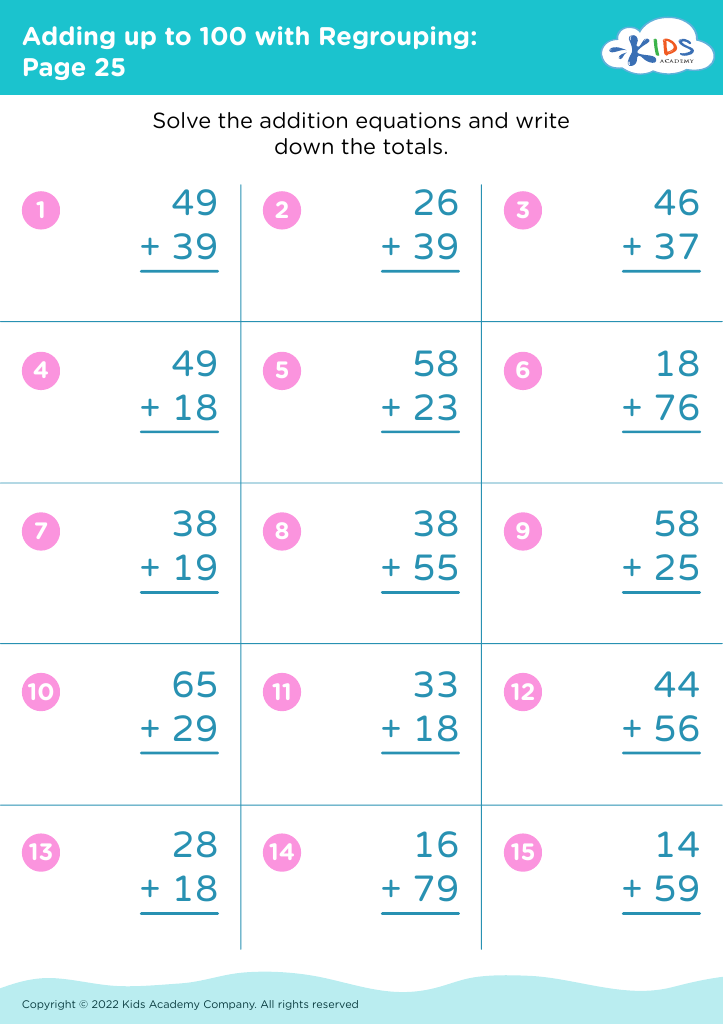
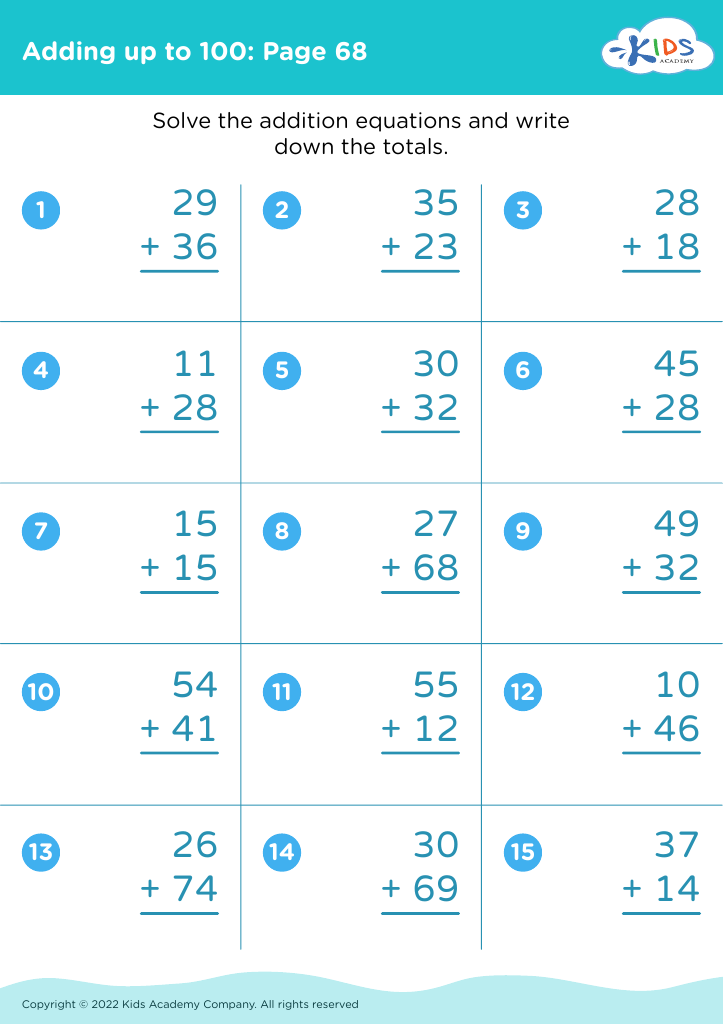
Discover our engaging "Practice Multiplication Adding Up to 100 Worksheets" tailored for children ages 4 to 7. These worksheets are designed to build foundational math skills, focusing on multiplication techniques through fun, interactive learning activities. Each worksheet encourages young learners to enhance their number sense and improve their calculation abilities while enjoying the process. With colorful illustrations and age-appropriate challenges, your child will gain confidence in their multiplication skills and develop a strong math foundation. Perfect for extracurricular learning or as a classroom resource, our worksheets promote both independent and guided practice for a comprehensive learning experience. Start multiplying with joy today!






%20(1).jpg)
Parents and teachers should care about teaching multiplication and addition skills to children aged 4-7 because these foundational mathematical concepts are crucial for a child’s cognitive development and future academic success. By introducing young learners to multiplication, especially in a context that adds up to 100, we make abstract concepts more tangible and relatable. This early exposure enables them to understand grouping and repeated addition, critical elements of multiplication.
Moreover, practicing these skills improves number sense, which builds the groundwork for more complex math in later years. When children engage with numbers through fun and interactive methods, they become more confident in their math abilities, reducing anxiety around the subject as they progress through school.
Additionally, mastering basic multiplication and addition enhances problem-solving and critical thinking skills, encouraging children to approach challenges with a logical mindset. It also fosters perseverance, as they learn to work through difficulties to arrive at a solution.
Lastly, nurturing positive attitudes towards mathematics early on can help combat the common stereotypes and fears surrounding math often faced in later schooling. By prioritizing these practices, parents and teachers prepare children for a life of learning where math plays a key role in everyday decision-making and understanding the world around them.








