Problem-solving practice Adding up to 100 Worksheets for Ages 4-7
5 filtered results
-
From - To
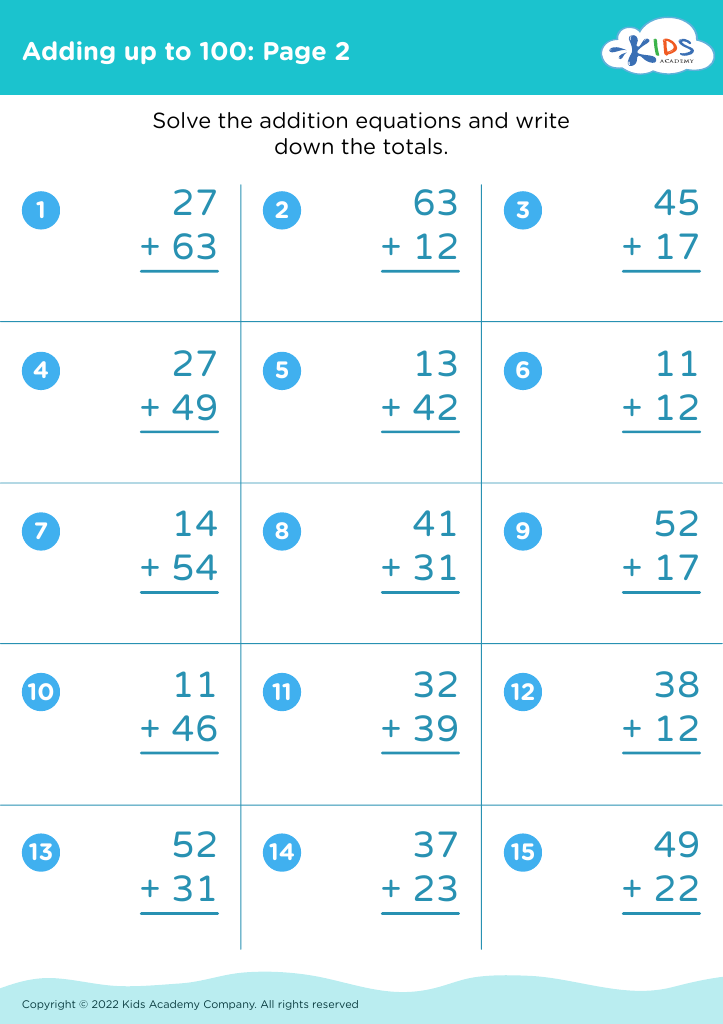
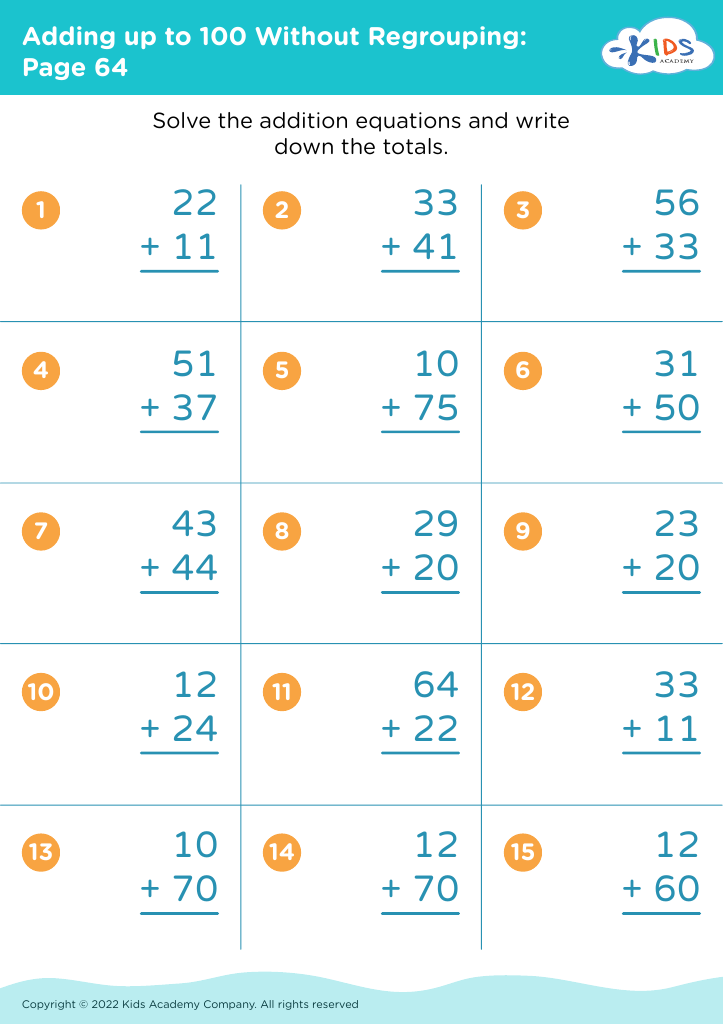
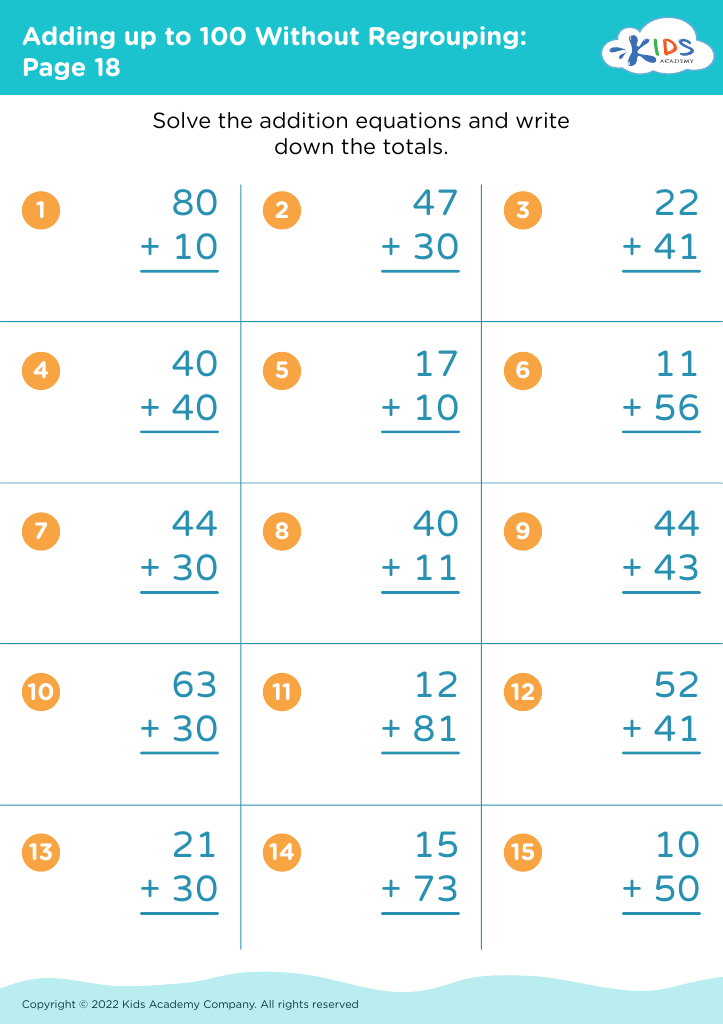
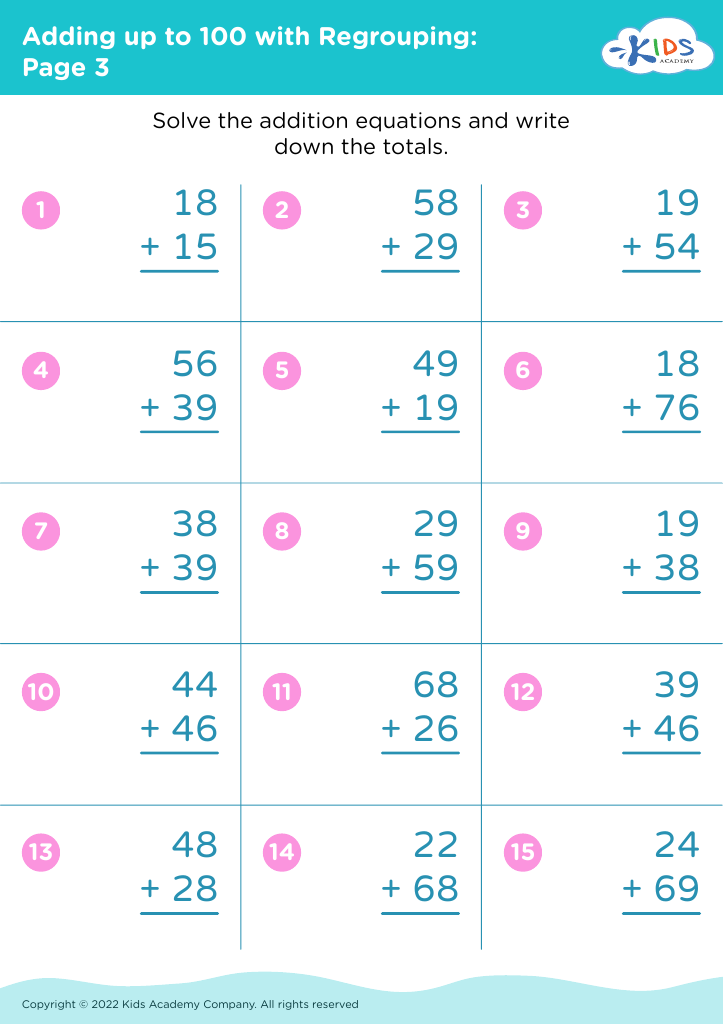
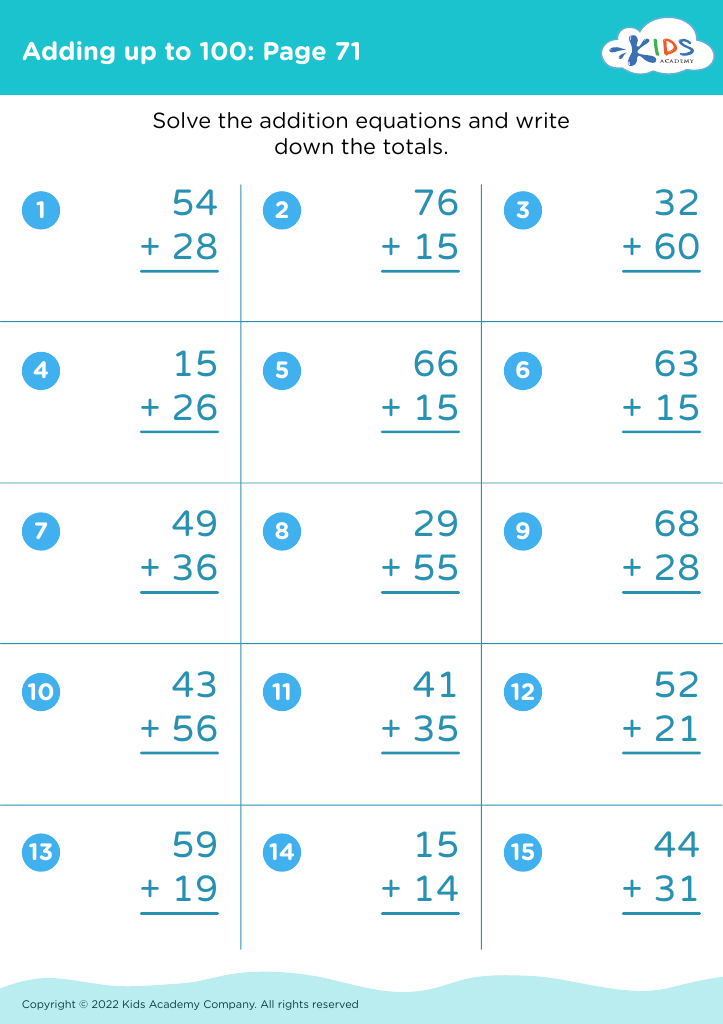
Discover our engaging "Problem-Solving Practice: Adding Up to 100 Worksheets" designed for children ages 4-7. These worksheets provide young learners with a fun and interactive way to enhance their math skills while practicing addition. Each worksheet features captivating illustrations and easy-to-follow instructions, encouraging kids to solve problems creatively and confidently. Perfect for at-home learning or classroom use, our resources foster critical thinking and boost computational fluency. Help your child master addition concepts and develop essential problem-solving strategies with these meticulously crafted worksheets. Start their math journey today and watch them thrive as they add up to 100!





%20(1).jpg)

Problem-solving practice, particularly focused on adding up to 100, is essential for early learners aged 4-7. Firstly, it enhances mathematical understanding and promotes number sense, a crucial foundation for future mathematical concepts. Engaging children in problems that require them to add numbers up to 100 fosters their ability to visualize quantities and develop strategies to solve them, boosting cognitive skills.
Moreover, practicing problem-solving encourages critical thinking and perseverance. Young learners face challenges that require them to think deeply, explore various solutions, and refine their approaches. This not only dissects their problem-solving skills but also builds resilience—a skill that transcends academics into real-world contexts.
Additionally, practice in this area promotes collaboration and communication skills when done in a group setting. Children learn to articulate their thought processes and listen to others, fostering a cooperative learning environment.
For parents and teachers, emphasizing this practice allows them to support the child's overall development, bridging the gap between home and classroom. By nurturing these abilities early on, we equip children with essential life skills, preparing them for future academic success and encouraging a lifelong love for learning. Thus, investing in problem-solving practice is critical for our young learners.








