Recognizing Patterns Adding up to 100 Worksheets for Ages 4-7
5 filtered results
-
From - To
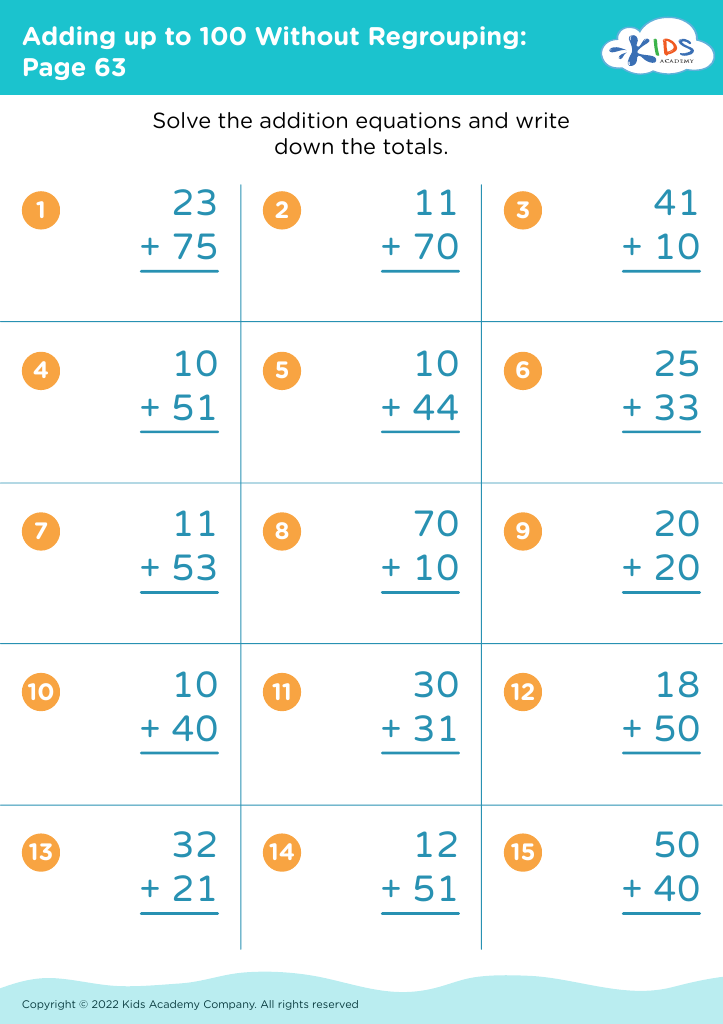
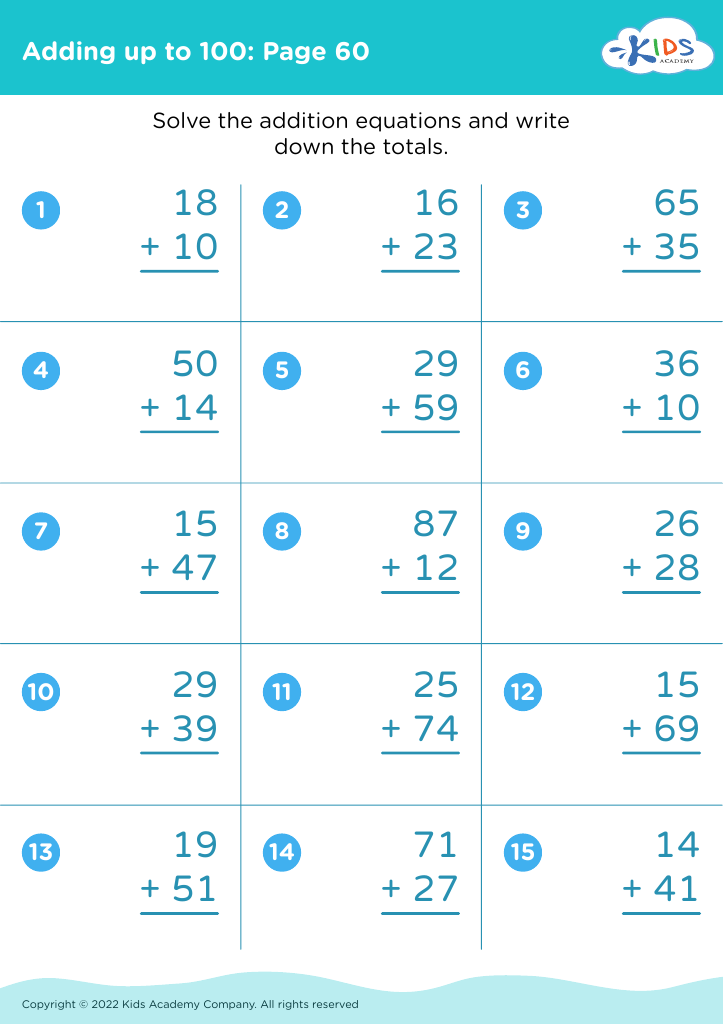
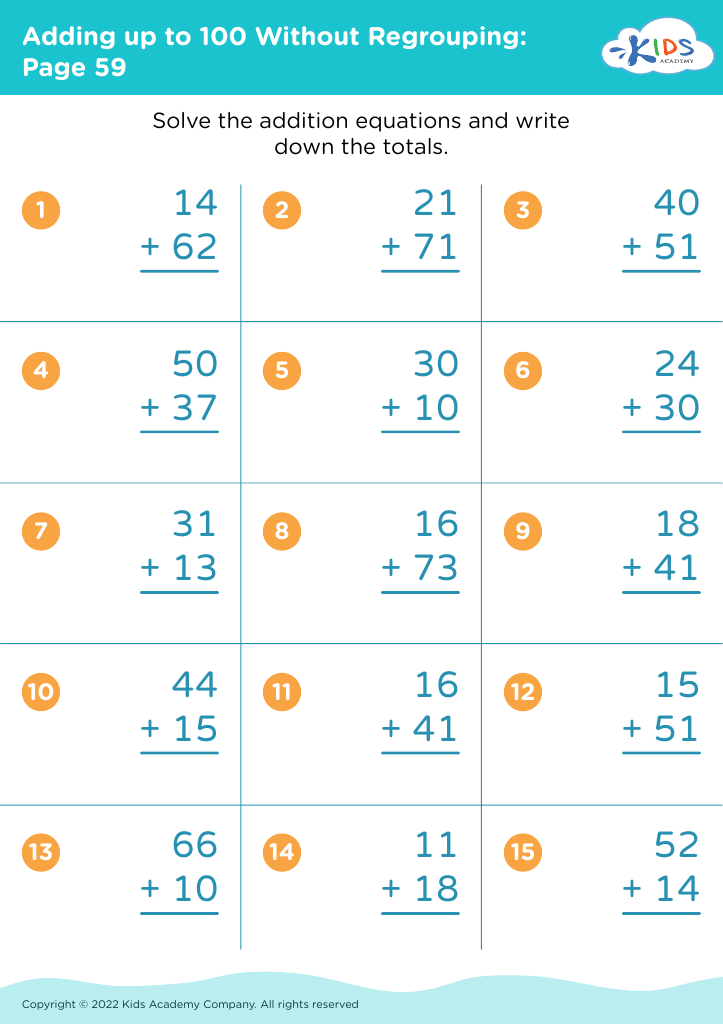
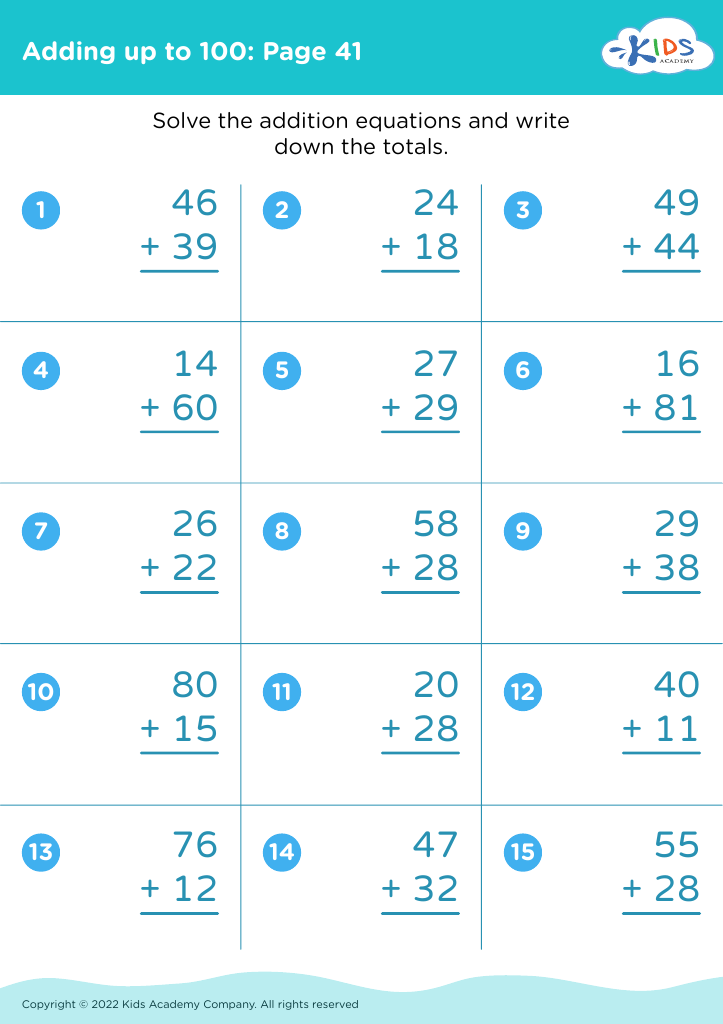
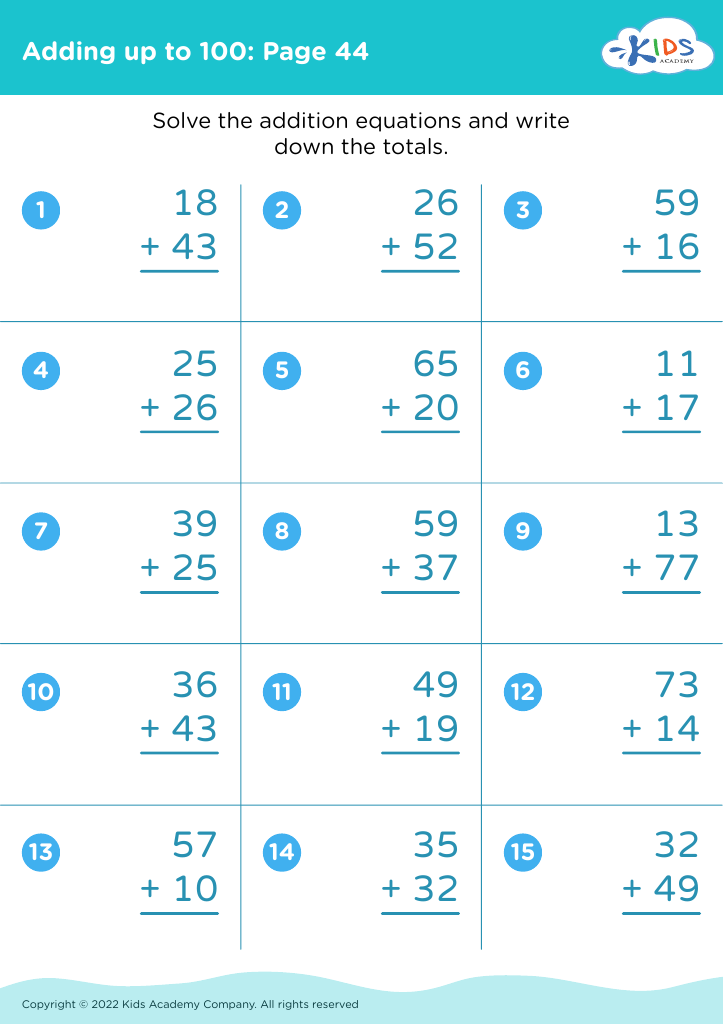
Discover our "Recognizing Patterns Adding up to 100 Worksheets" designed specifically for children aged 4-7. These engaging worksheets help young learners grasp essential math concepts by identifying patterns and relationships in numbers leading to sums of 100. By combining fun visuals with interactive exercises, kids will develop critical reasoning skills and enhance their ability to recognize numerical patterns. Perfect for classroom use or at-home learning, our worksheets provide a solid foundation in math while fostering a sense of achievement. Watch your child become a confident mathematician as they explore the world of patterns and addition—with learning made enjoyable!





%20(1).jpg)

Recognizing patterns and adding up to 100 is essential for young learners aged 4-7 as it lays the foundation for critical mathematical skills. At this age, children are naturally curious and eager to explore numbers and relationships, making it an ideal time to engage them in activities that promote pattern recognition. Patterns help children identify sequences and connections, which are fundamental to understanding more complex mathematical concepts.
When children learn to recognize and extend patterns, they develop logical thinking and problem-solving skills, which are applicable not just in math but in everyday situations. Additionally, adding up to 100 introduces them to the concepts of addition and numerical values early on, reinforcing their understanding of how numbers work together.
For parents and teachers, this skill-building will promote confidence in children's mathematical abilities, making them more resilient when facing advanced concepts in the future. Moreover, reinforcing such skills enhances a child's cognitive abilities, encouraging them to think critically and analytically. As early education lays the groundwork for lifelong learning, nurturing these foundational skills is crucial for success in academics and beyond. In summary, caring about pattern recognition and addition skills fosters holistic development and equips children with vital tools for future learning.








