Shape Recognition Adding up to 100 Worksheets for Ages 4-7
8 filtered results
-
From - To
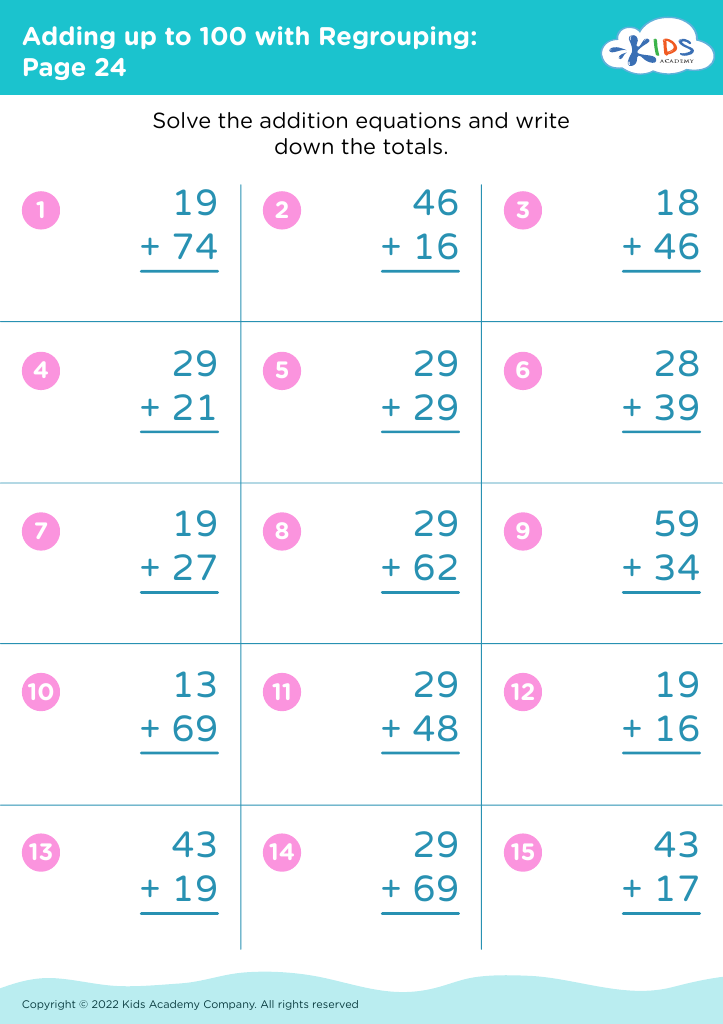
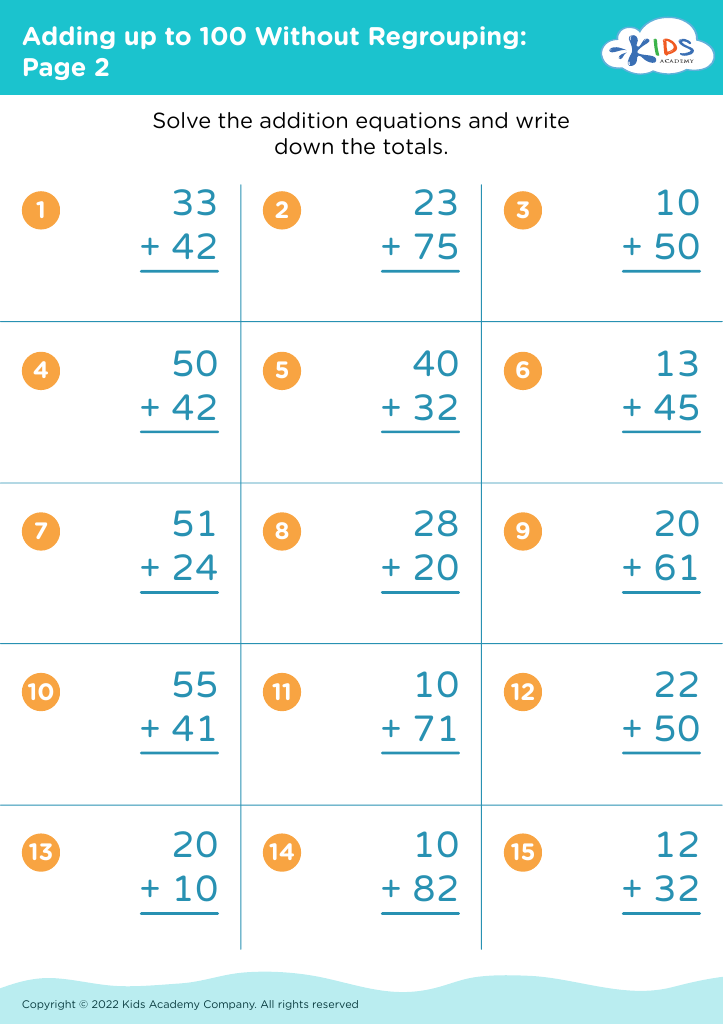
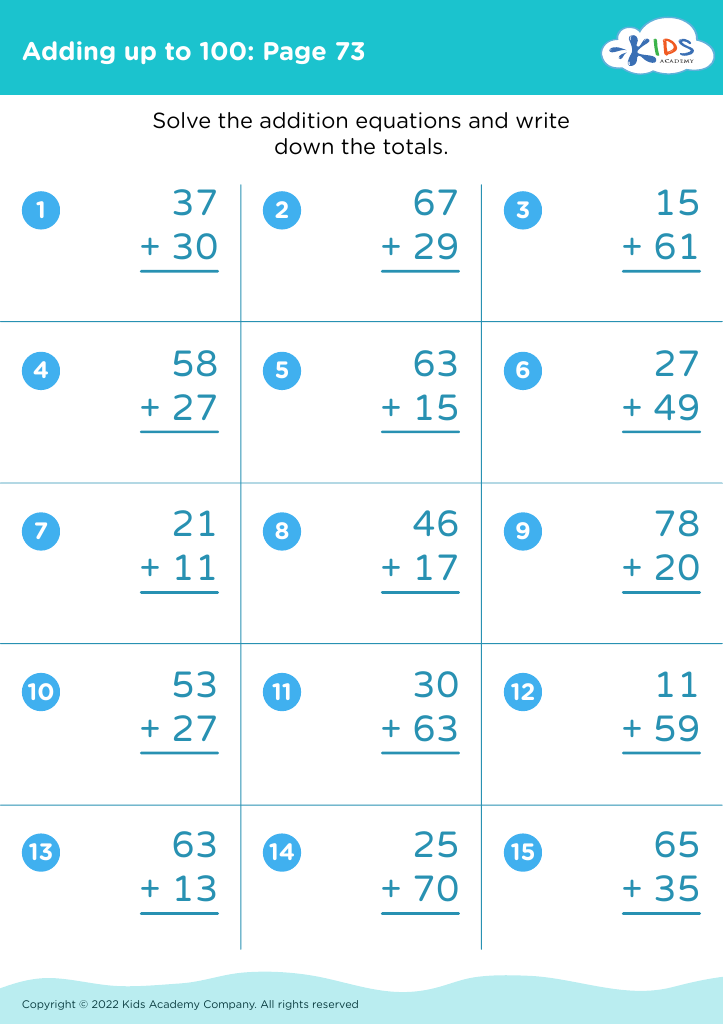
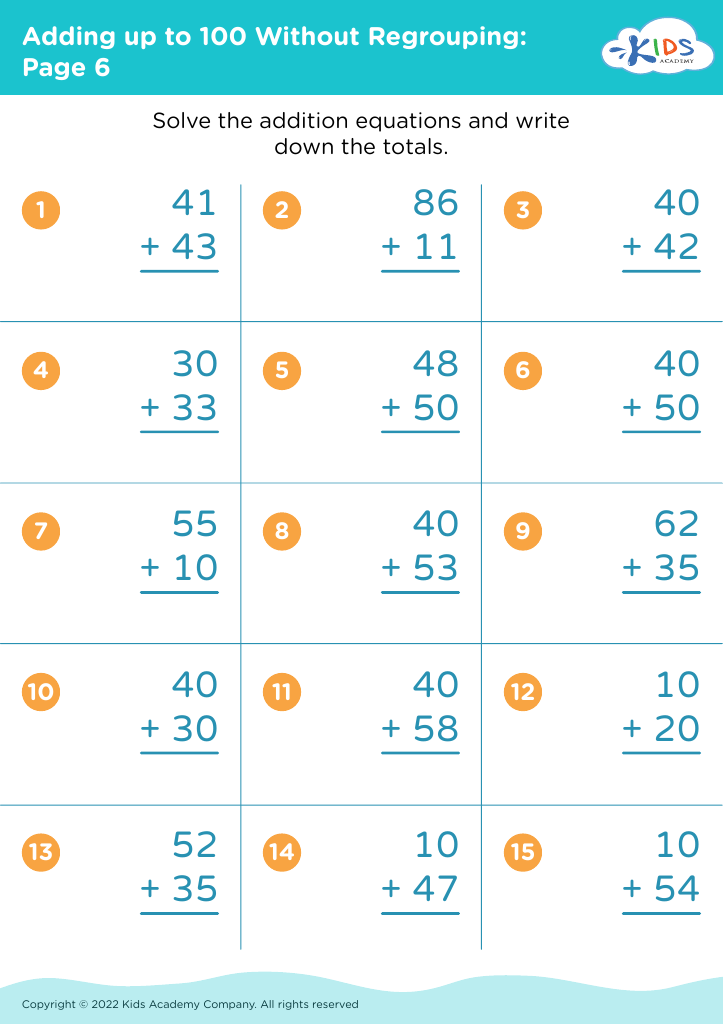
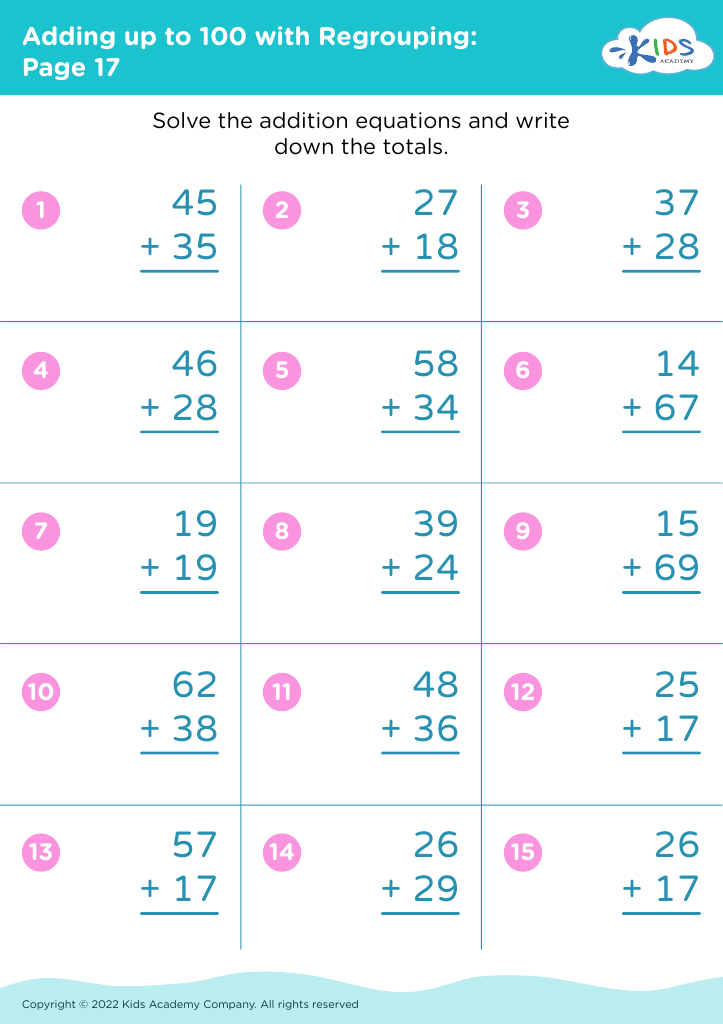
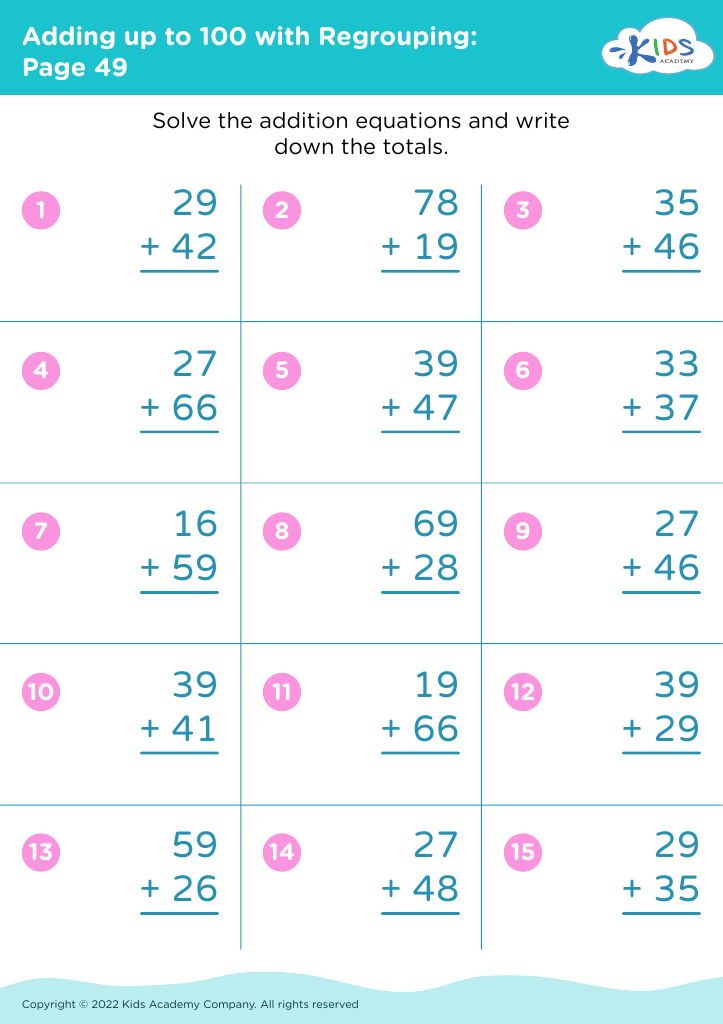
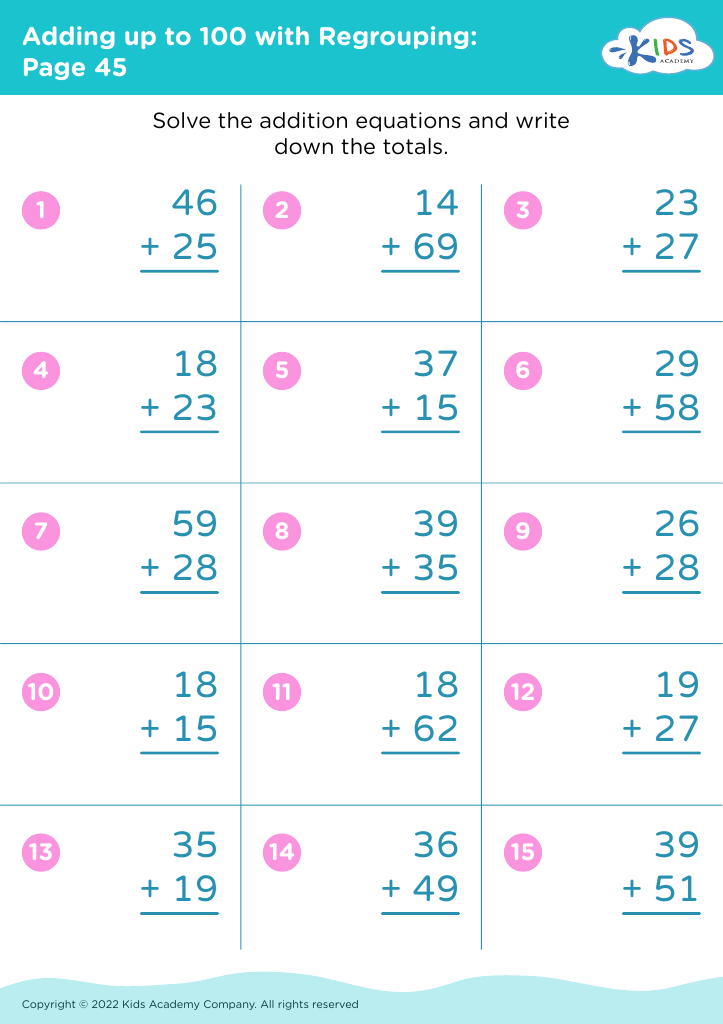
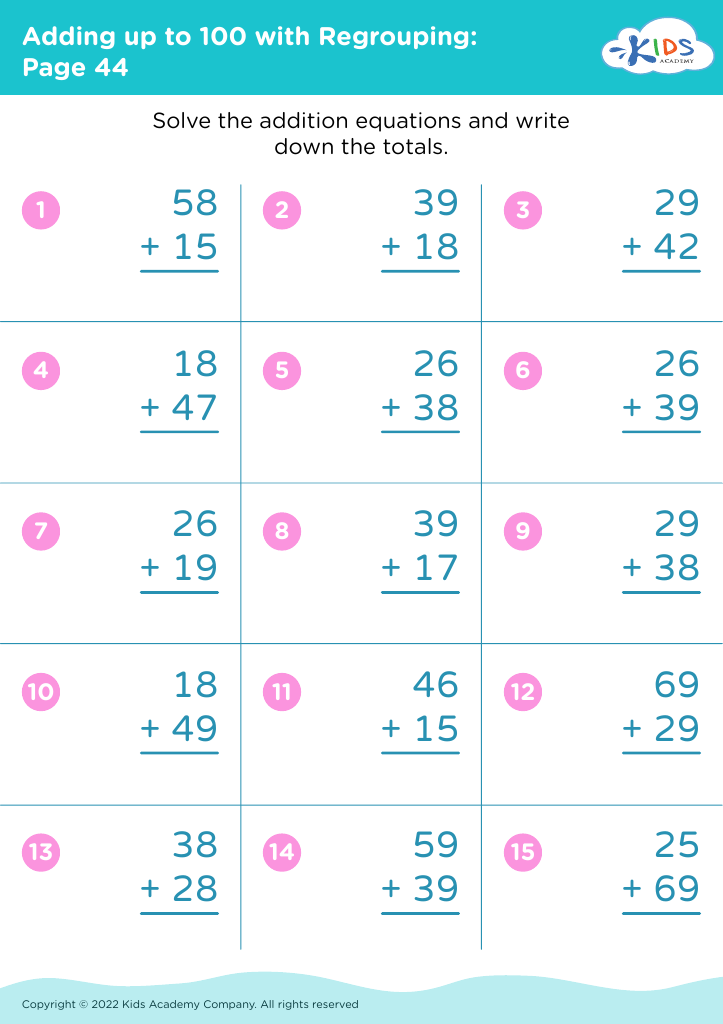
Unlock the power of learning with our "Shape Recognition Adding up to 100 Worksheets for Ages 4-7." Designed to seamlessly blend fun with education, these worksheets help young learners develop crucial math skills while recognizing and identifying shapes. Each activity is crafted to engage children in counting, summing up to 100, and boosting their geometric awareness. Perfect for early grade students, our worksheets support cognitive development and foster a love for math. Ideal for both classroom and home use, they provide a strong foundation for future arithmetic concepts in a playful, interactive manner. Empower your child’s learning journey today!




%20(1).jpg)


Shape recognition and understanding basic math concepts, such as adding up to 100, are crucial skills for children ages 4-7 for several reasons. Firstly, shape recognition lays the foundation for geometry, an essential branch of mathematics. Recognizing and distinguishing shapes help children develop spatial awareness, which is vital not only for math but also for understanding the world around them. When children interact with different shapes, they also enhance their fine motor skills and visual-spatial reasoning, which are important for daily tasks like handwriting and navigation.
Learning to add up to 100 at an early age is equally important because it sets the stage for more advanced mathematical concepts. Early numeracy skills, such as counting, number recognition, and basic addition, are crucial for later success in math. When children understand how to combine numbers to reach a total, they build confidence in their mathematical abilities and develop problem-solving skills.
Combining shape recognition with adding numbers makes learning more interactive and fun. It engages different areas of the brain through visual and cognitive activities, making educational experiences more holistic. Teachers and parents who focus on these skills provide children with a solid groundwork that supports future academic achievement and everyday functioning.








