Understanding Sequences Adding up to 100 Worksheets for Ages 4-7
5 filtered results
-
From - To
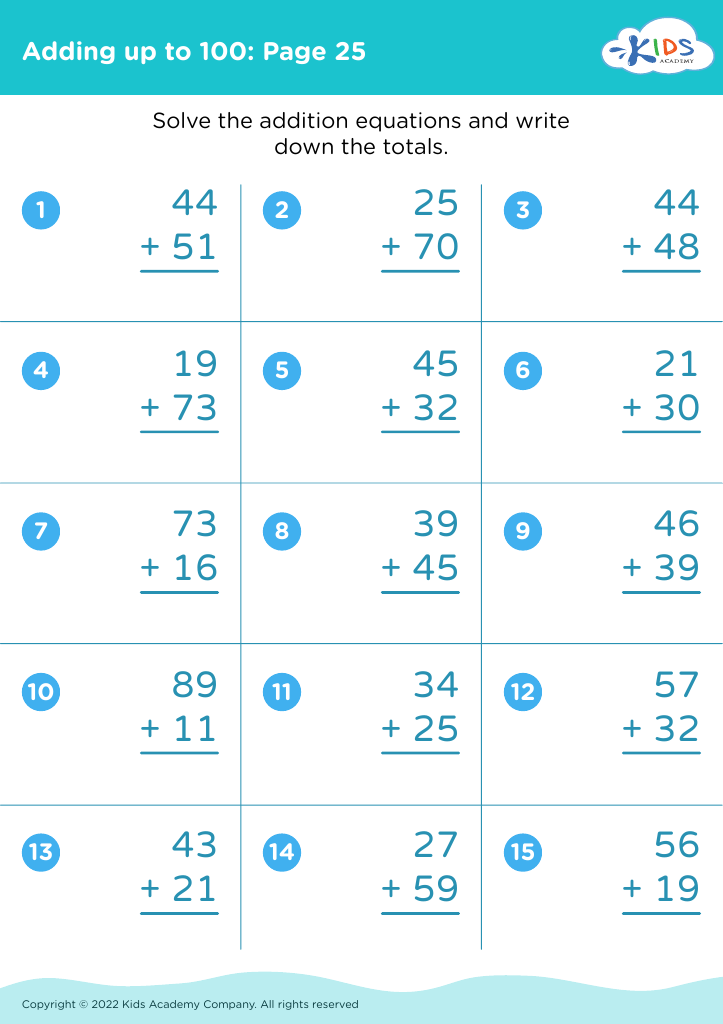
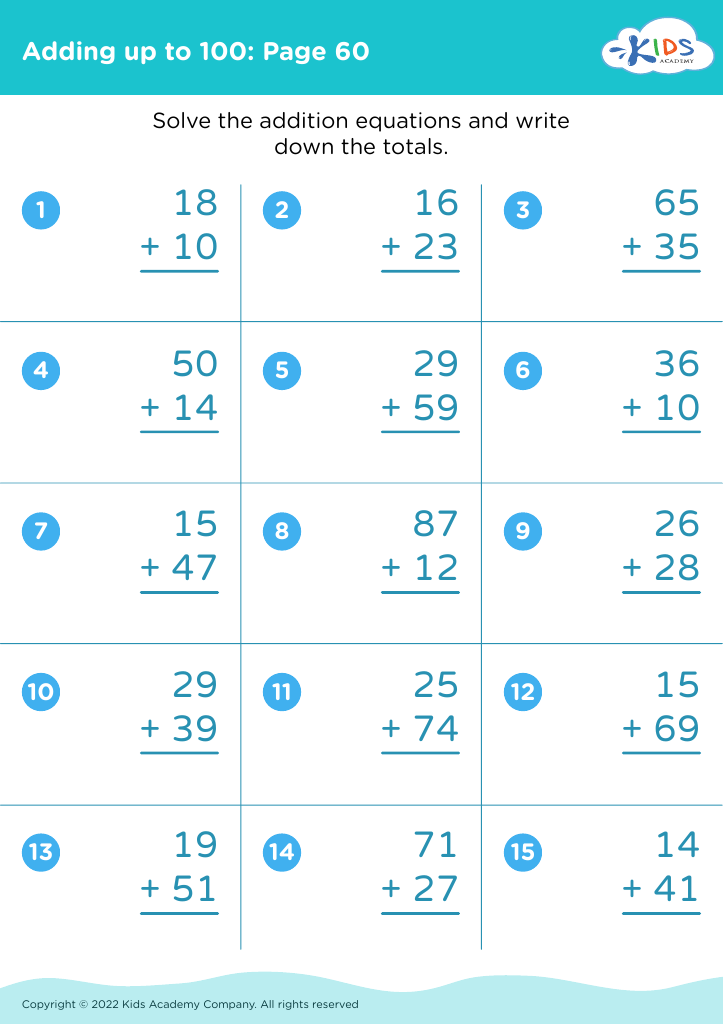
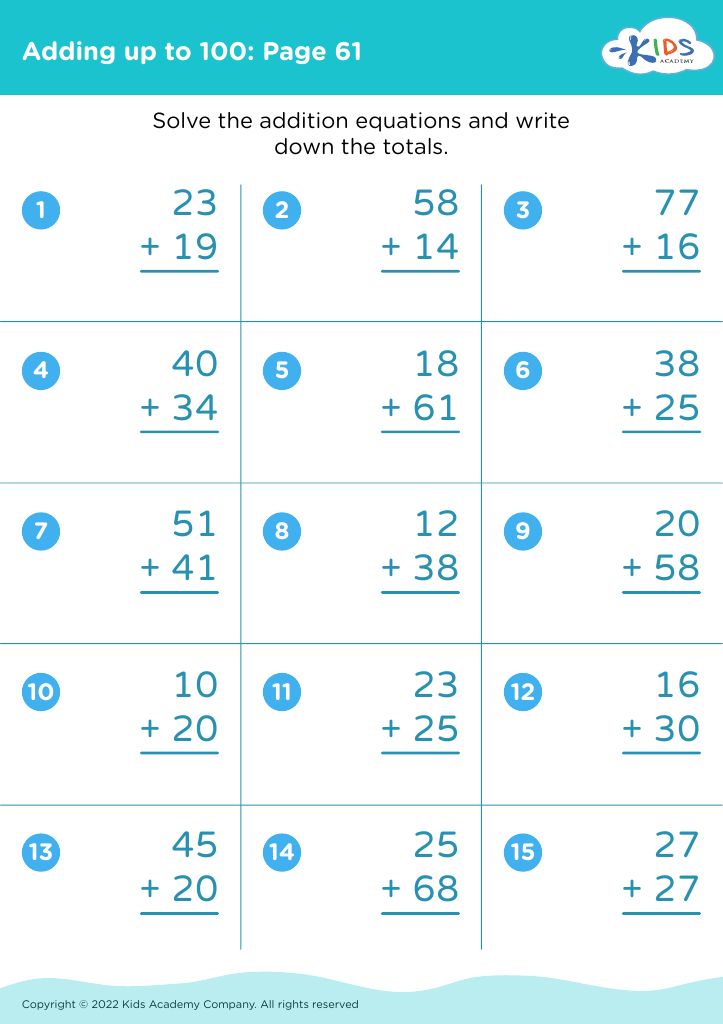
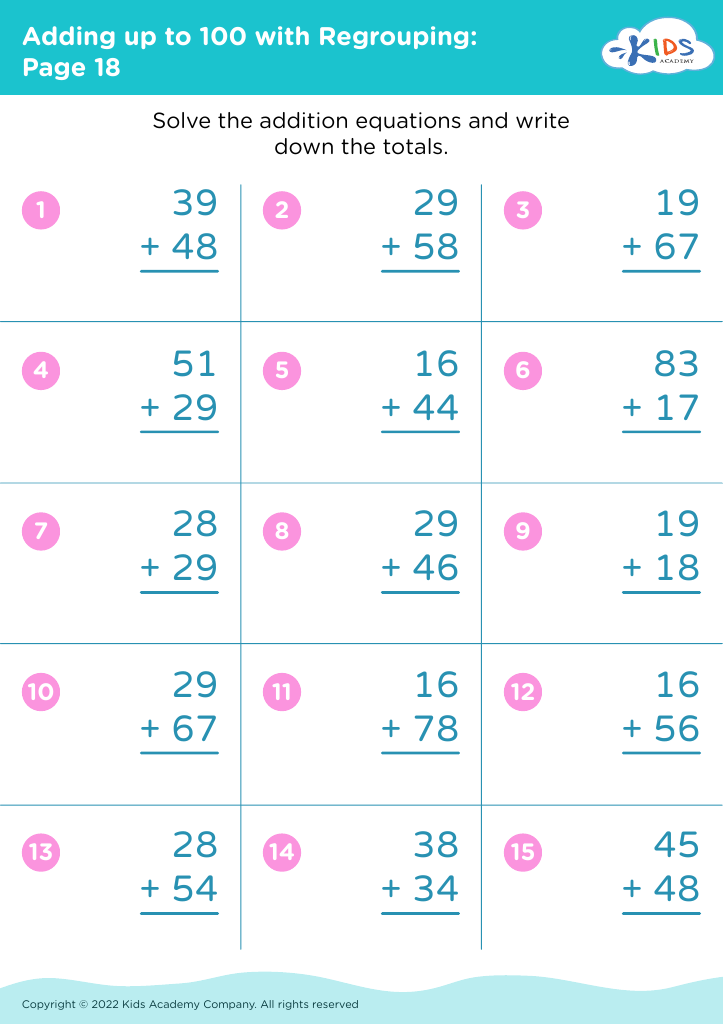
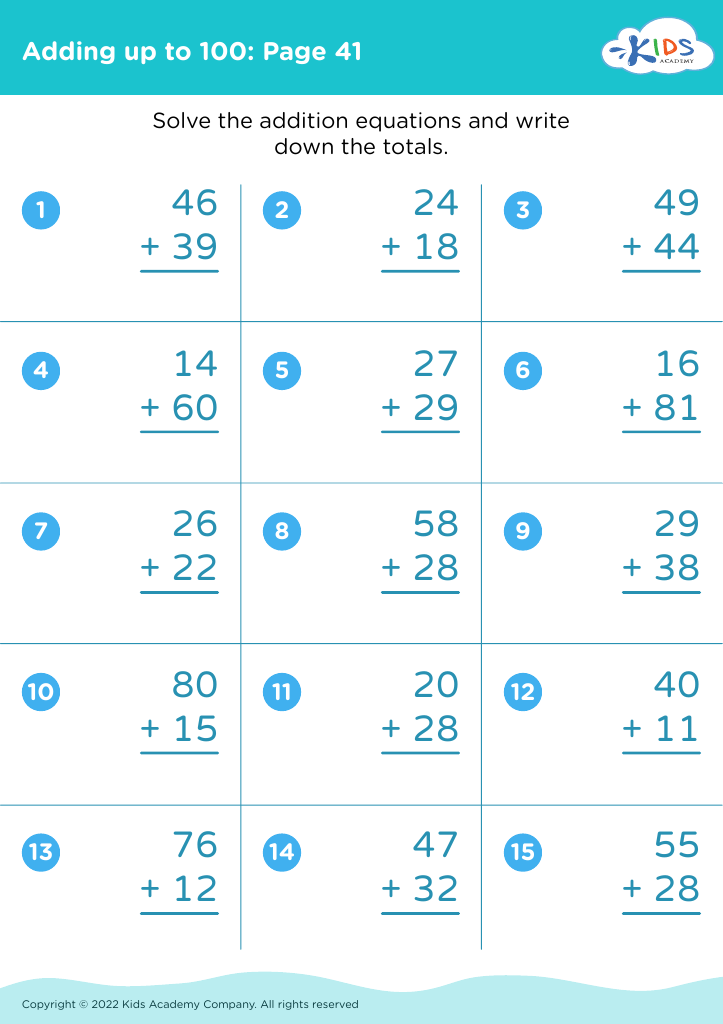
Introduce your child to the world of numbers with our "Understanding Sequences Adding up to 100 Worksheets for Ages 4-7." These expertly designed worksheets make learning fun and engaging, helping young learners grasp the concept of numerical sequences. Suitable for ages 4-7, these printables aid in developing essential math skills by progressively building up to the number 100. Through colorful visuals, interactive exercises, and clear instructions, students can practice counting, recognition, and pattern establishment. Perfect for both classroom use and home practice, these worksheets are an excellent resource to foster a strong numerical foundation early on. Join us on this mathematical adventure!



%20(1).jpg)



Understanding sequences and arithmetic patterns, such as those that add up to 100, is crucial for young children's cognitive and mathematical development. For ages 4-7, developing these skills helps lay a foundational understanding of how numbers work and relate to one another. Engaging in these activities promotes critical thinking and problem-solving abilities, which are essential life skills.
Parents and teachers who emphasize learning sequences and arithmetic patterns not only support children's math education but also enhance their overall academic trajectory. Recognizing simple patterns and numerical relationships aids in developing logic and reasoning efficiently applied in various subjects beyond math, such as science and reading comprehension.
Additionally, participating in hands-on, fun exercises like adding up to 100 can make math enjoyable and eliminate early math anxiety. When children feel confident in their ability to tackle math problems, it sets a positive tone for their future educational experiences.
Thus, by fostering an environment focused on understanding sequences and arithmetic from a young age, parents and teachers can help build a strong mathematical foundation. This proactive approach encourages a lifelong love for learning and empowers children with vital academic and life skills.








