Cognitive Development Adding Up to 5 Worksheets for Ages 4-7 - Page 3
95 filtered results
-
From - To
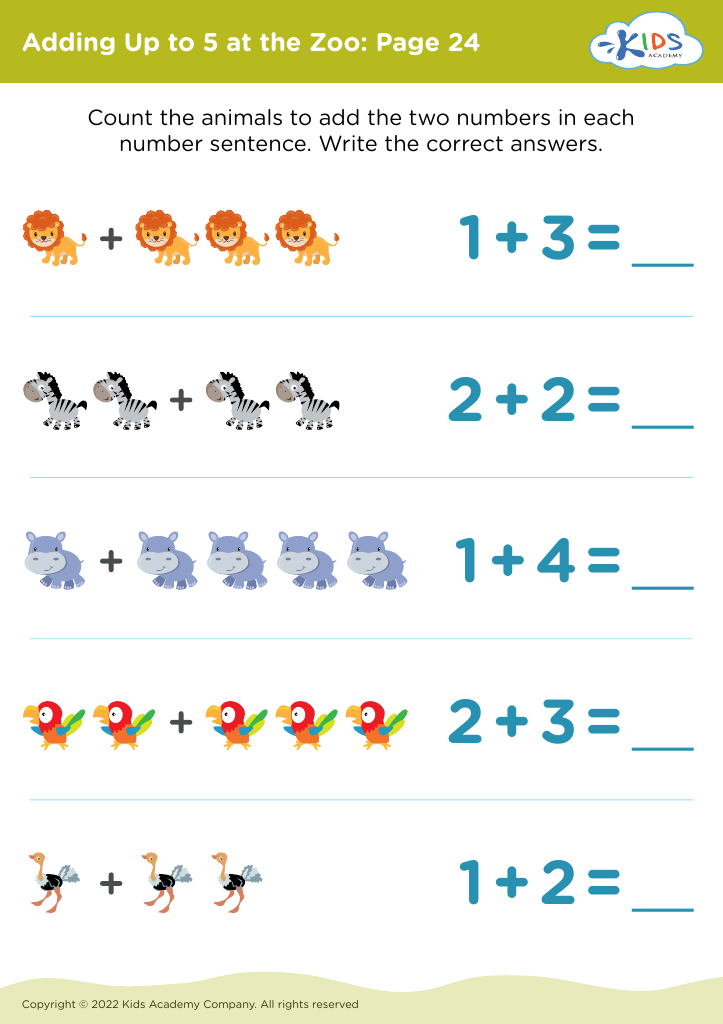
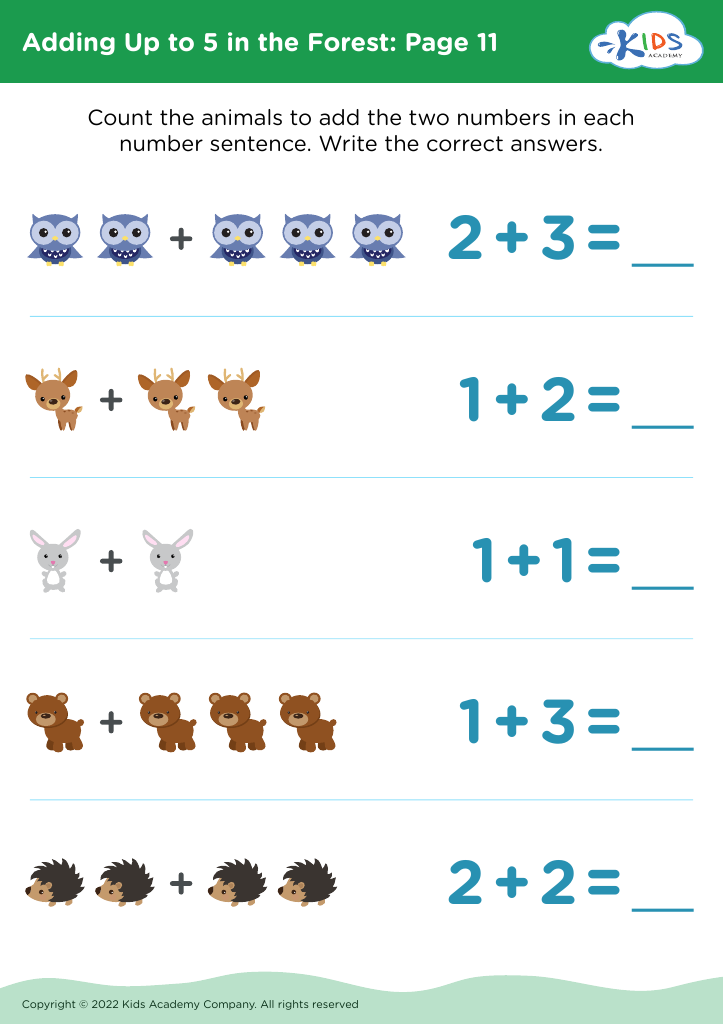
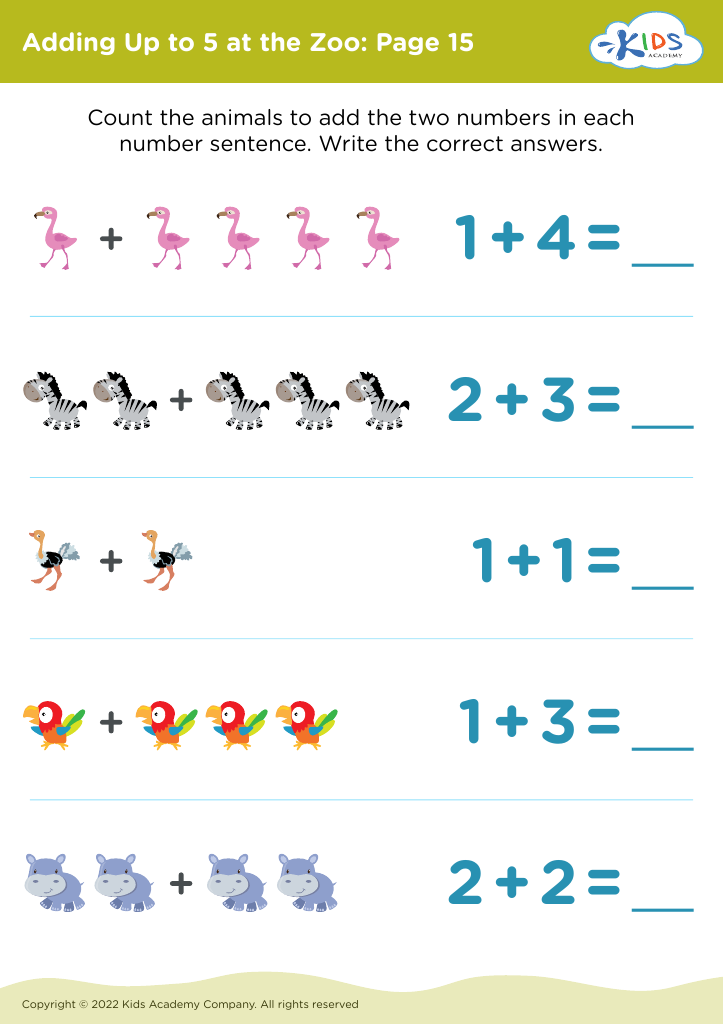
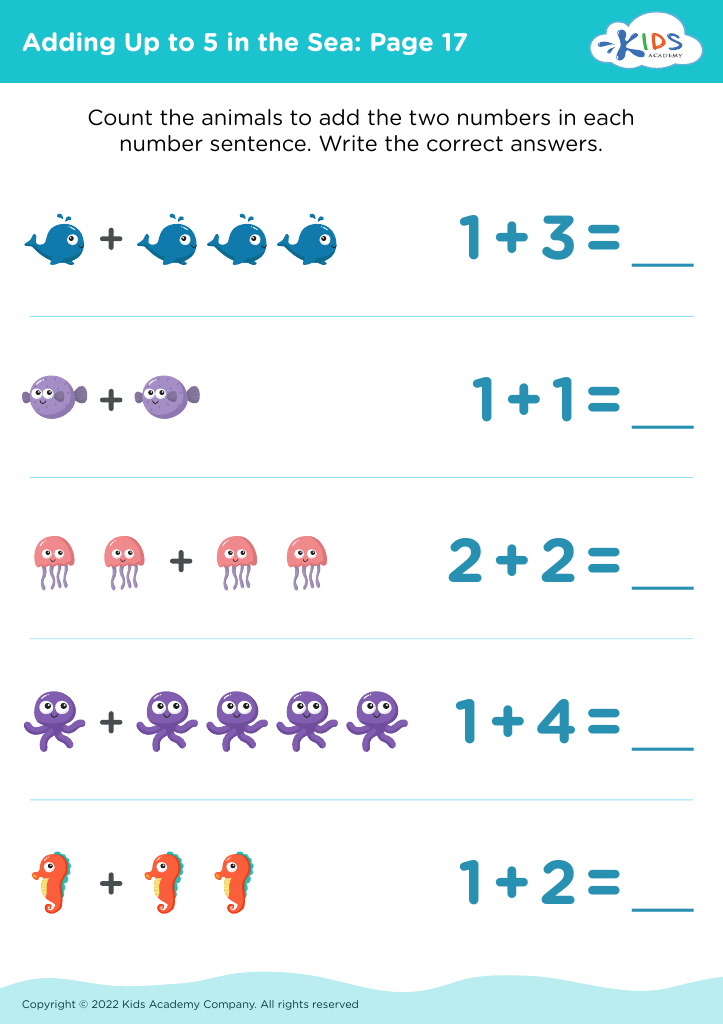
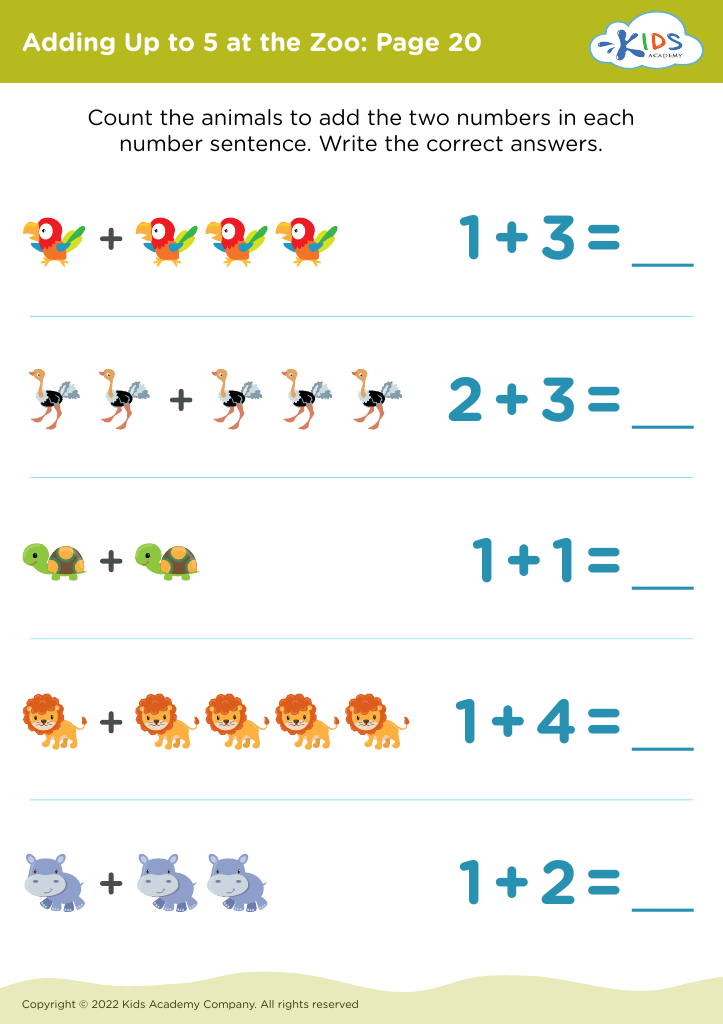
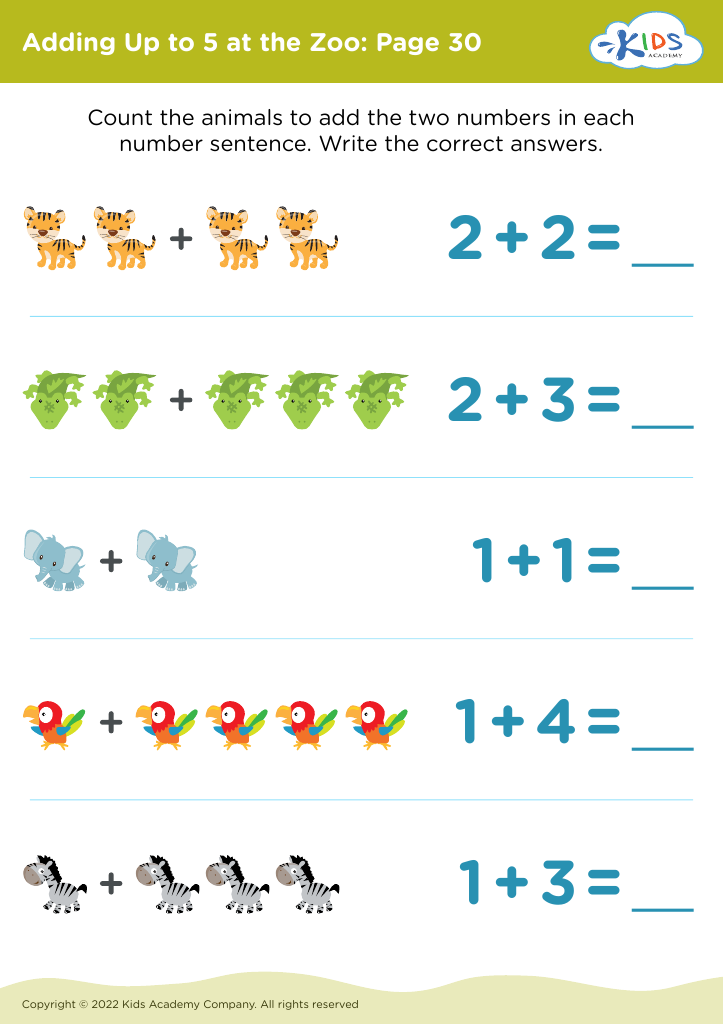
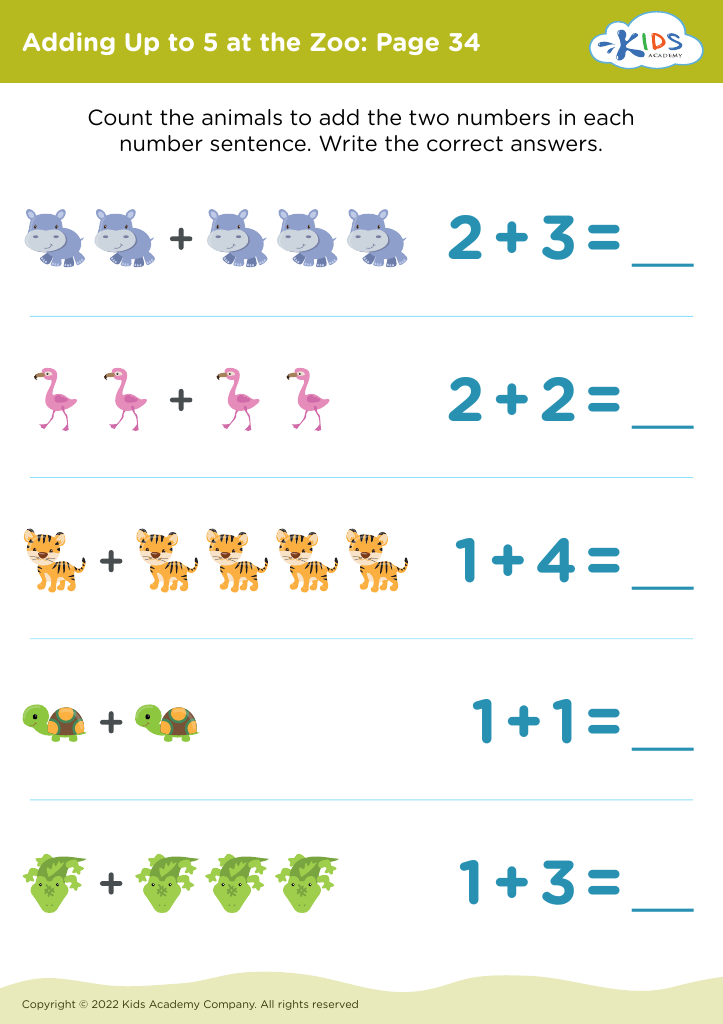
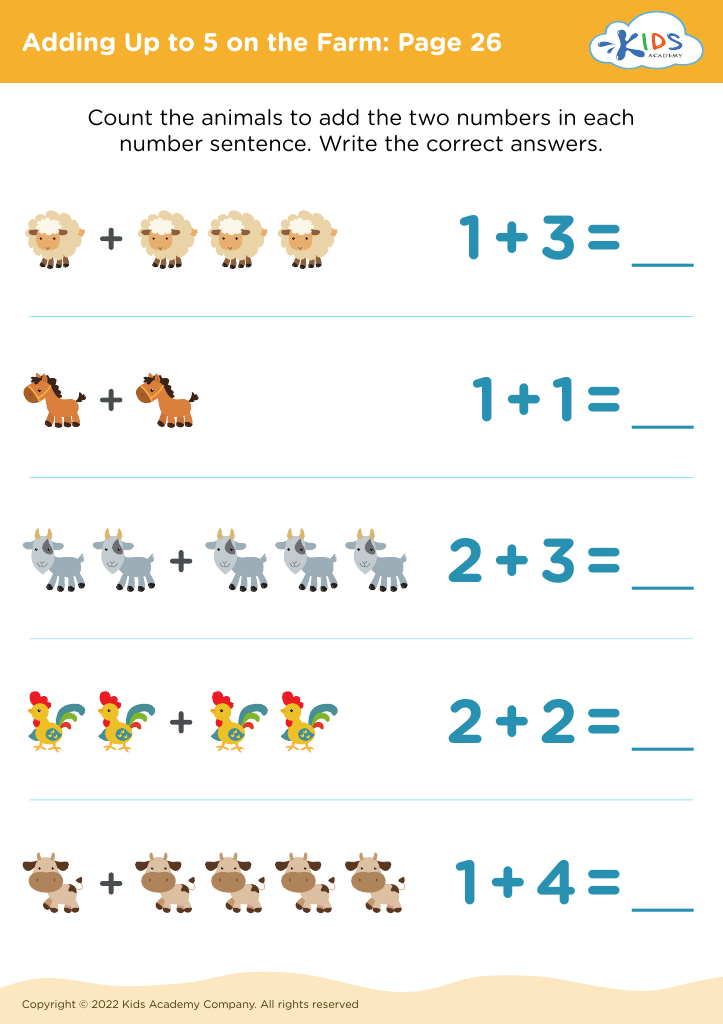
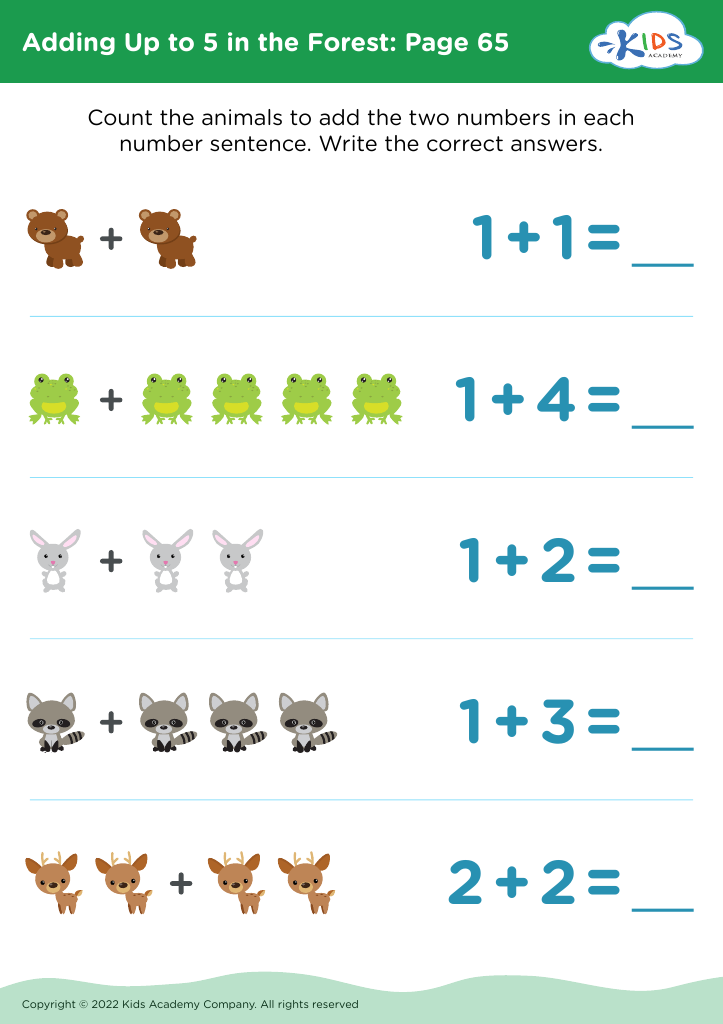
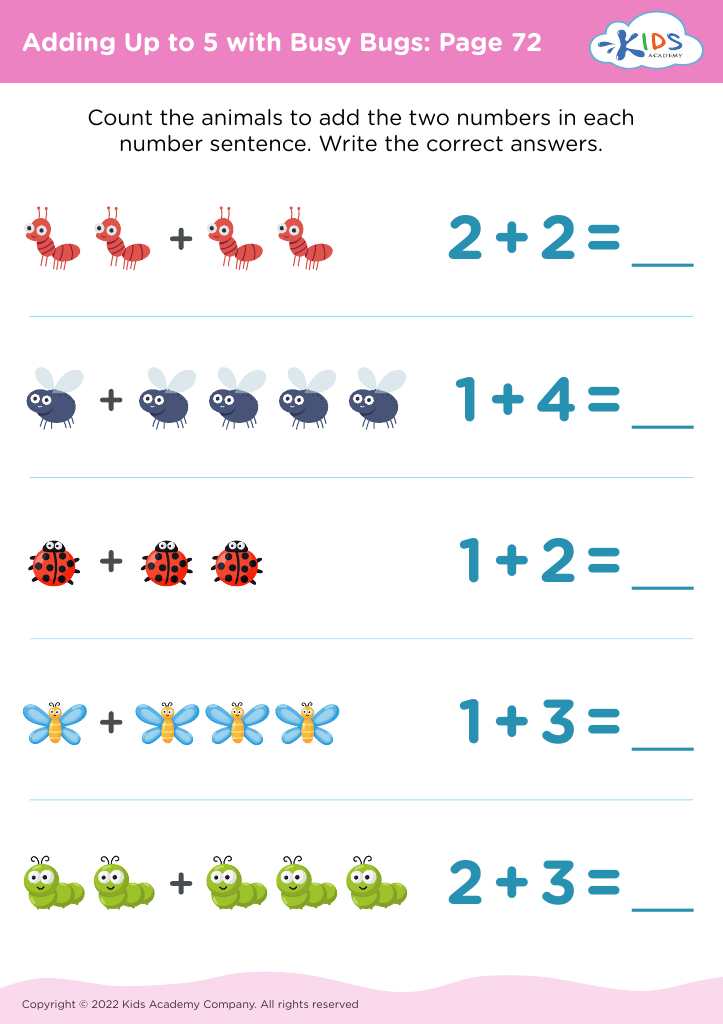
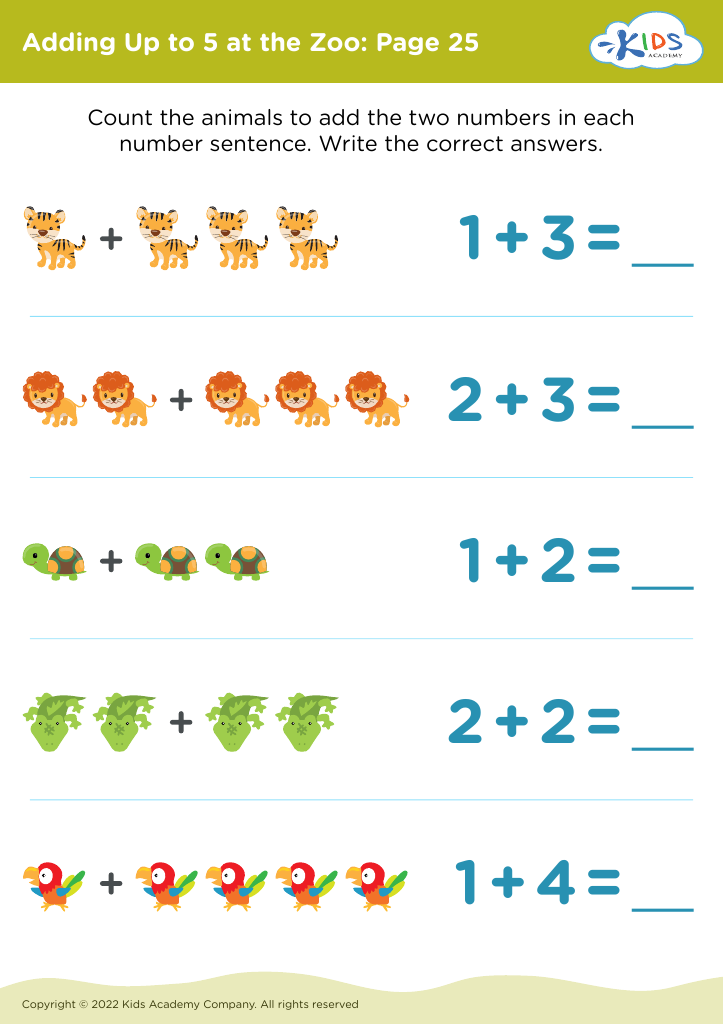
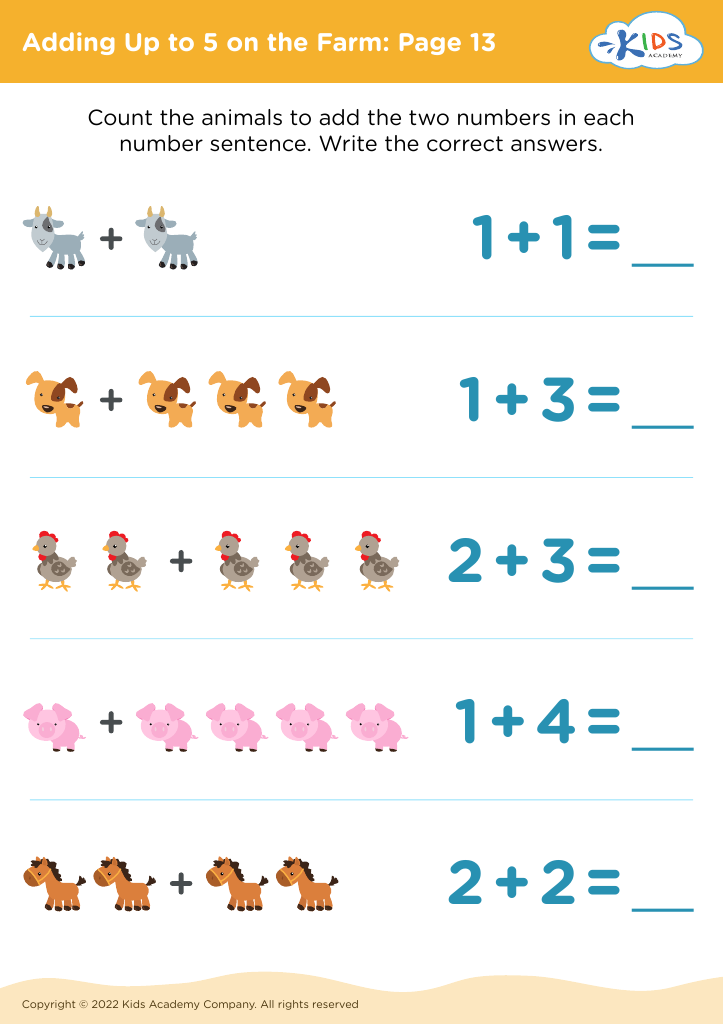
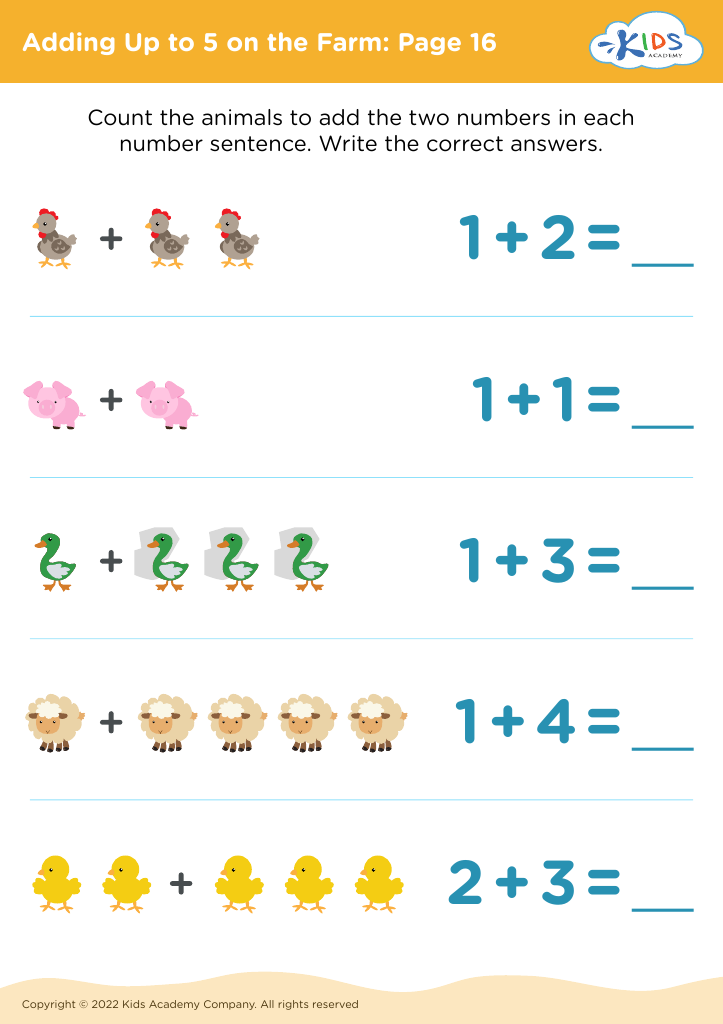
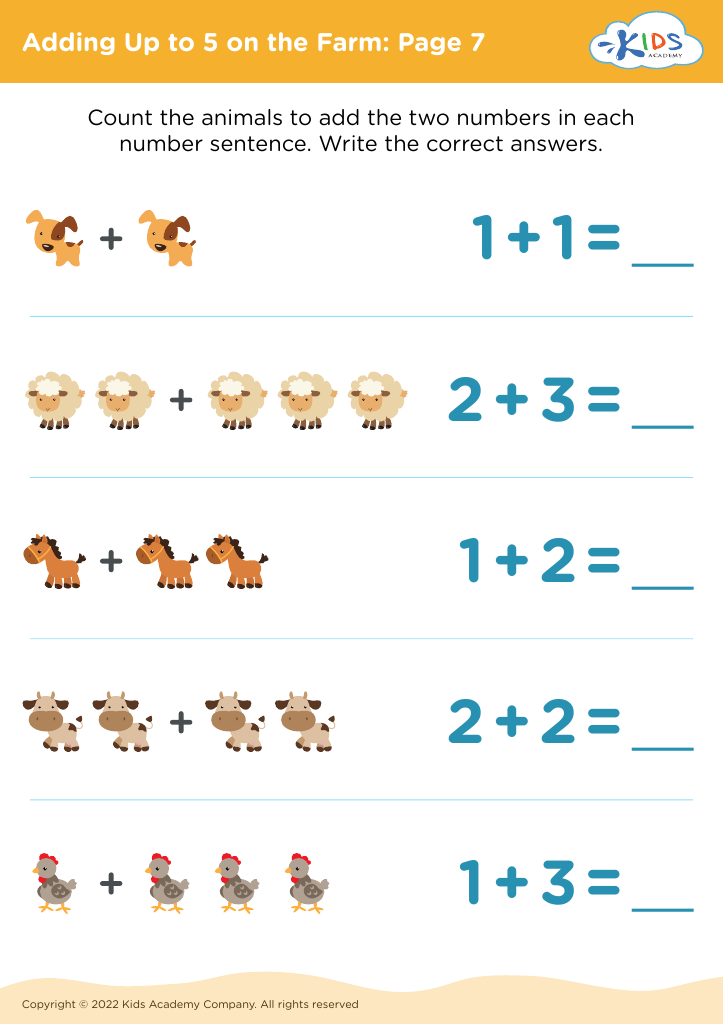
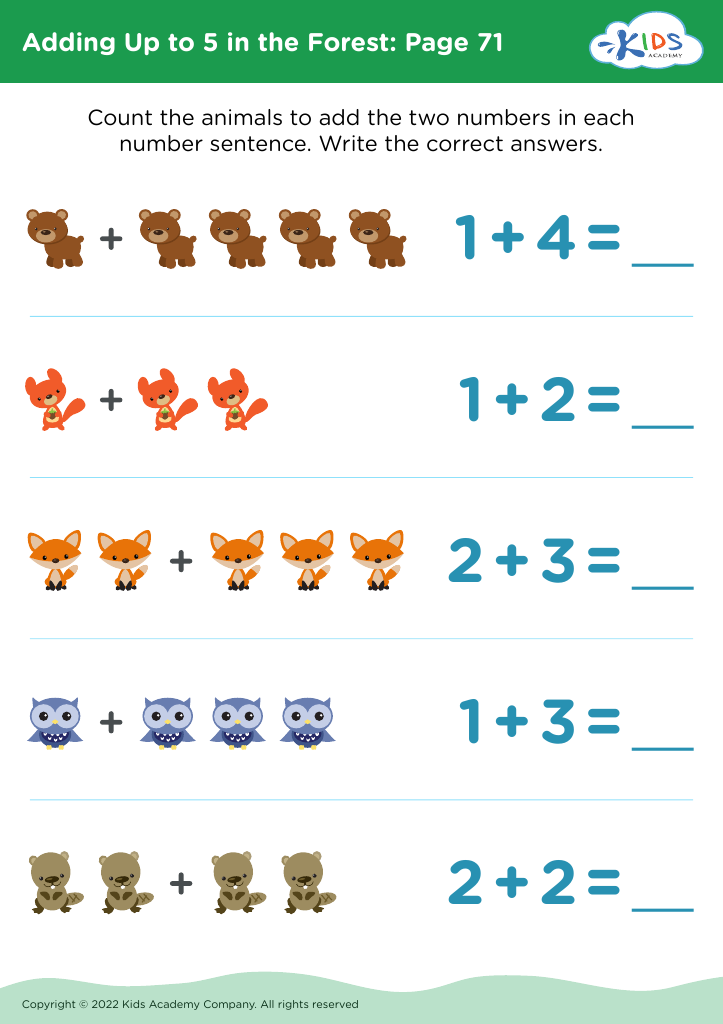
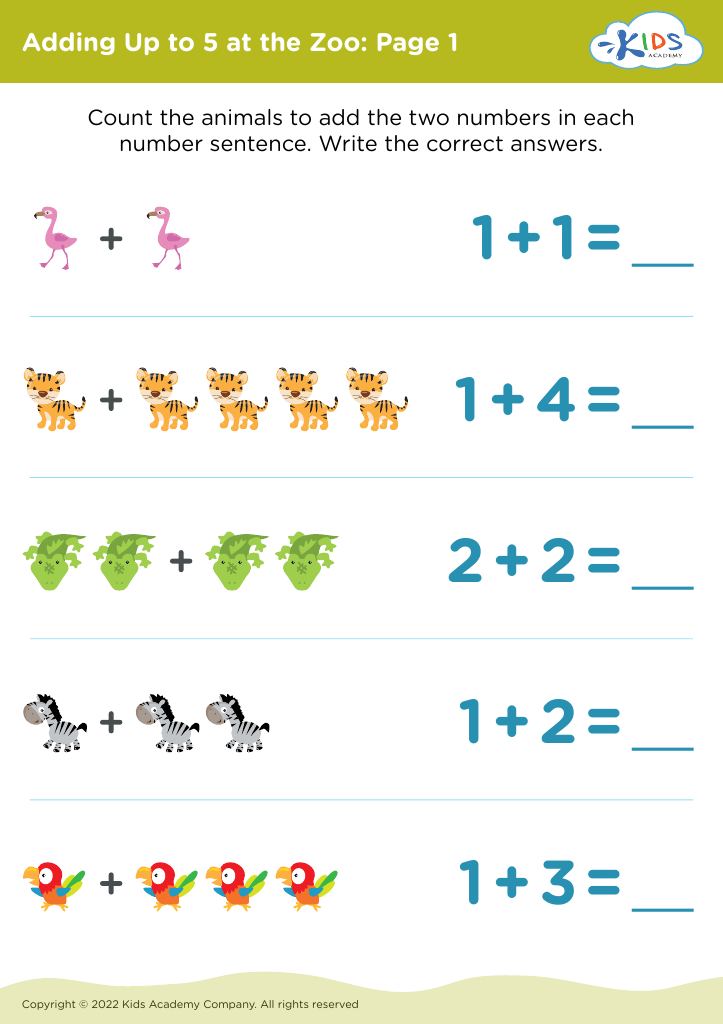
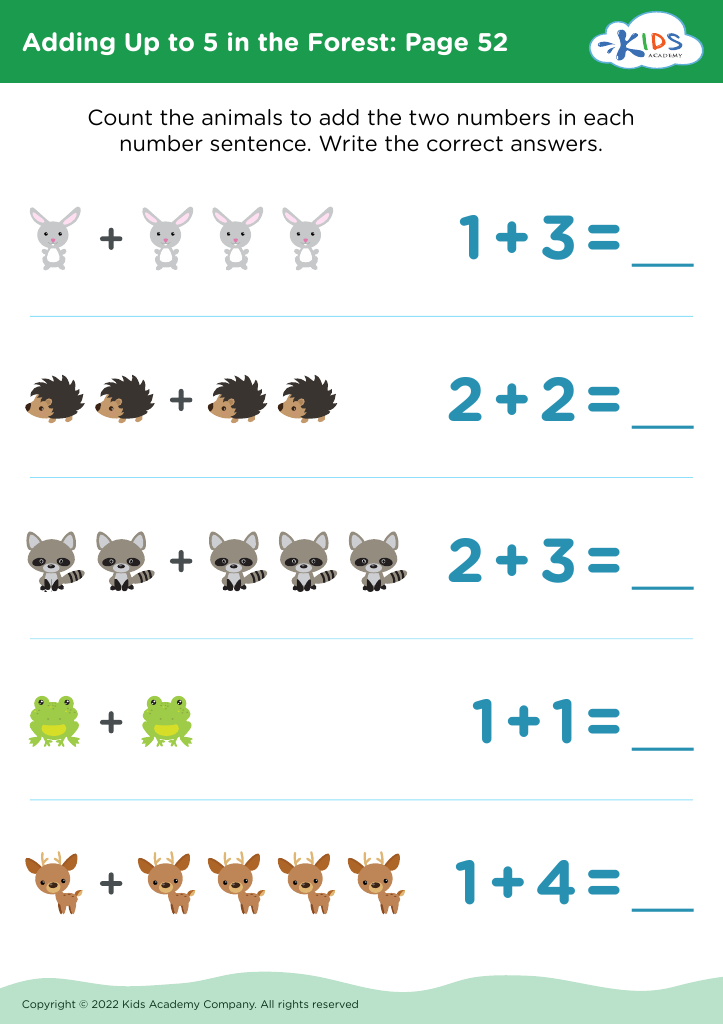
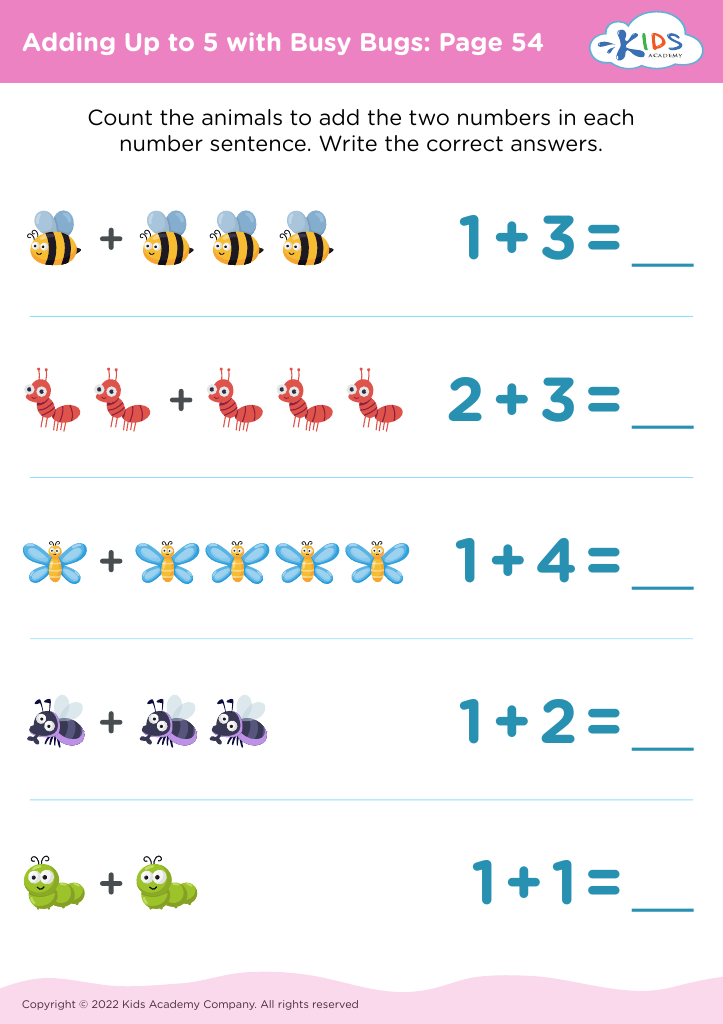
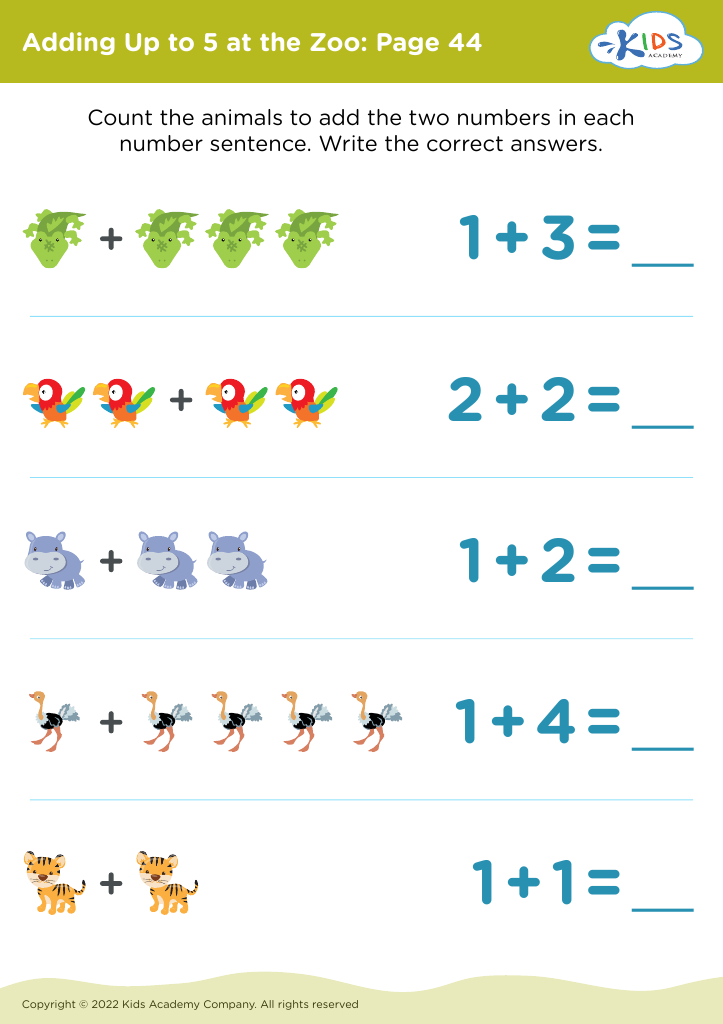
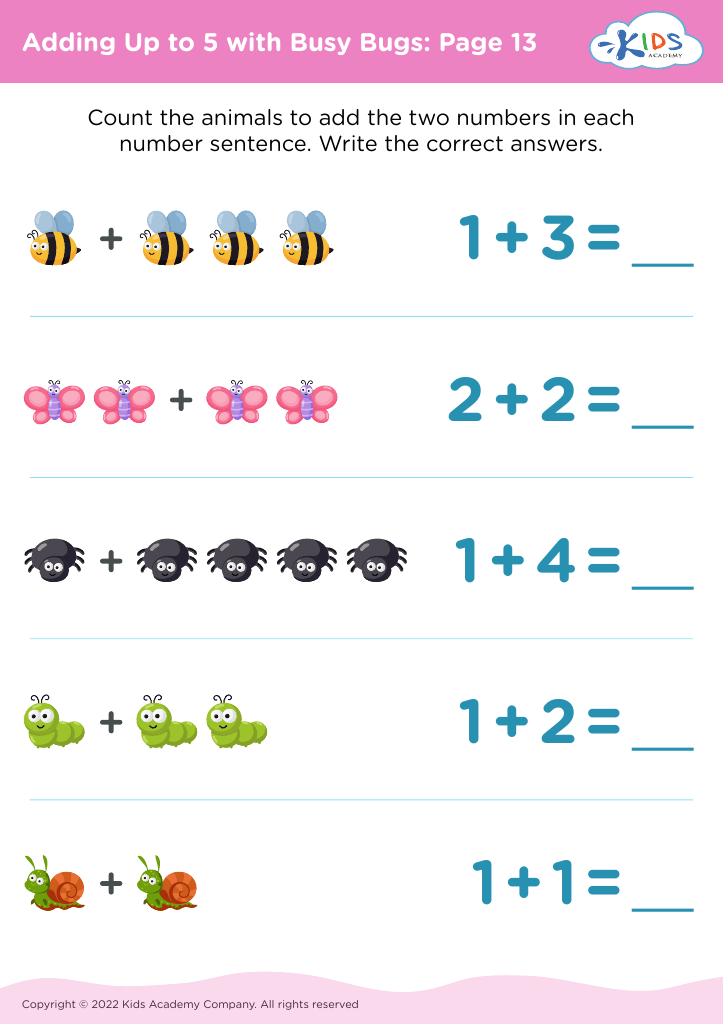
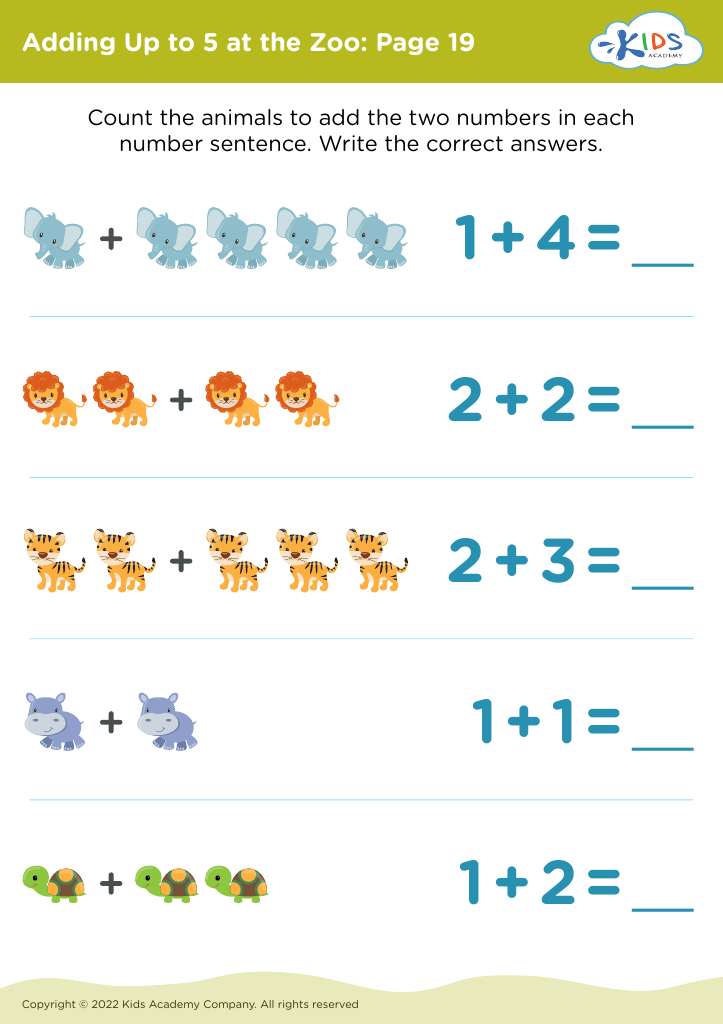
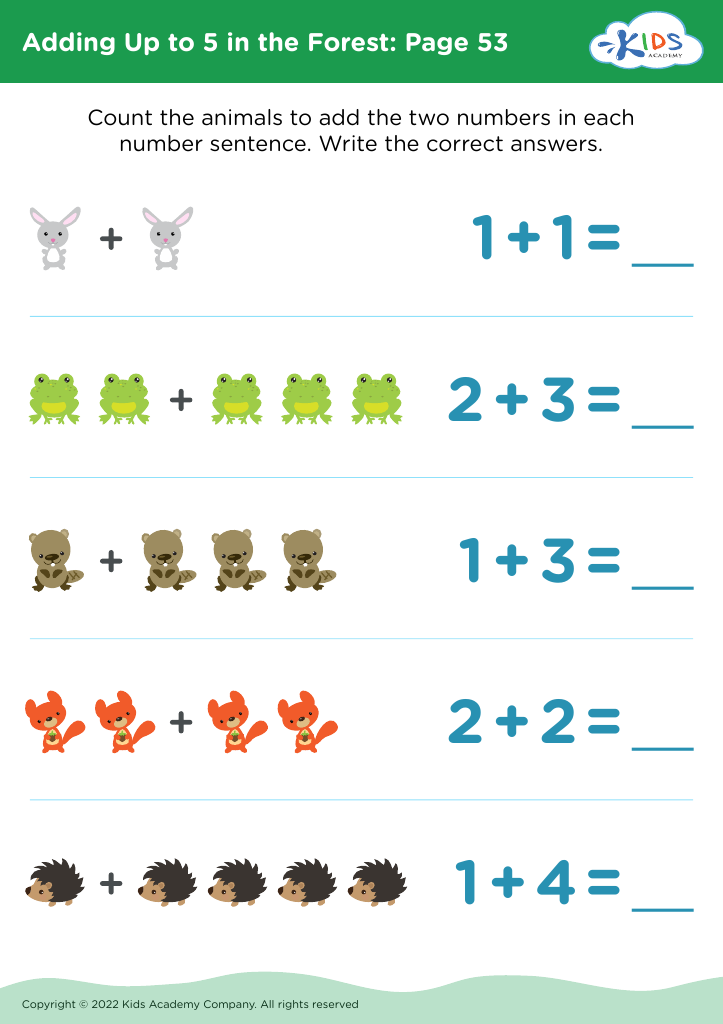
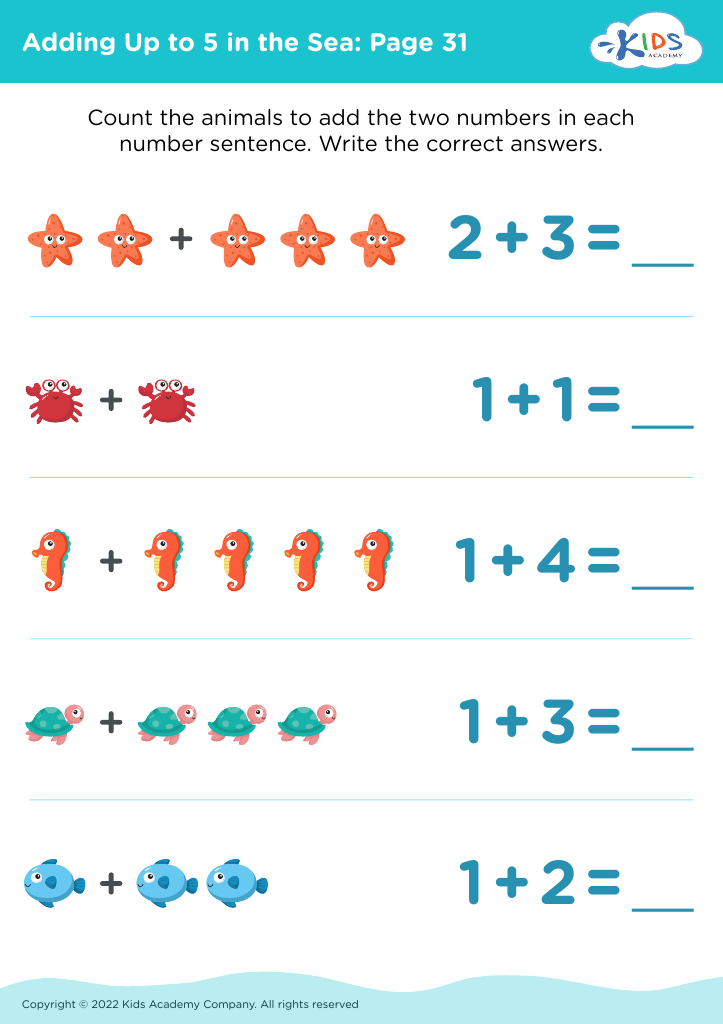
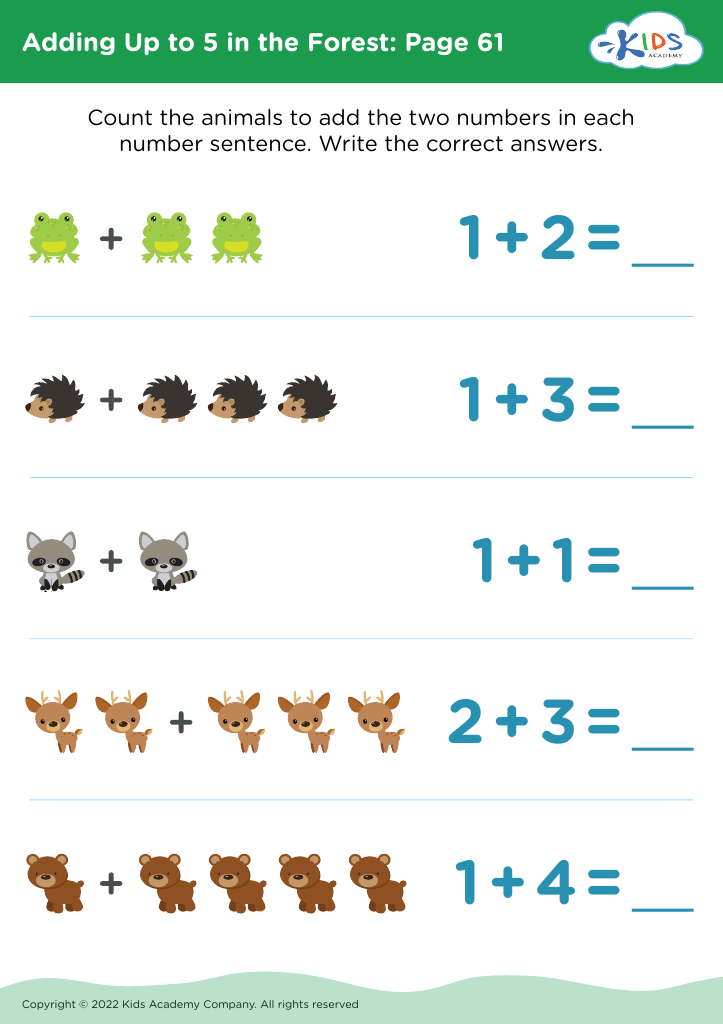








Cognitive development is fundamental in early childhood as it lays the foundation for future learning and academic success. One key area is the mastery of early math skills, specifically adding up to 5, for children ages 4-7. This seemingly simple skill is crucial as it enhances number sense, which is an essential component of mathematical thinking. By focusing on addition problems that total up to 5, children become familiar with the basic principles of arithmetic, such as counting, number recognition, and understanding part-whole relationships.
Building a strong number sense in these formative years helps in the development of higher cognitive functions such as problem-solving, logical reasoning, and critical thinking. It also boosts confidence in mathematics, creating a positive learning experience that can influence attitudes towards the subject in later years. Additionally, early math skills are not just limited to academic achievement; they are integral to everyday tasks and overall cognitive processing.
Parents and teachers who prioritize these skills help children develop a strong educational foundation. Engaging activities that promote adding numbers up to 5 can be both enjoyable and informative, providing a balanced approach to learning that supports cognitive growth and future success in mathematics and beyond. Thus, fostering these skills in early childhood is critical for lifelong cognitive and educational development.








