Filters

102 filtered results

Clear all filters
Favorites
With answer key
Interactive

102 filtered results

Difficulty Level

Grade


Subject

Check out this FREE Trial Lesson on Adding Up to 5 for age 4-7!

Z

Favorites
With answer key
Interactive
  • 4-7
  • Counting skills
  • Adding Up to 5
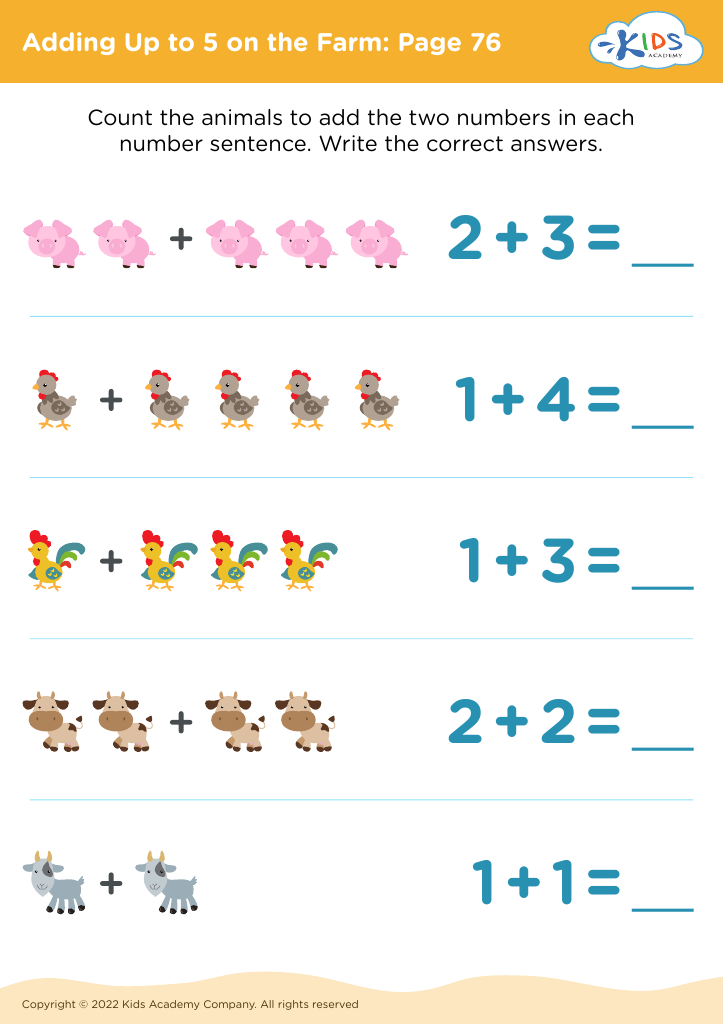
Adding Up to 5 on the Farm: Page 76
Worksheet
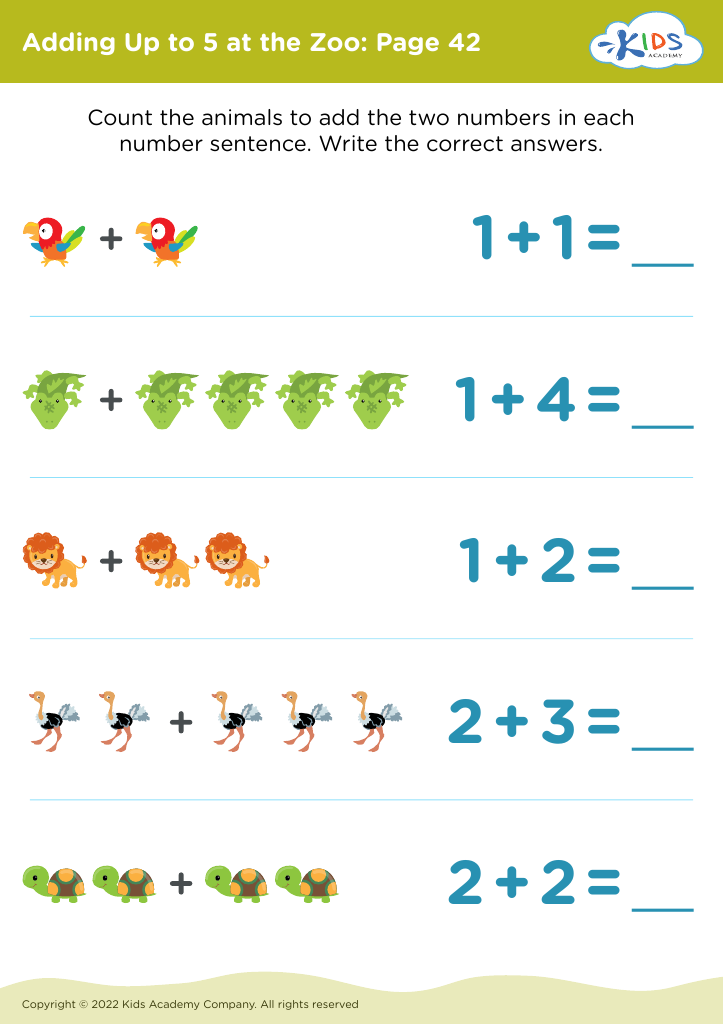
Adding Up to 5 at the Zoo: Page 42
Worksheet
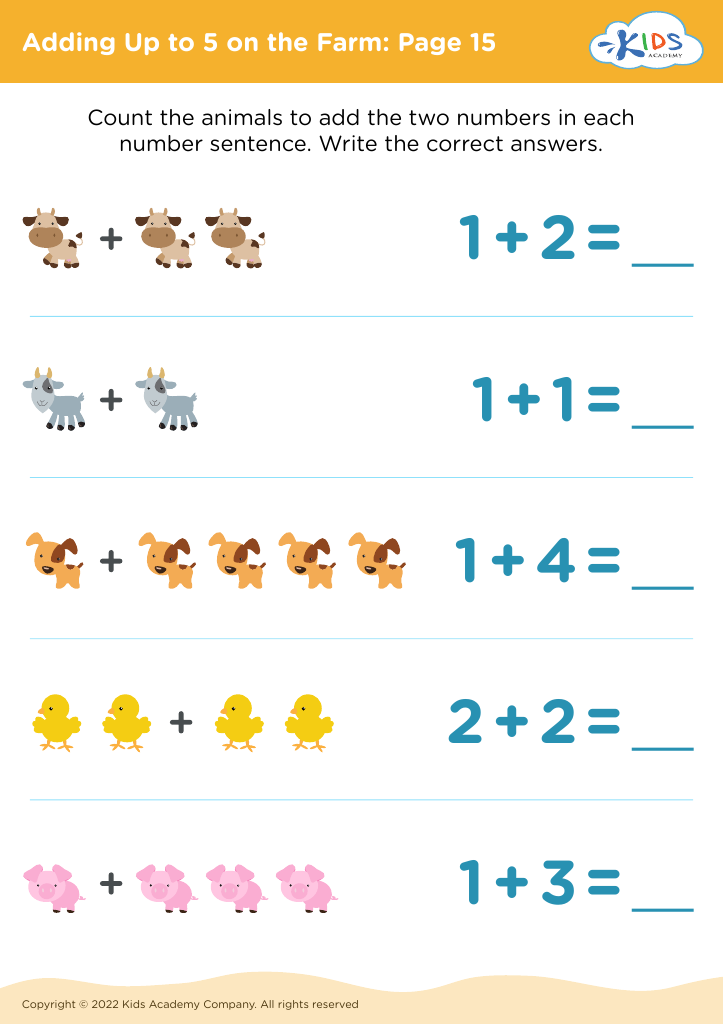
Adding Up to 5 on the Farm: Page 15
Worksheet
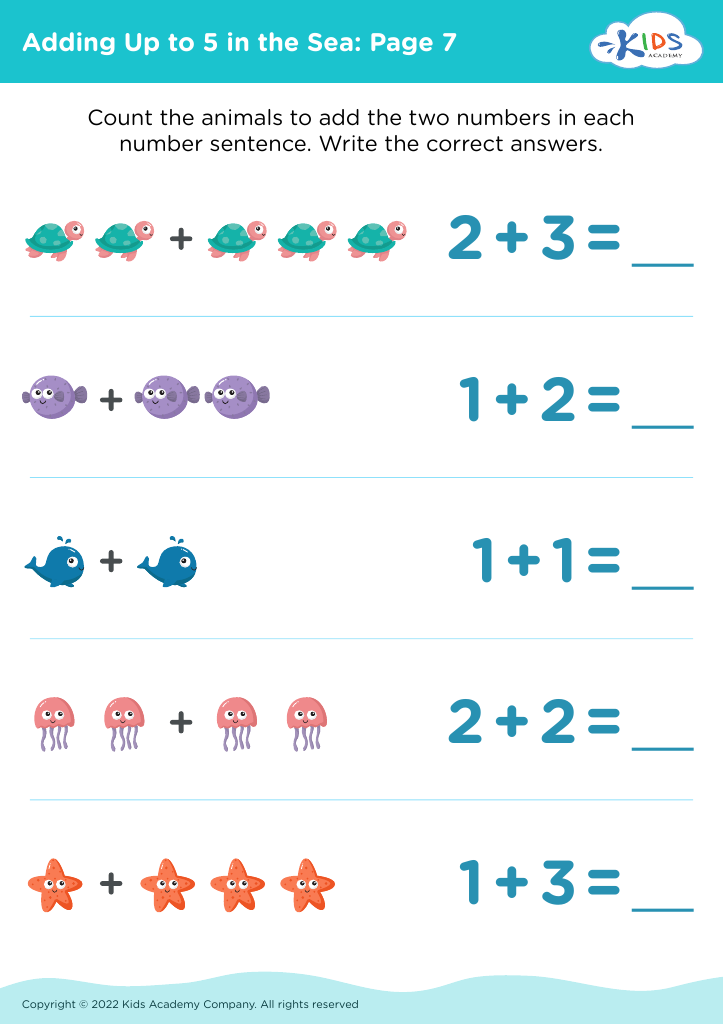
Adding Up to 5 in the Sea: Page 7

Adding Up to 5 in the Sea: Page 7

Adding Up to 5 in the Sea: Page 7
Worksheet
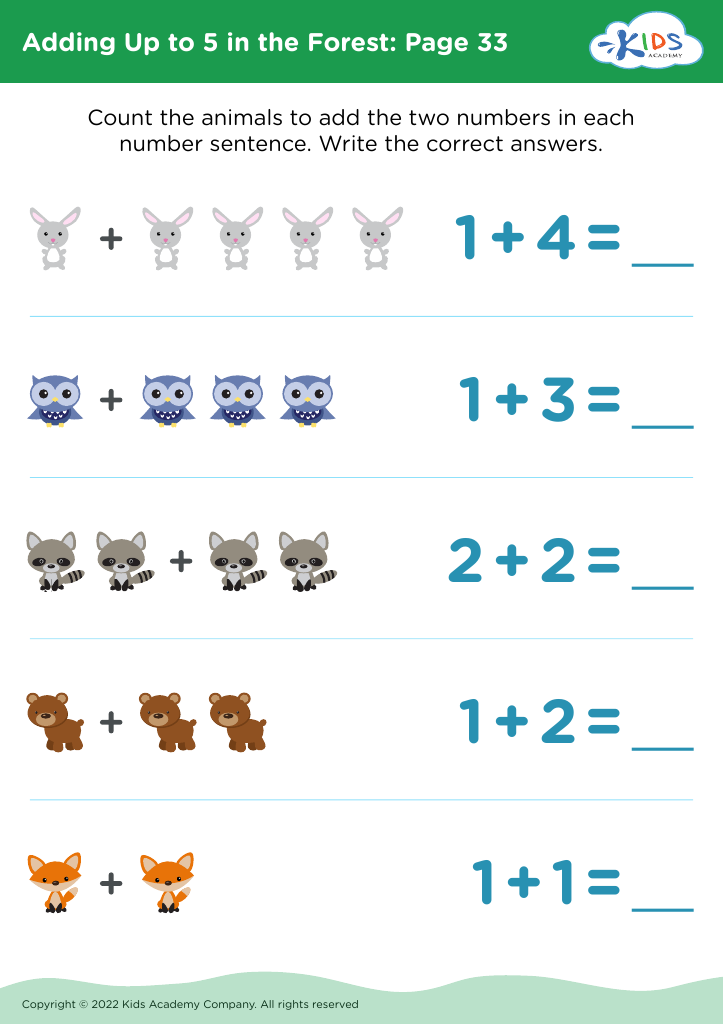
Adding Up to 5 in the Forest: Page 33
Worksheet
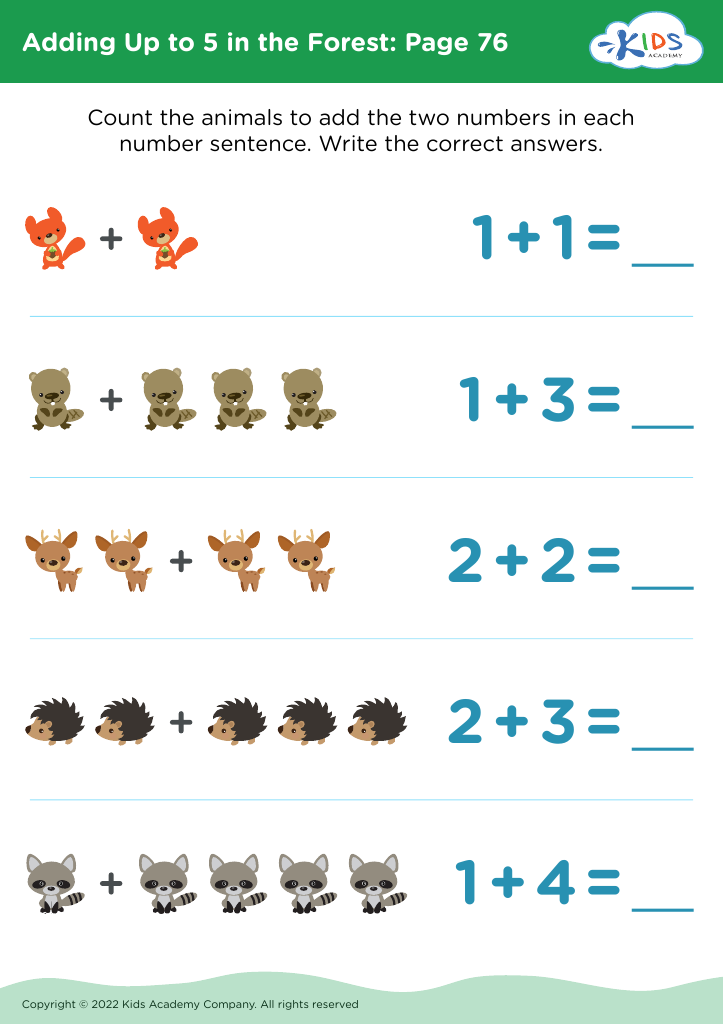
Adding Up to 5 in the Forest: Page 76
Worksheet
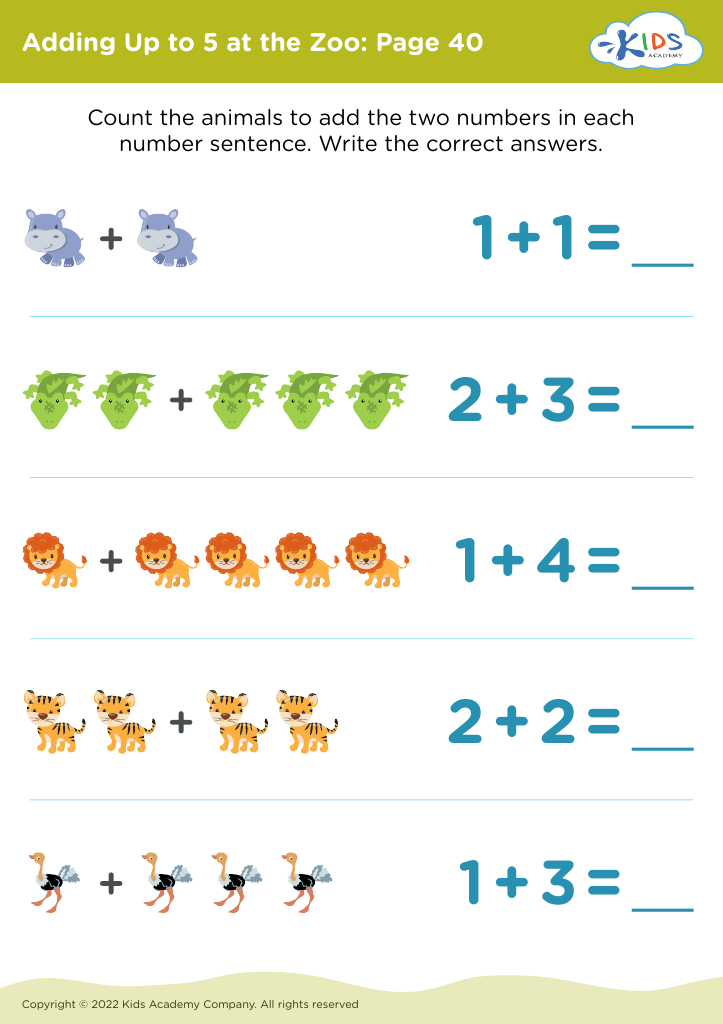
Adding Up to 5 at the Zoo: Page 40
Worksheet
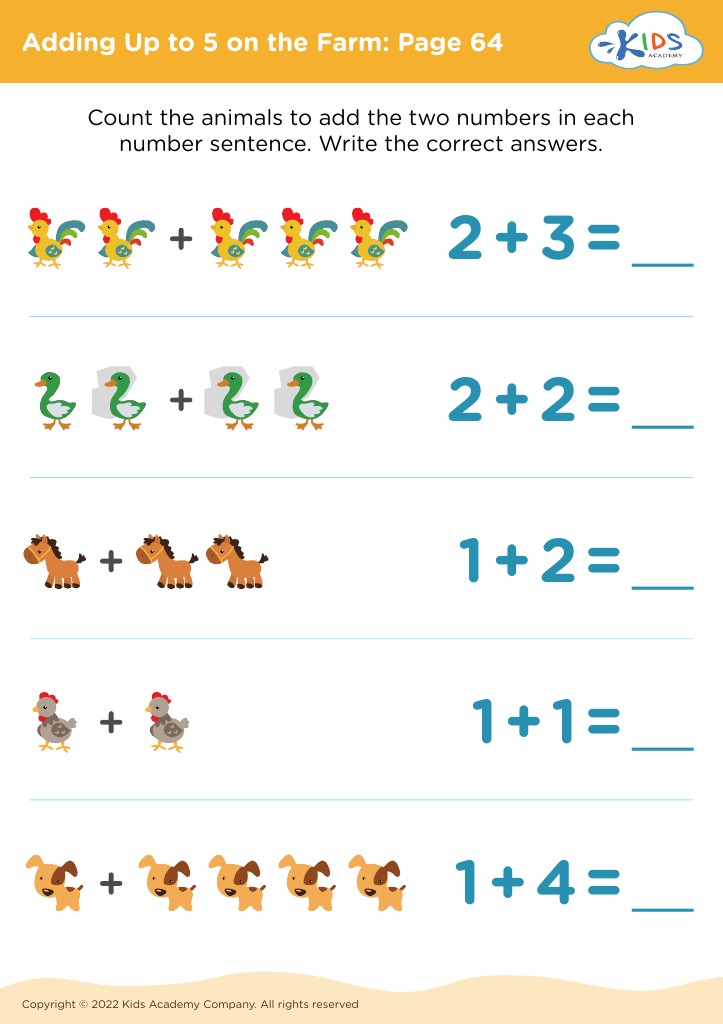
Adding Up to 5 on the Farm: Page 64
Worksheet
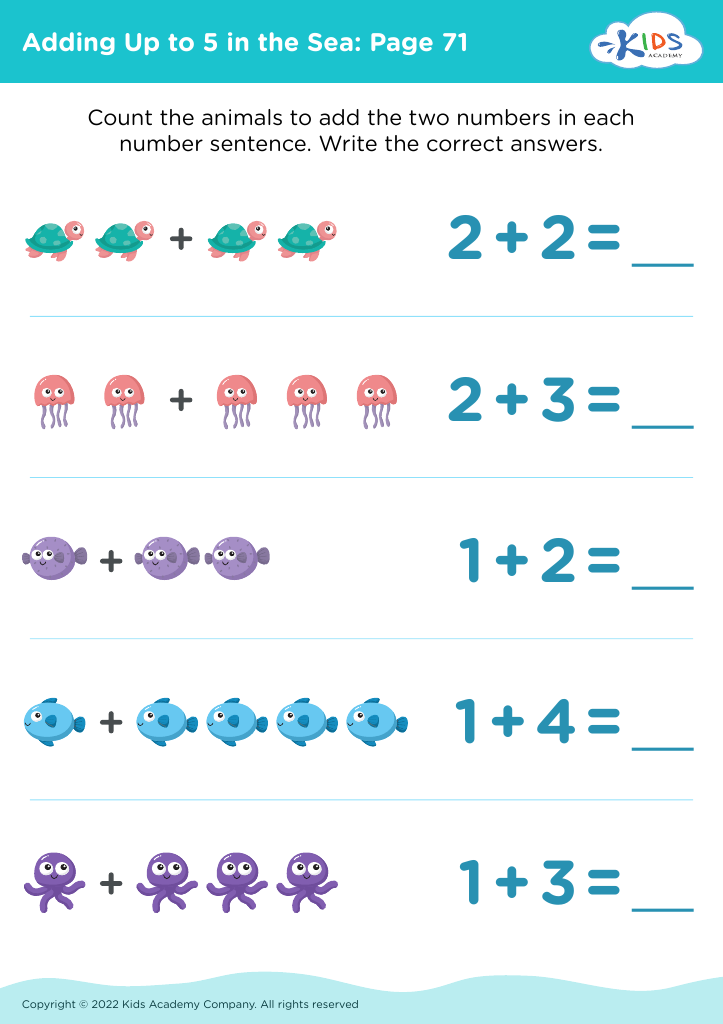
Adding Up to 5 in the Sea: Page 71
Worksheet
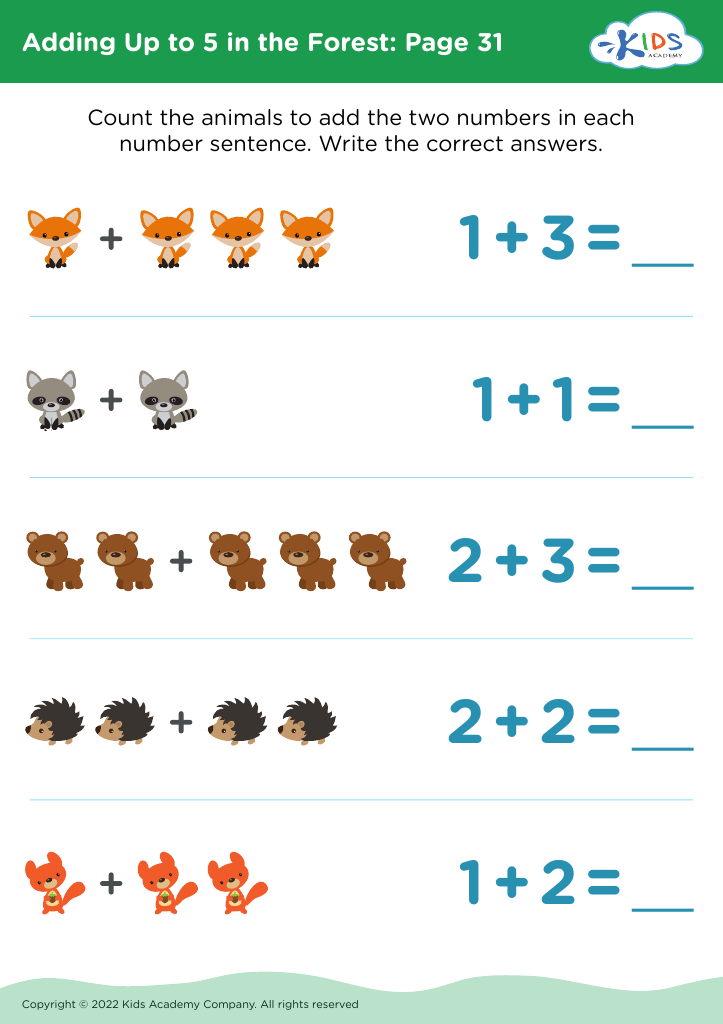
Adding Up to 5 in the Forest: Page 31
Worksheet
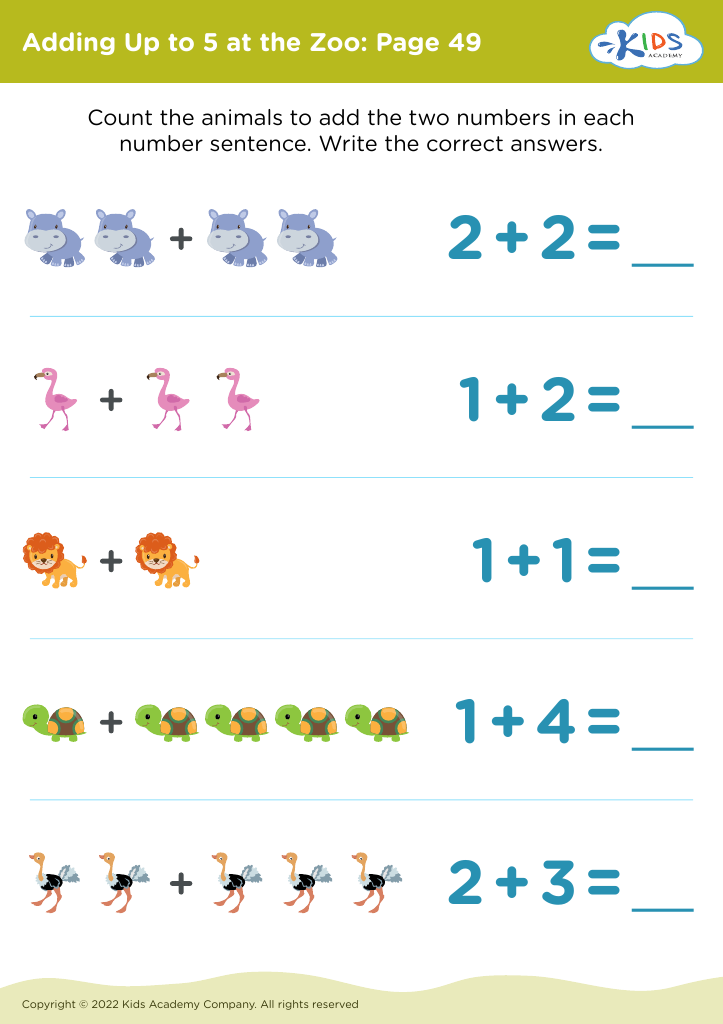
Adding Up to 5 at the Zoo: Page 49
Worksheet
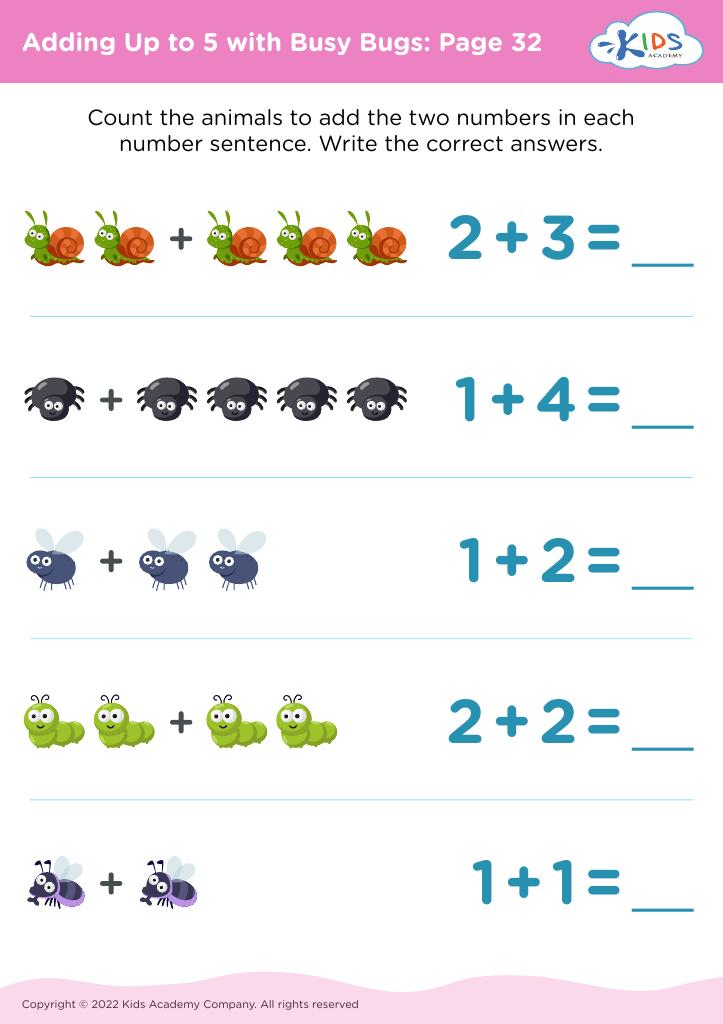
Adding Up to 5 with Busy Bugs: Page 32
Worksheet
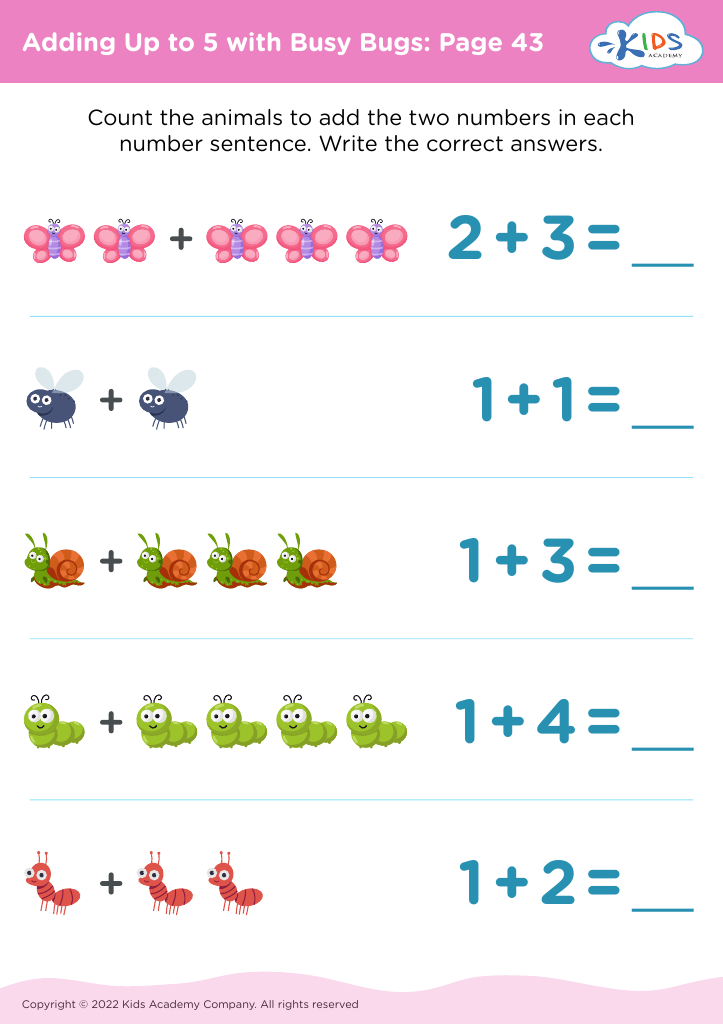
Adding Up to 5 with Busy Bugs: Page 43
Worksheet
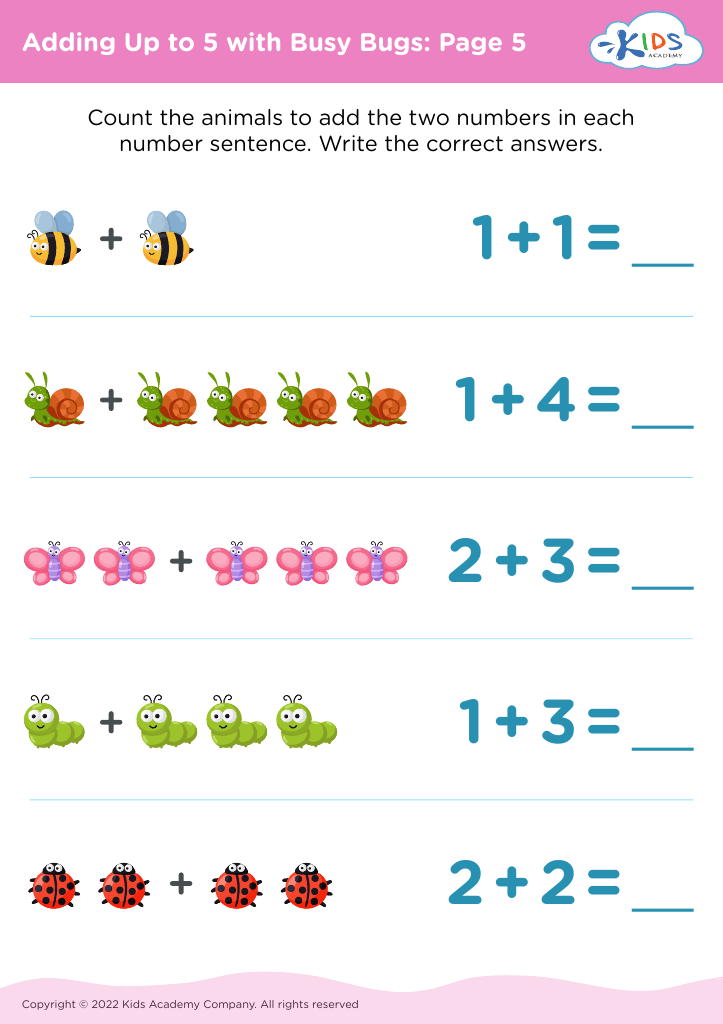
Adding Up to 5 with Busy Bugs: Page 5
Worksheet
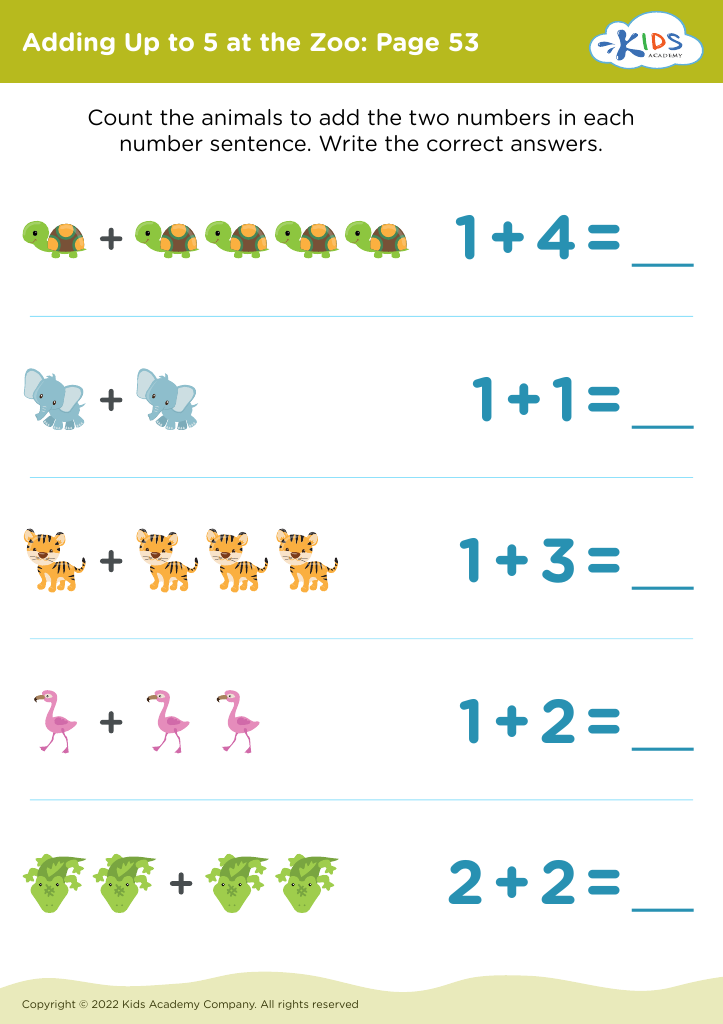
Adding Up to 5 at the Zoo: Page 53
Worksheet
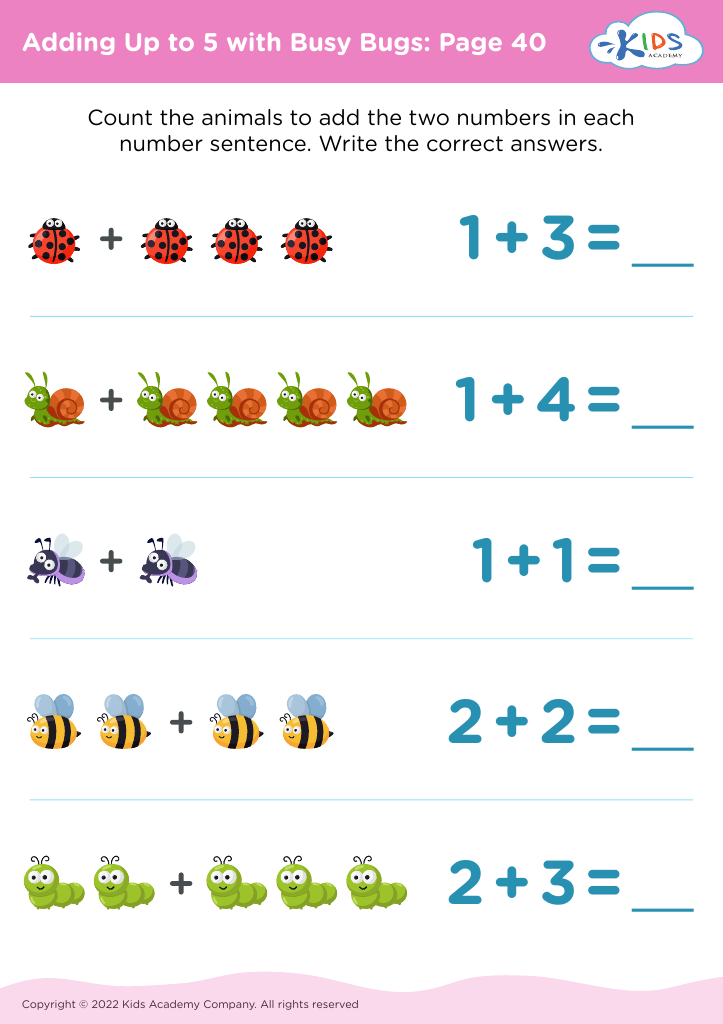
Adding Up to 5 with Busy Bugs: Page 40
Worksheet
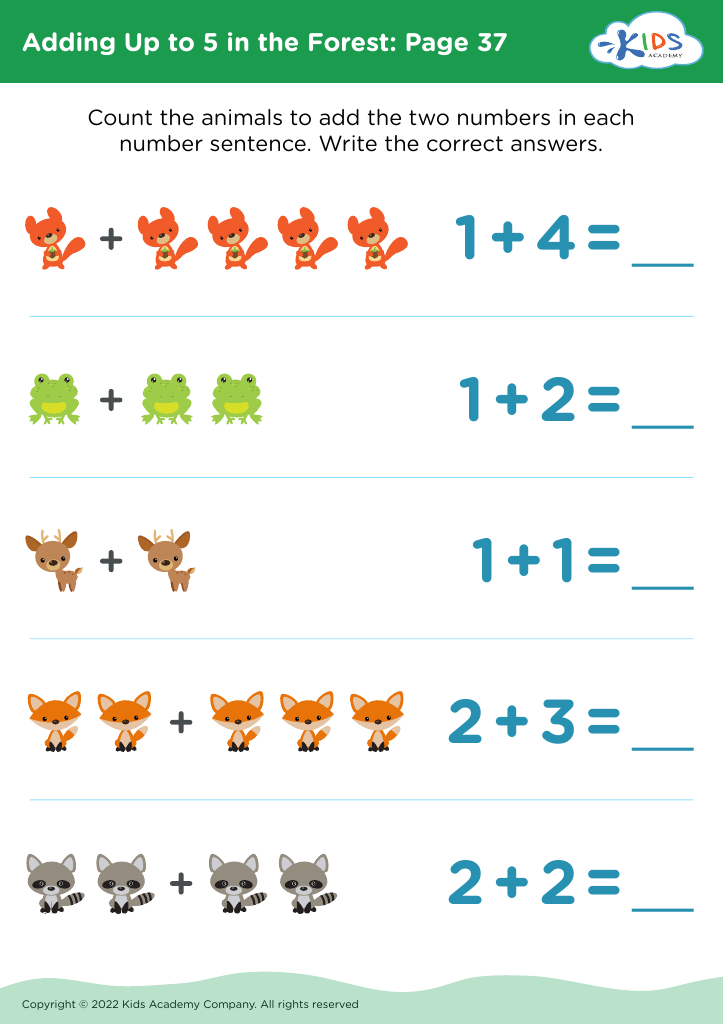
Adding Up to 5 in the Forest: Page 37
Worksheet
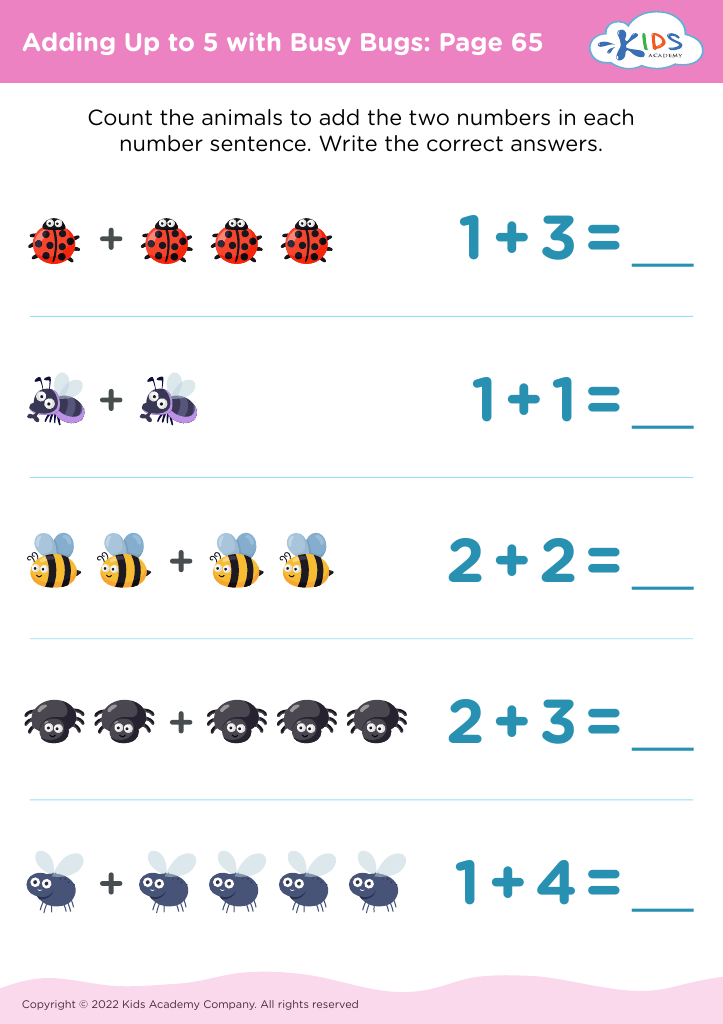
Adding Up to 5 with Busy Bugs: Page 65
Worksheet
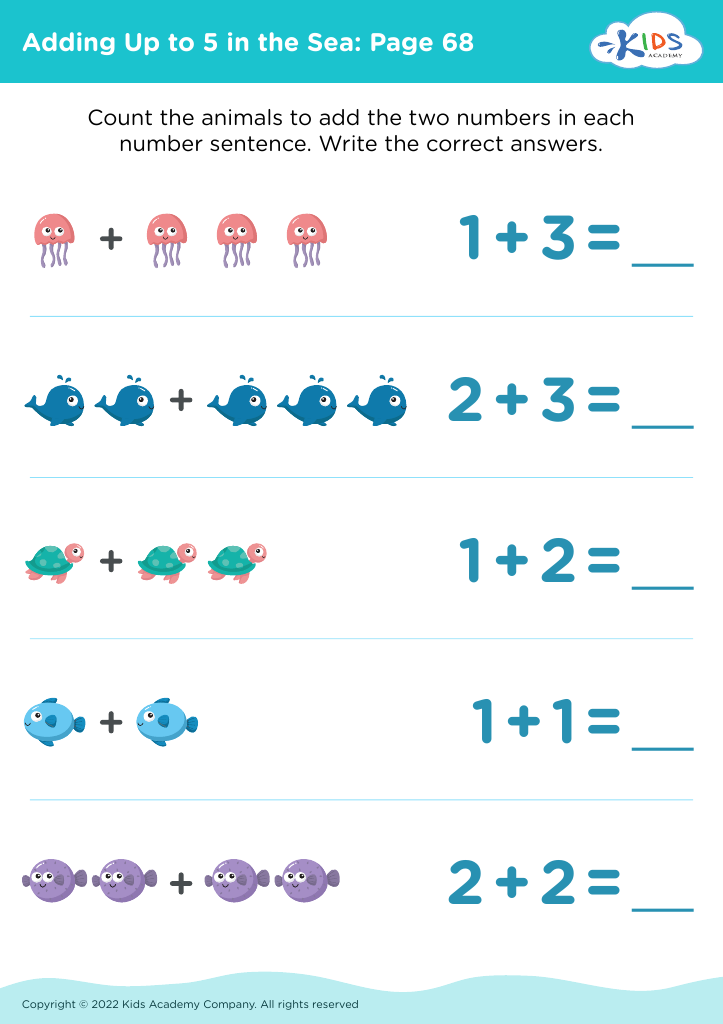
Adding Up to 5 in the Sea: Page 68
Worksheet
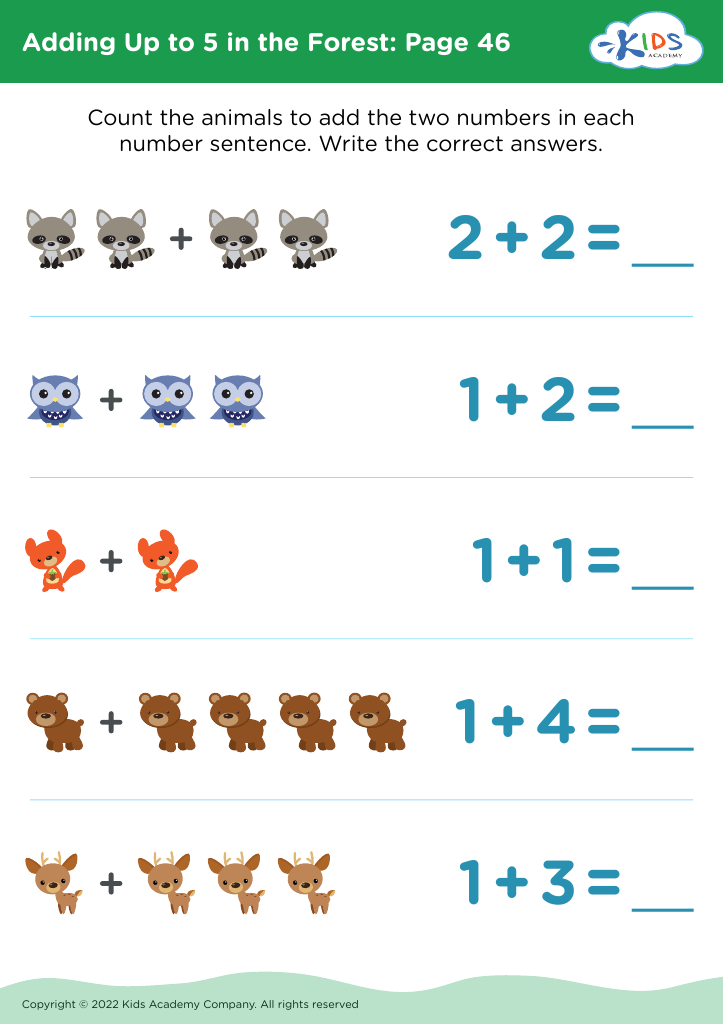
Adding Up to 5 in the Forest: Page 46
Worksheet
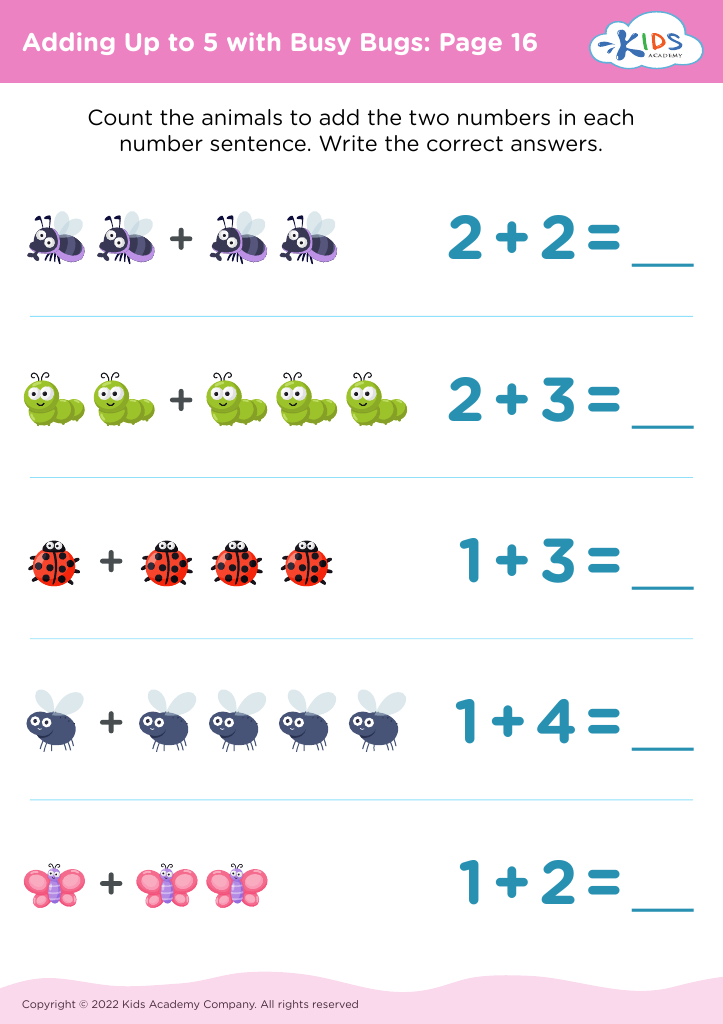
Adding Up to 5 with Busy Bugs: Page 16
Worksheet
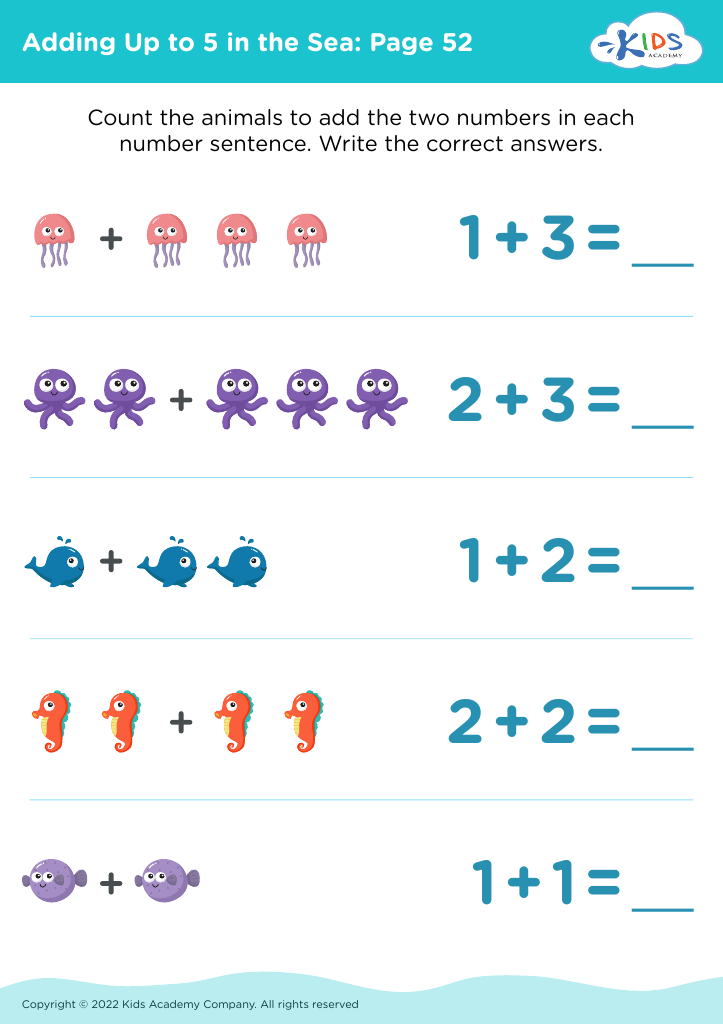
Adding Up to 5 in the Sea: Page 52
Worksheet
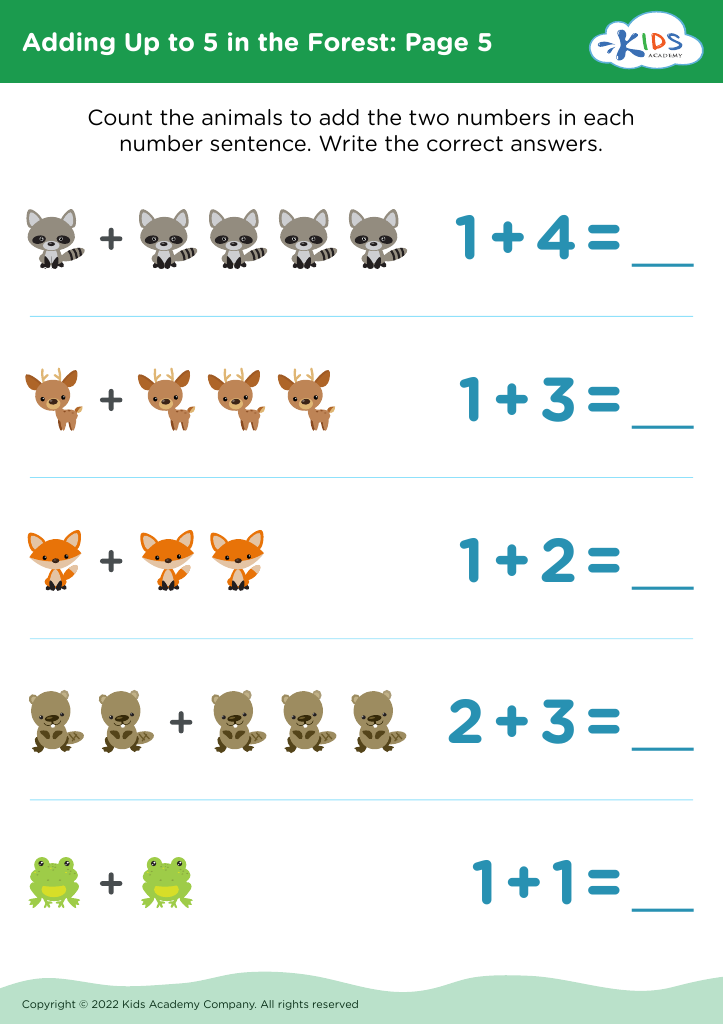
Adding Up to 5 in the Forest: Page 5
Worksheet
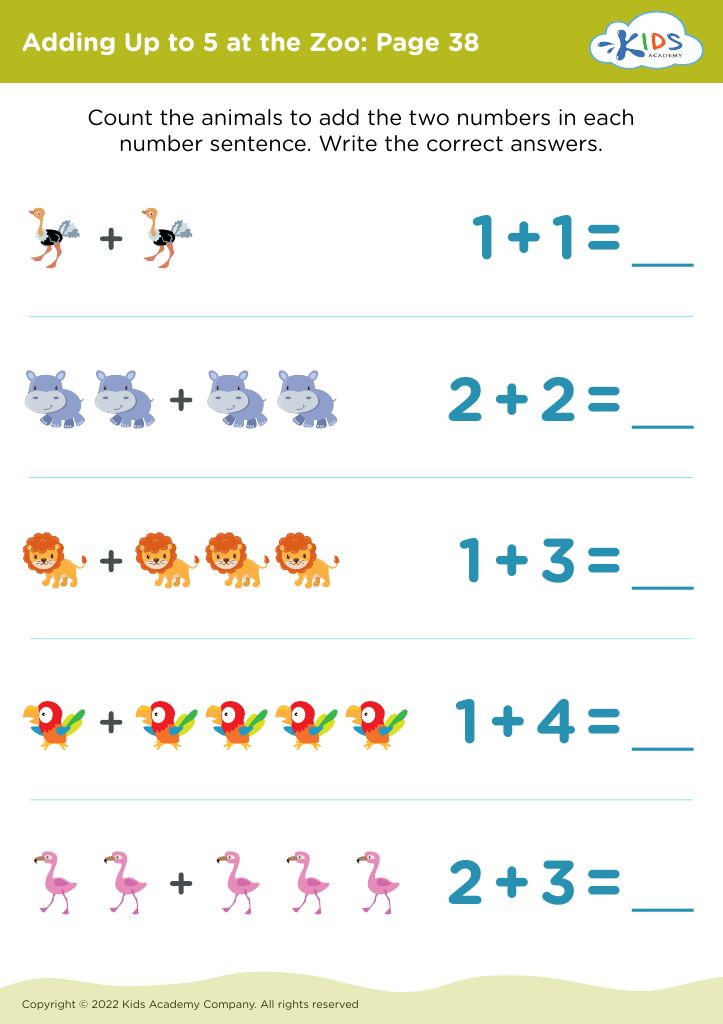
Adding Up to 5 at the Zoo: Page 38
Worksheet


Counting skills, especially the ability to add up to 5, are fundamental for children ages 4-7 because they form the foundation of early mathematics education. Counting and basic addition are critical skills that prepare young minds for more complex mathematical concepts. For instance, understanding numbers and their relationships through simple addition builds a child's number sense, helping them grasp concepts like quantity, order, and comparisons.

Parents and teachers should prioritize these skills to support overall cognitive development. Mastery of early counting and adding up to 5 leads to improved problem-solving abilities and logical thinking. This forms a basis for higher arithmetic skills and enables children to approach everyday tasks with confidence.

Additionally, early success in math enhances self-esteem and fosters a positive attitude towards learning. During the ages of 4-7, children are highly impressionable; showing them that they can succeed in math encourages persistence and a growth mindset. Engaging children with counting activities and games also nurtures a love for learning, making education a joyous experience.

Moreover, solid counting skills prepare kids for real-life applications, such as understanding money, time, and measurements. Early proficiency in mathematics can predict future academic achievement, making it crucial for parents and teachers to emphasize counting and addition skills up to 5 in early childhood learning.