Filters

349 filtered results

Clear all filters
Favorites
With answer key
Interactive

349 filtered results

Difficulty Level

Grade


Check out this FREE Trial Lesson on Adding Up to 5 for age 4-7!

Z

Favorites
With answer key
Interactive
  • 4-7
  • Number Recognition
  • Adding Up to 5
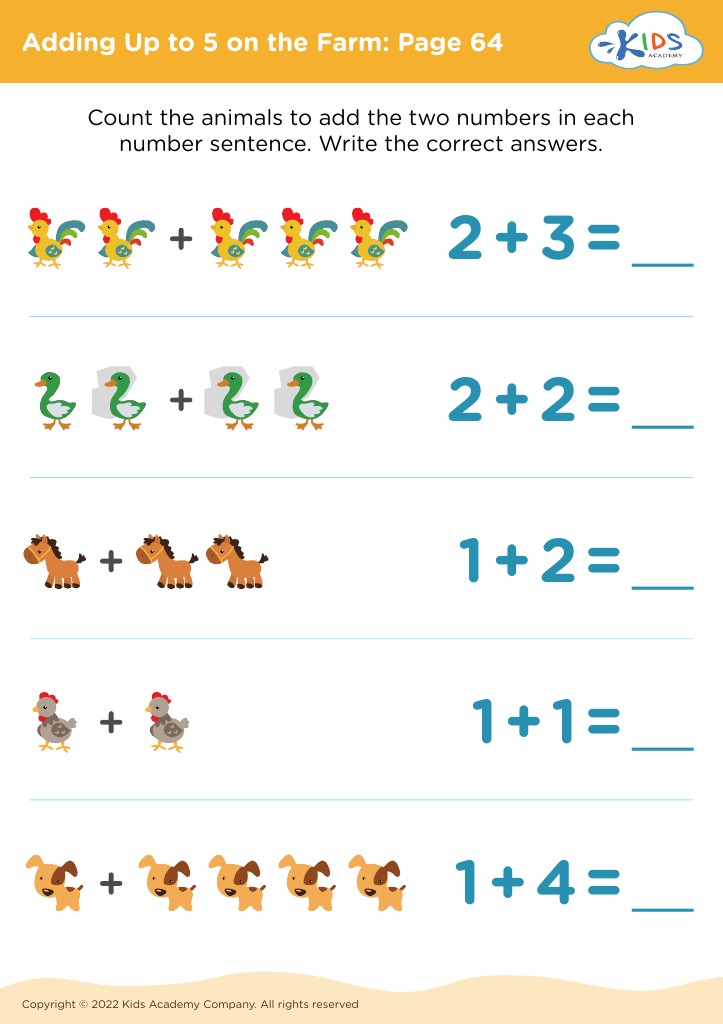
Adding Up to 5 on the Farm: Page 64
Worksheet
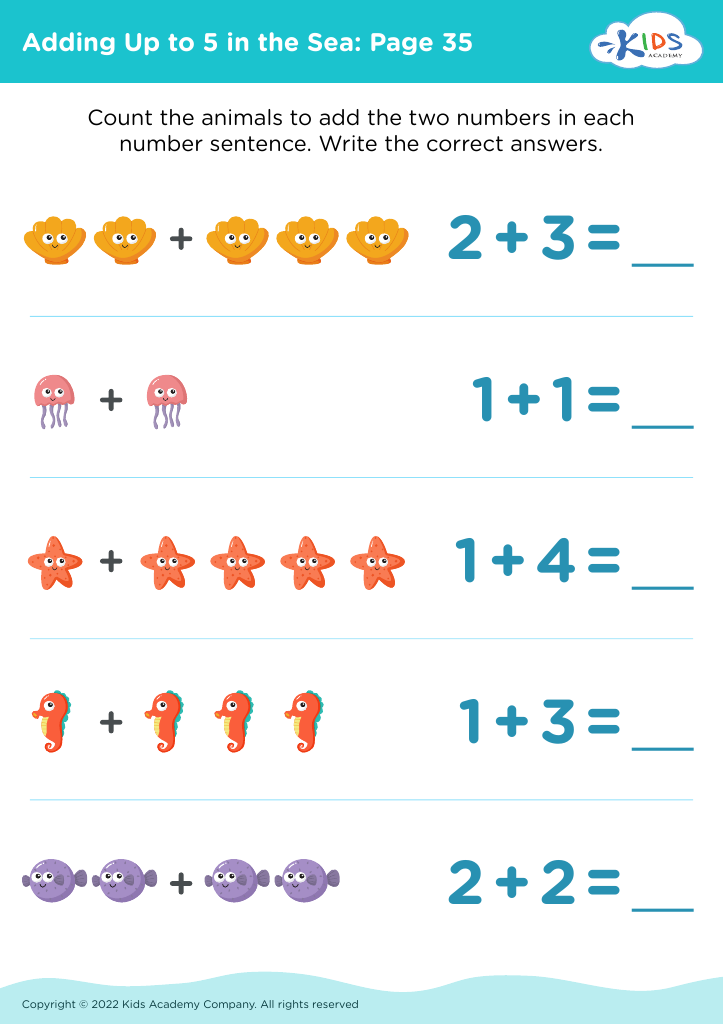
Adding Up to 5 in the Sea: Page 35
Worksheet
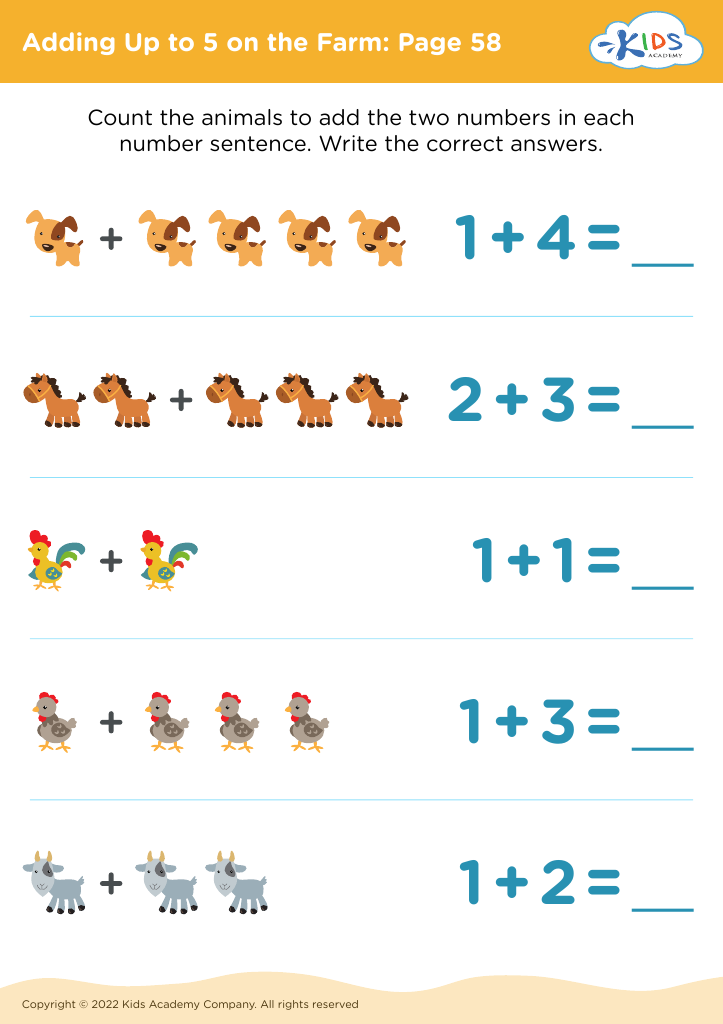
Adding Up to 5 on the Farm: Page 58
Worksheet
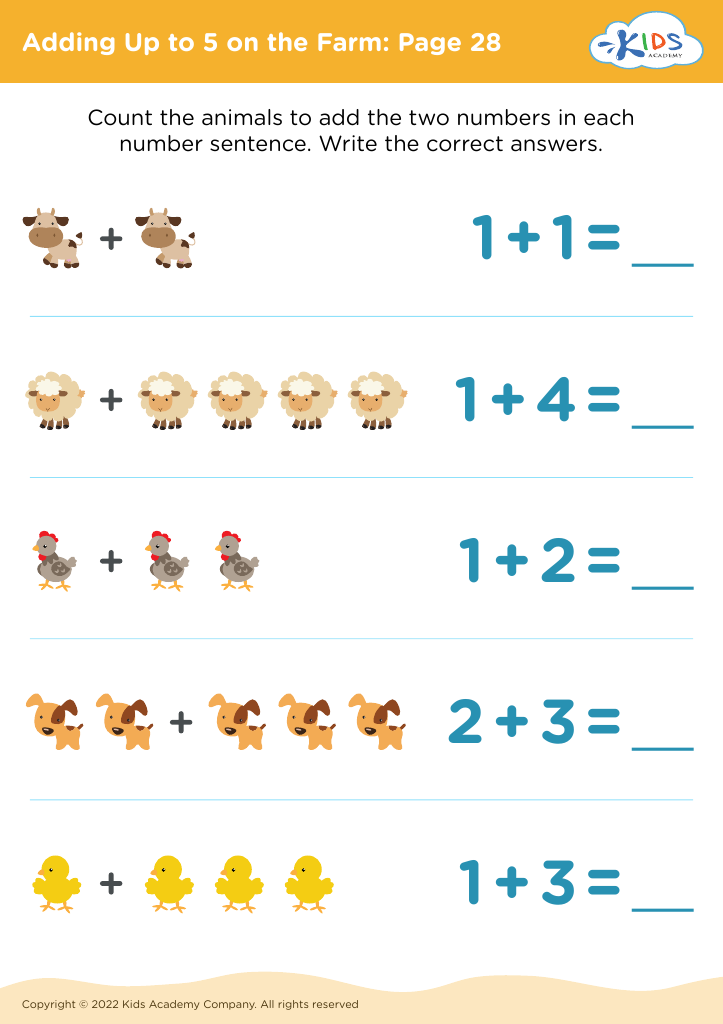
Adding Up to 5 on the Farm: Page 28
Worksheet
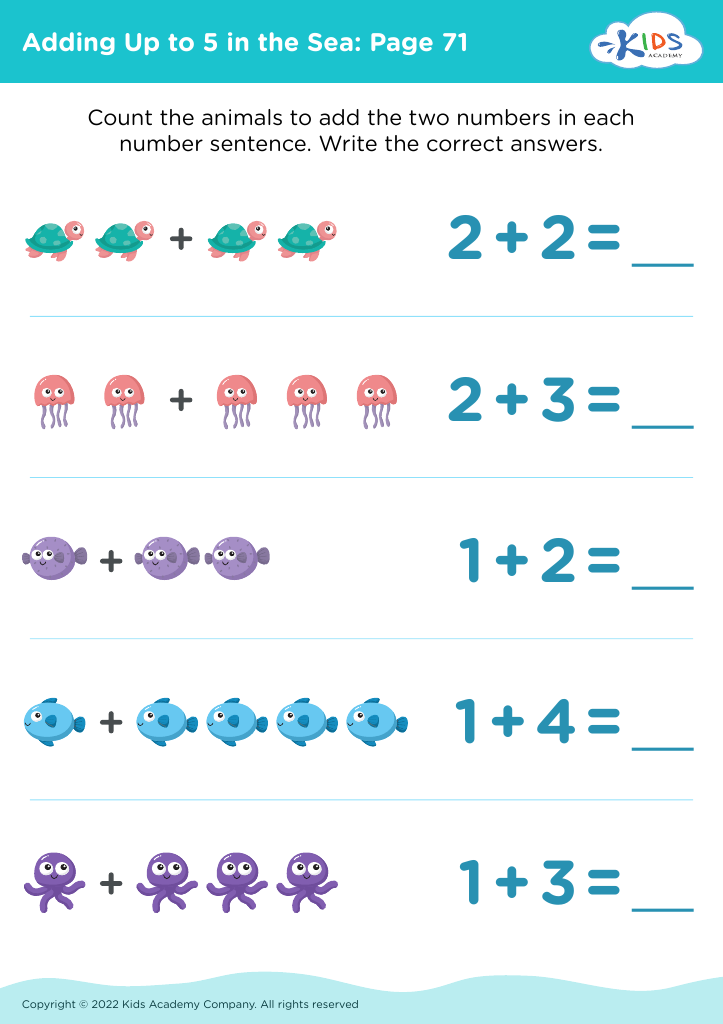
Adding Up to 5 in the Sea: Page 71
Worksheet
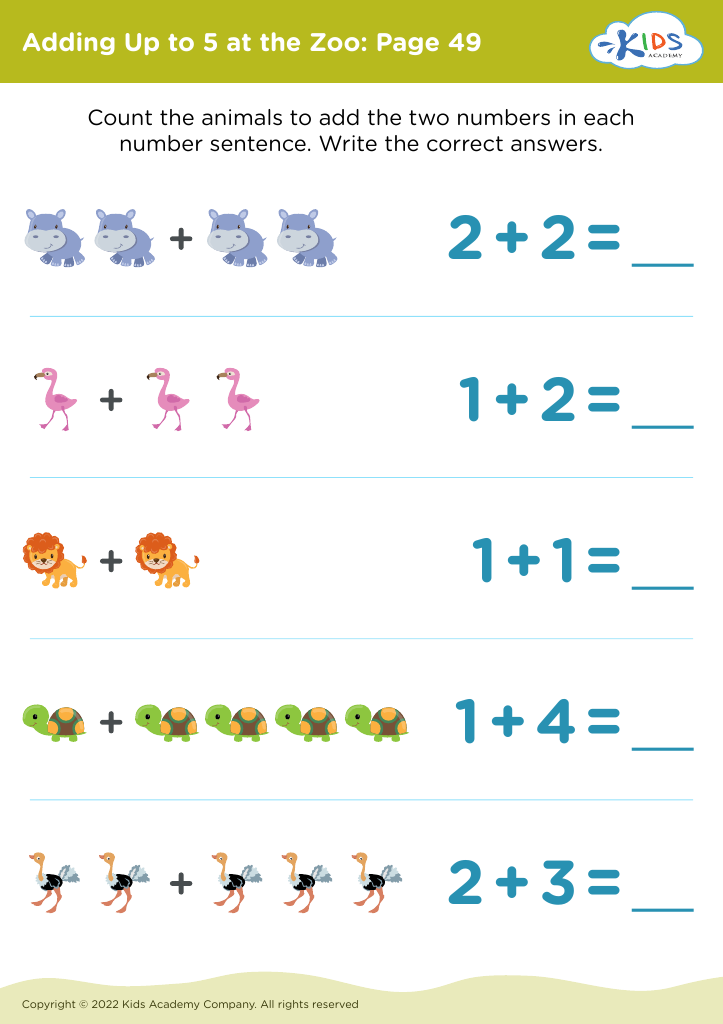
Adding Up to 5 at the Zoo: Page 49
Worksheet
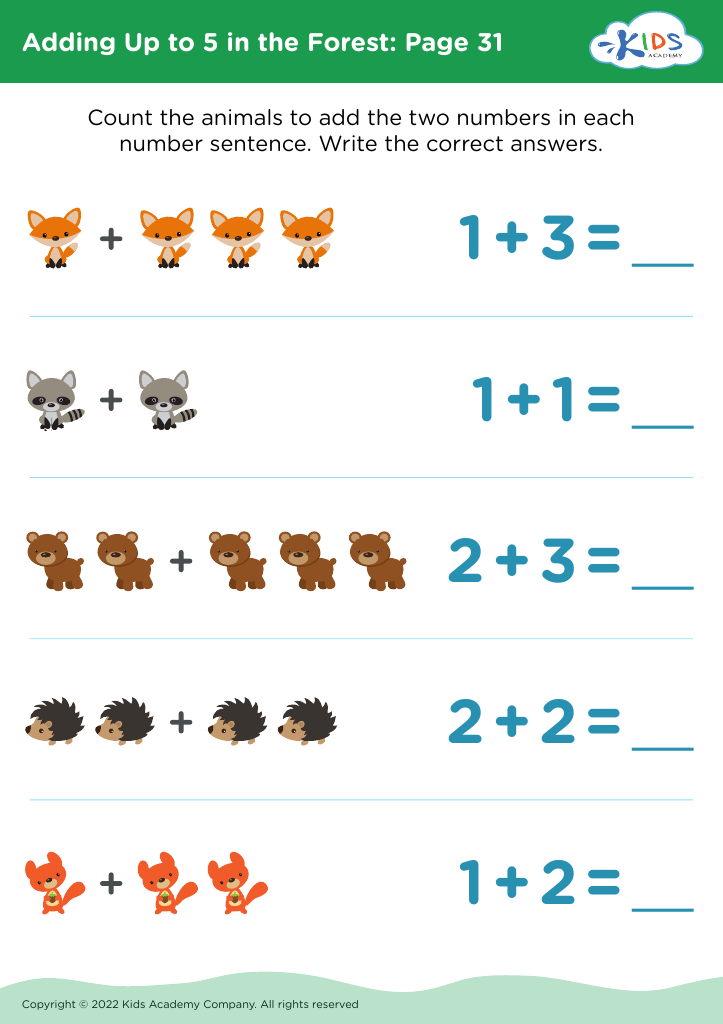
Adding Up to 5 in the Forest: Page 31
Worksheet
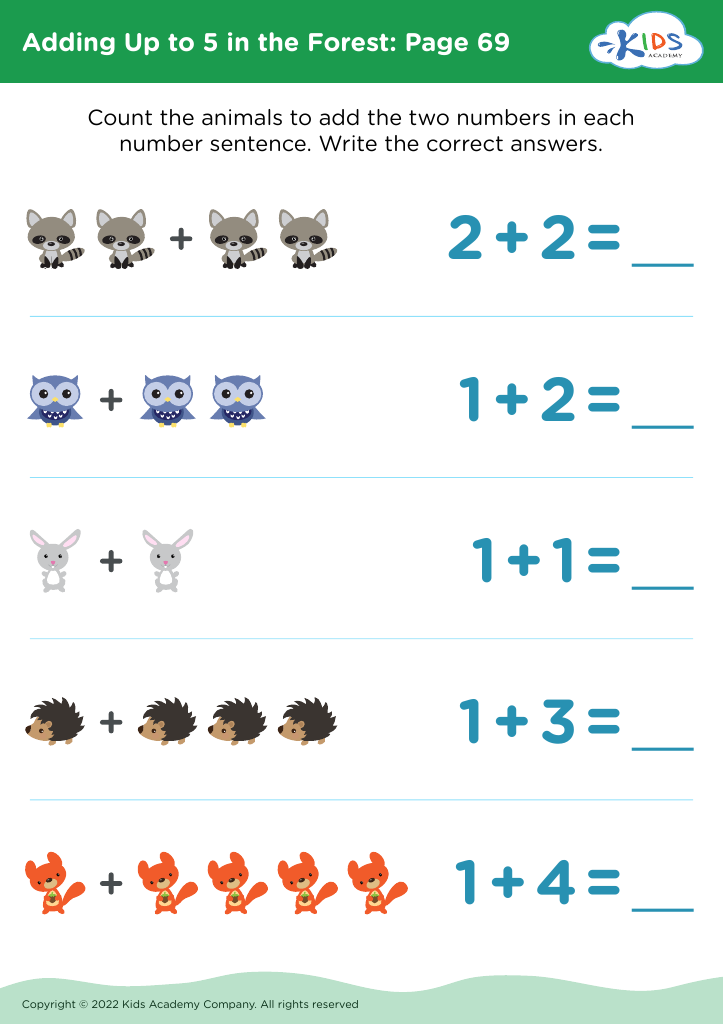
Adding Up to 5 in the Forest: Page 69
Worksheet
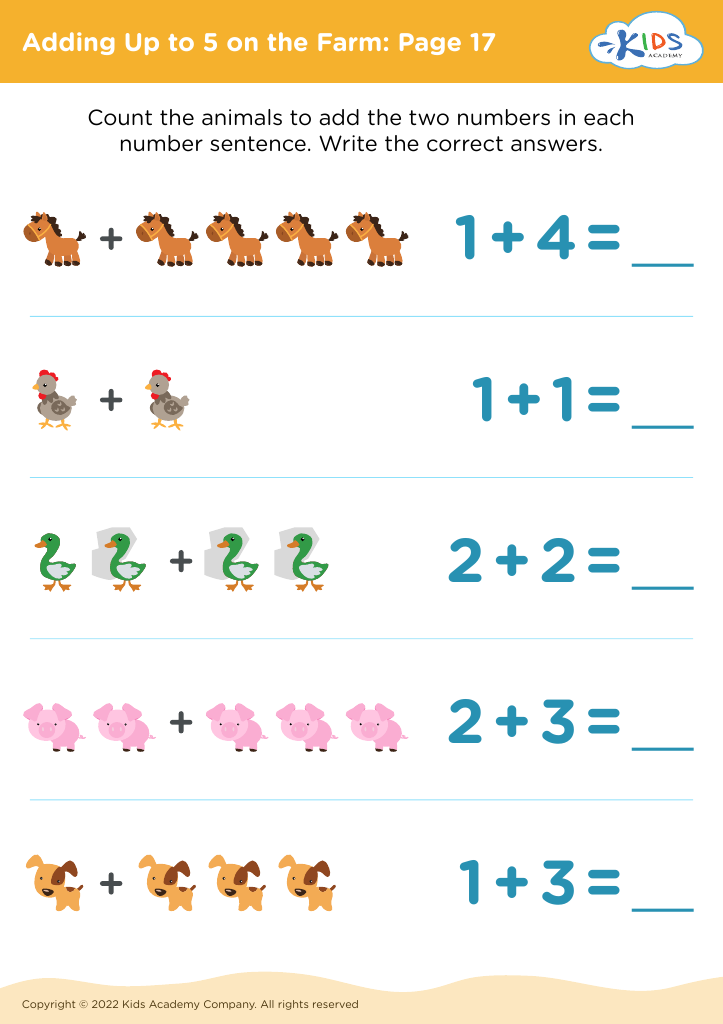
Adding Up to 5 on the Farm: Page 17
Worksheet
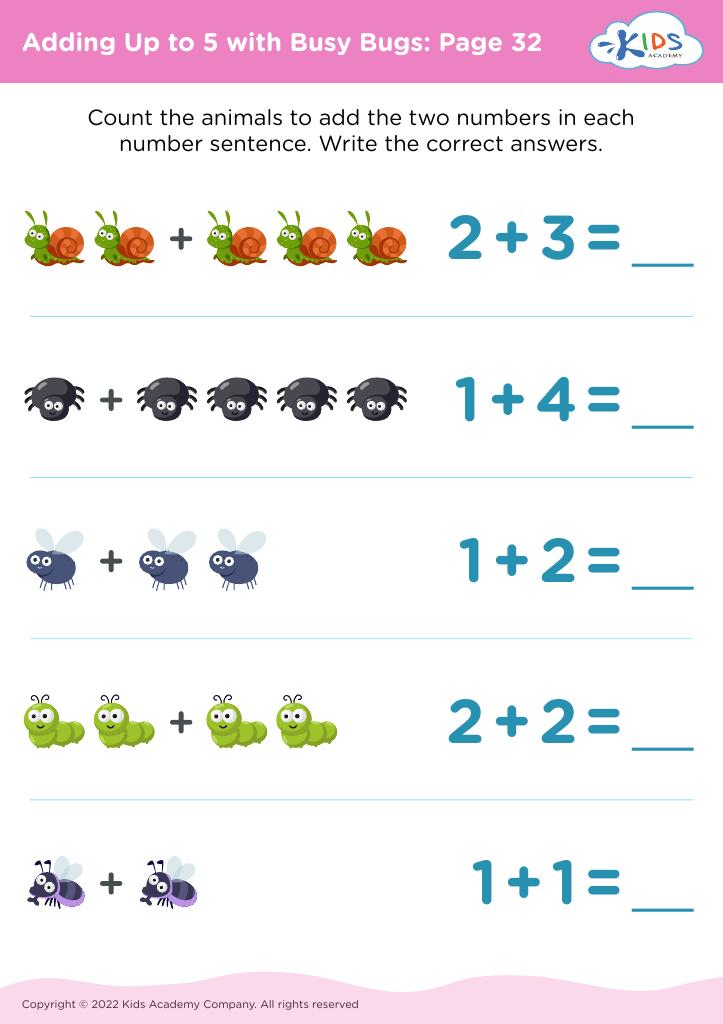
Adding Up to 5 with Busy Bugs: Page 32
Worksheet
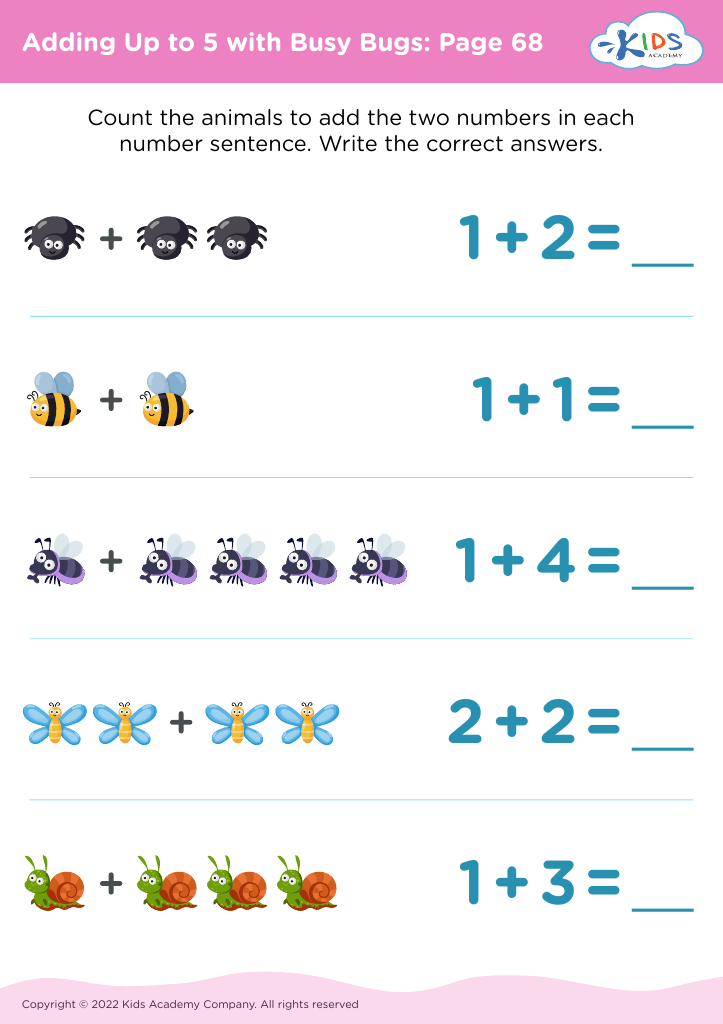
Adding Up to 5 with Busy Bugs: Page 68
Worksheet
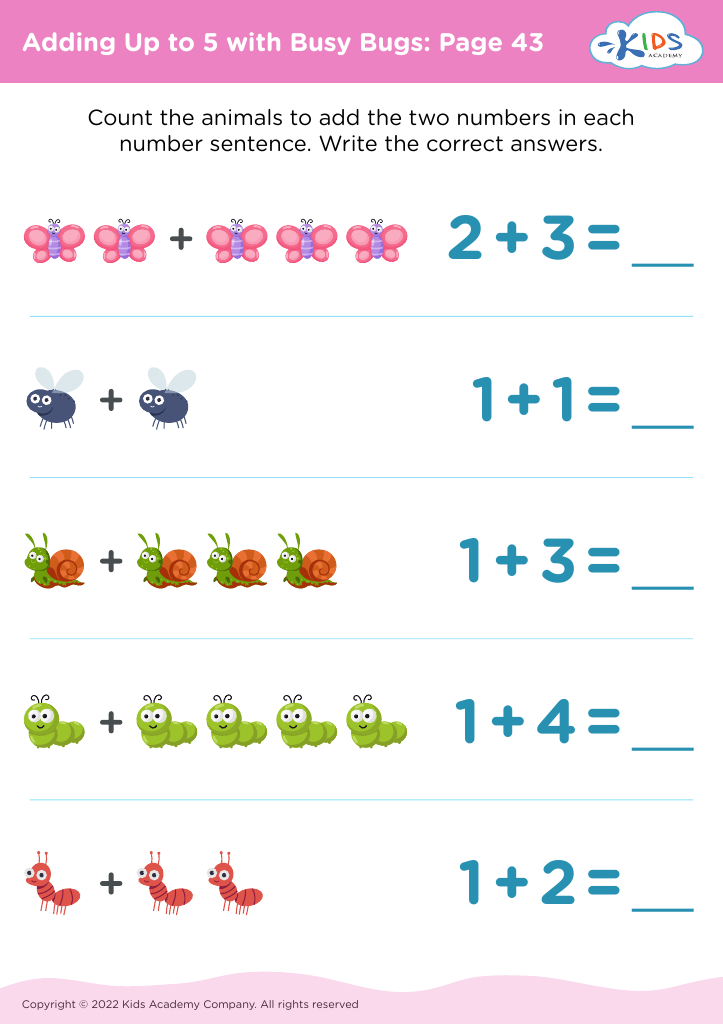
Adding Up to 5 with Busy Bugs: Page 43
Worksheet
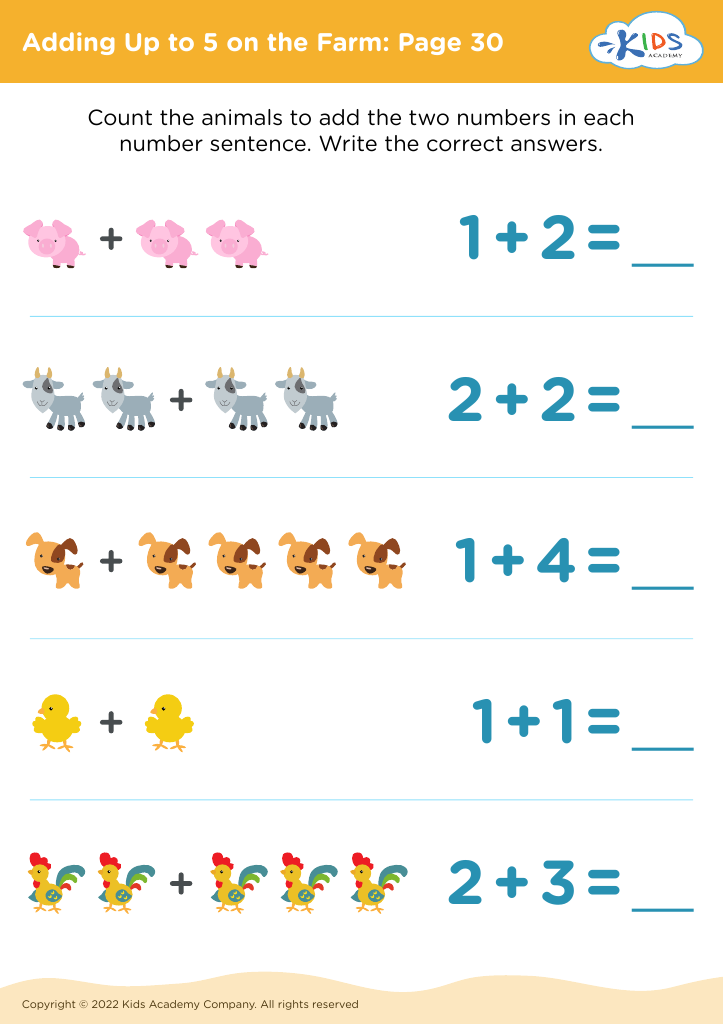
Adding Up to 5 on the Farm: Page 30
Worksheet
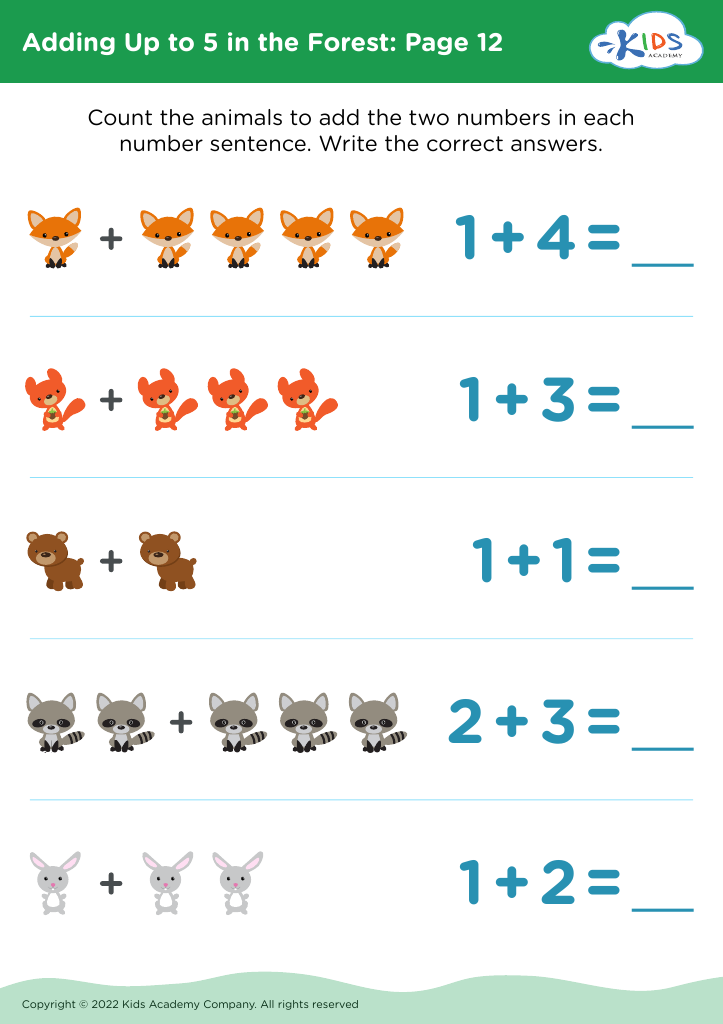
Adding Up to 5 in the Forest: Page 12
Worksheet
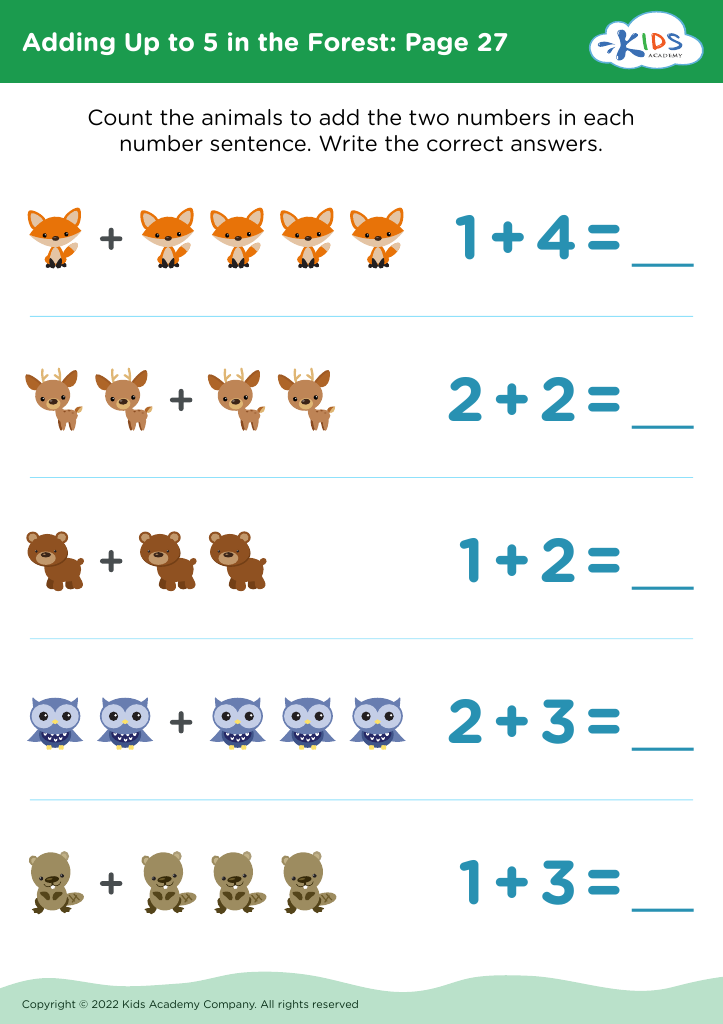
Adding Up to 5 in the Forest: Page 27
Worksheet
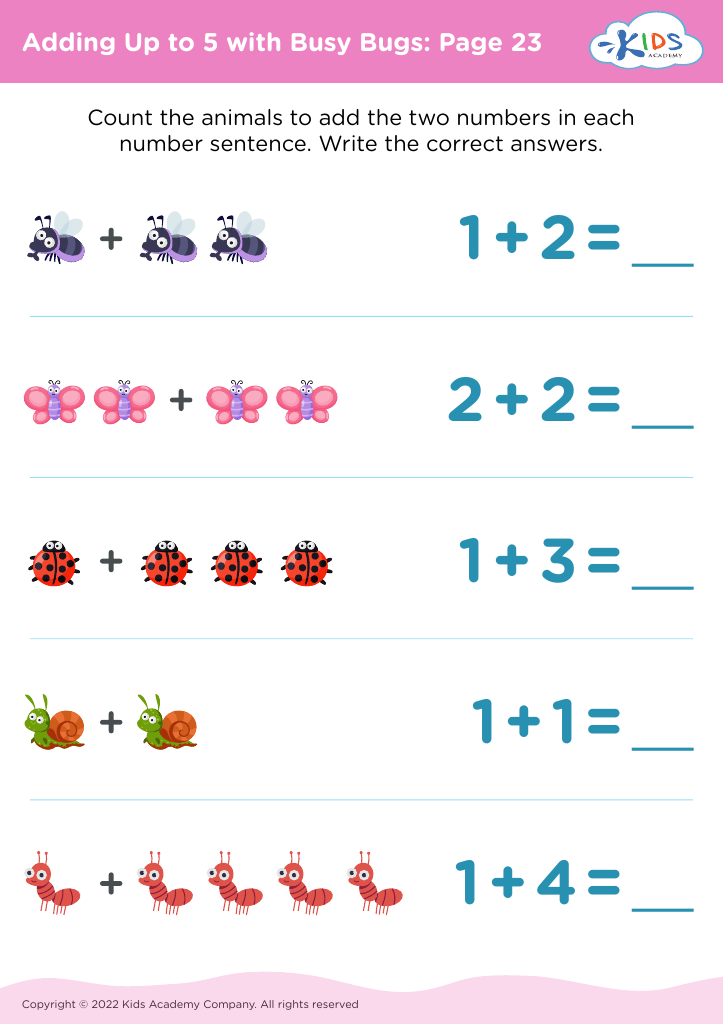
Adding Up to 5 with Busy Bugs: Page 23
Worksheet
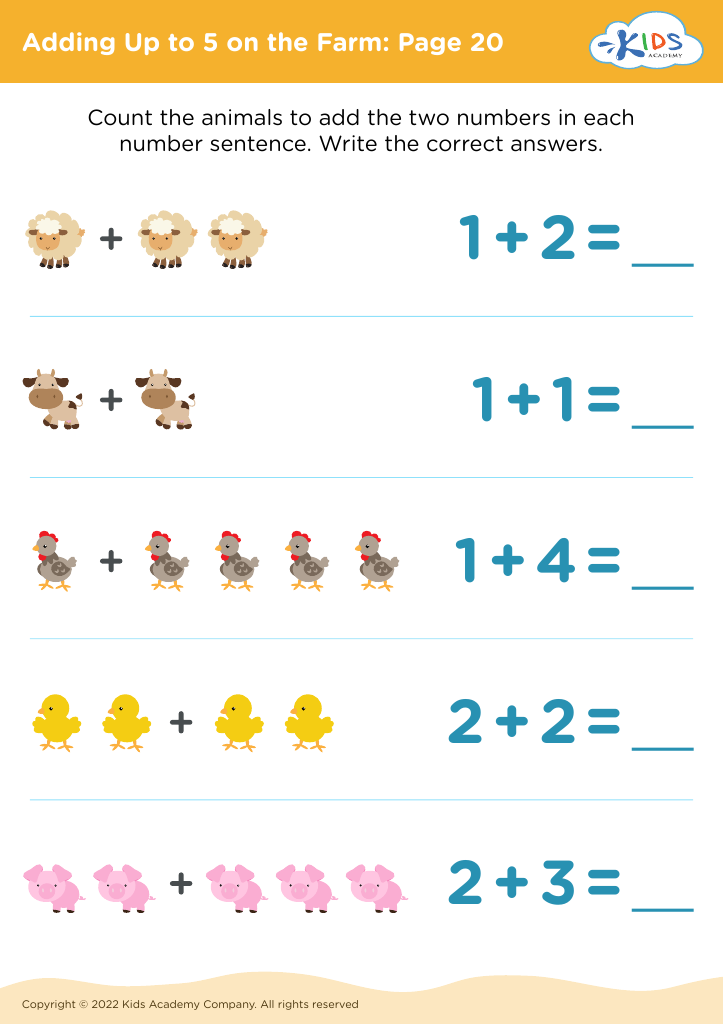
Adding Up to 5 on the Farm: Page 20
Worksheet
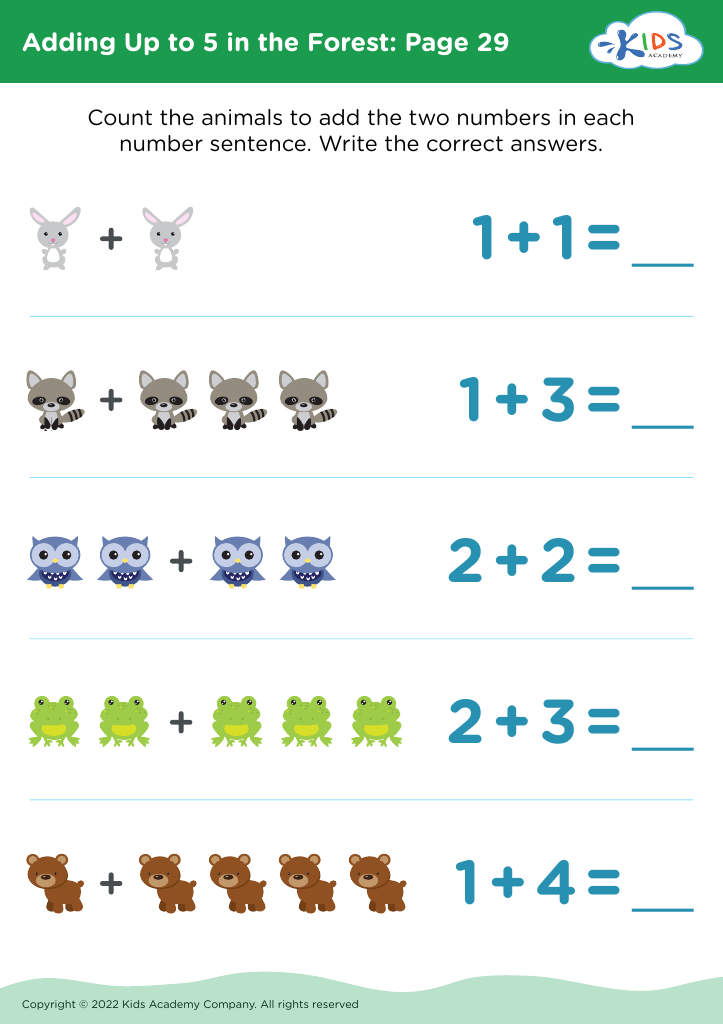
Adding Up to 5 in the Forest: Page 29
Worksheet
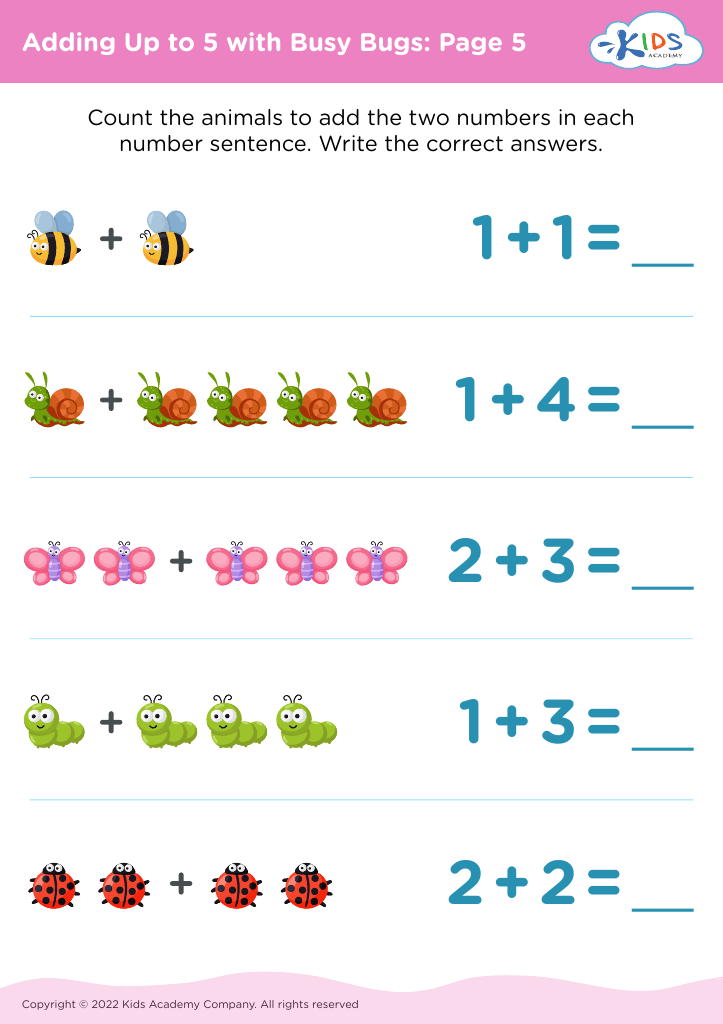
Adding Up to 5 with Busy Bugs: Page 5
Worksheet
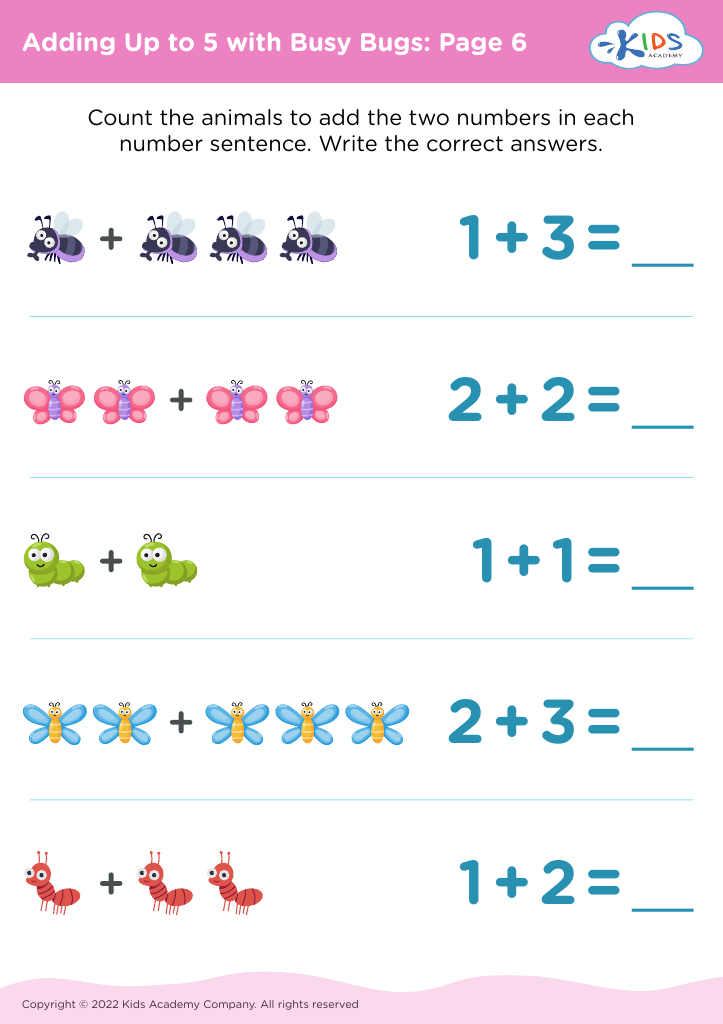
Adding Up to 5 with Busy Bugs: Page 6
Worksheet
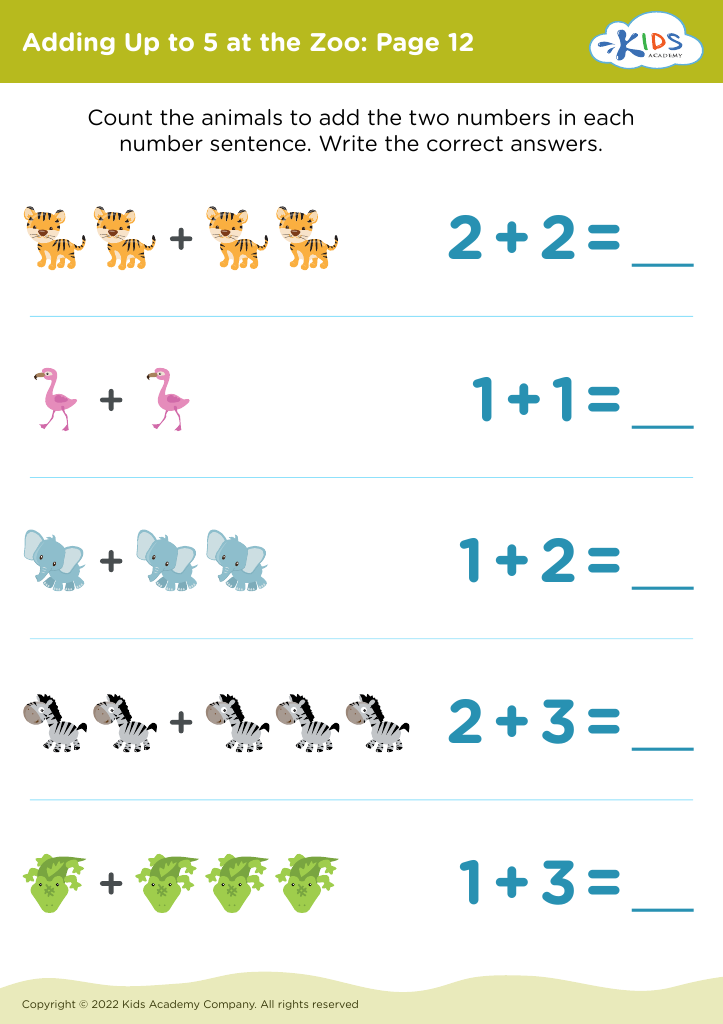
Adding Up to 5 at the Zoo: Page 12
Worksheet
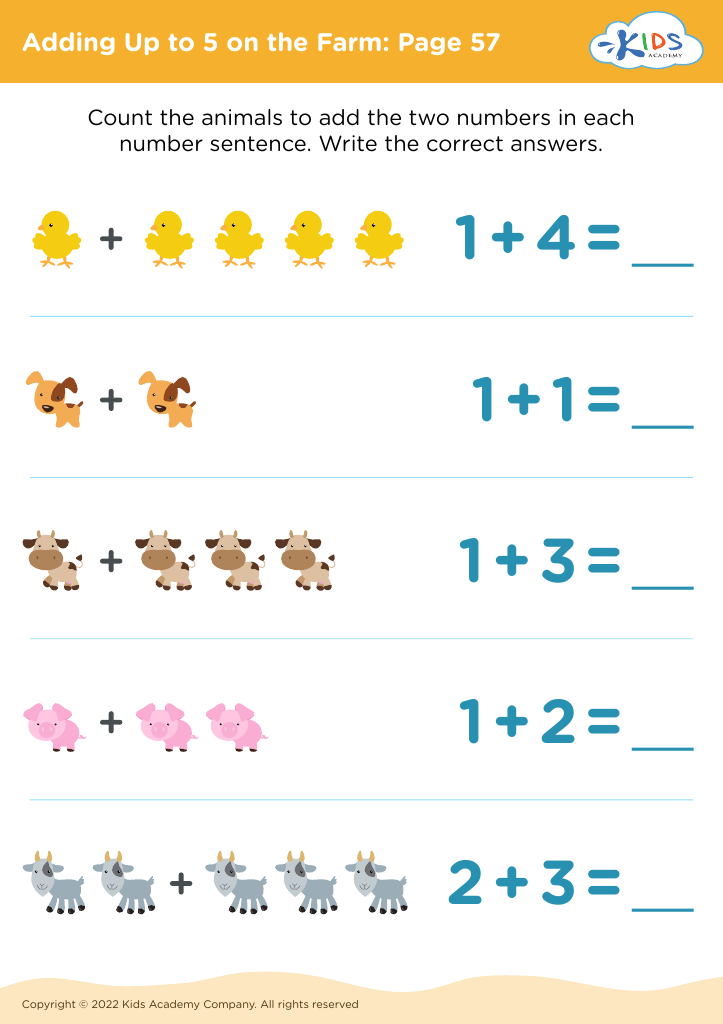
Adding Up to 5 on the Farm: Page 57
Worksheet
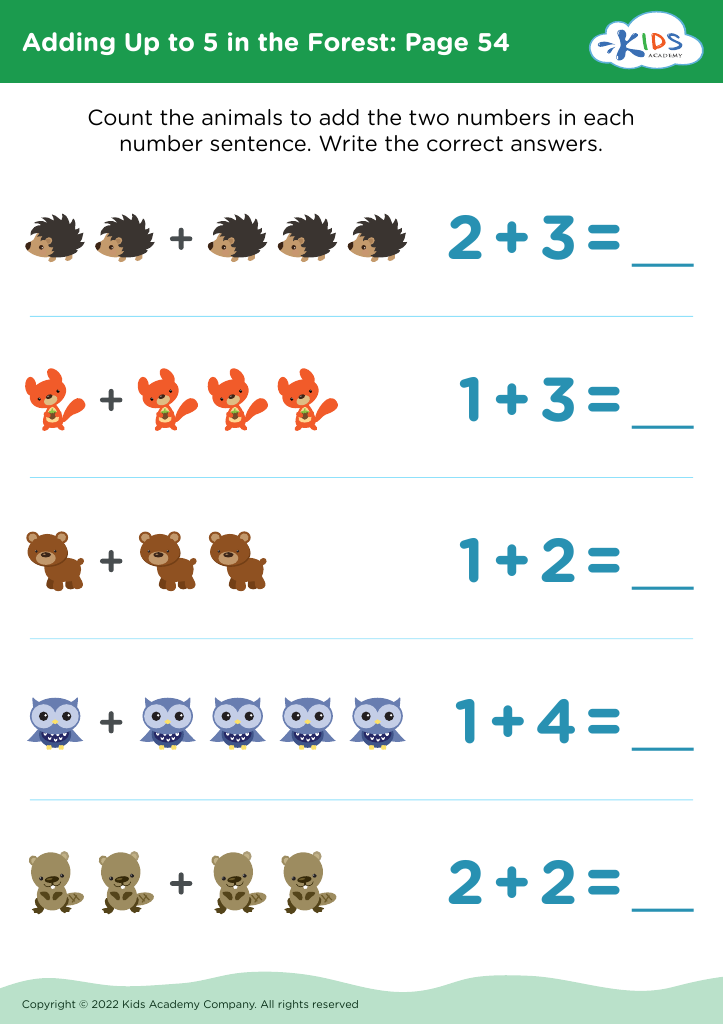
Adding Up to 5 in the Forest: Page 54
Worksheet
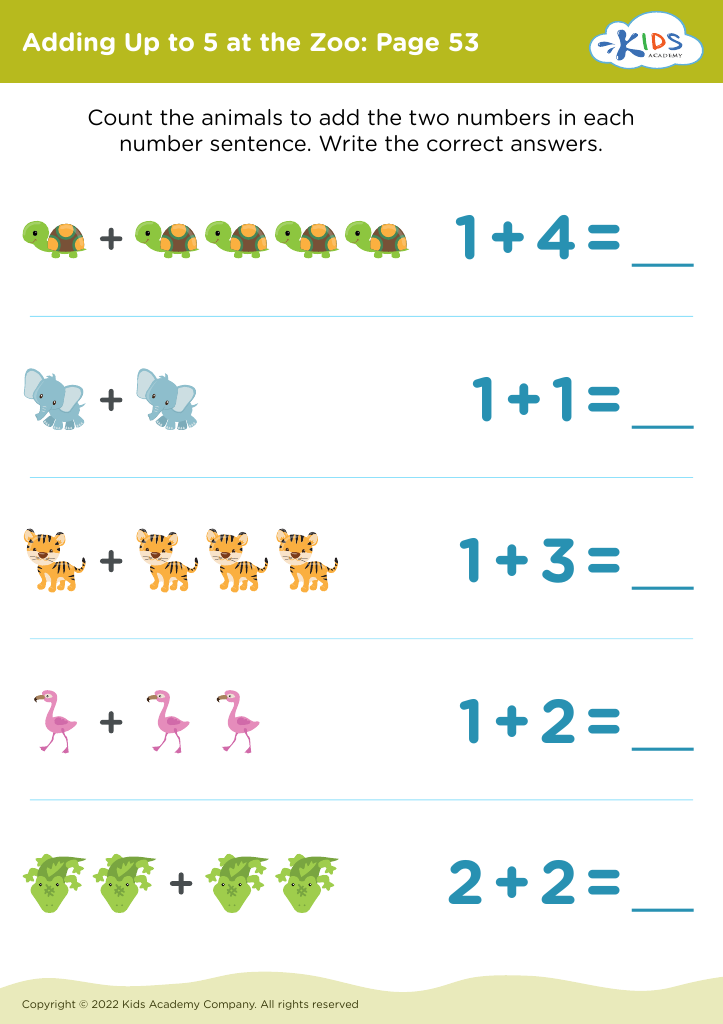
Adding Up to 5 at the Zoo: Page 53
Worksheet


Number recognition and the ability to add up to 5 are fundamental skills for young children aged 4-7, serving as building blocks for more complex mathematical concepts. Focusing on these skills at an early age fosters confidence and a love for learning. Mastery of number recognition enables children to identify, compare, and organize numbers, laying the groundwork for problem-solving and critical thinking.

When children can recognize numbers and understand basic addition, they gain essential skills that can be utilized in everyday situations, from playing games to shopping with parents. This foundational knowledge not only supports later math skills but enhances cognitive development overall.

Parents and teachers should care about these milestones, as they are crucial for academic success. Early number recognition positively influences children's ability to grasp higher math concepts in the future, preventing gaps in learning during formative years. Furthermore, achieving number recognition integrates play-based and interactive learning, helping engage children in a fun and supportive environment.

By prioritizing these early math skills, adults can cultivate a strong math foundation, promote self-esteem, and help children become enthusiastic, lifelong learners ready to tackle future challenges in mathematics and beyond. Ultimately, engaging in this educational journey fosters well-rounded development in young children.