Problem-solving abilities Adding Up to 5 Worksheets for Ages 4-7
13 filtered results
-
From - To
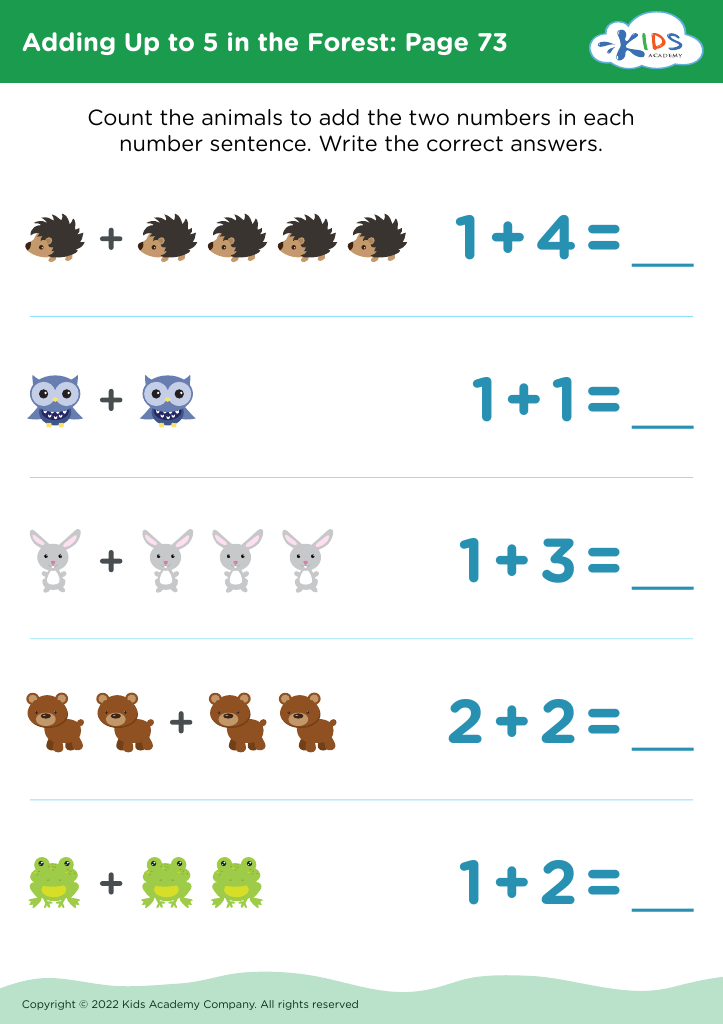
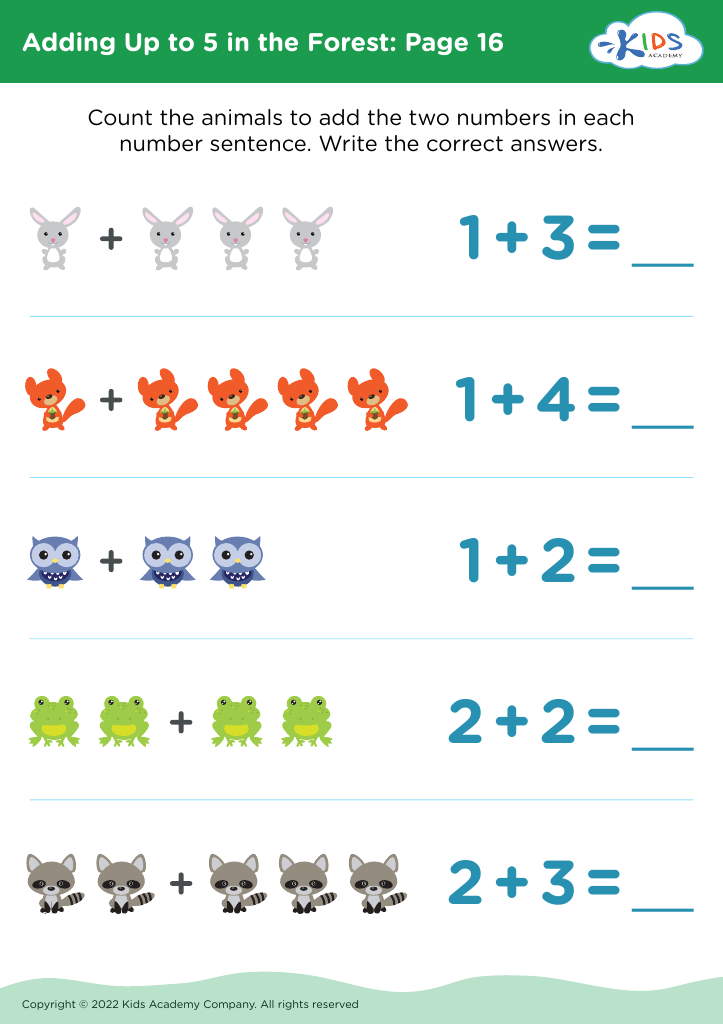
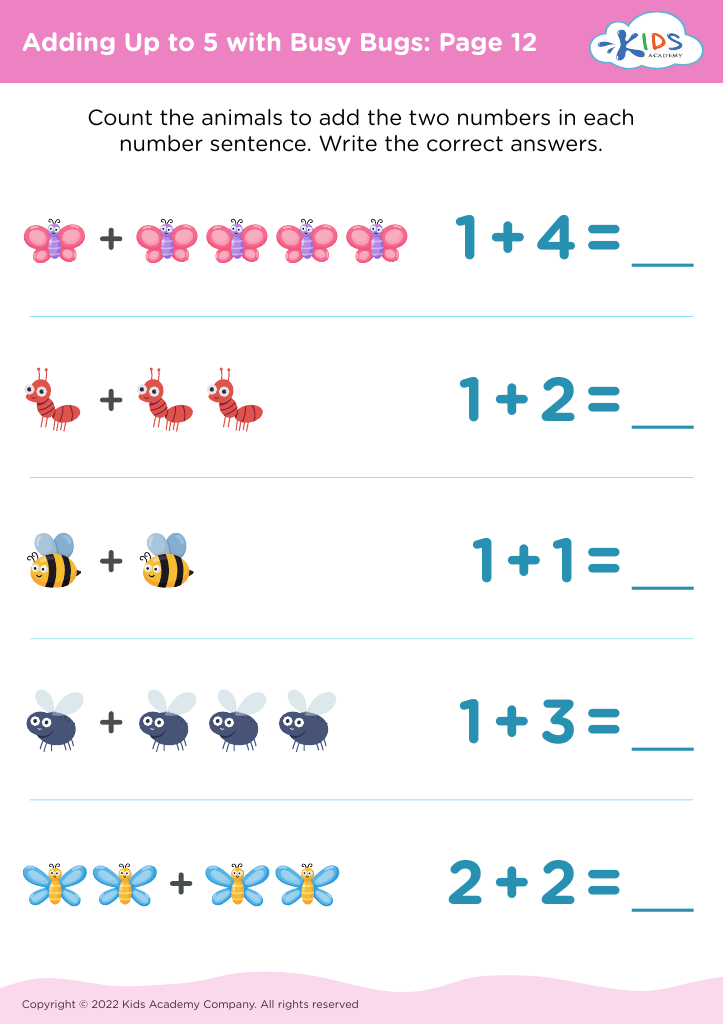
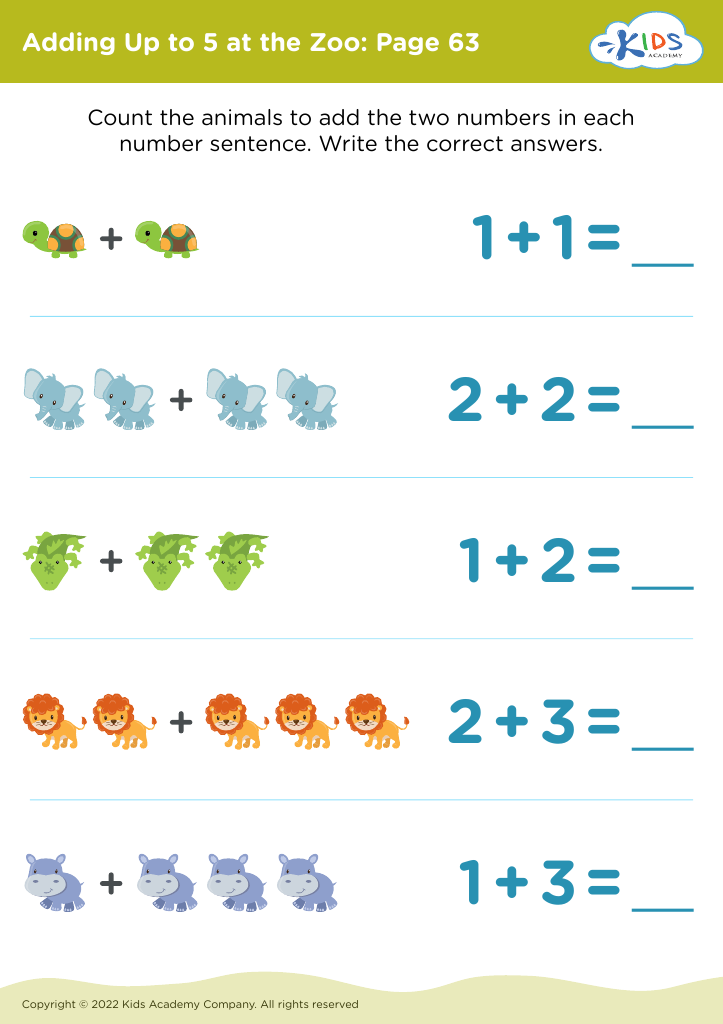
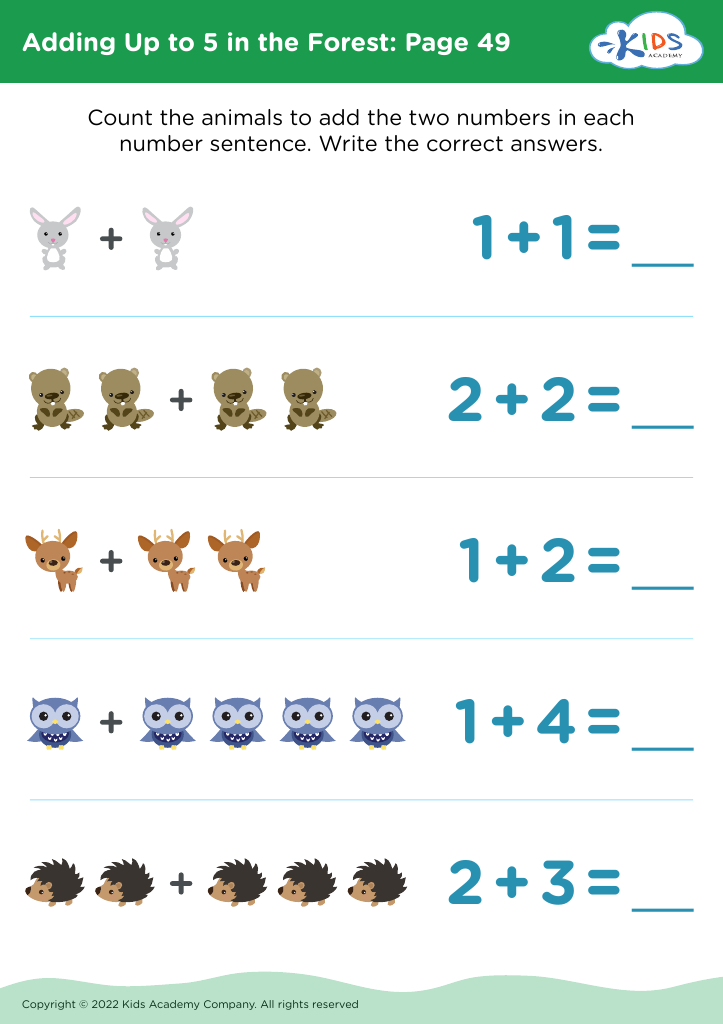
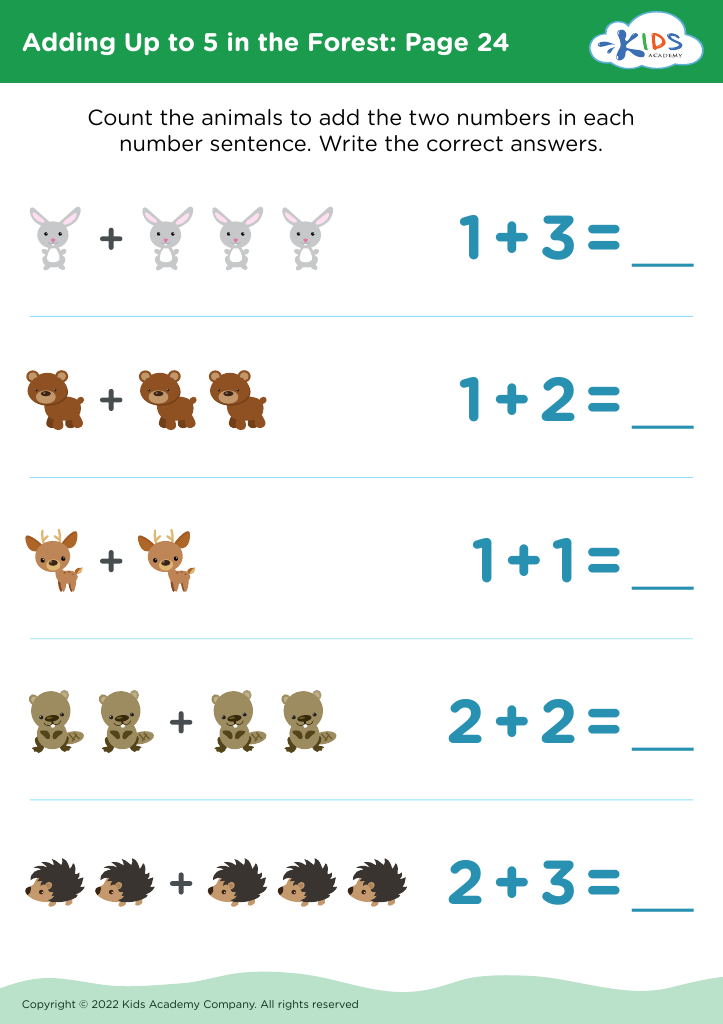
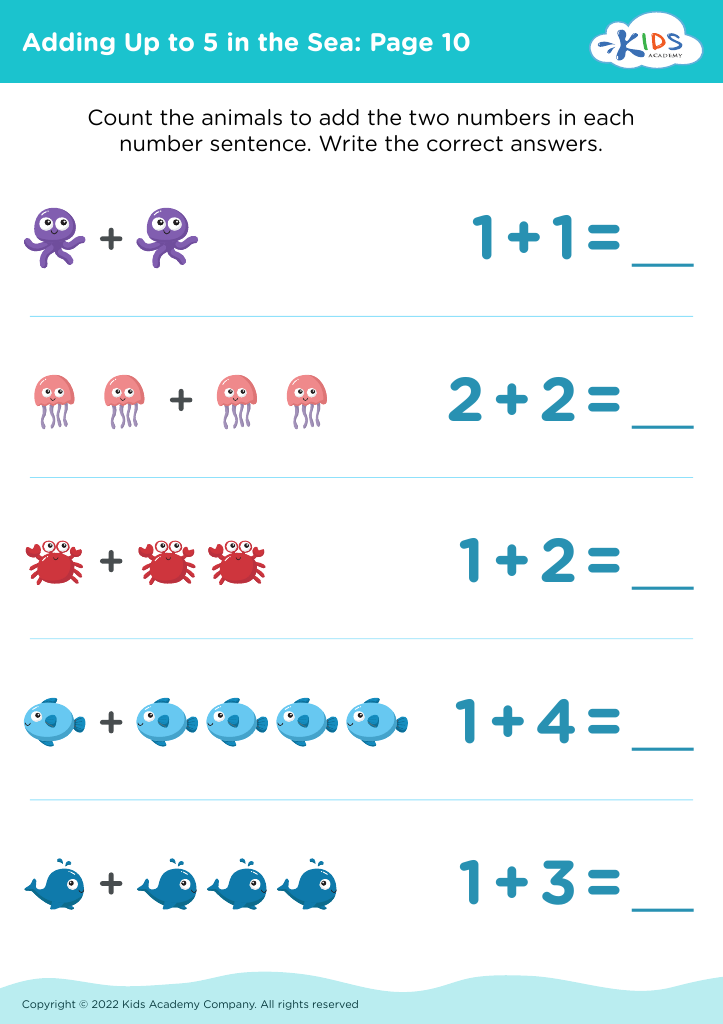
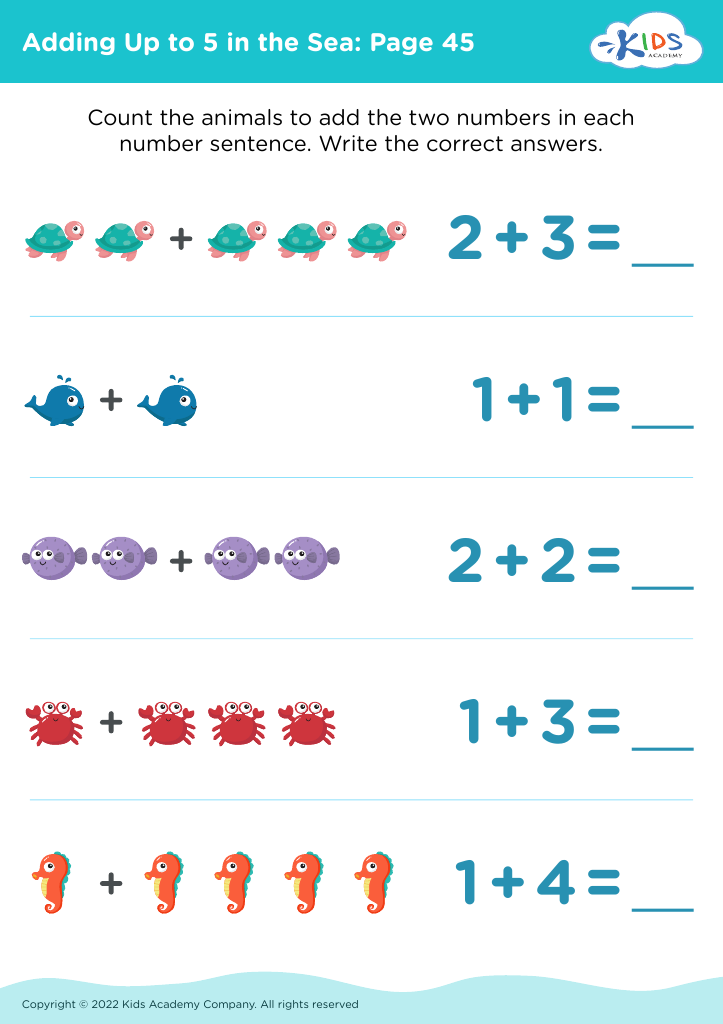
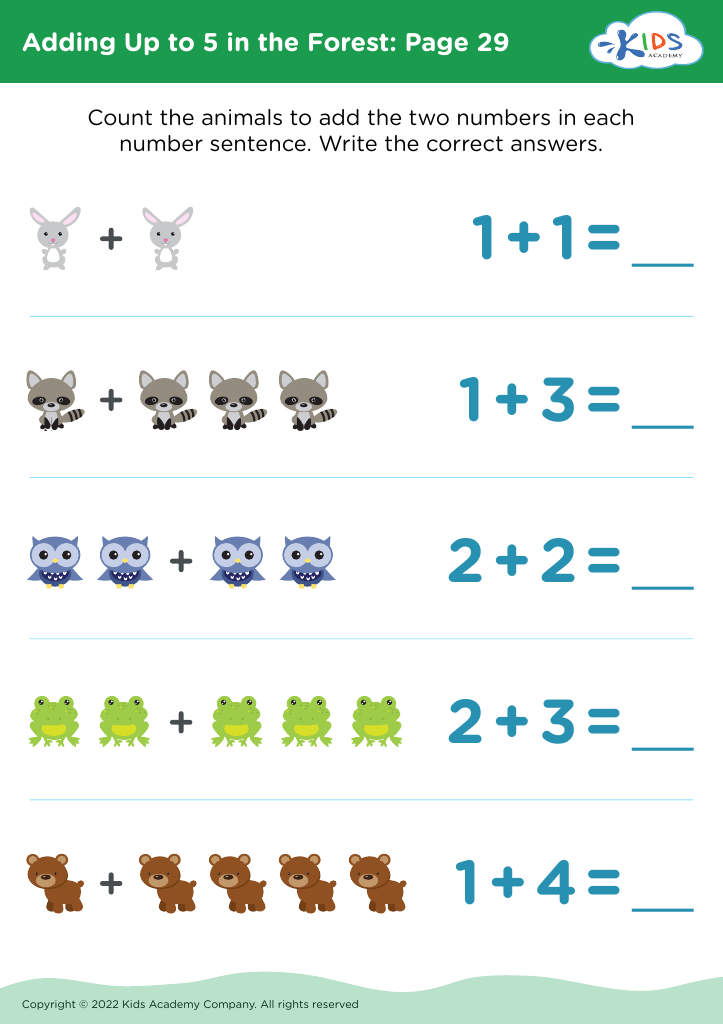
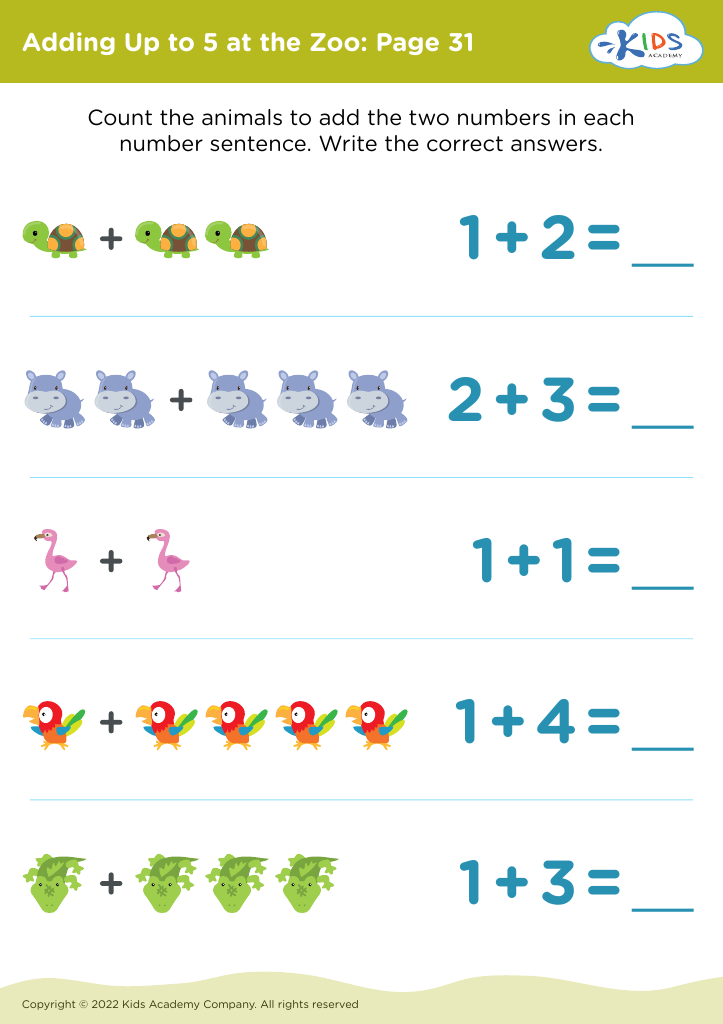
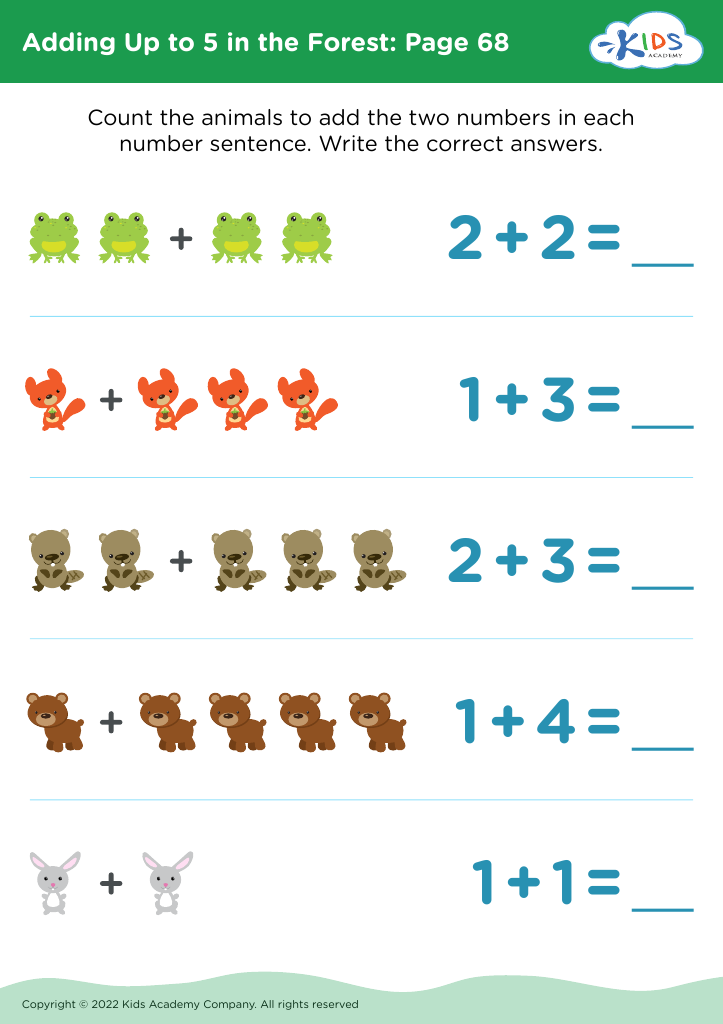
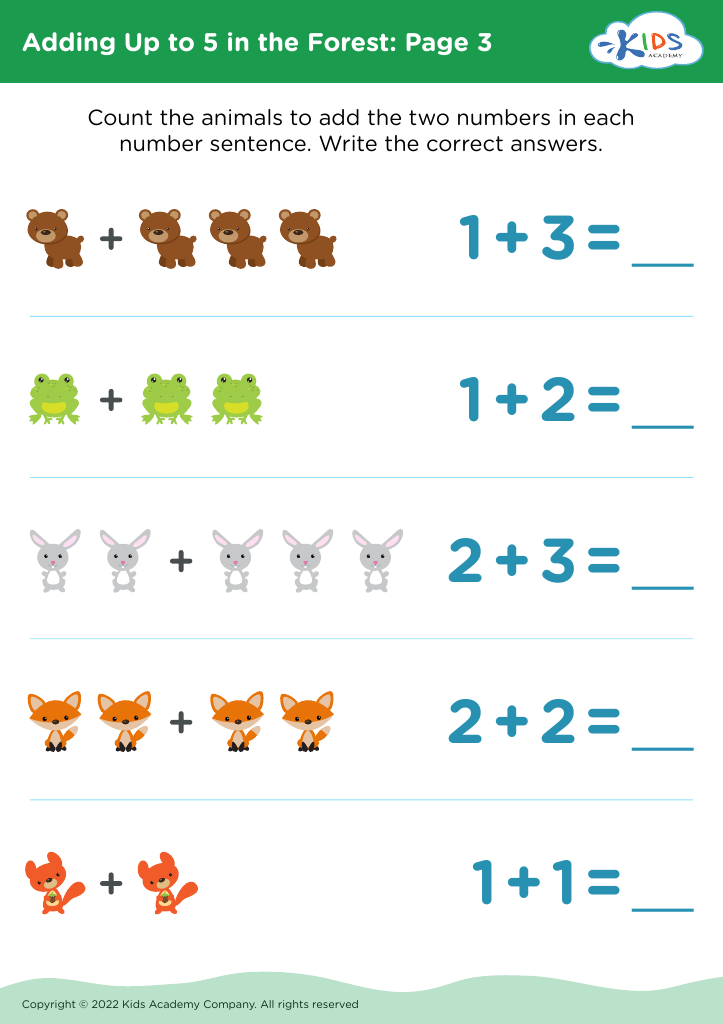
Explore our engaging "Problem-Solving Abilities: Adding Up to 5 Worksheets" designed for children ages 4-7. These interactive worksheets combine fun and learning, helping young learners master addition and strengthen their problem-solving skills. Each worksheet encourages critical thinking, promoting a deeper understanding of numbers and their relationships while maintaining an enjoyable learning experience. Children will solve engaging puzzles, complete patterns, and tackle addition problems that boost their confidence and mathematical reasoning. Perfect for parents and educators looking to enhance early math skills, these worksheets ensure that kids develop a love for learning while successfully adding numbers up to 5!




%20(1).jpg)




Developing problem-solving abilities, particularly with simple arithmetic like adding up to 5, is crucial for children aged 4 to 7. This foundational skill supports not only mathematical understanding but also critical thinking and cognitive development. Early exposure to problem-solving enhances a child's ability to approach challenges methodically, building resilience and confidence as they learn to navigate different situations.
Parents and teachers play a vital role in nurturing these skills. When children tackle basic addition problems, they practice breaking down tasks into manageable parts, which lays the groundwork for more complex mathematical concepts later on. This age is a formative period for brain development, and engaging children in Problem-solving activities cultivates an inquisitive mindset that values exploration and logic.
Moreover, these skills contribute to everyday life. For example, counting objects, sharing snacks equally, or planning playtime activities involves problem-solving in real-world contexts, making learning applicable and meaningful. Encouraging children to constructively address challenges fosters independence and promotes a positive attitude toward learning.
Therefore, emphasizing the importance of problem-solving in early education not only supports mathematical development but also equips children with essential life skills that they will carry throughout their educational journey and beyond.








