Sea creatures identification Adding Up to 5 Worksheets for Ages 4-7
3 filtered results
-
From - To
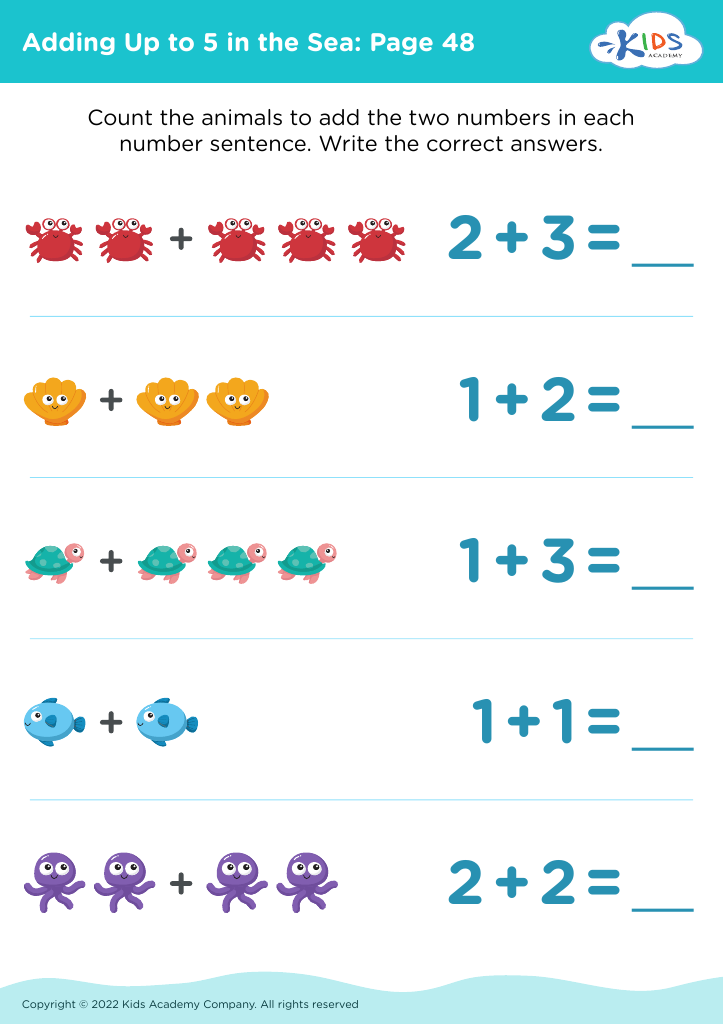
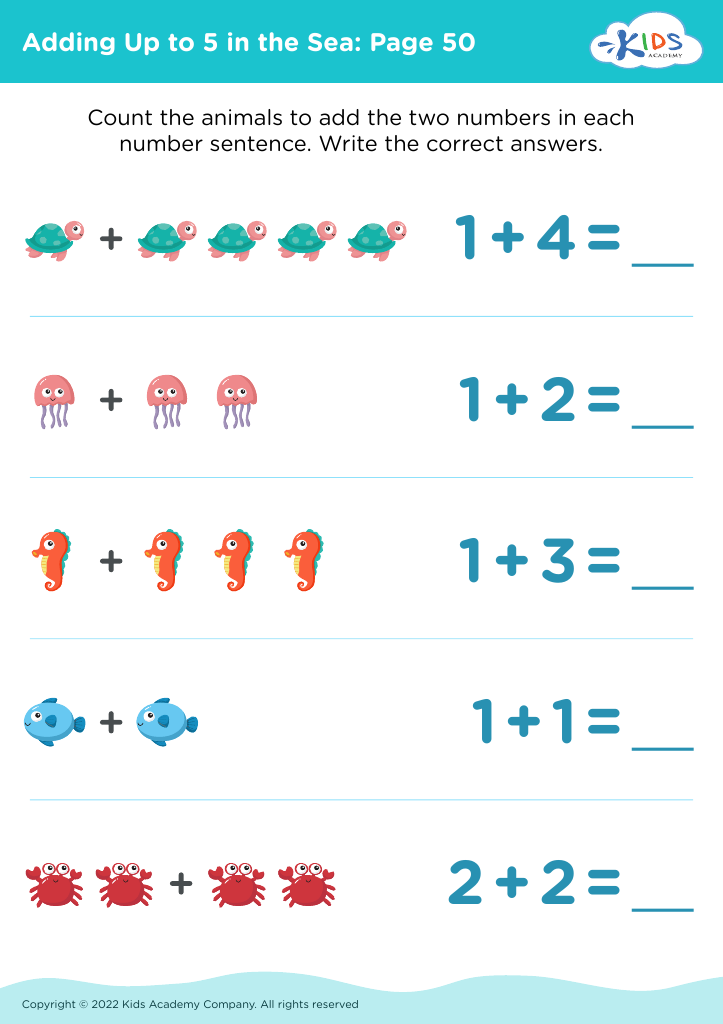
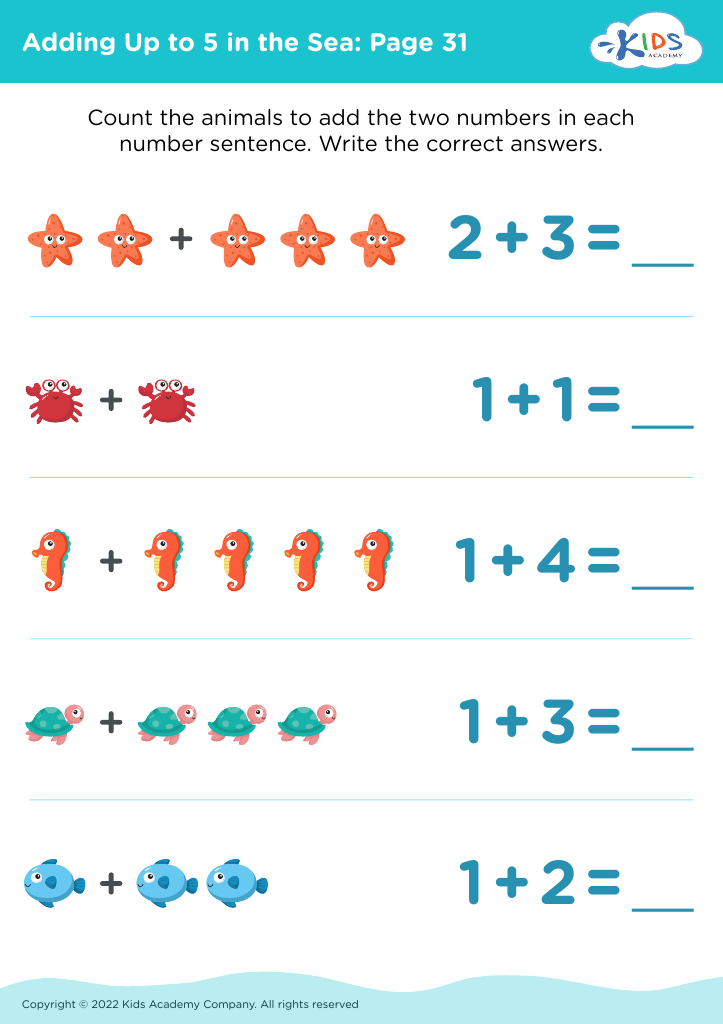
Explore the fascinating world of ocean life with our "Sea Creatures Identification" worksheets designed for kids ages 4-7! These engaging activities combine fun illustrations of various sea creatures with math skills, helping young learners master addition up to 5. Each worksheet challenges students to identify sea animals while integrating counting practice, encouraging both academic growth and a love for marine biology. Perfect for classroom use or at-home learning, our resources are crafted to stimulate curiosity and enhance learning. Dive into a memorable educational experience with these interactive worksheets and watch your child's confidence in math and science flourish!








Parents and teachers should care about sea creature identification for children aged 4-7 for several important reasons. First, learning about sea creatures fosters curiosity and a sense of wonder about the natural world. It encourages children to observe and ask questions, laying the foundation for scientific thinking.
Additionally, understanding different sea creatures helps promote awareness of marine biology and the importance of ocean conservation. By identifying creatures like starfish, dolphins, or jellyfish, children gain a sense of connection to the environment and learn early on about ecosystems and biodiversity.
Educational activities related to sea creature identification can also support language development and vocabulary expansion. Children learn new words and concepts while discussing the unique features and habitats of various animals. Furthermore, engaging in these activities can promote social skills, as kids often work together in groups, sharing their findings and exploring together.
Finally, incorporating sea creature identification into lessons can make learning fun and interactive. Using visuals, songs, and hands-on projects can capture young learners' attention and inspire a lifelong passion for nature and science. Overall, introducing sea creature identification enriches children's education, fosters environmental stewardship, and nurtures a love for learning.








