Visual learning reinforcement Adding Up to 5 Worksheets for Ages 4-7
5 filtered results
-
From - To
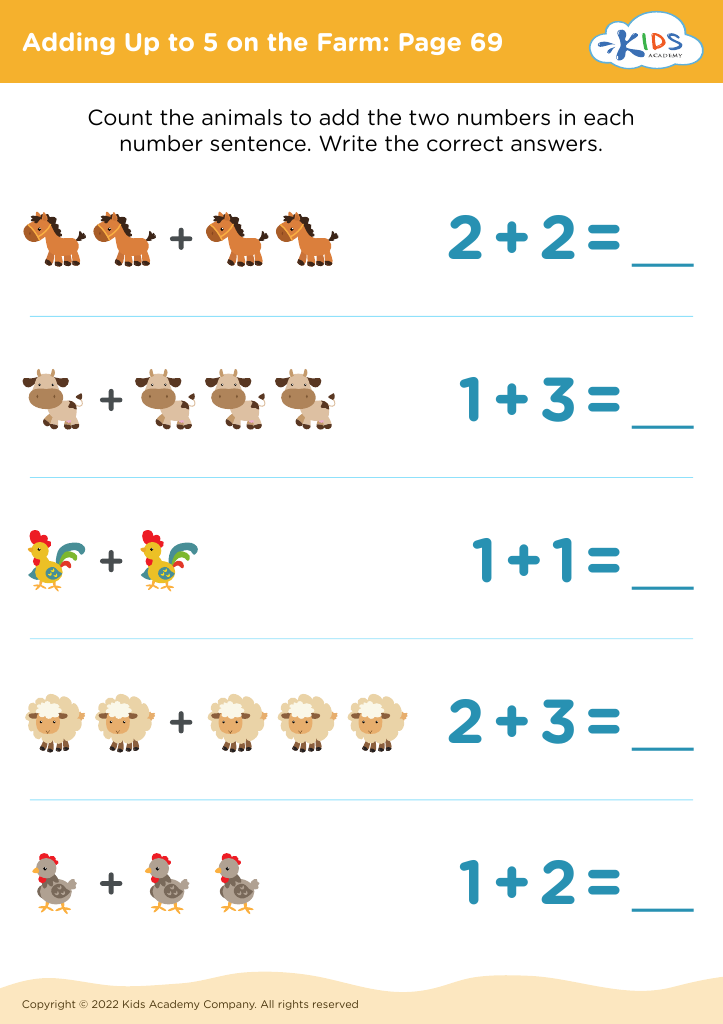
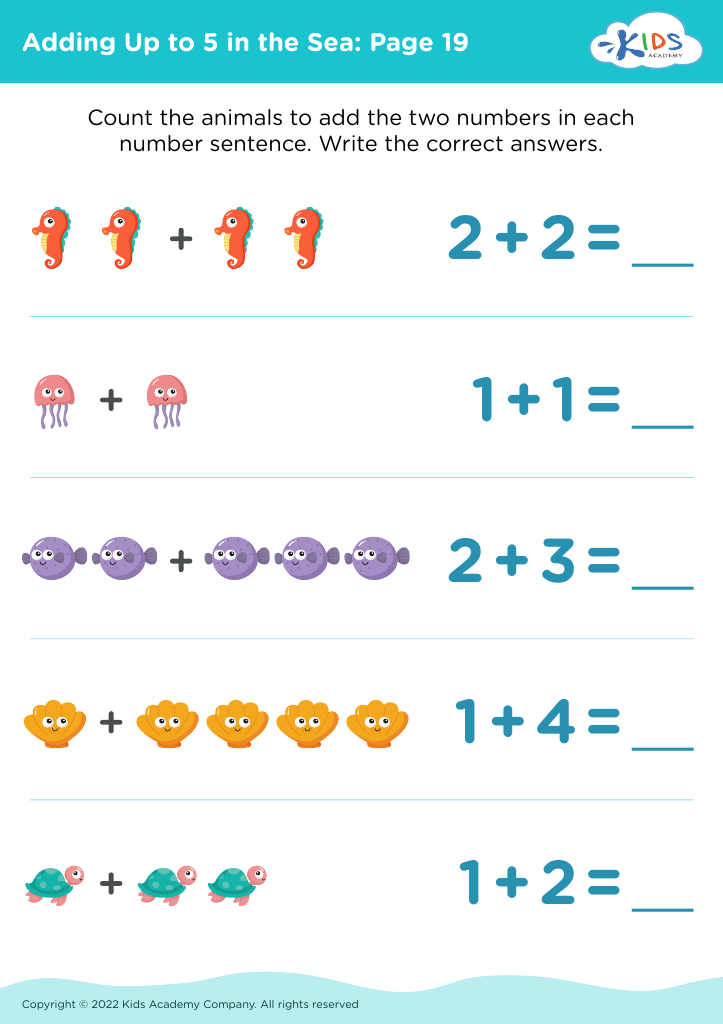
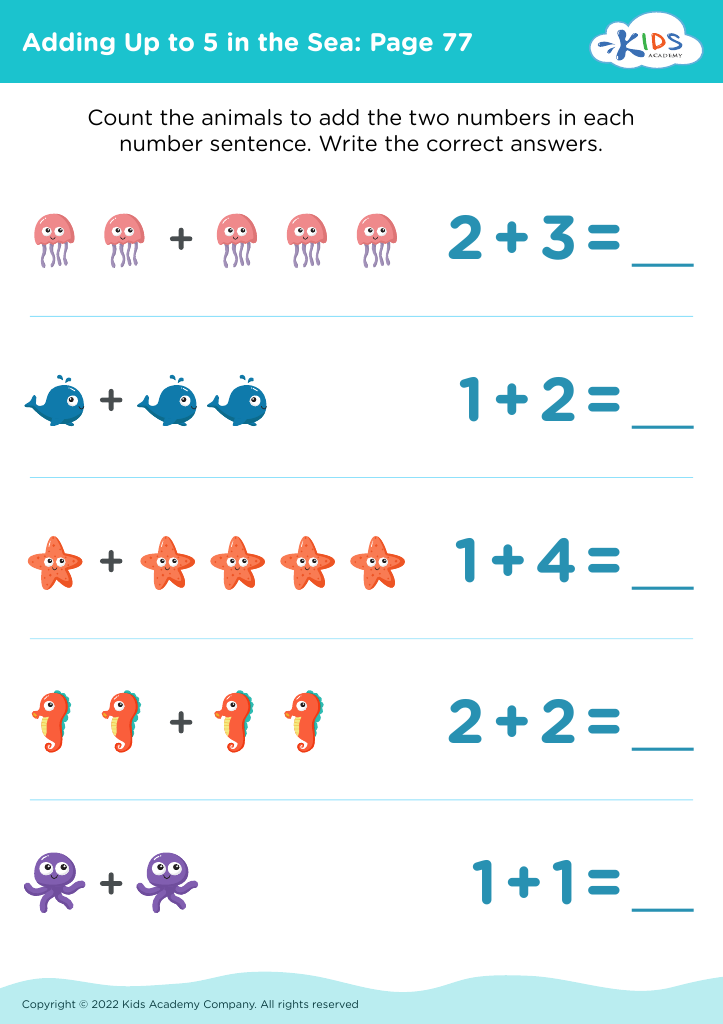
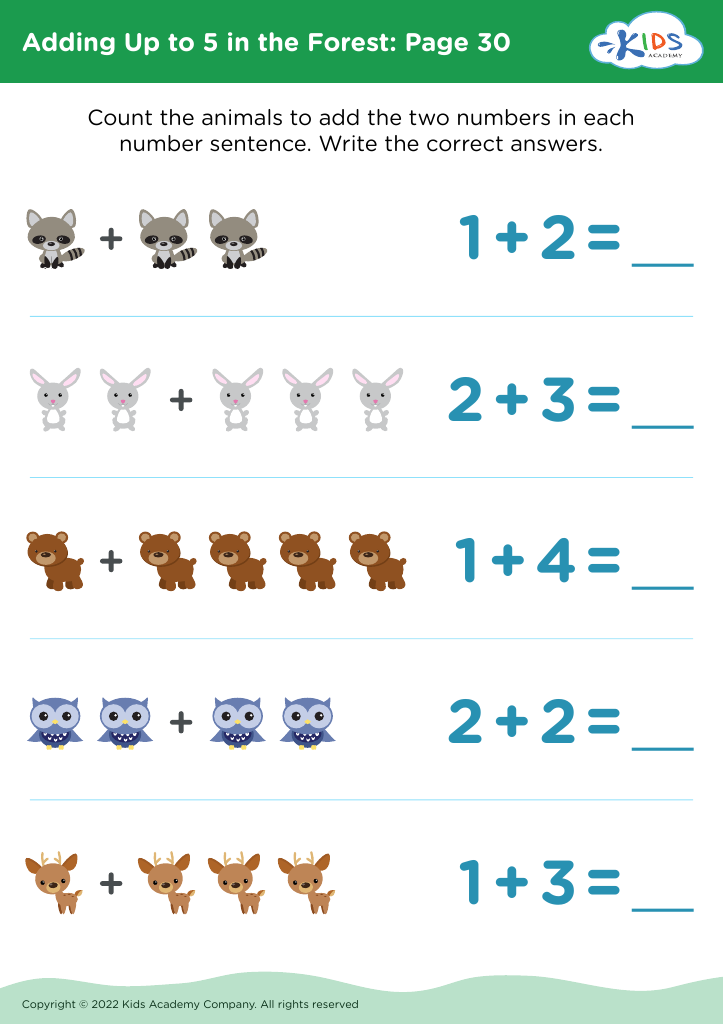
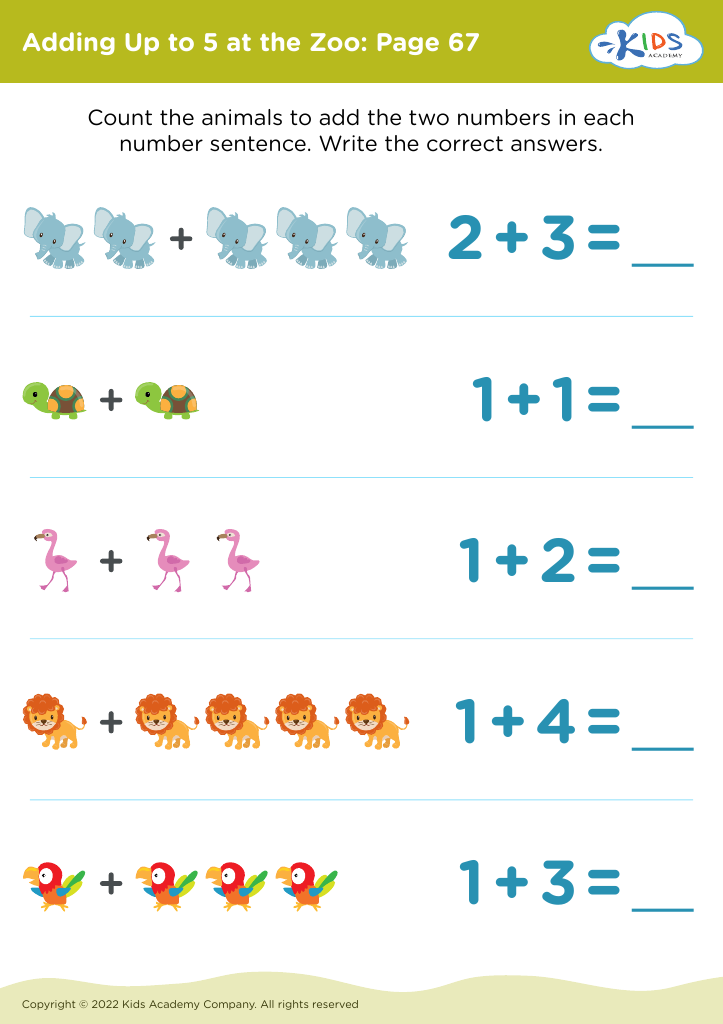
Discover the power of visual learning with our "Adding Up to 5 Worksheets" designed for ages 4-7. These engaging resources enhance mathematical understanding through colorful imagery and interactive exercises. Perfect for early learners, the worksheets reinforce addition skills by integrating playful illustrations and intuitive visuals. Catering to young minds, they transform math practice into a fun and enjoyable experience. Promote confidence and competence in arithmetic as children learn to add numbers up to 5 effortlessly. Ideal for both classroom and home use, these worksheets are a proven tool to lay a strong math foundation, ensuring lasting academic success.






.jpg)

Visual learning reinforcement, especially when it comes to foundational math skills like adding up to 5, is crucial for young children aged 4-7. At this developmental stage, children's cognitive abilities are highly receptive to visual stimuli, which helps them grasp complex concepts more easily. Visual aids such as colorful counters, number lines, and engaging images make abstract notions tangible, aiding memory and understanding.
For parents and teachers, incorporating visual elements creates a more interactive and enjoyable learning environment. This approach caters to different learning styles, whether a child prefers tactile engagement, visual stimuli, or auditory instruction. By using visual reinforcements, children can see patterns and relationships between numbers, enhancing their ability to absorb and retain mathematical concepts.
Moreover, early exposure to visual math tools builds a strong foundation for future learning. It helps children develop critical thinking skills, spatial awareness, and a positive attitude towards mathematics. These skills extend beyond math, contributing to overall academic success. Additionally, frequent visualization of successful problem-solving can boost a child's confidence and foster a growth mindset.
In essence, visual learning reinforcement makes math less daunting and more accessible, laying the groundwork for children to become confident, competent learners in their formative years and beyond.








