Visual perception improvement Adding Up to 5 Worksheets for Ages 4-7
5 filtered results
-
From - To
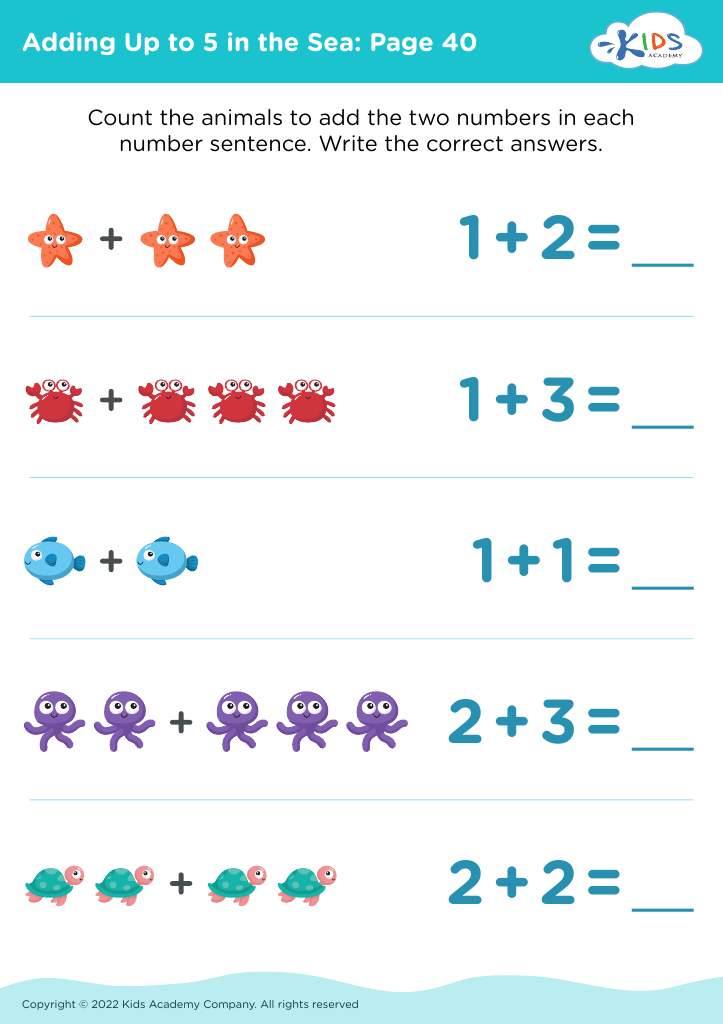
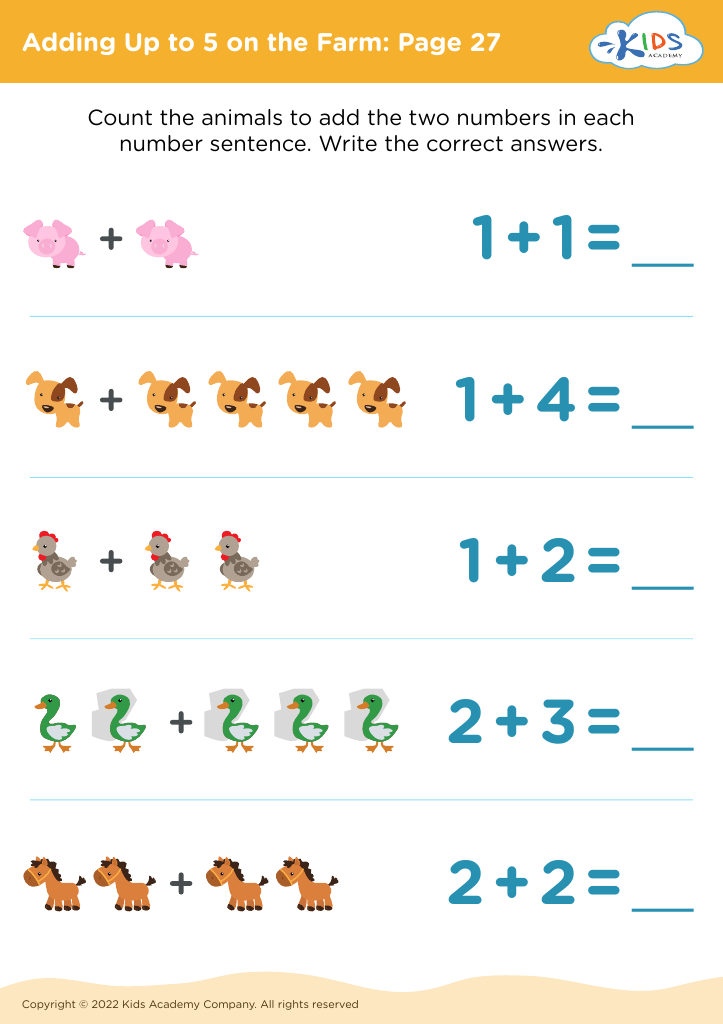
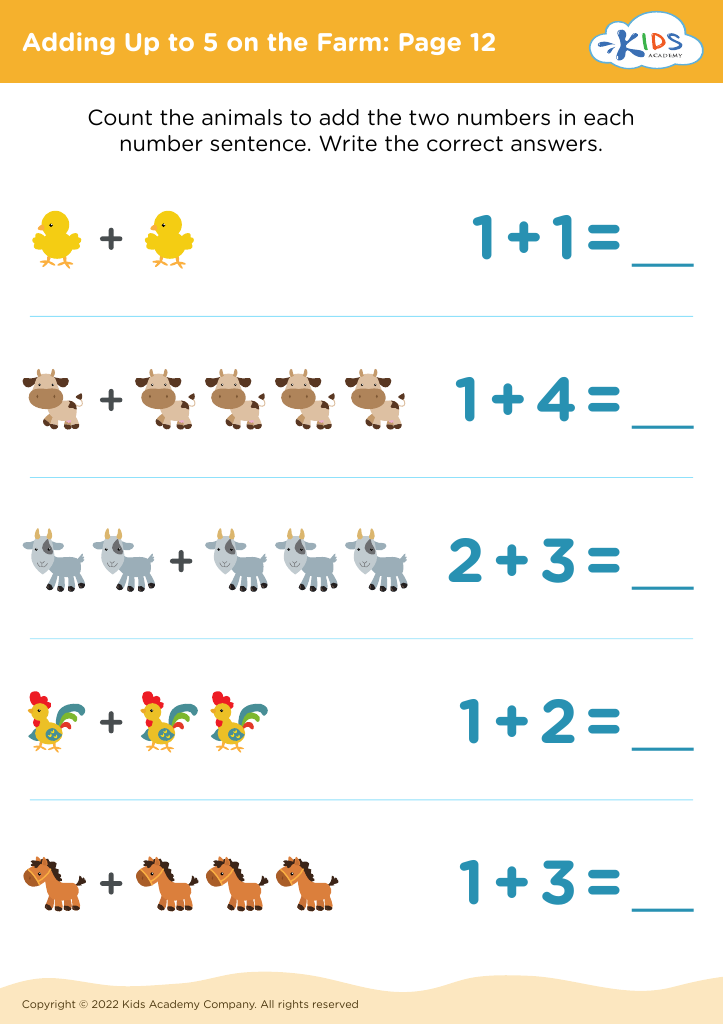
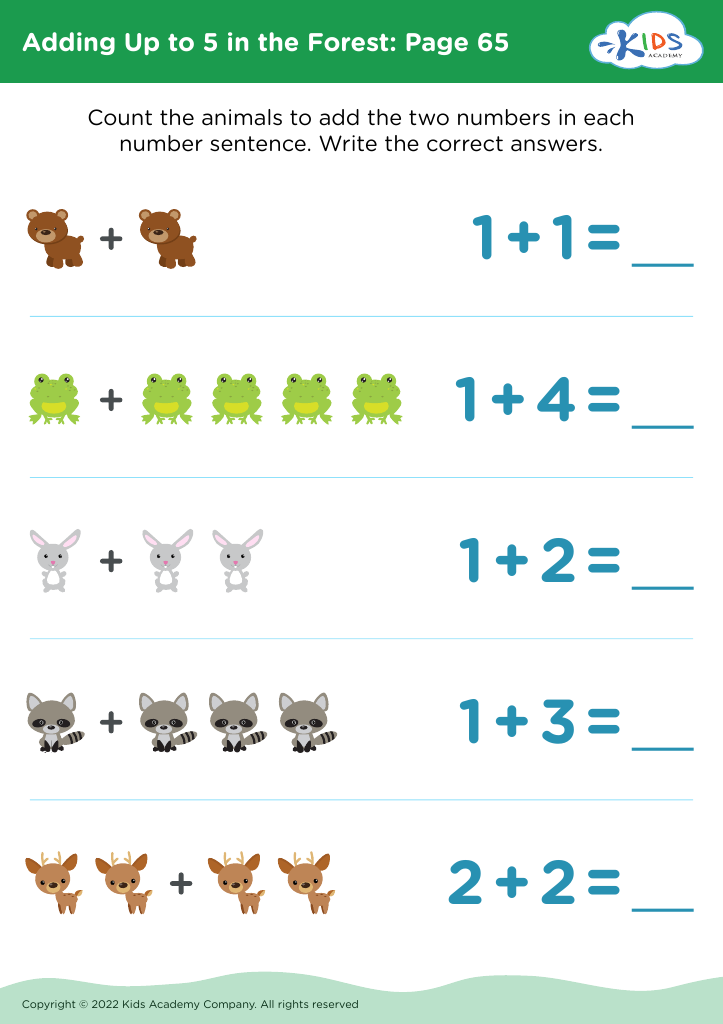
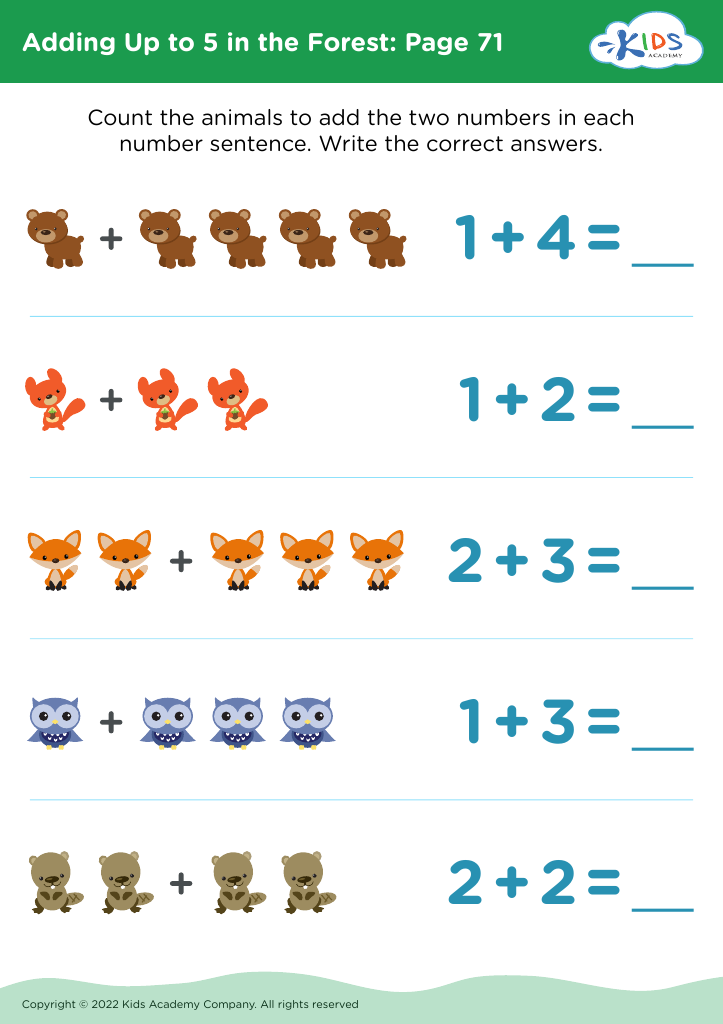
Enhance your child's visual perception skills with our "Adding Up to 5 Worksheets" designed specifically for ages 4-7. These engaging worksheets combine fun exercises in adding numbers with activities designed to strengthen visual recognition and cognitive abilities. Children will enjoy a variety of colorful illustrations and interactive tasks that make learning math concepts exciting and approachable. By focusing on visual perception, these worksheets help boost the ability to see patterns, compare quantities, and recognize numbers effectively. Give your little learners the tools they need for math success, while developing essential visual skills that serve as a foundation for lifelong learning!





.jpg)

%20(1).jpg)
Visual perception is a crucial skill that involves the ability to interpret and make sense of visual information. For children aged 4-7, improving visual perception is essential as it lays the foundation for their academic success, especially in subjects like math.
When children learn to add up to 5, they often need to visualize numbers, quantities, and spatial relationships. Strong visual perception helps them recognize patterns, understand number lines, and relate symbols to objects, which can enhance their ability to perform basic arithmetic. Additionally, developing these skills supports their reading comprehension, as visual perception plays a role in recognizing letters and words.
For parents and teachers, focusing on visual perception not only boosts mathematical understanding but also fosters confidence in learning. Engaging children in activities that strengthen these skills—such as puzzles, games, and visual sorting tasks—can make learning interactive and enjoyable. Furthermore, the repercussions of underdeveloped visual perception may lead to frustration in classroom settings, potentially affecting a child's overall attitude towards learning. Hence, prioritizing visual perception improvement is vital for cultivating foundational skills in young learners, paving the way for future educational achievements and instilling a love for learning early in life.








