Develop critical thinking Adding up to 50 Worksheets for Ages 4-7
3 filtered results
-
From - To
Unlock your child's potential with our "Adding up to 50 Worksheets for Ages 4-7." These engaging printables are designed to develop critical thinking and arithmetical skills in young learners. Through a series of carefully crafted activities, children will explore addition within 50, enhancing their problem-solving abilities. Perfect for both home and classroom use, these worksheets make learning math fun and effective. Foster confidence and a love for numbers in your young ones with tasks that encourage logical reasoning and analytical thinking. Start building a solid foundation for future math success today!
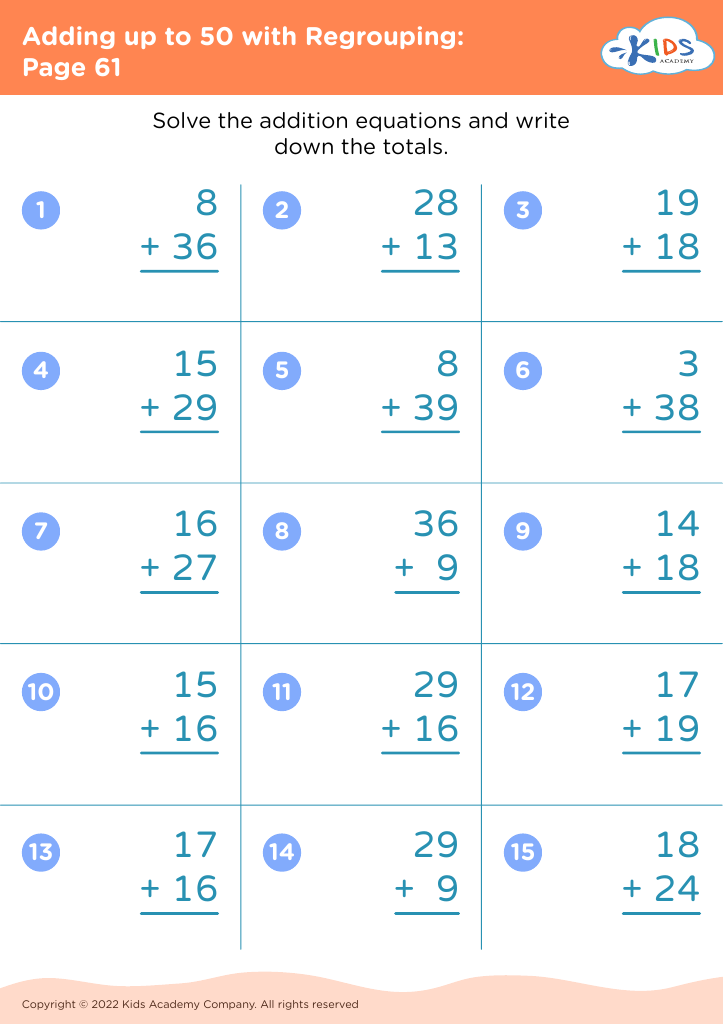
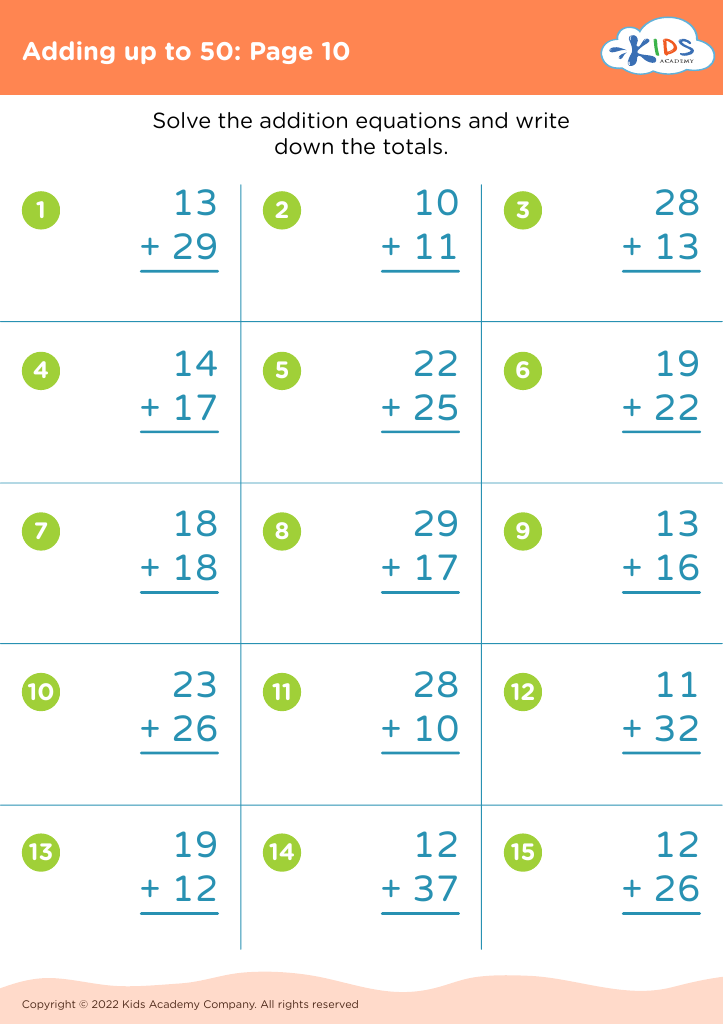
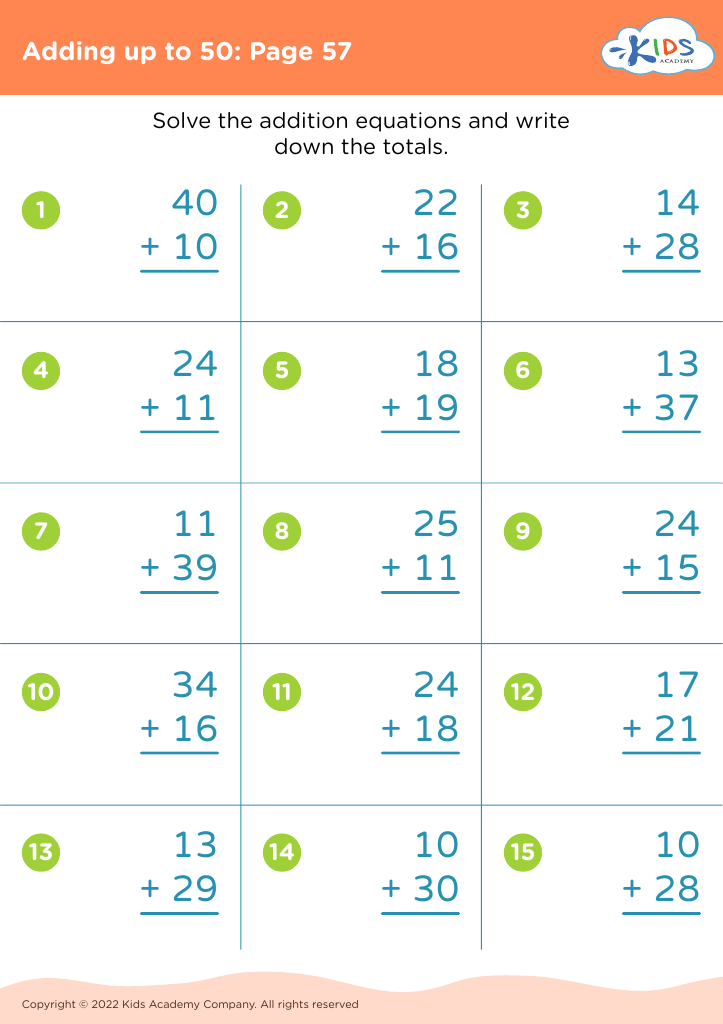




Parents and teachers should prioritize developing critical thinking skills in children, particularly in early math, for multiple reasons. Introducing activities that involve adding up to 50 for ages 4-7 does more than teach simple arithmetic; it lays the foundation for critical problem-solving abilities.
First, critical thinking promotes children's cognitive development. It helps them learn to analyze information, make connections, and consider various solutions before concluding. Being able to add numbers up to 50 challenges young minds, reinforces number sense, and enhances their mathematical understanding, which is crucial for future academic achievements.
Second, critical thinking skills nurtured through early math play help children become independent thinkers. They learn to approach problems systematically, reason logically, and think creatively. This self-reliance and resourcefulness are valuable traits that extend beyond the classroom and into real-life situations, preparing them to tackle everyday challenges.
Lastly, a nurturing environment that encourages questioning, exploration, and thoughtful discussions can foster a lifelong love for learning. As children achieve each small success, confidence in their abilities grows. This positive reinforcement encourages them to take on new challenges, maintaining their curiosity and enthusiasm for learning.
In summary, teaching young children to add up to 50 instills critical thinking skills that are essential for cognitive growth, independence, and a sustained passion for learning, making it a foundational step in their educational journey.








