Mathematical reasoning Adding up to 50 Worksheets for Ages 4-7
4 filtered results
-
From - To
Enhance your child's mathematical reasoning skills with our engaging "Adding Up to 50" worksheets for ages 4-7! Designed to make learning fun, these worksheets feature colorful illustrations and interactive exercises that promote critical thinking and problem-solving. Kids will practice addition in various contexts, building a solid foundation for future math success. Each sheet is tailored to cater to young learners, enabling them to grasp fundamental concepts through enjoyable activities. Perfect for home or classroom use, our worksheets encourage exploration and mastery of addition up to 50. Empower your child’s learning journey today with these valuable resources!
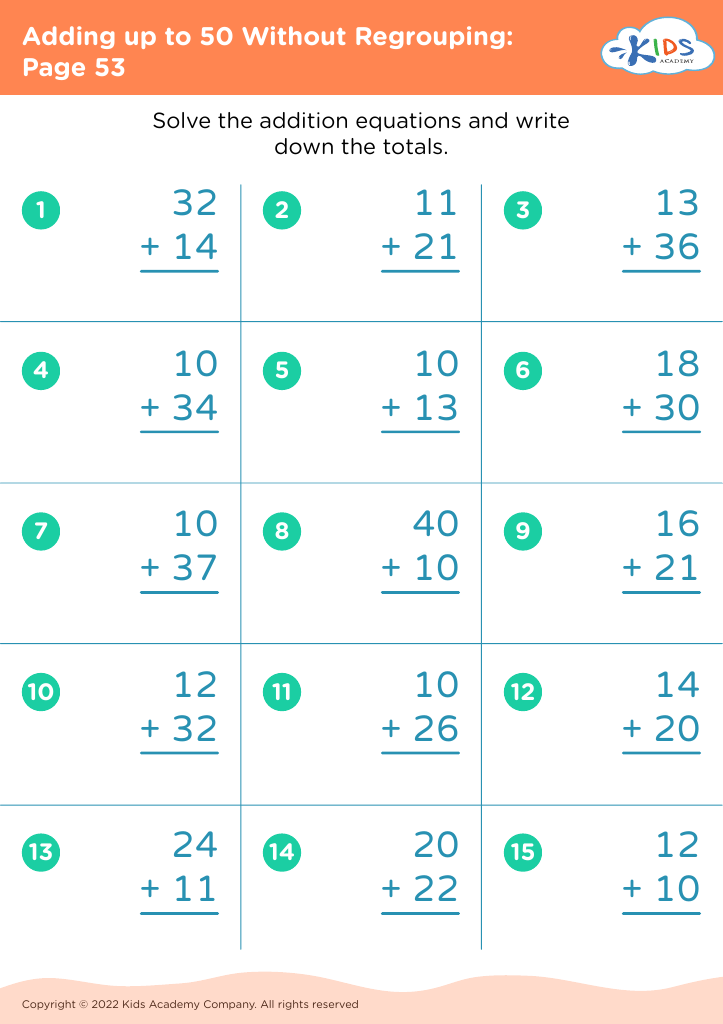
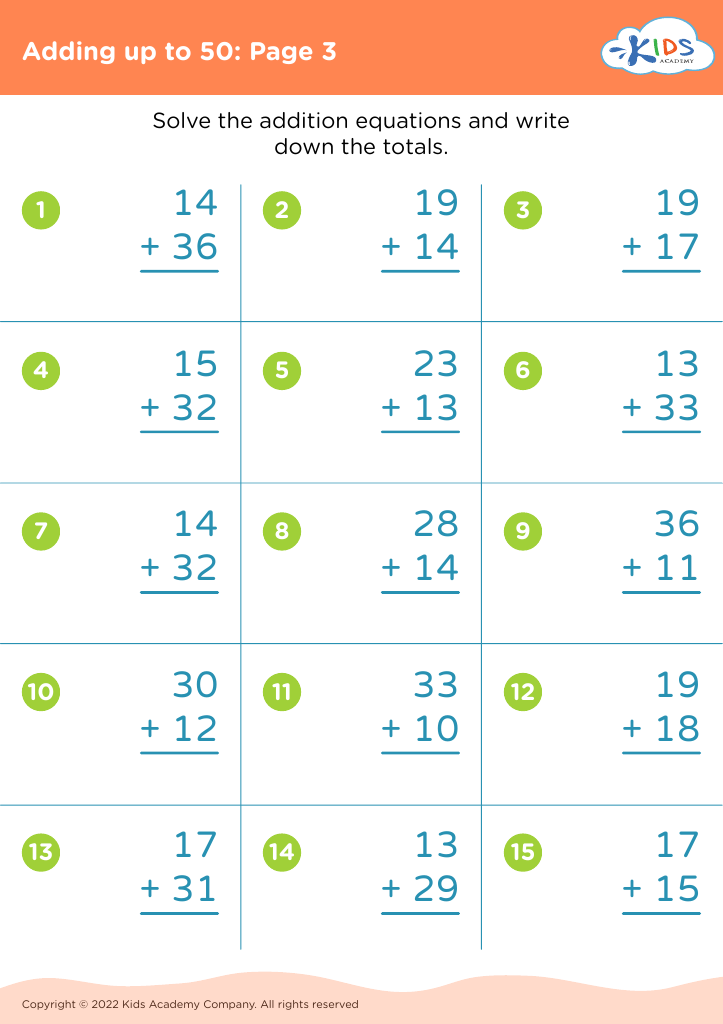
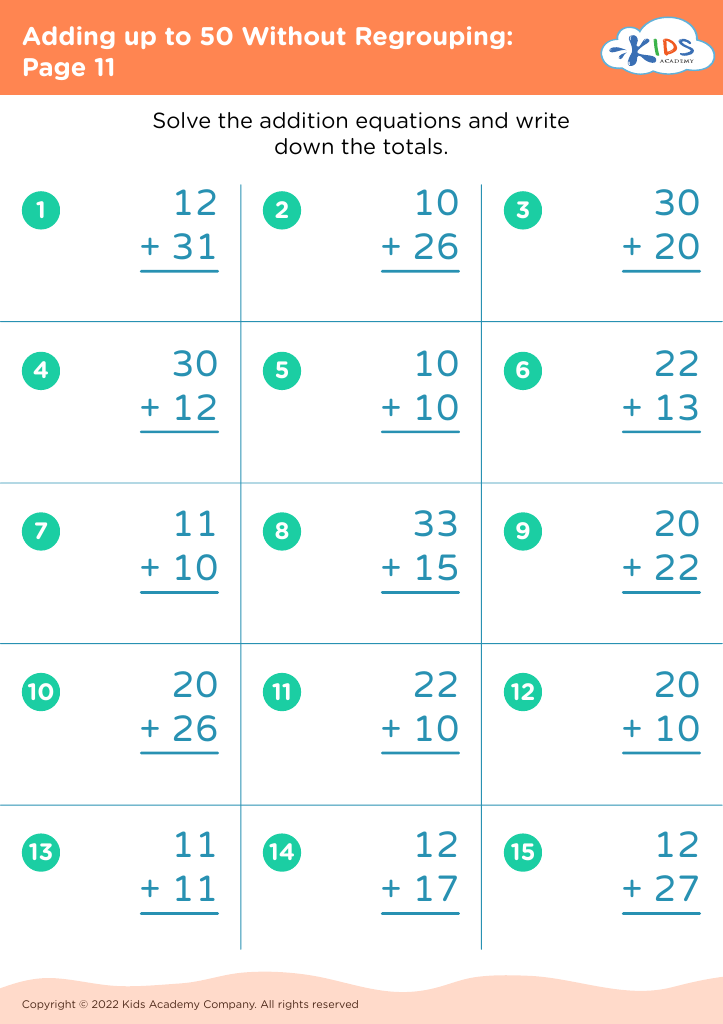
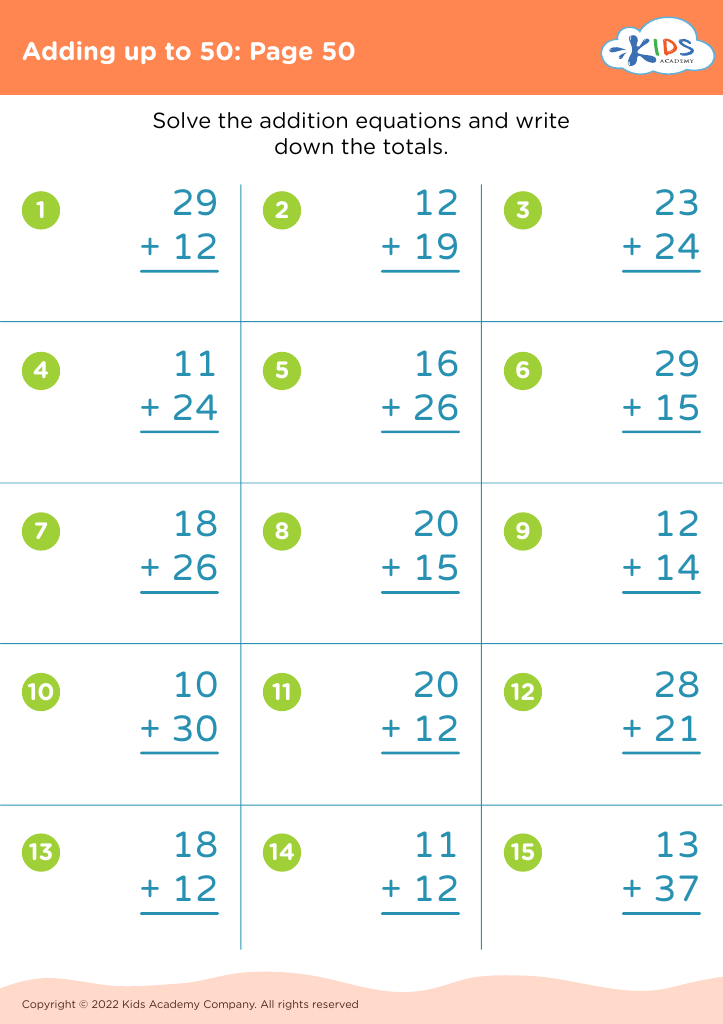




Mathematical reasoning, particularly skills like adding up to 50, is vital for children aged 4-7, as it lays the groundwork for future mathematical understanding and critical thinking. At this stage, children develop essential cognitive skills, and strong mathematical reasoning helps them make sense of the world around them. Parents and teachers should care about fostering this skill because it encourages problem-solving abilities, enhances logical thinking, and builds confidence.
Engaging in addition activities up to 50 helps children recognize patterns, establish number relationships, and understand how numbers work together. This foundational knowledge is crucial as they progress to more complex concepts, such as subtraction, multiplication, and division. Additionally, developing a solid understanding of addition and its applications supports literacy in math, enabling children to perform better academically.
Moreover, fostering an early interest in mathematics can inspire a lifelong appreciation for the subject, opening doors to diverse career paths in STEM fields. By prioritizing mathematical reasoning, adults can create a supportive environment that not only enhances children's academic success but also equips them with essential life skills needed for everyday decision-making and real-world applications. Ultimately, nurturing these mathematical abilities can lead to empowered, confident learners.








