Recognizing Patterns Adding up to 50 Worksheets for Ages 4-7
7 filtered results
-
From - To
Discover our "Recognizing Patterns Adding up to 50 Worksheets" designed specifically for ages 4-7! These engaging worksheets help young learners understand numerical patterns while practicing addition skills up to 50. Through colorful visuals and interactive activities, children will develop critical thinking and problem-solving abilities as they recognize and continue patterns. Our carefully crafted resources aim to create a solid foundation in mathematical concepts, making learning both fun and effective. Perfect for classrooms or home education, these worksheets encourage creativity and strengthen confidence in young mathematicians. Grab your set today and watch your child thrive in their math journey!
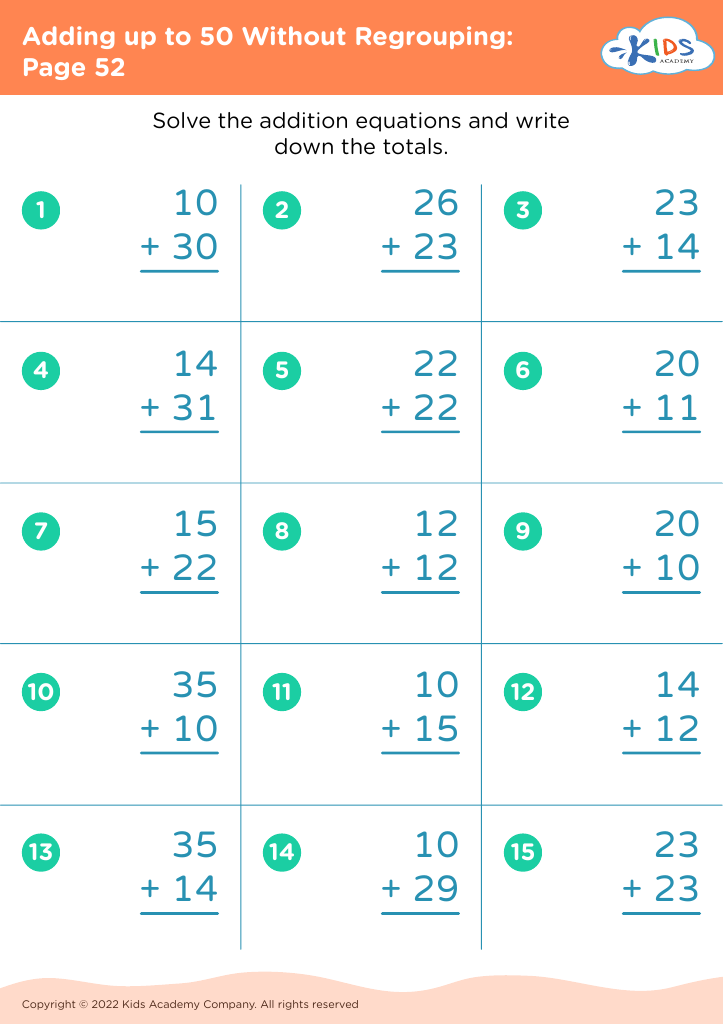
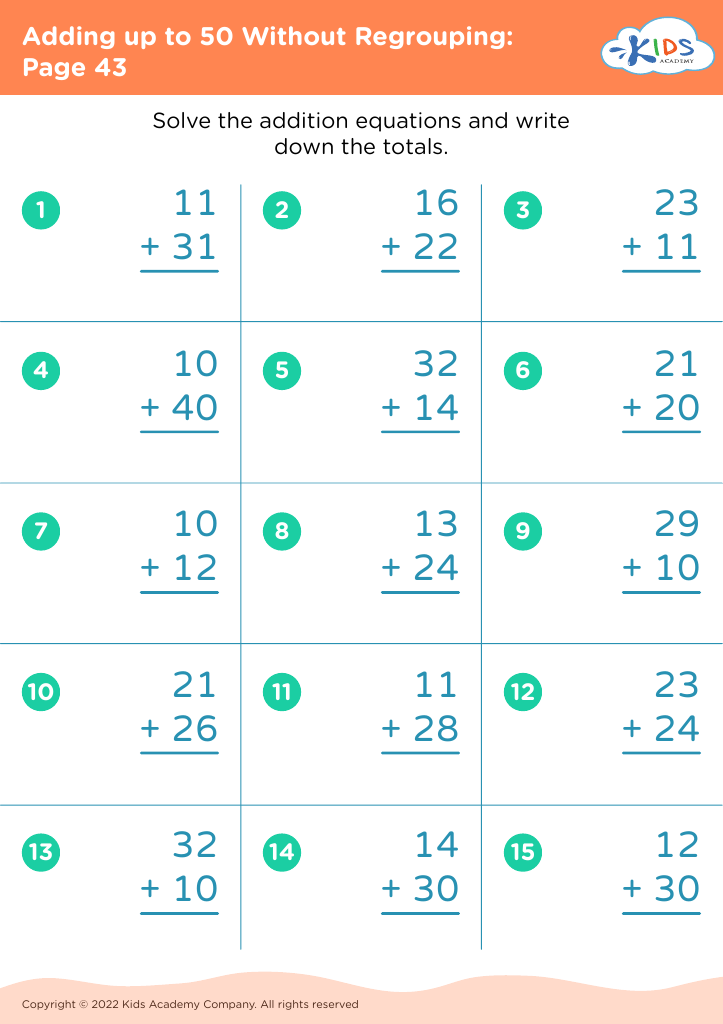
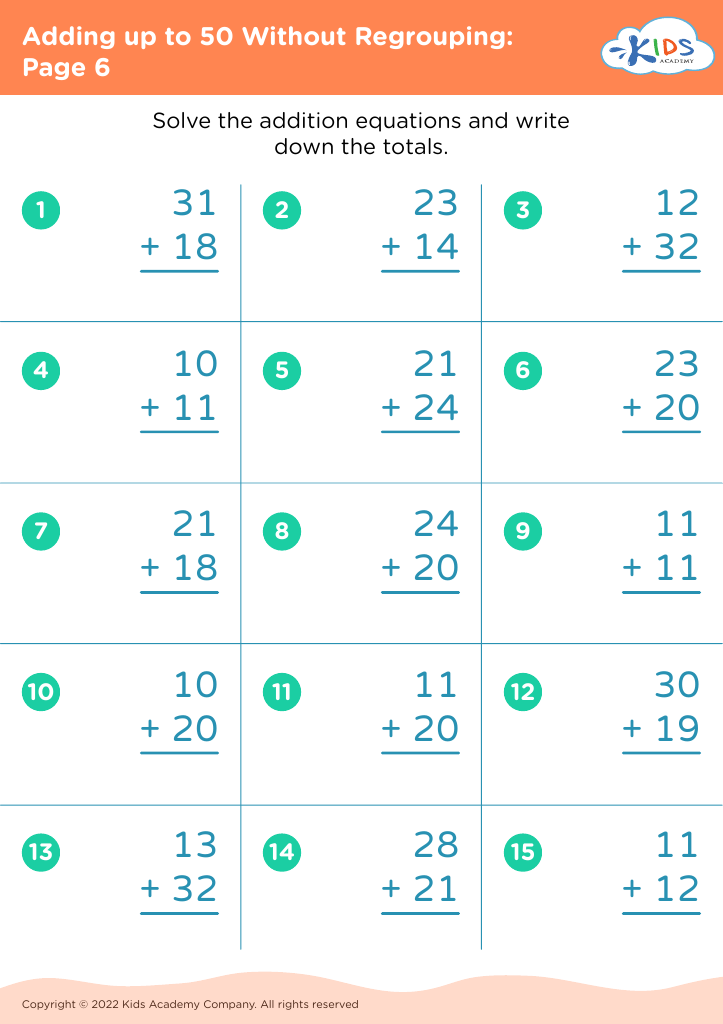
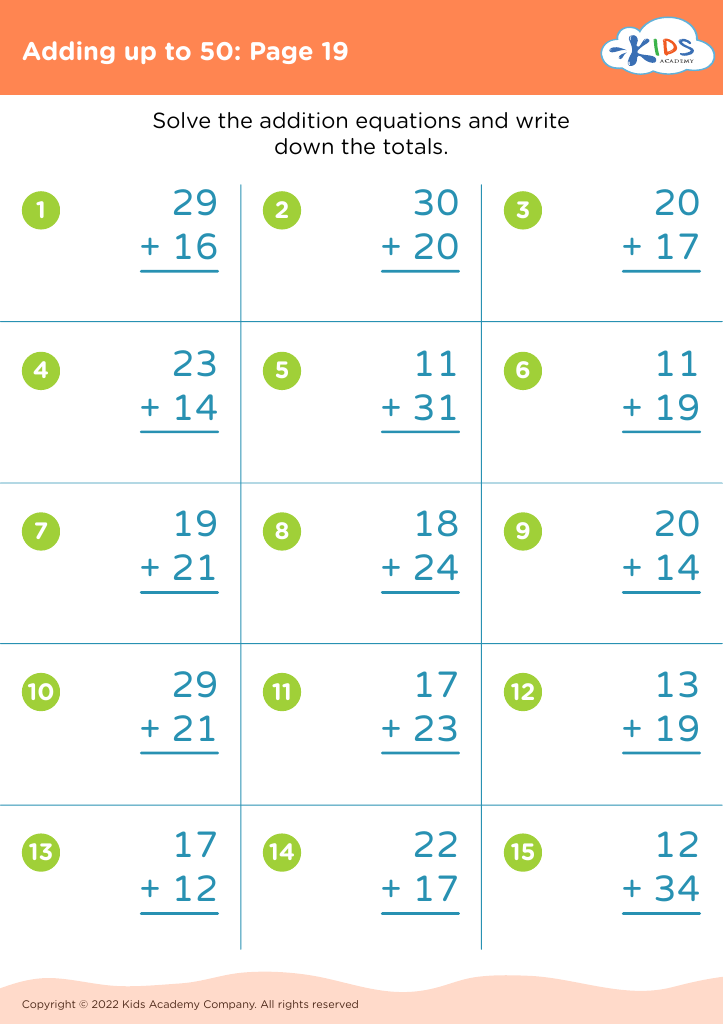
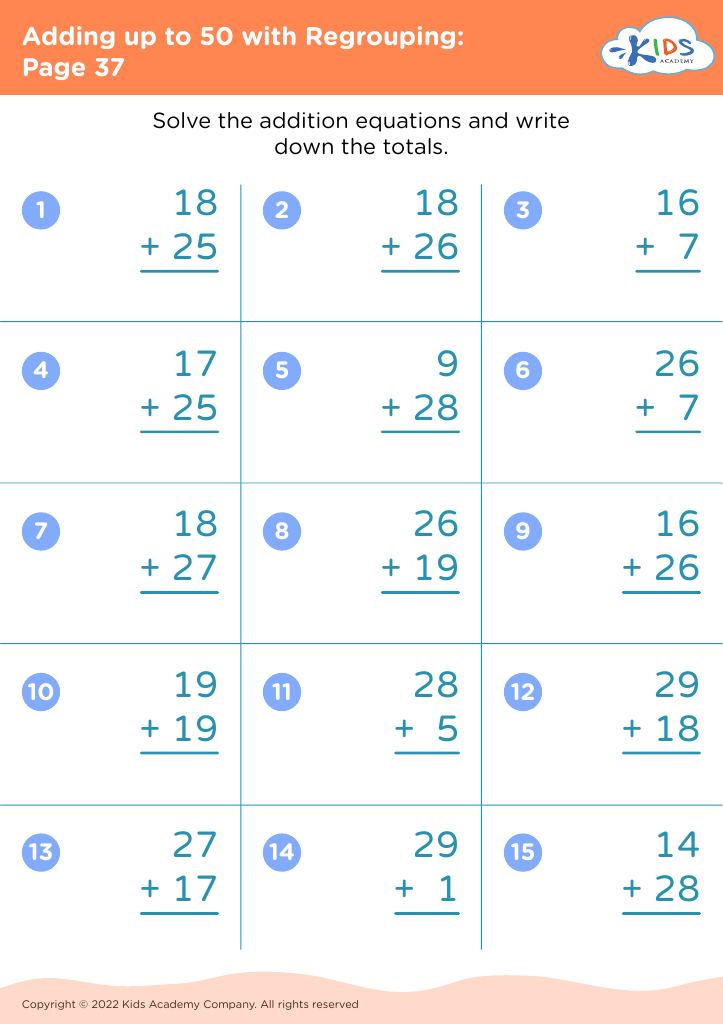
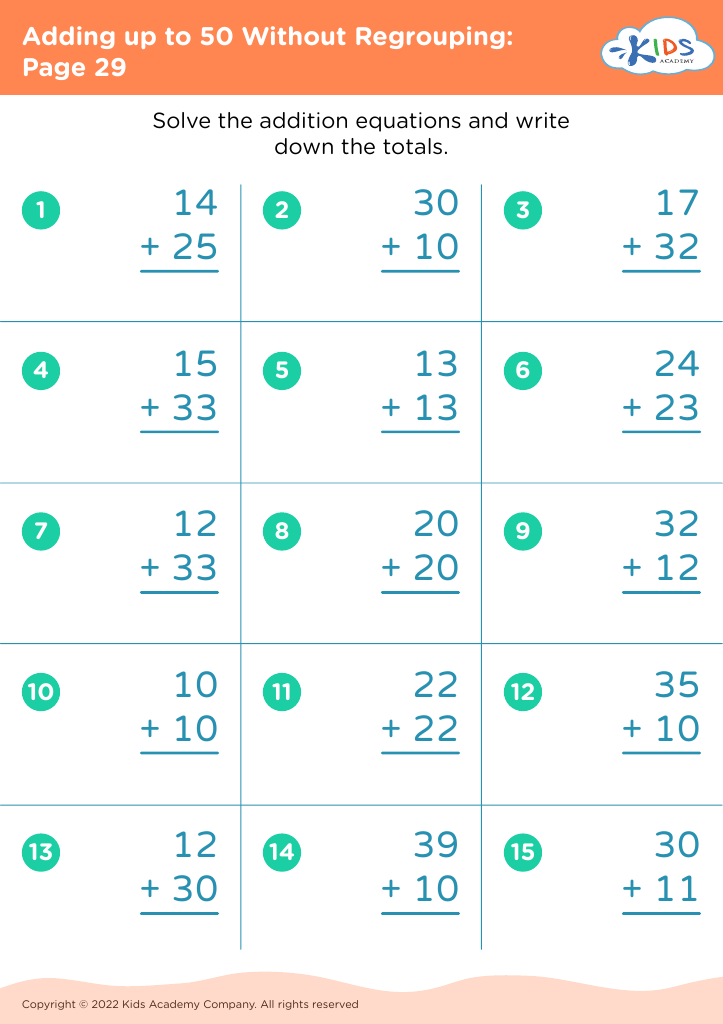
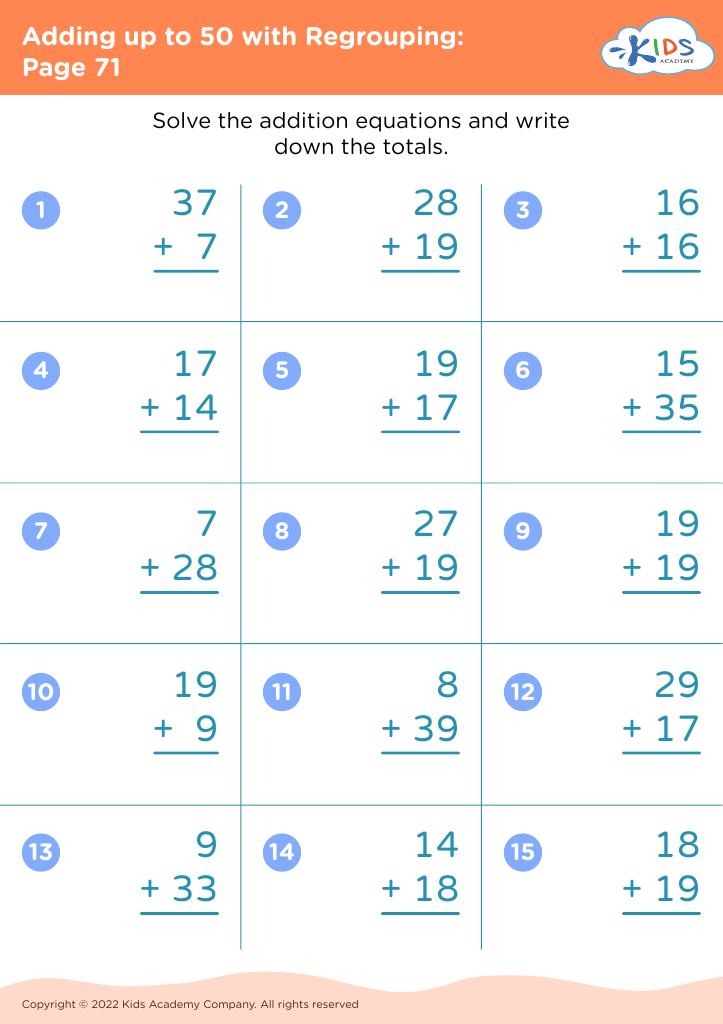




Recognizing patterns and understanding addition up to 50 are foundational skills for children aged 4-7, laying the groundwork for more complex mathematical concepts. Parents and teachers should care about this developmental milestone for several reasons.
Firstly, pattern recognition is vital for cognitive development. It encourages critical thinking, problem-solving skills, and enhances memory. Children learn to identify sequences and relationships, fostering a sense of order and predictability in math.
Secondly, mastering addition within 50 builds numerical fluency. This skill strengthens their ability to construct strategies for larger problems, which is essential for future math success. When children are comfortable with smaller numbers, they gain confidence, making them more willing to tackle challenging concepts.
Moreover, integrating pattern recognition with addition can be engaging and fun. Interactive games, visual aids, and hands-on activities can make learning enjoyable, consolidating their interest in math.
Finally, in a world increasingly dominated by STEM fields, a strong early foundation in math equips children with skills necessary for future academic and career opportunities. By redefining math as an approachable and exciting subject, parents and teachers play a crucial role in shaping children’s long-term attitudes towards learning and problem-solving.








