Recognizing shapes Adding up to 50 Worksheets for Ages 4-7
8 filtered results
-
From - To
Unlock your child's potential with our "Recognizing Shapes Adding Up to 50 Worksheets," designed for children aged 4 to 7. These engaging worksheets combine shape recognition with addition skills, providing a fun and interactive way for young learners to enhance their math abilities. Each activity encourages children to identify and categorize various shapes as they practice adding numbers up to 50. Perfect for classroom use or at-home learning, our worksheets are crafted to foster critical thinking and problem-solving abilities in early learners. Equip your child with the fundamental skills they need while enjoying a creative, hands-on approach to math!
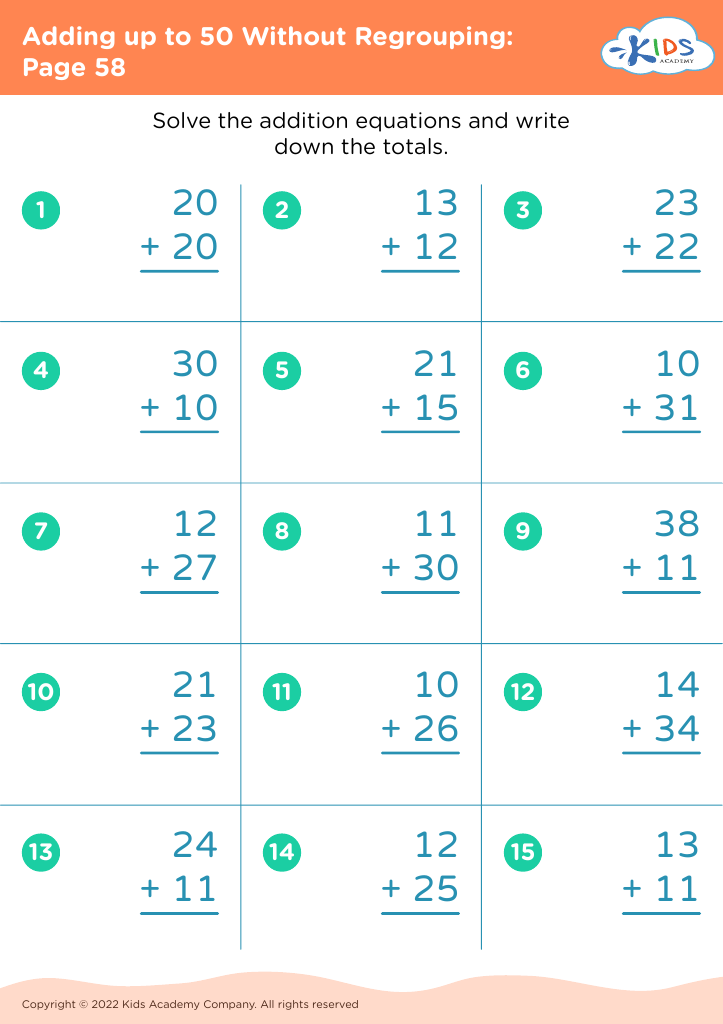
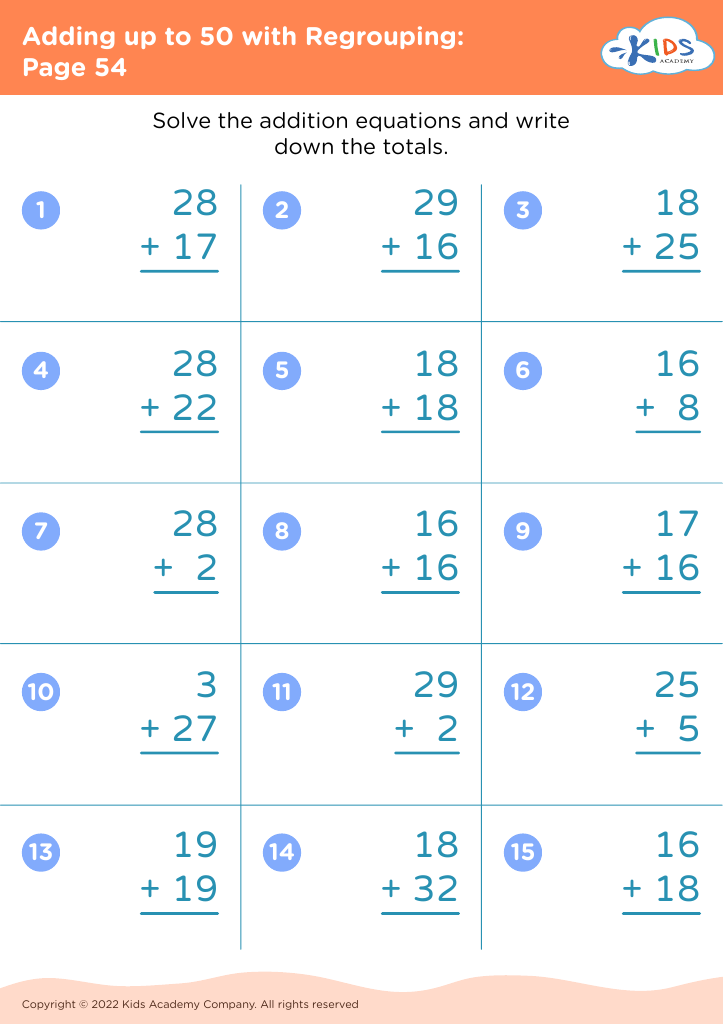
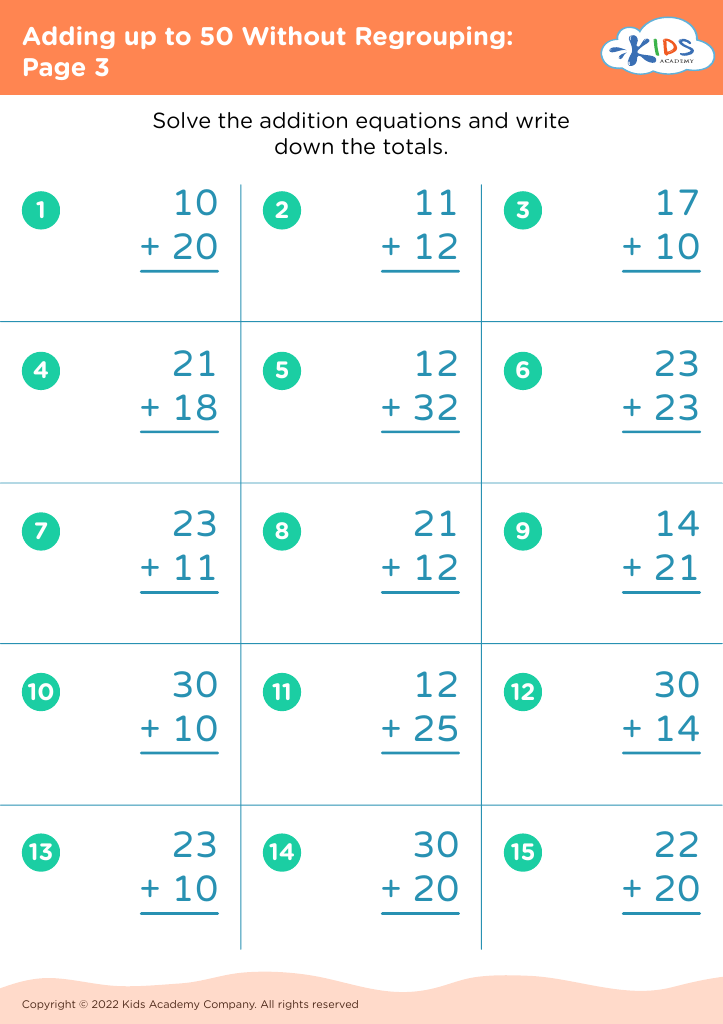
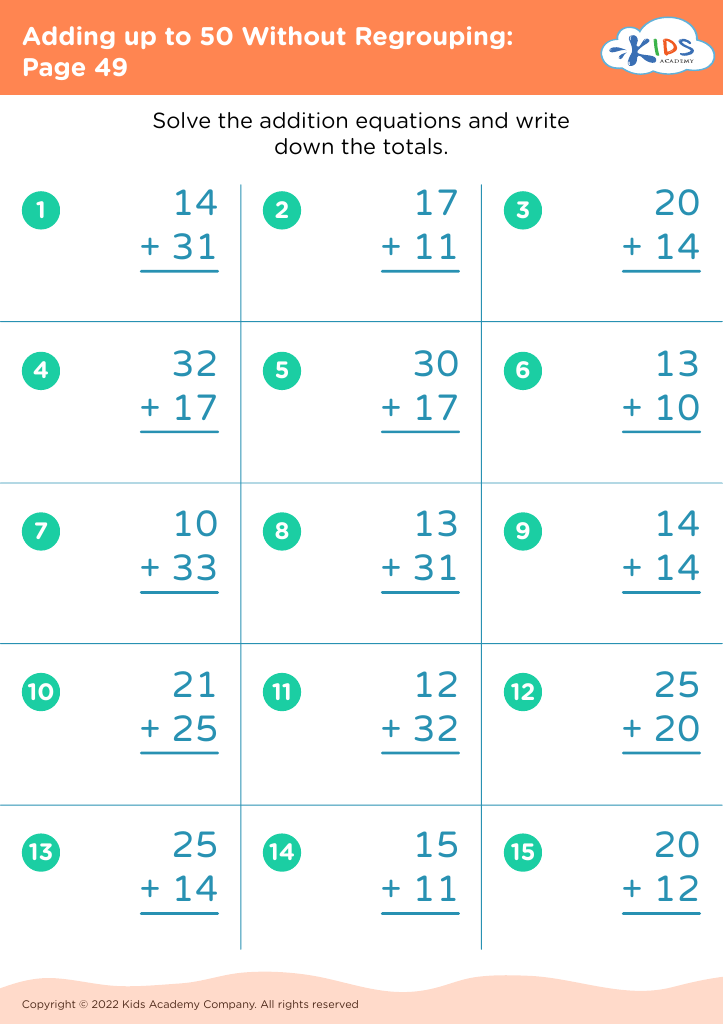
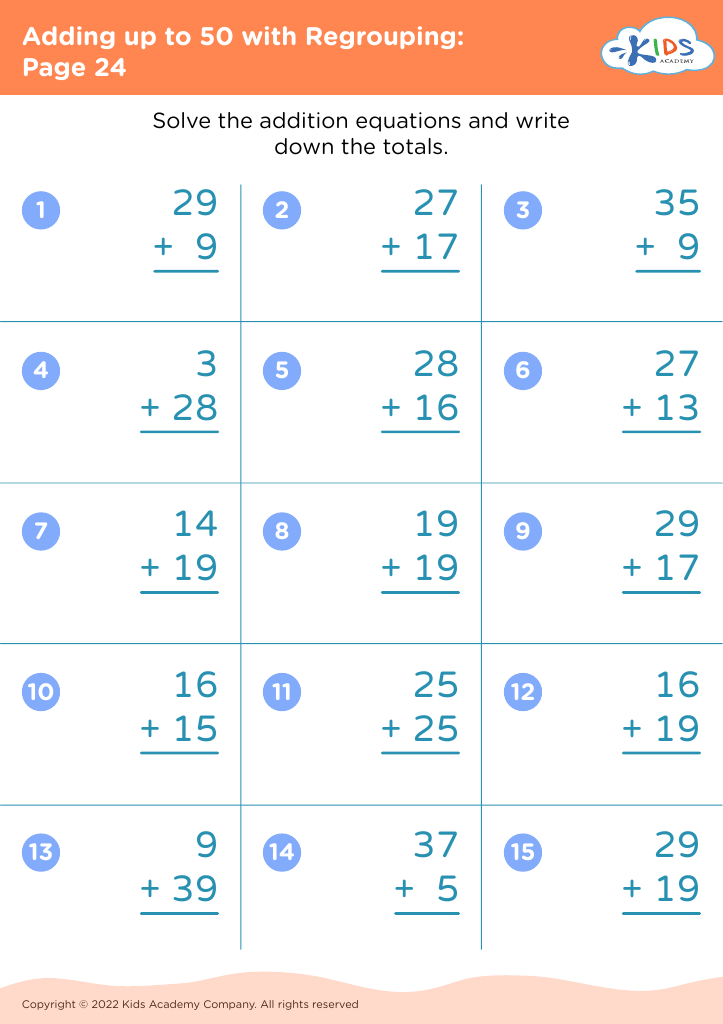
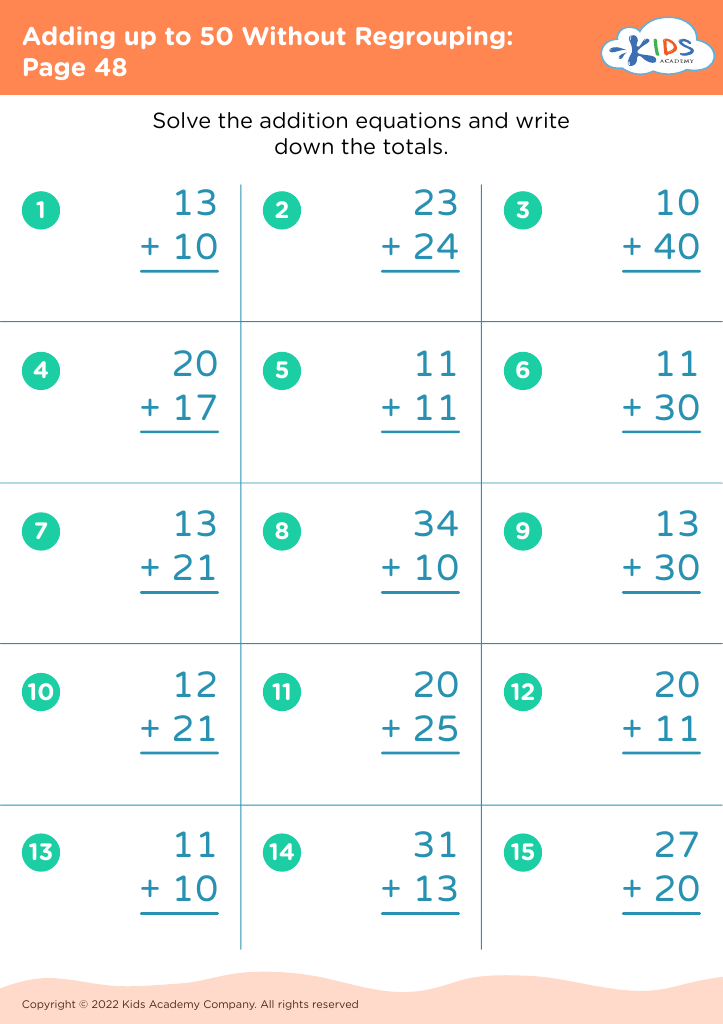
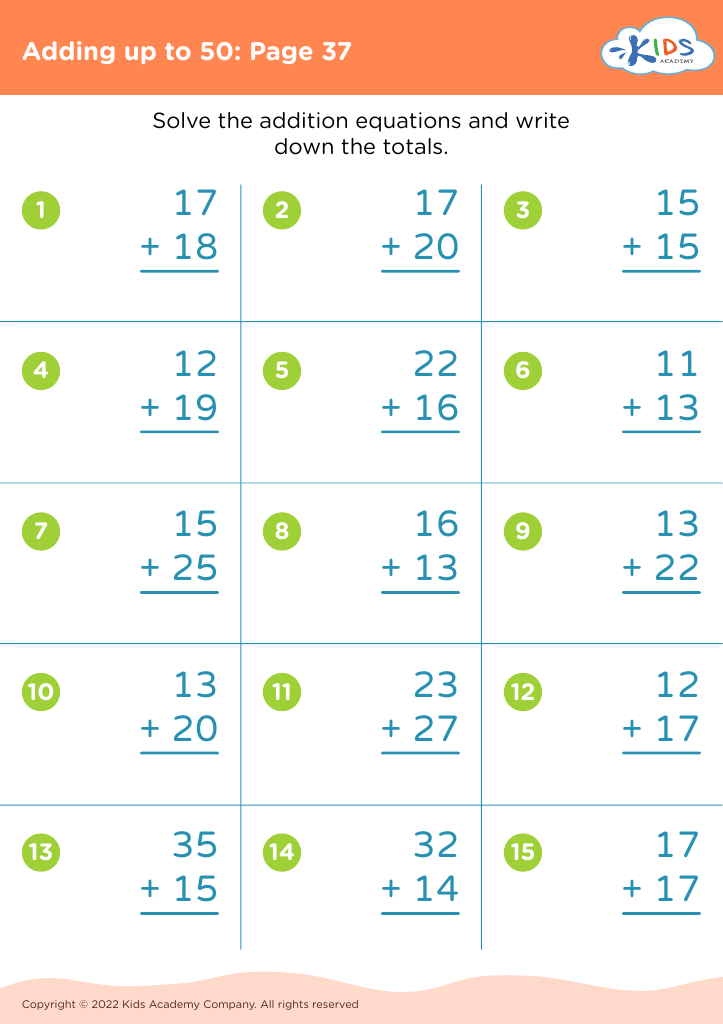
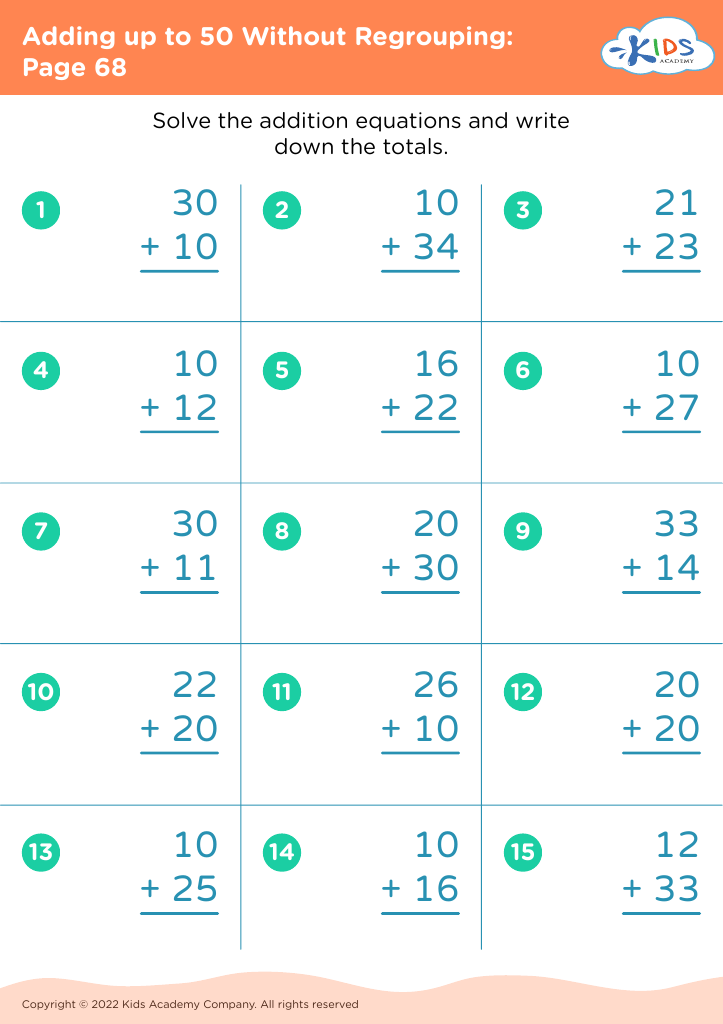




Recognizing shapes and understanding numbers up to 50 are fundamental skills for children aged 4-7. For parents and teachers, nurturing these skills is crucial in fostering early math competency and spatial awareness, laying the groundwork for a child’s future learning.
Recognizing shapes helps children develop critical observation skills and understanding geometry. It encourages them to look for patterns in their environment, which enhances cognitive abilities and problem-solving. For instance, when children can identify squares, triangles, and circles, they begin to understand concepts of symmetry and spatial relationships, which are foundational for more complex mathematical concepts later in life.
Likewise, learning to add up to 50 equips children with essential number sense. It strengthens their ability to perform basic arithmetic, enabling them to solve simple problems and understand sequences and relationships between numbers. This skill is imperative as classrooms increasingly incorporate math into daily activities.
Furthermore, these foundational skills enhance confidence in young learners, making them more enthusiastic about math. By caring about recognizing shapes and basic addition, parents and teachers empower children to be successful both in academics and their overall cognitive development, ensuring they are well-prepared for future challenges.








