Understanding multiplication Adding up to 50 Worksheets for Ages 4-7
5 filtered results
-
From - To
Unlock your child's math potential with our "Understanding Multiplication: Adding Up to 50" worksheets designed for ages 4-7. These engaging, colorful worksheets introduce young learners to the concept of multiplication in a fun, accessible way. By connecting multiplication to their existing addition skills, children will build a solid foundation in math. With guided exercises and practical examples, children will reinforce their understanding of how multiplication works, helping them reach numbers up to 50. Ideal for classroom use or at-home practice, these worksheets provide an enjoyable learning experience, making math enjoyable and accessible for little learners. Empower your child's journey in math today!
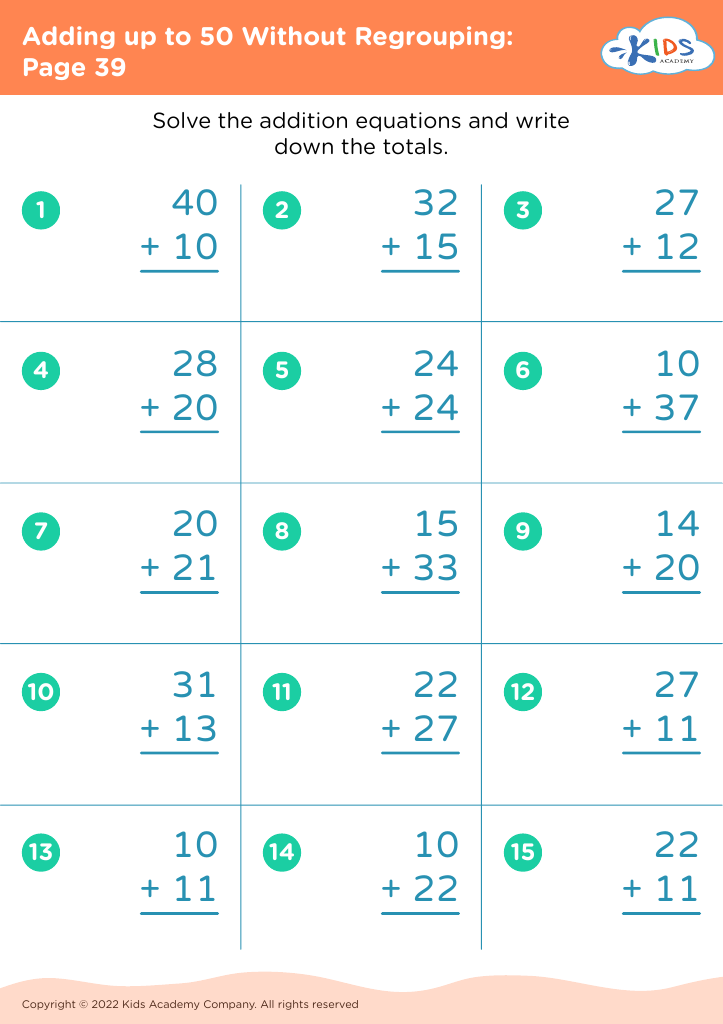
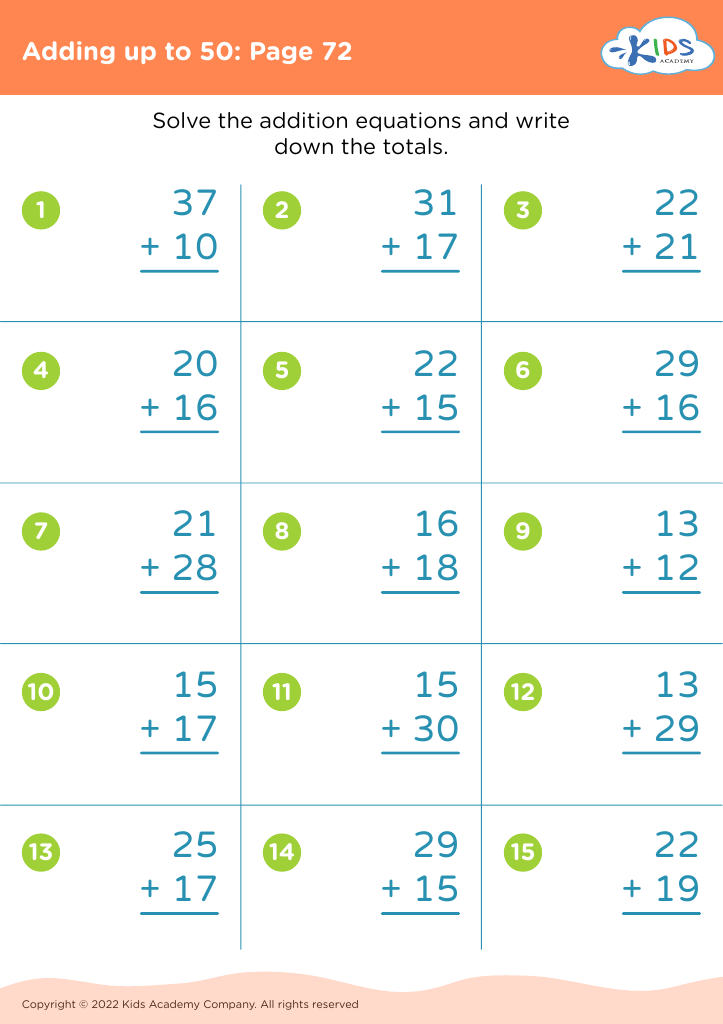
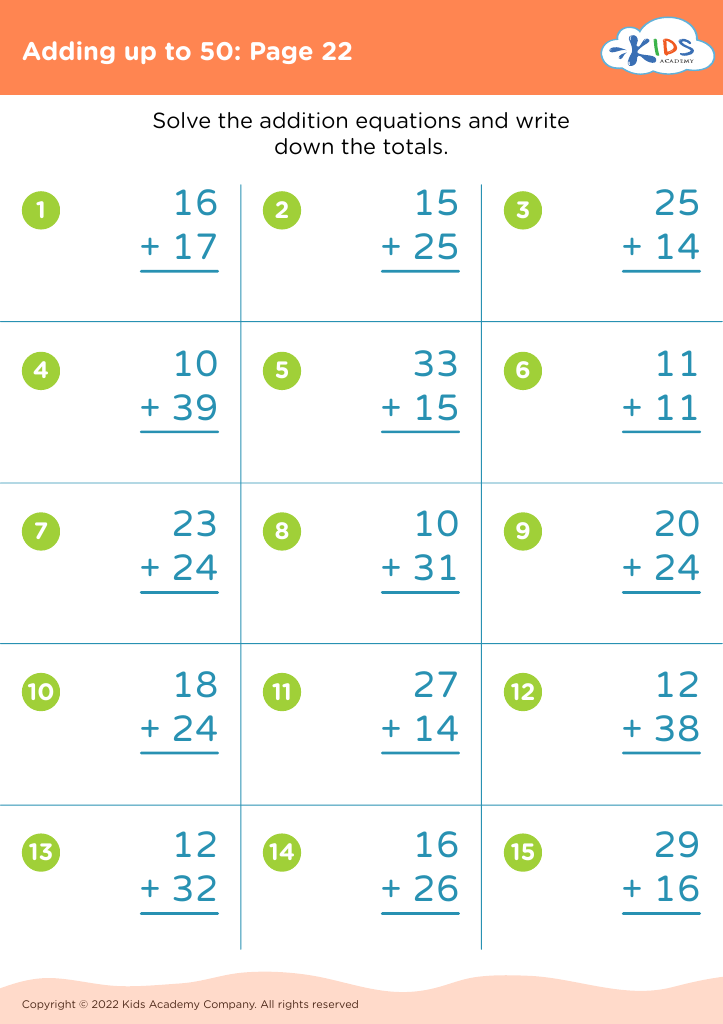
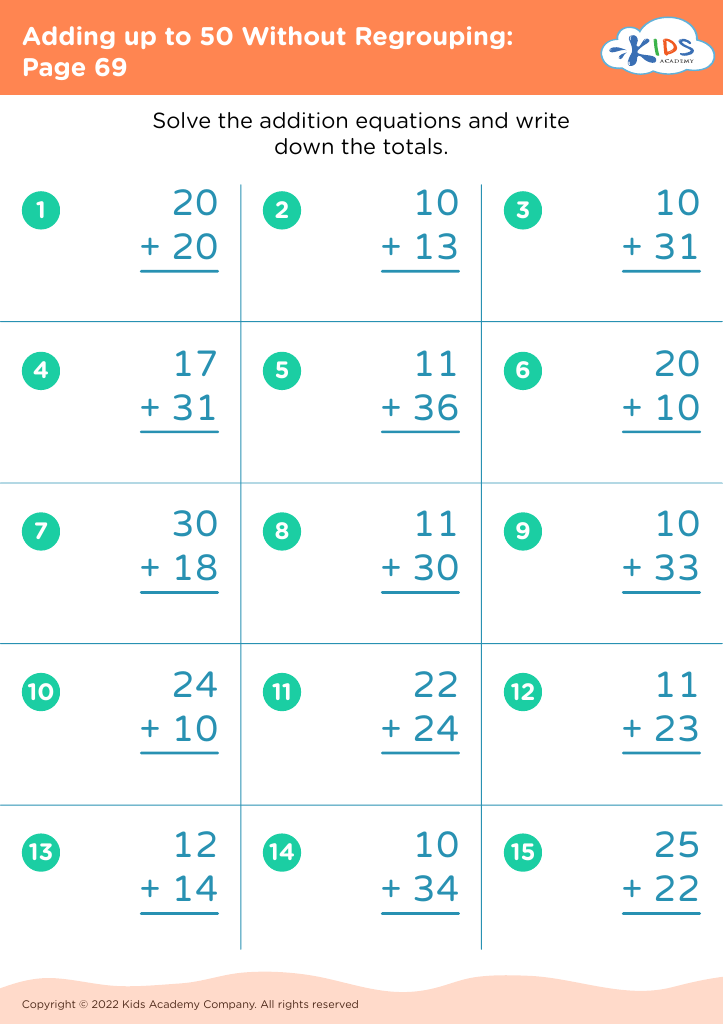
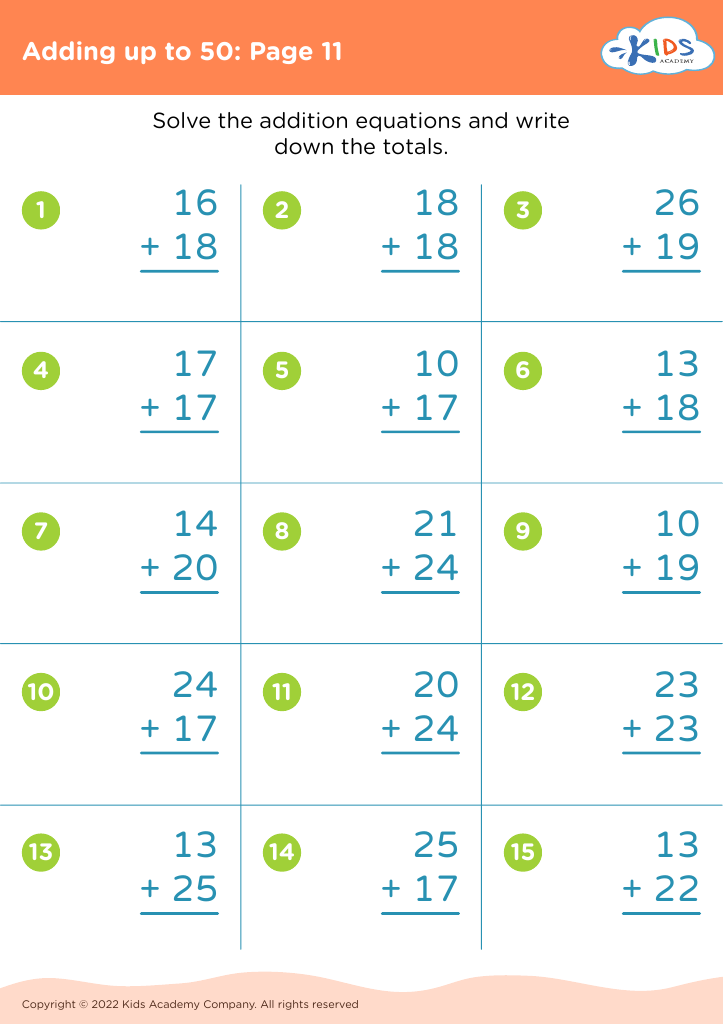




Understanding multiplication, especially in the context of adding up to 50, is crucial for children aged 4-7 as it establishes a solid mathematical foundation. At this early age, children are developing their number sense, and grasping how multiplication relates to addition helps reinforce this concept. Multiplication can be seen as repeated addition, essentially helping young learners visualize and understand how numbers interact.
Teaching children to think about numbers in groups (e.g., 5 groups of 10 equals 50) encourages critical thinking and problem-solving skills. It also allows for greater fluency in mathematics, making it easier for children to tackle more complex calculations in the future. Additionally, as they progress in their education, the ability to multiply will aid them not just in mathematics, but also in disciplines like science and economics.
Parents and teachers play a vital role in fostering engagement with these concepts. Integrating multiplication with playful activities, such as games or visual aids, captivates children's interest, making learning enjoyable. Overall, emphasizing multiplication at this age prepares children for academic success, enhances their confidence in handling math, and builds a strong foundation that supports future learning efforts across all subjects.








