Basic Addition Skills Adding with Busy Bugs Worksheets for Ages 4-7 - Page 2
34 filtered results
-
From - To
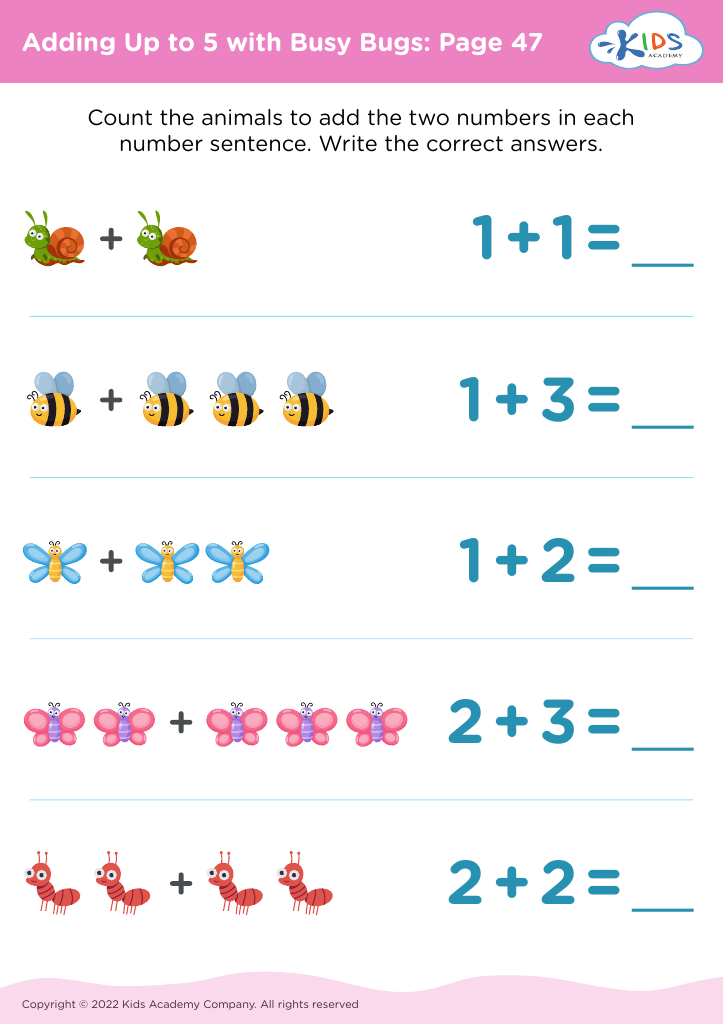
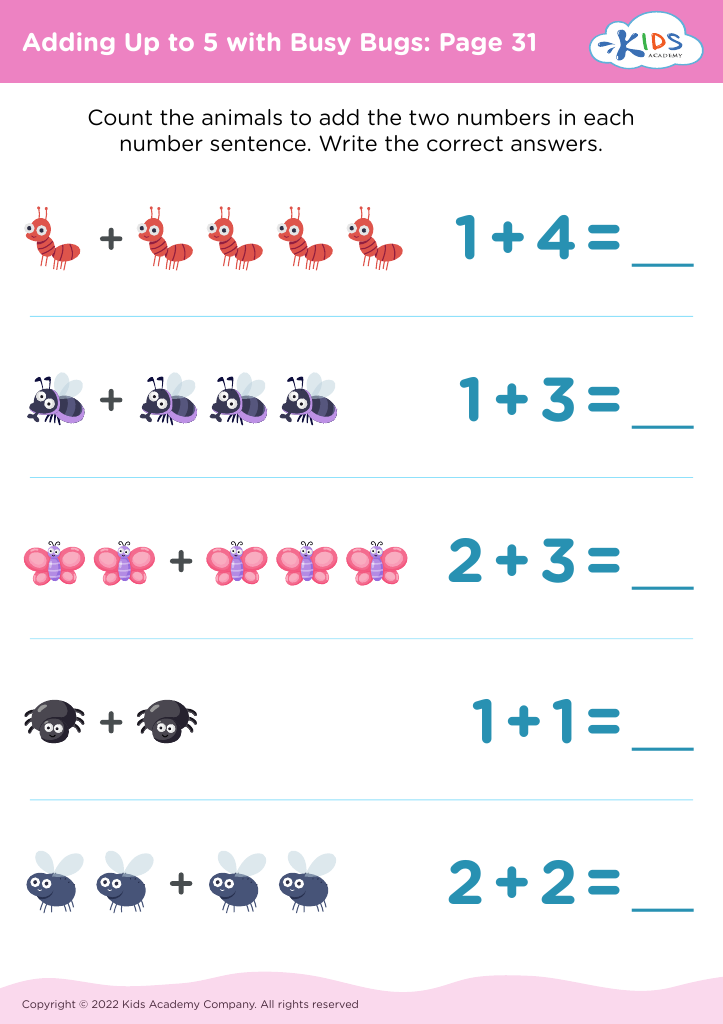
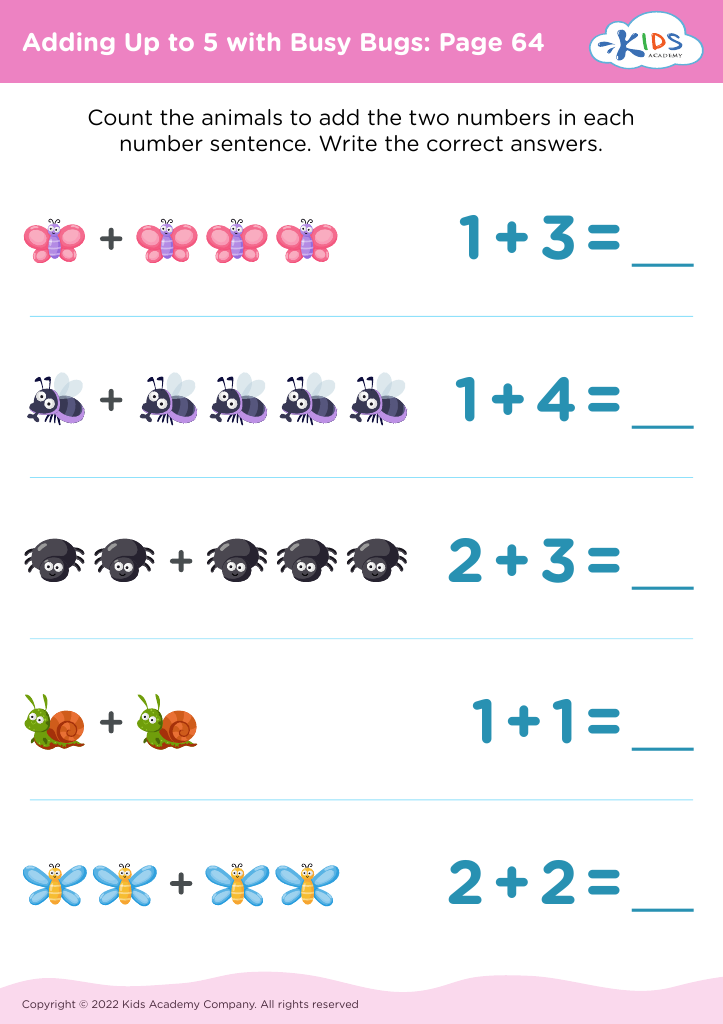
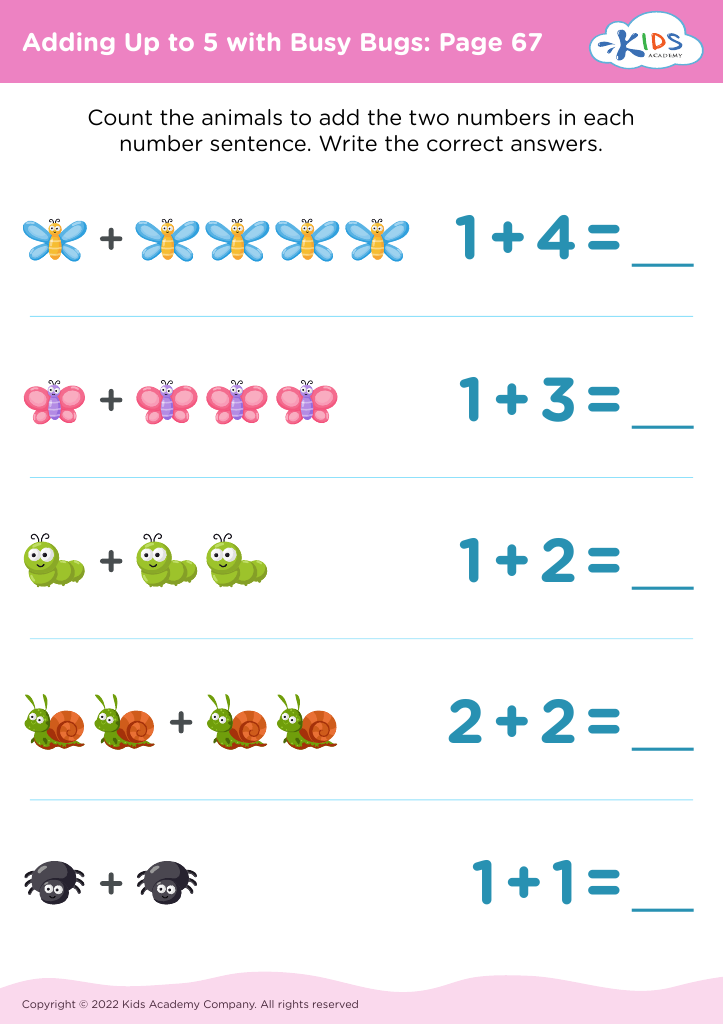
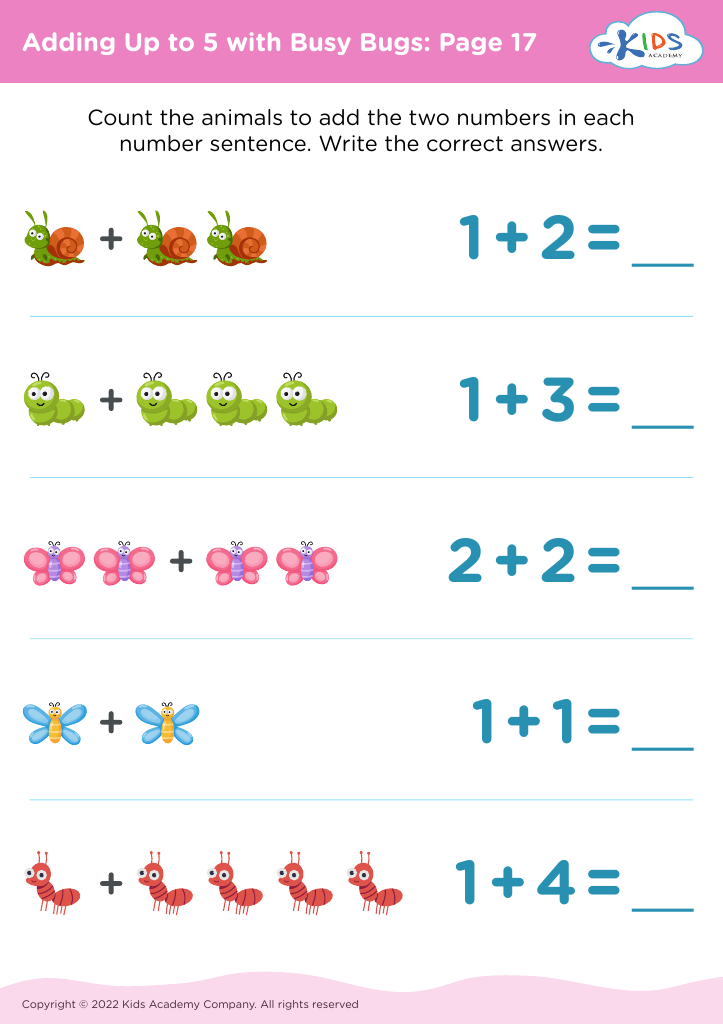
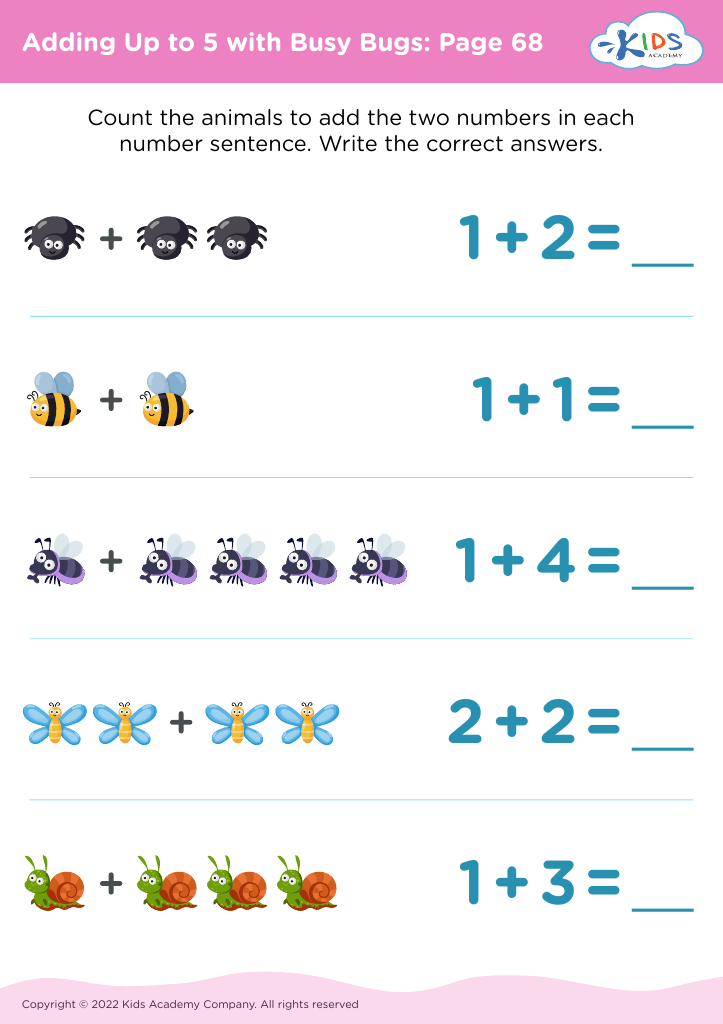
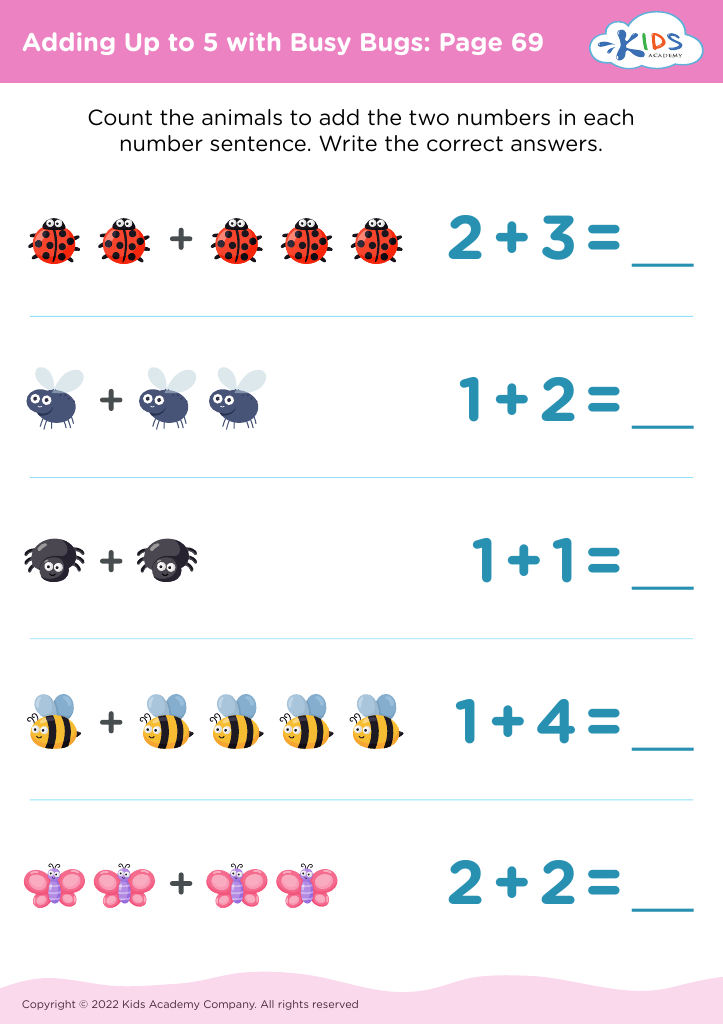
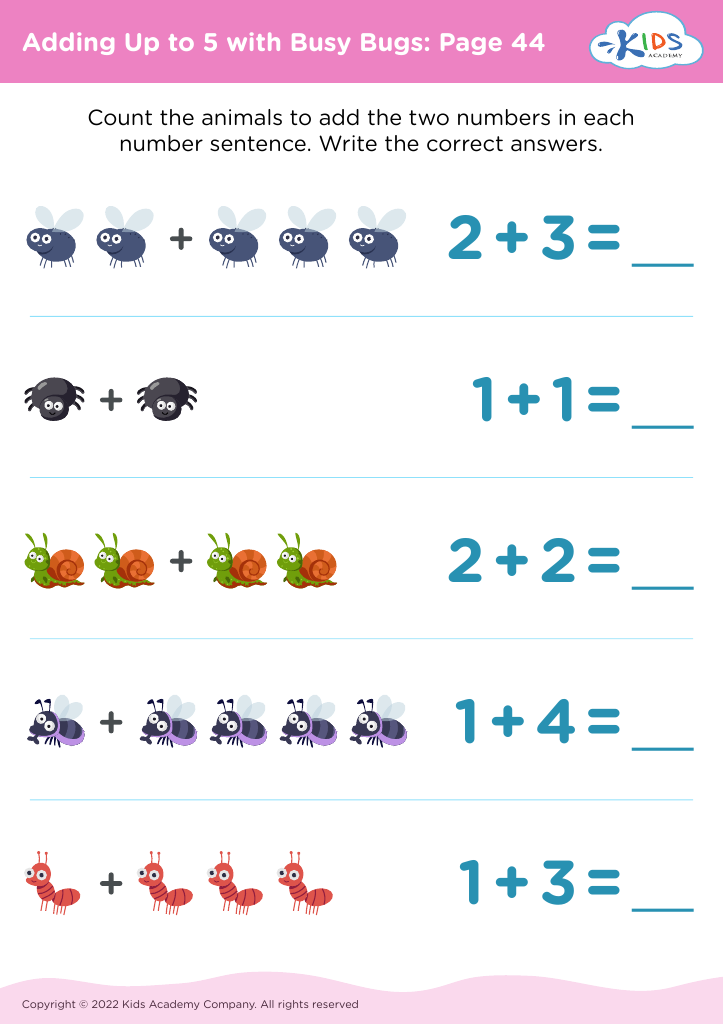
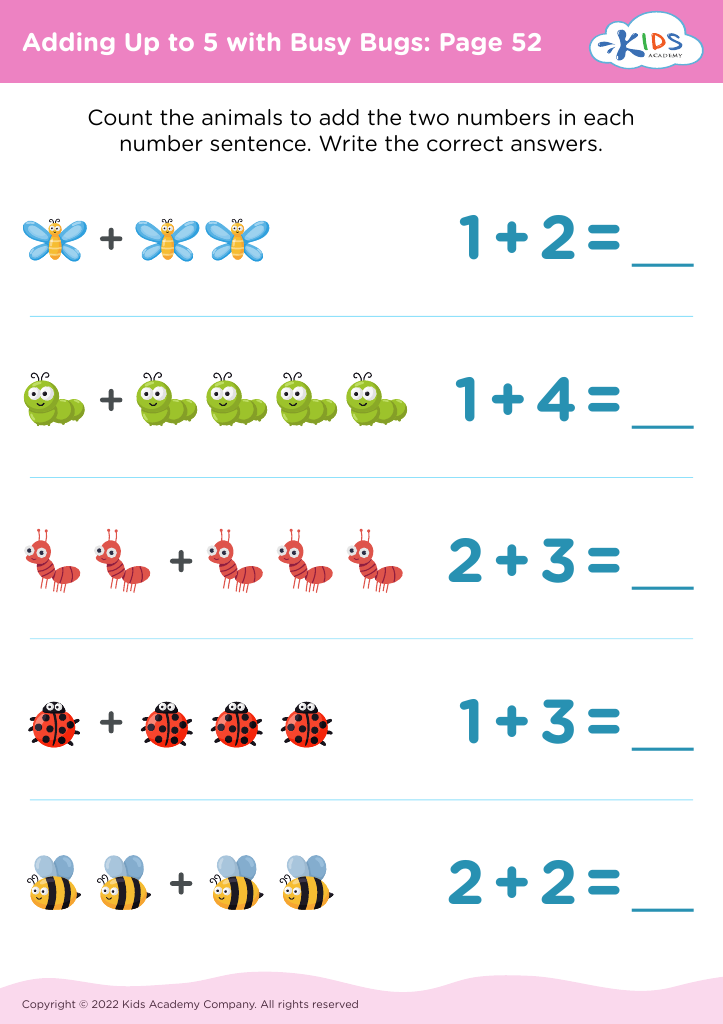
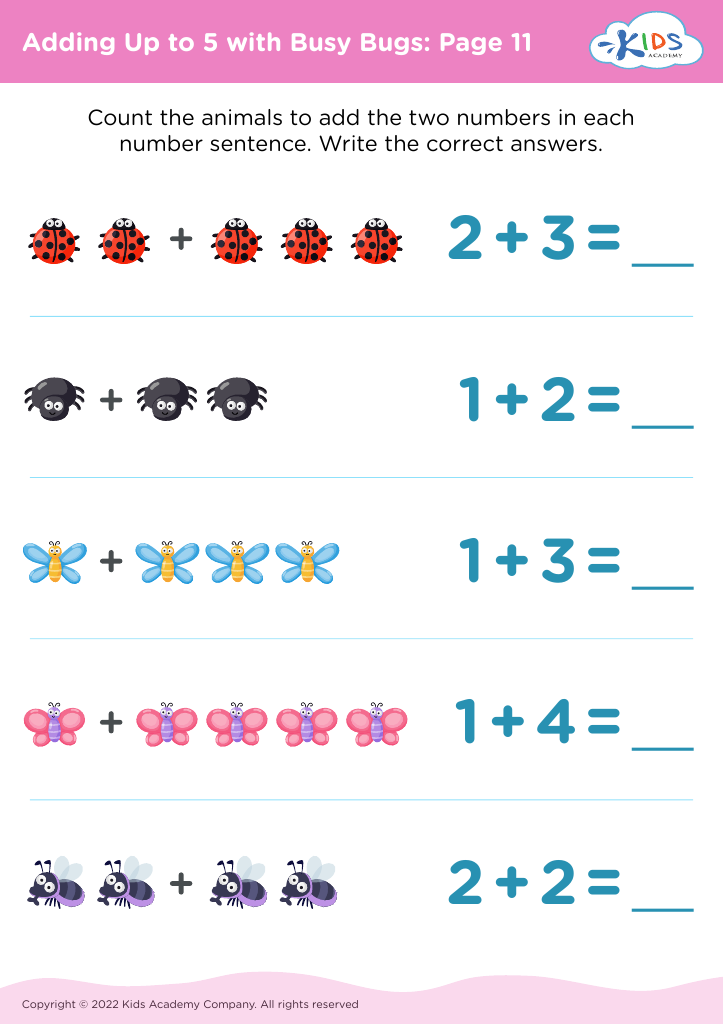



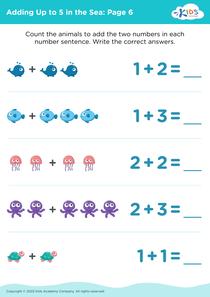
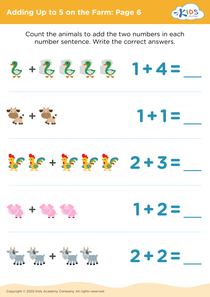
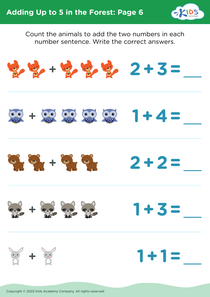
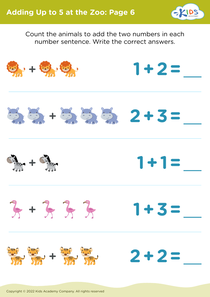
Parents and teachers should care about Basic Addition Skills such as "Adding with Busy Bugs" for children aged 4-7 because early numeracy forms the foundation for future academic success. At this age, children are developing critical thinking and problem-solving skills, and introducing engaging methods like the Busy Bugs approach makes learning enjoyable and effective. This interactive method utilizes visual aids and playful characters, which capture children's interest and encourage active participation.
Moreover, mastering basic addition enhances a child's confidence and fosters a positive attitude towards math. As they progress, a solid grasp of addition can lead to improved performance in more complex mathematical concepts, directly impacting their overall academic journey.
Additionally, early math skills support cognitive development by teaching children to recognize patterns, develop logical reasoning, and improve memory. This skill set not only aids in mathematics but also reflects on disciplines like science and literacy. When parents and teachers prioritize effective tools like Busy Bugs, they contribute significantly to creating a supportive environment where young learners can thrive emotionally and intellectually. Ultimately, investing time in basic addition equips children with essential skills that will serve them throughout their educational pathway and beyond.