Problem-Solving Skills Addition and Subtraction Word Problems Worksheets for Ages 4-7 - Page 2
33 filtered results
-
From - To
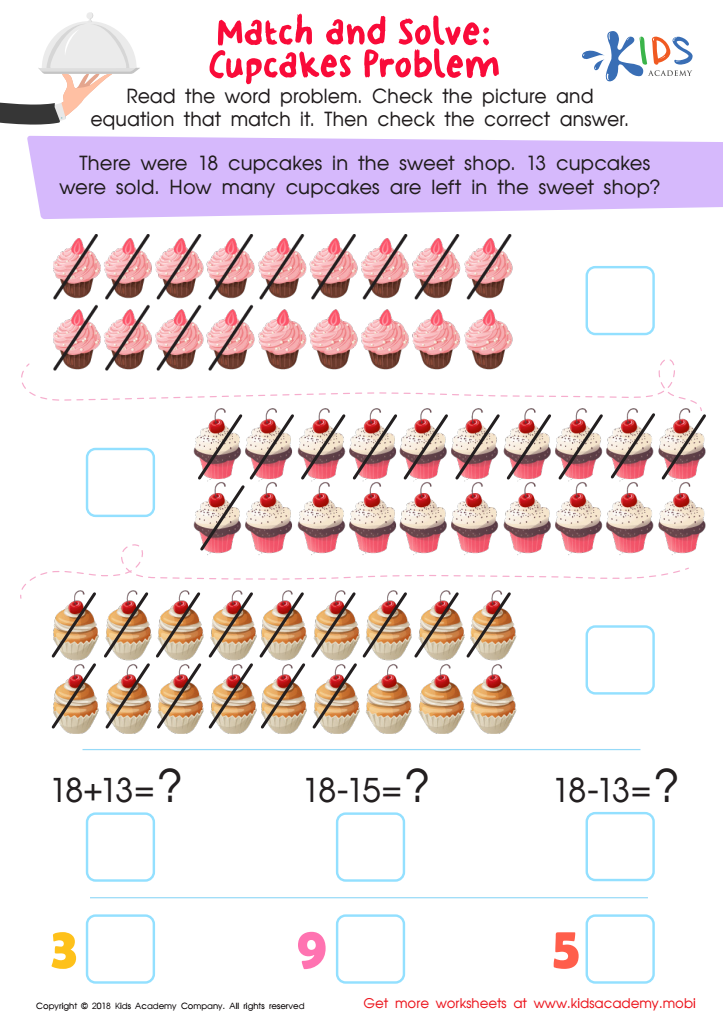
Match and Solve: Cupcakes Problem Worksheet
 Assign to My Students
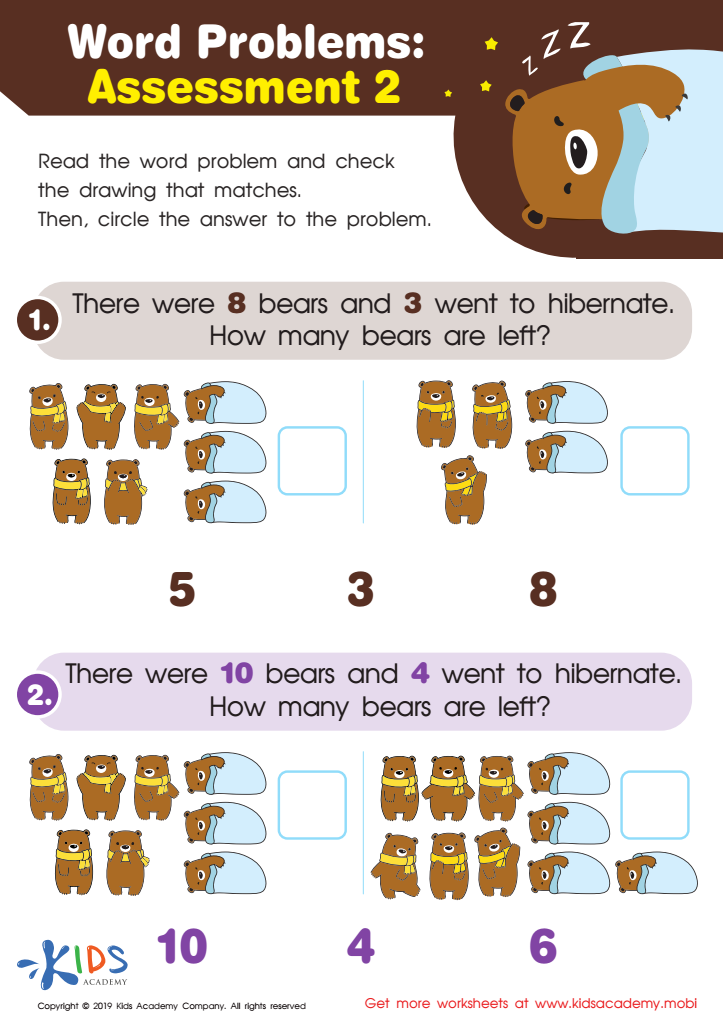
Word Problems: Assessment 2 Worksheet
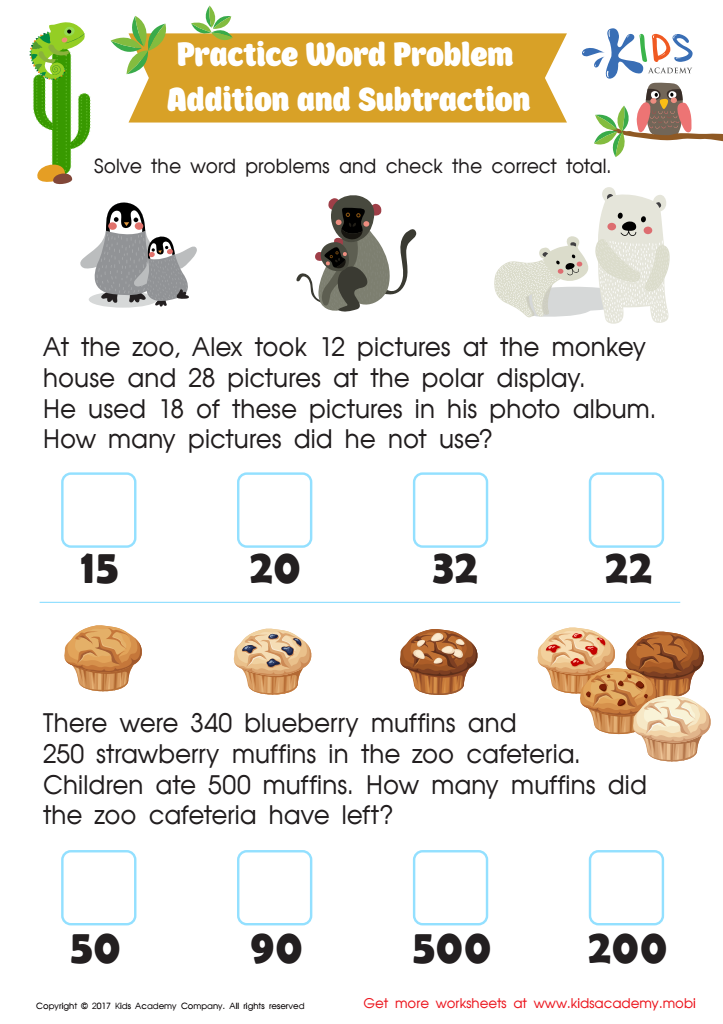
Addition and Subtraction: Word Problems Worksheet
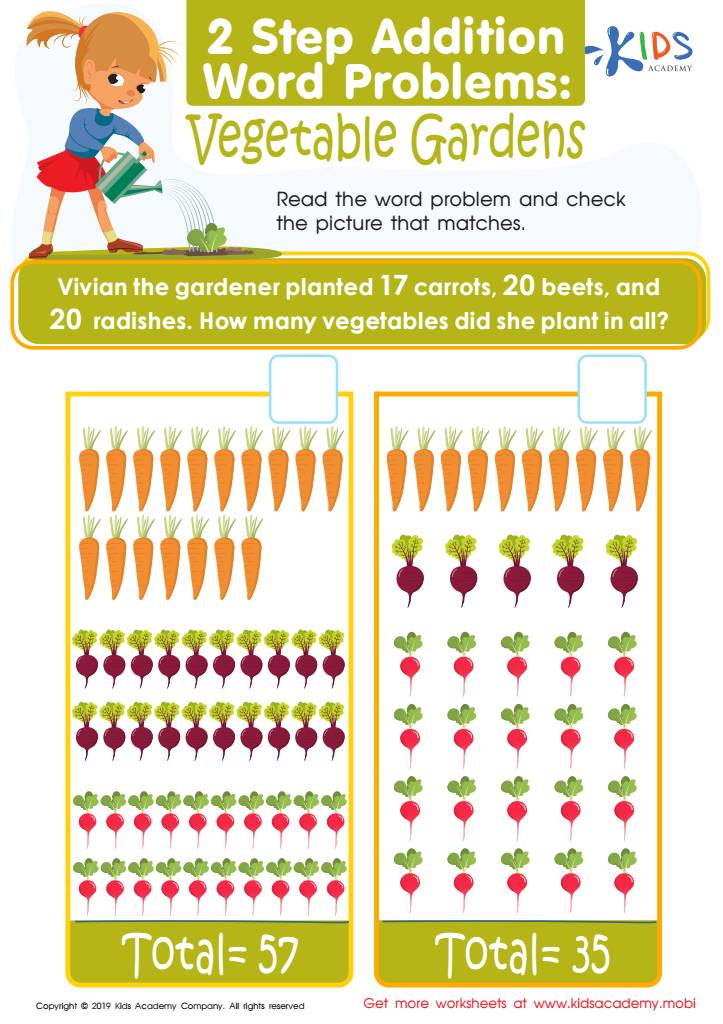
Vegetable Gardens Worksheet
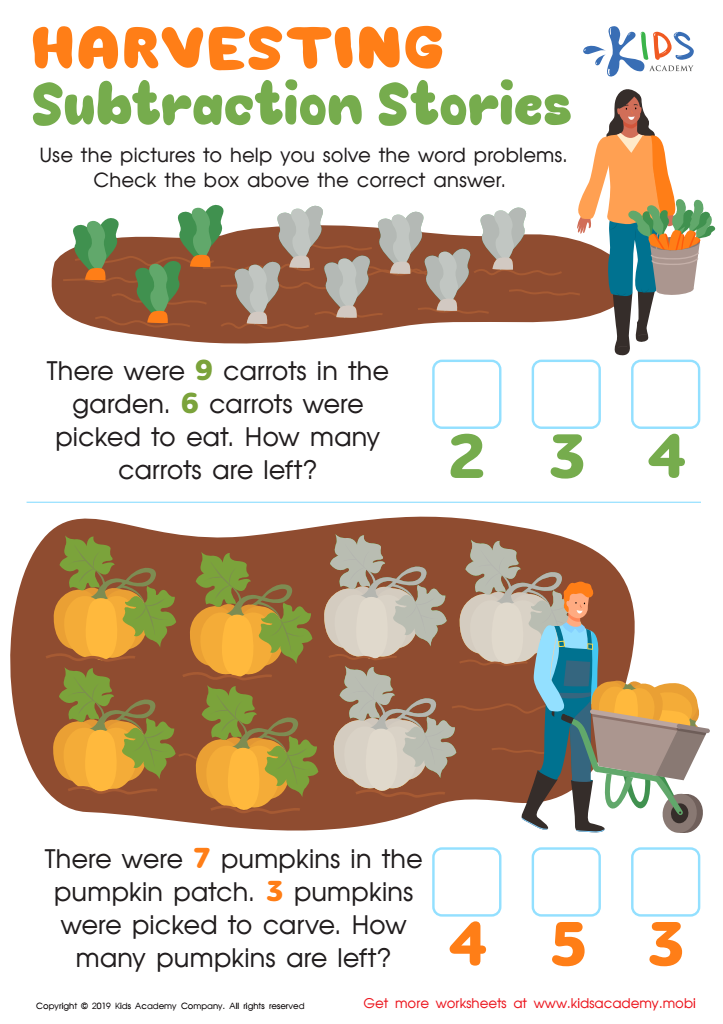
Harvesting Subtraction Stories Worksheet
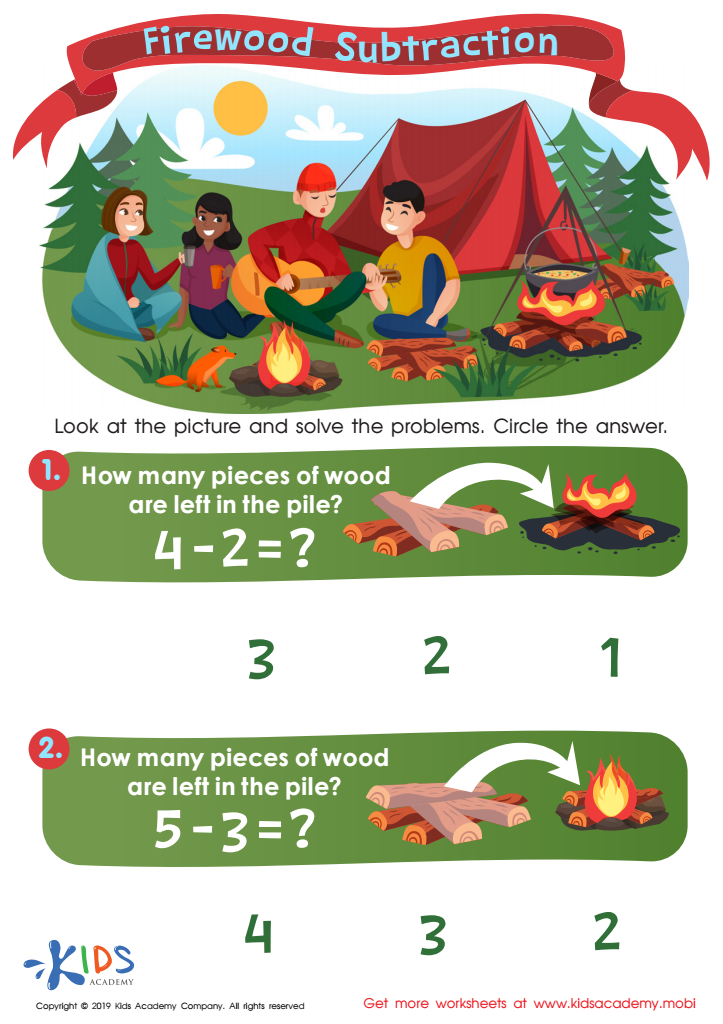
Firewood Subtraction Worksheet
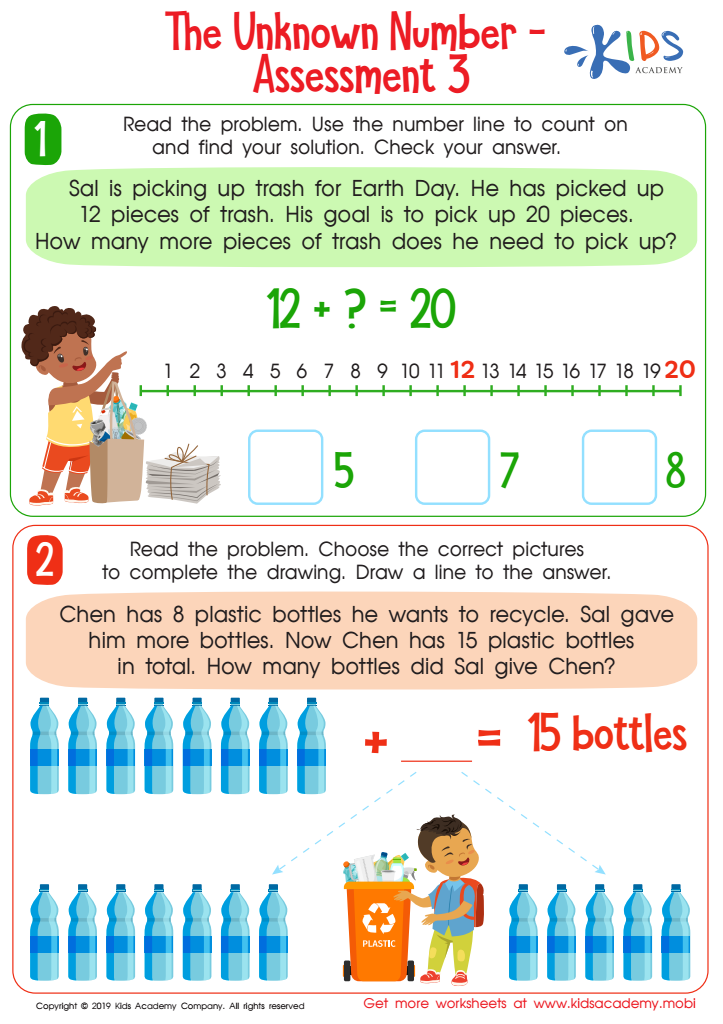
The Unknown Number - Assessment 3 Worksheet
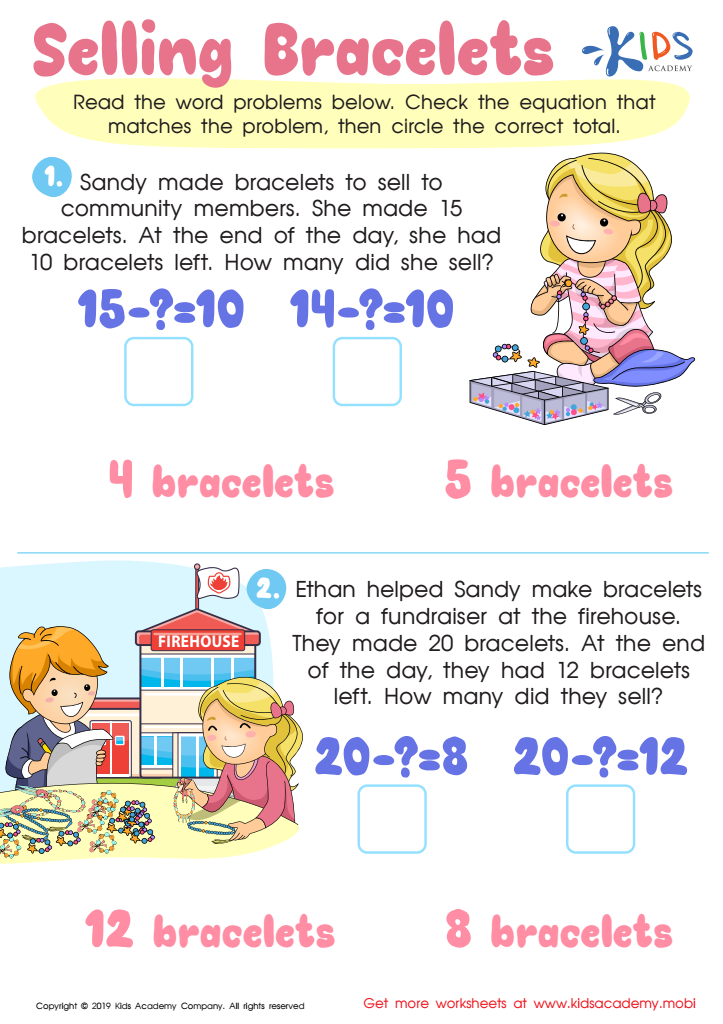
Selling the Bracelets Worksheet
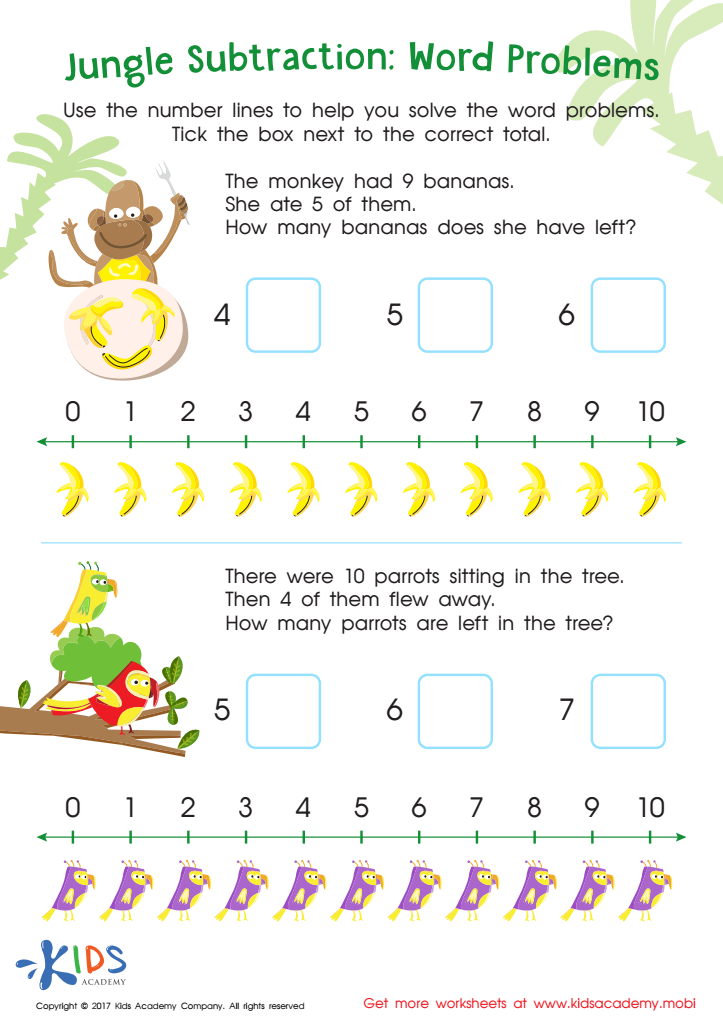
Jungle Subtraction Word Problems Substraction Worksheet








Teaching problem-solving skills through addition and subtraction word problems to children aged 4-7 is crucial for several reasons. Firstly, these early math activities lay a foundational understanding of basic arithmetic, which is essential for more advanced mathematical concepts they will encounter later. By engaging with word problems, children learn to contextualize numbers and operations, helping them realize the practical applications of math in everyday life.
Additionally, problem-solving with addition and subtraction enhances critical thinking skills. It encourages young learners to analyze situations, consider various solutions, and logically reason through problems. This ability to think critically is a skill that extends beyond mathematics and is applicable across all areas of learning and daily decision-making.
Moreover, tackling word problems fosters language development and reading comprehension. Understanding the problem requires children to read, interpret, and make sense of written instructions, thereby enhancing their literacy skills simultaneously.
Lastly, successfully solving math problems builds confidence and a positive attitude towards learning. When children see that they can overcome challenging tasks, it boosts their self-esteem and encourages a growth mindset. Therefore, parents and teachers should prioritize problem-solving skills in early math education to develop well-rounded, competent, and confident learners.