Visual Learning Addition and Subtraction Word Problems Worksheets for Ages 4-7
5 filtered results
-
From - To
Enhance your child's mathematical skills with our Visual Learning Addition and Subtraction Word Problems Worksheets, designed for ages 4-7. These engaging worksheets use vivid illustrations to make learning fun and intuitive, helping young learners to grasp basic math concepts effortlessly. Our visual approach not only simplifies understanding of addition and subtraction word problems but also boosts problem-solving abilities and critical thinking. Perfect for early grade students, these worksheets align with educational standards and provide a solid foundation for future math success. Download and print our expertly crafted resources to support your child’s learning journey today!
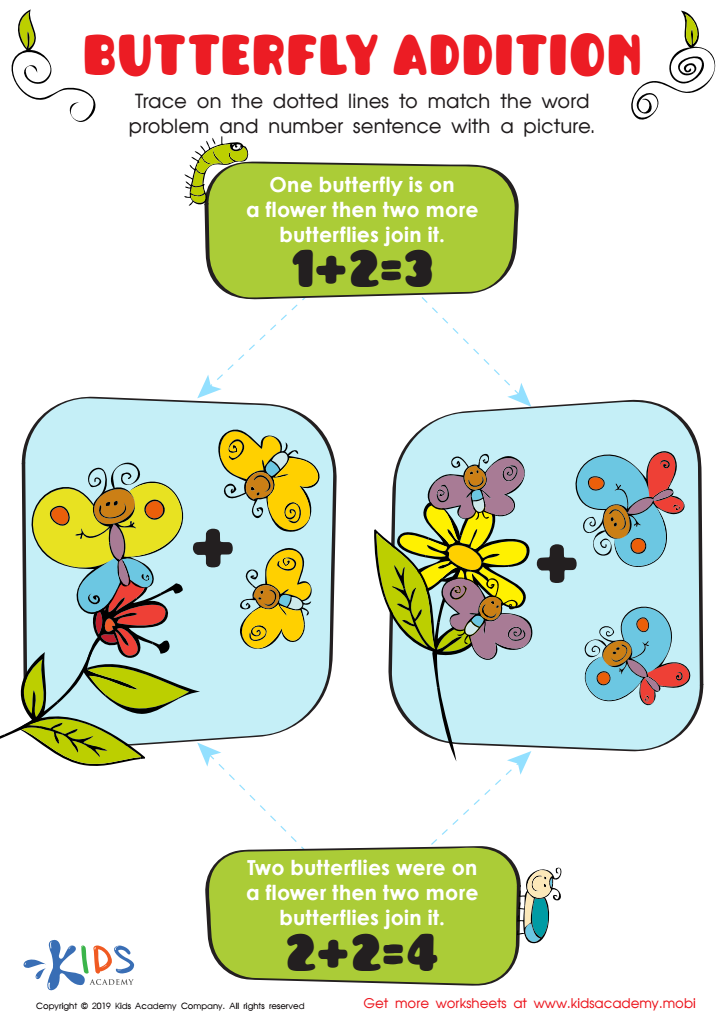
Butterfly Addition Worksheet
 Assign to My Students
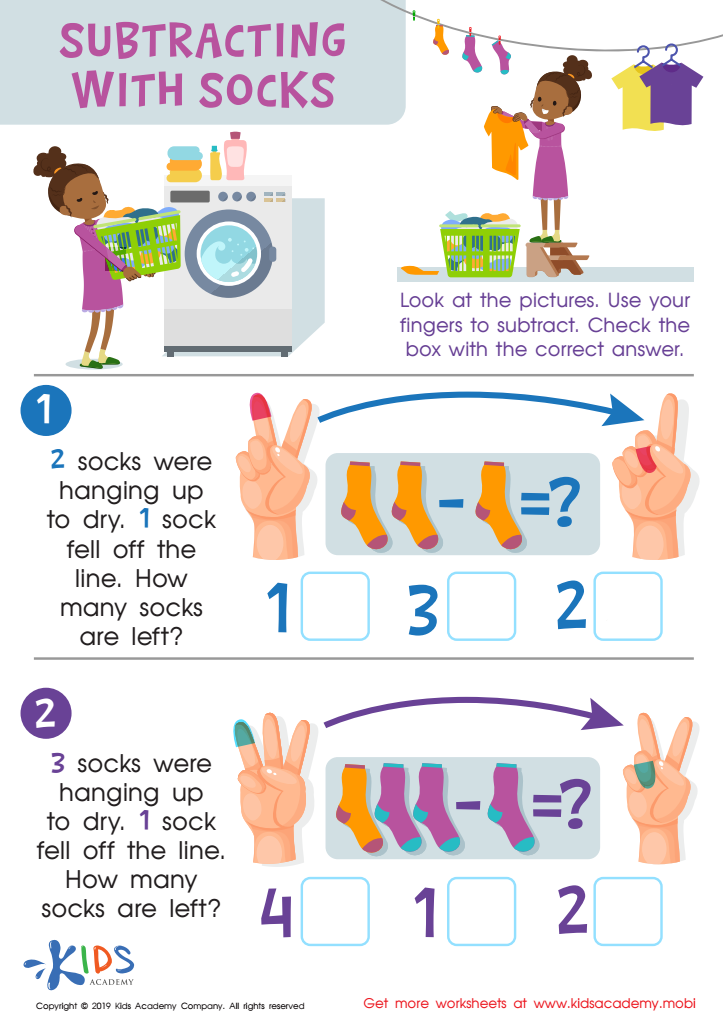
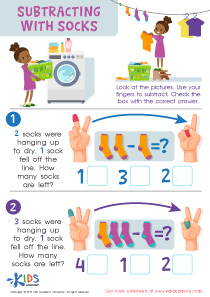
Subtracting Socks Worksheet
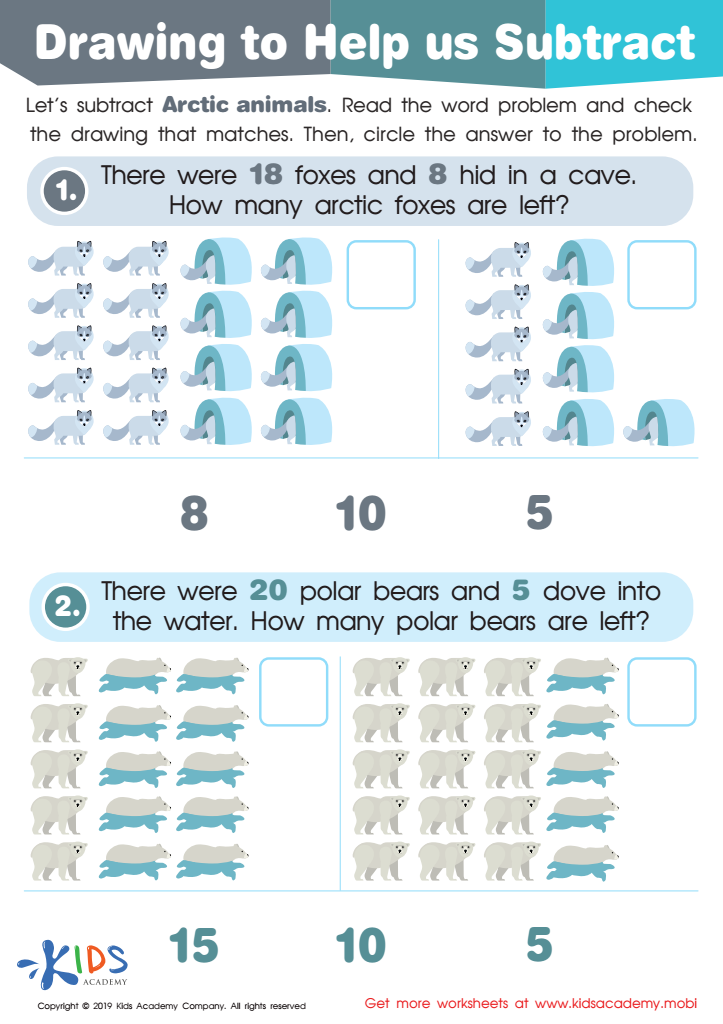
Drawing to Help Us Subtract Worksheet
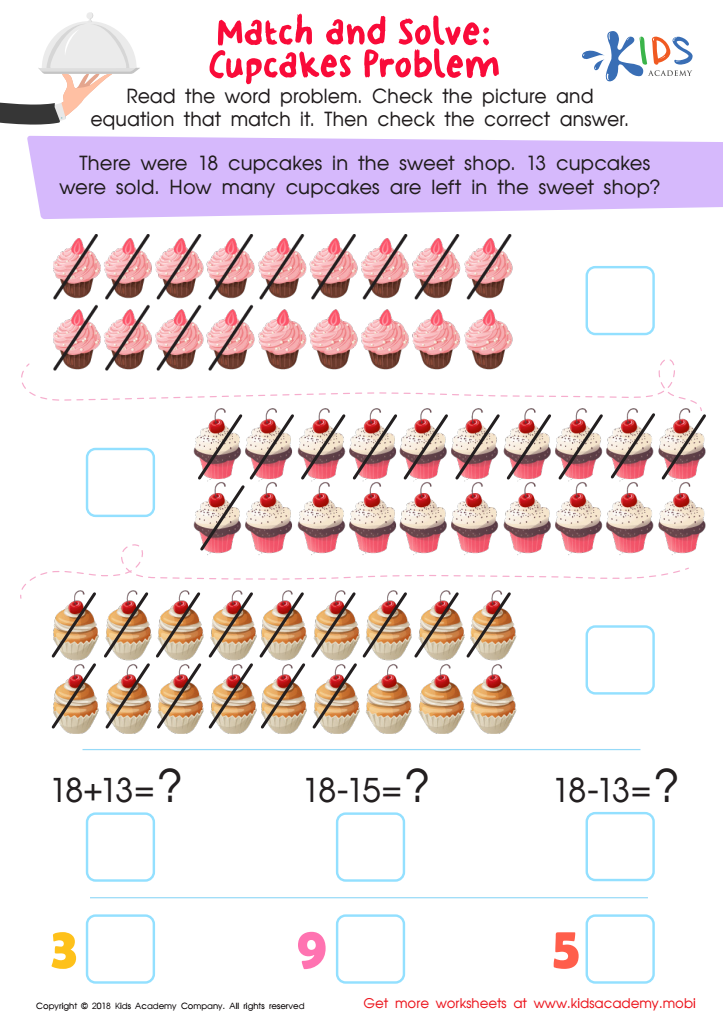
Match and Solve: Cupcakes Problem Worksheet
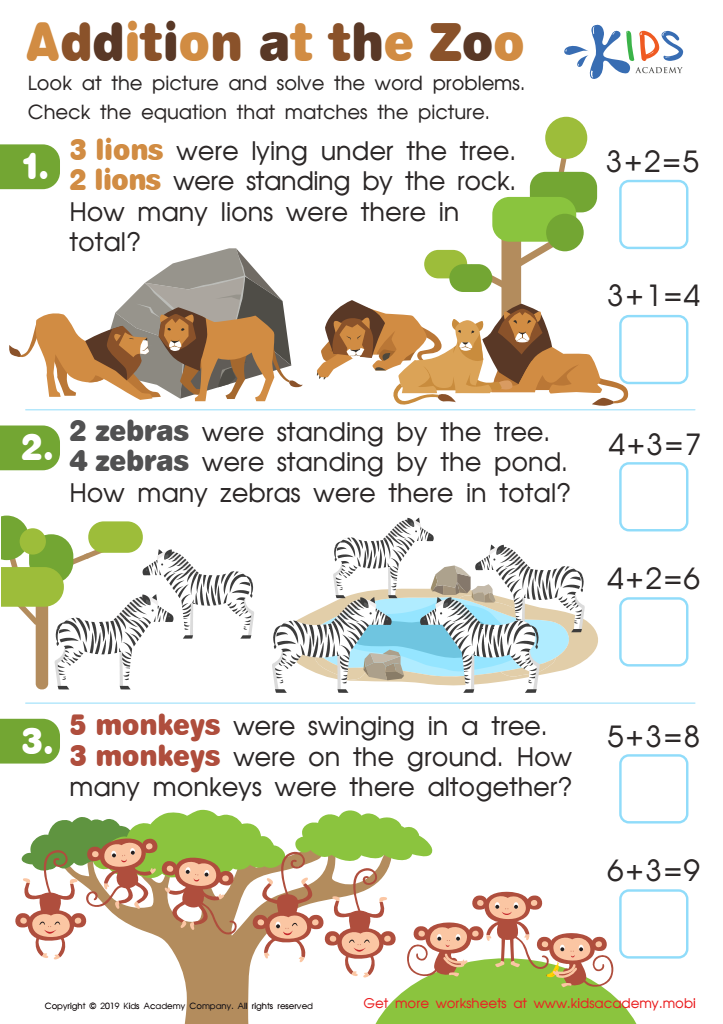
Addition at the Zoo Worksheet








Visual learning addition and subtraction word problems are crucial for children aged 4-7 because they facilitate the development of essential early math skills in an engaging and comprehensible manner. At this age, children are typically in the pre-operational and early concrete operational stages of cognitive development, according to Piaget’s theory, meaning they benefit greatly from visual aids and hands-on activities.
Using visual learning techniques, such as pictures, objects, and diagrams, helps young learners to better grasp abstract mathematical concepts. When children see pictures associated with word problems, they are able to connect the numerical symbols in the math problems to real-life objects or scenarios, making the math more relatable and less intimidating.
Moreover, visual learning assists in developing critical thinking and problem-solving skills. It encourages children to analyze, interpret, and strategize how to solve a problem. These are foundational skills that underpin more advanced mathematical understanding and general cognitive development.
Parents and teachers should prioritize this approach because it also caters to various learning styles, offering support for visual learners who might struggle with traditional methods. Furthermore, by integrating enjoyable visual elements, children are likely to find the learning process more enjoyable, enhancing their engagement and enthusiasm for math.
In essence, visual learning builds a strong mathematical foundation, encouraging a positive attitude towards math, while promoting essential thinking and problem-solving abilities.