Filters

278 filtered results

Clear all filters
Favorites
With answer key
Interactive

278 filtered results

Difficulty Level

Grade


Check out this FREE Trial Lesson on Addition & Subtraction for age 4-7!

Sorting Objects into 3 Categories

Favorites
With answer key
Interactive
  • 4-7
  • Basic Addition Skills
  • Addition & Subtraction
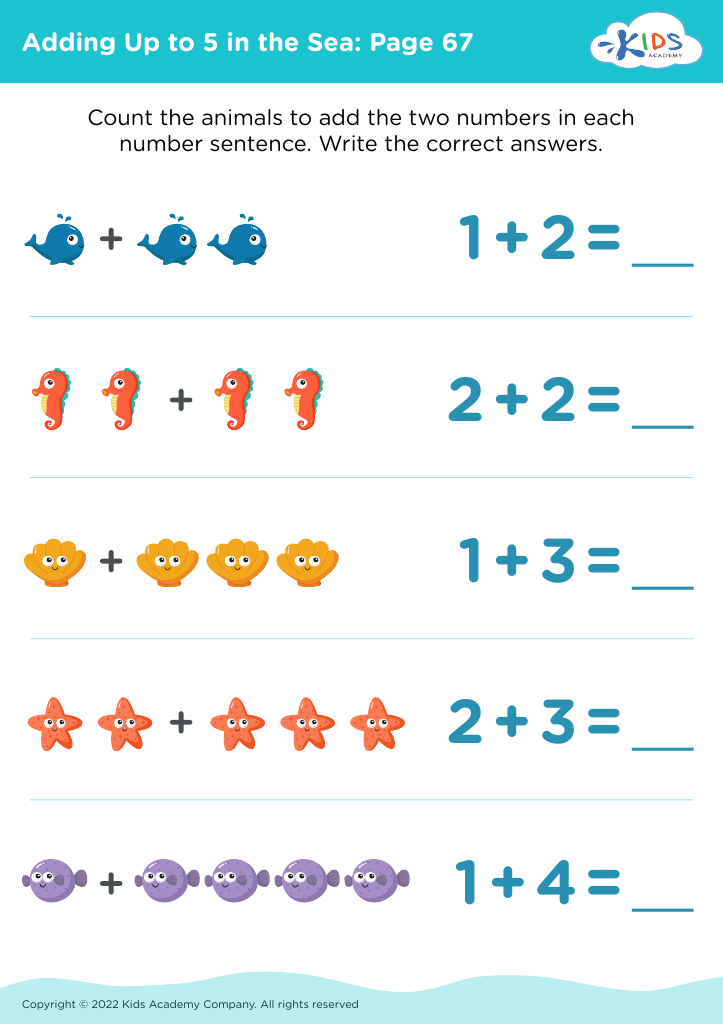
Adding Up to 5 in the Sea: Page 67
Worksheet
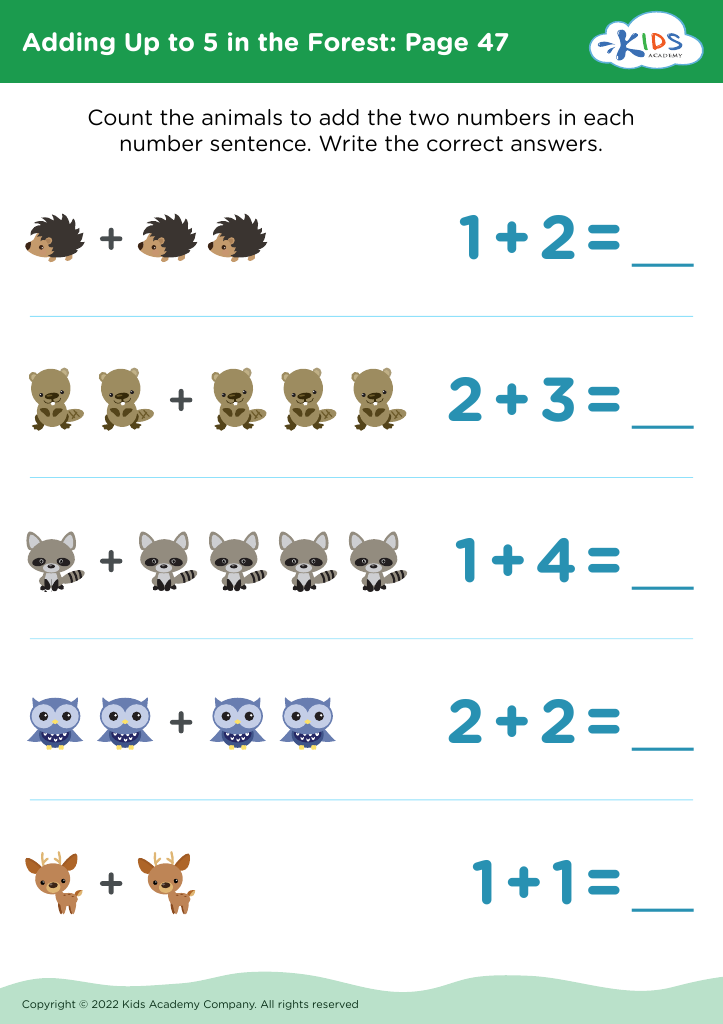
Adding Up to 5 in the Forest: Page 47
Worksheet
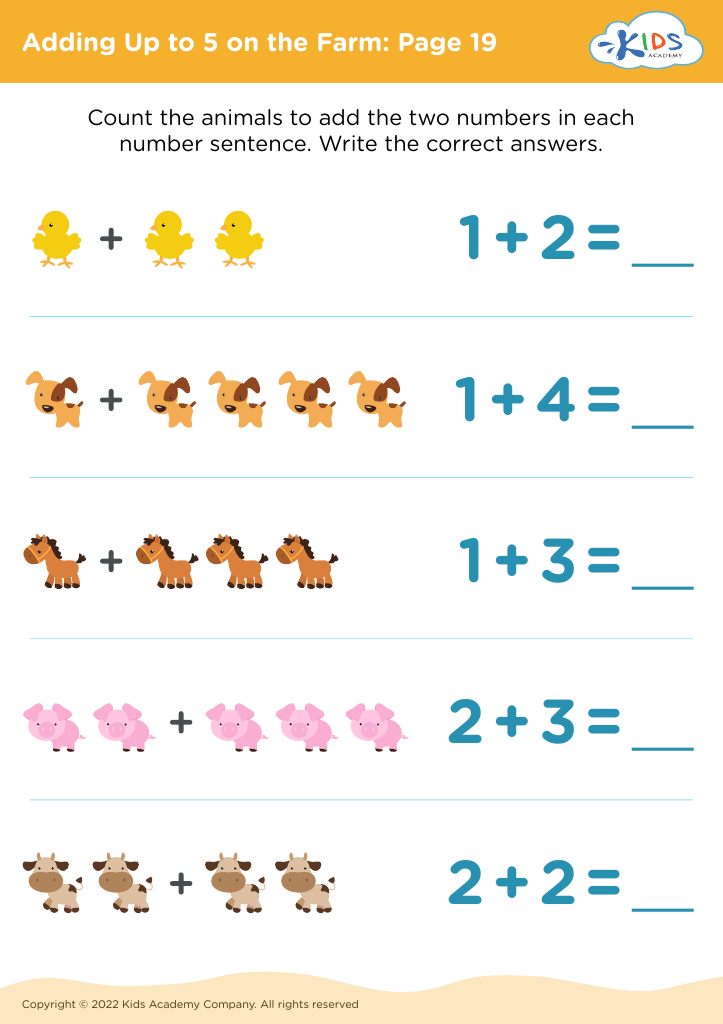
Adding Up to 5 on the Farm: Page 19
Worksheet
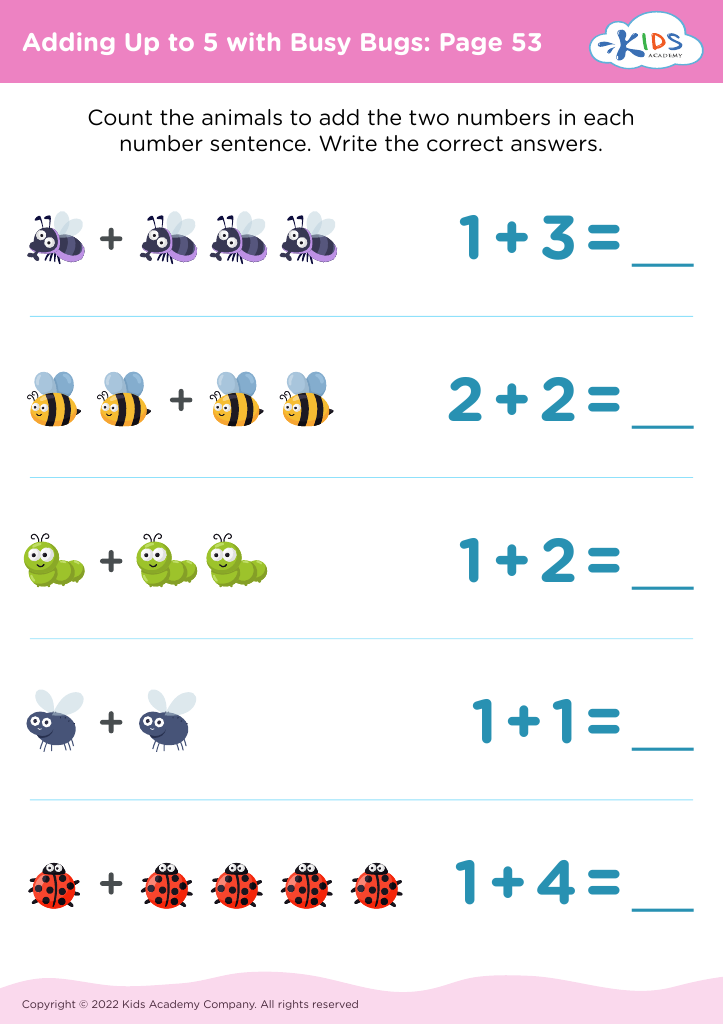
Adding Up to 5 with Busy Bugs: Page 53
Worksheet
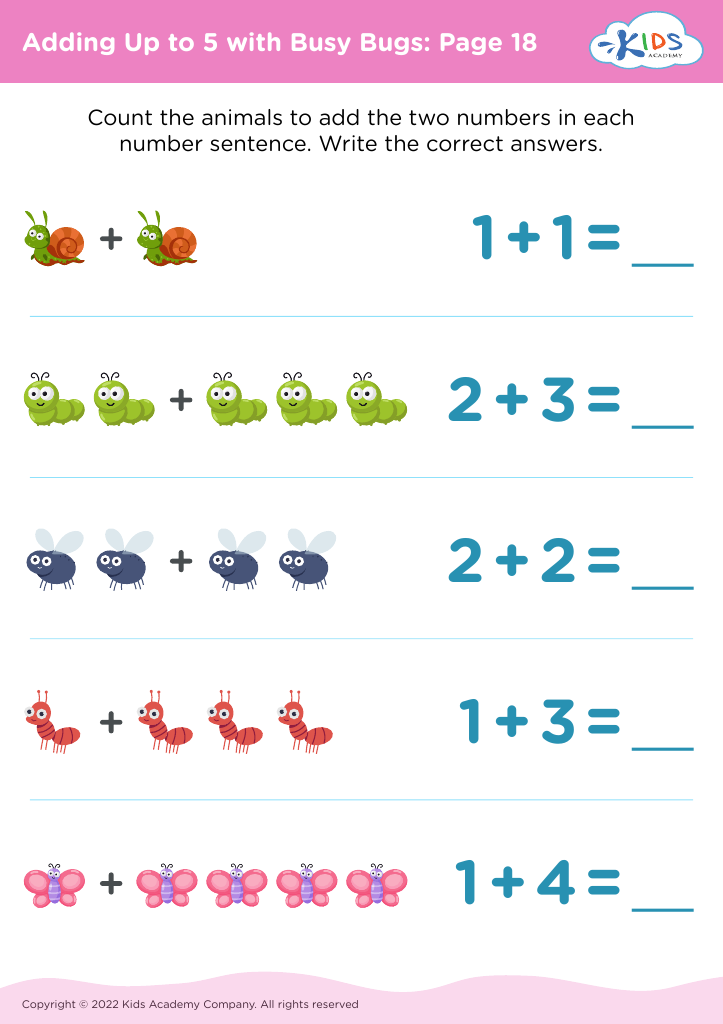
Adding Up to 5 with Busy Bugs: Page 18
Worksheet
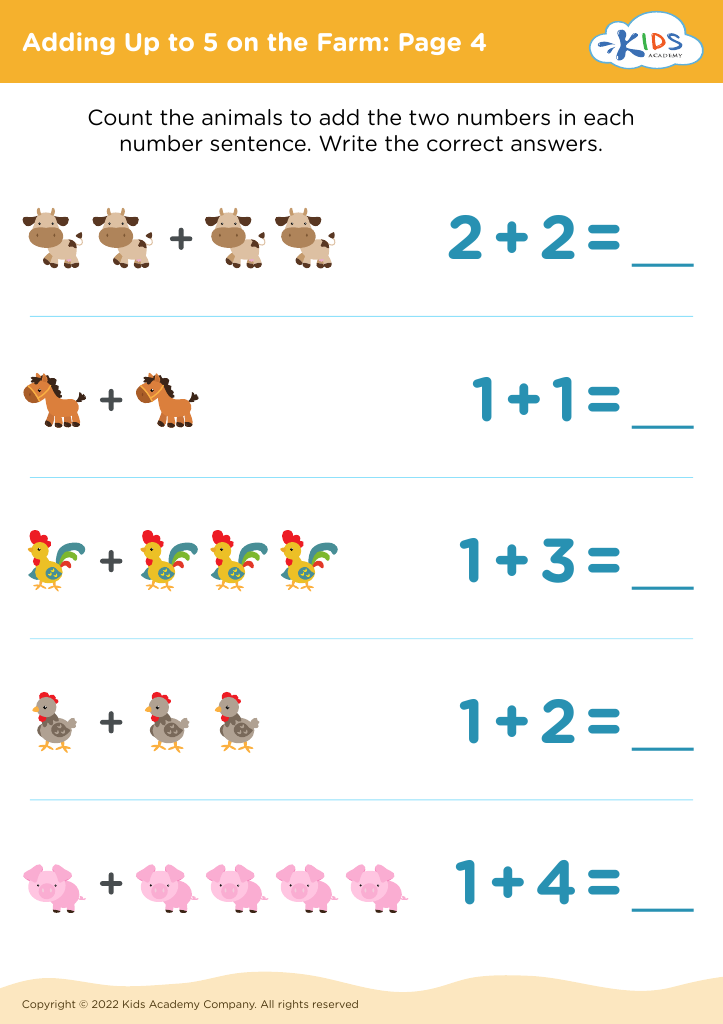
Adding Up to 5 on the Farm: Page 4
Worksheet
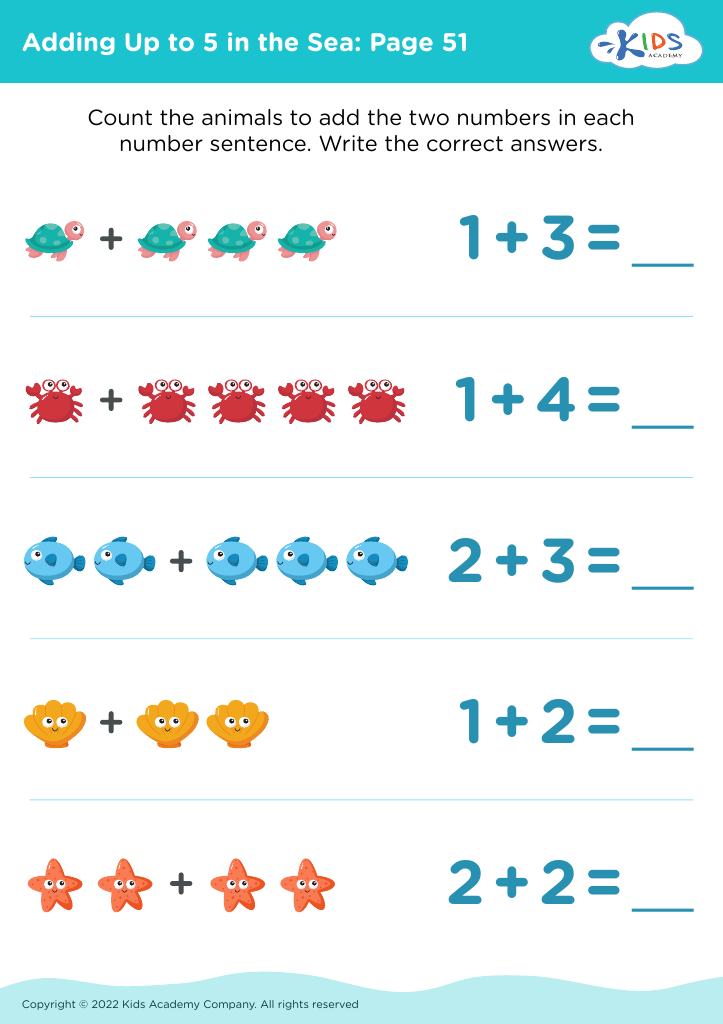
Adding Up to 5 in the Sea: Page 51
Worksheet
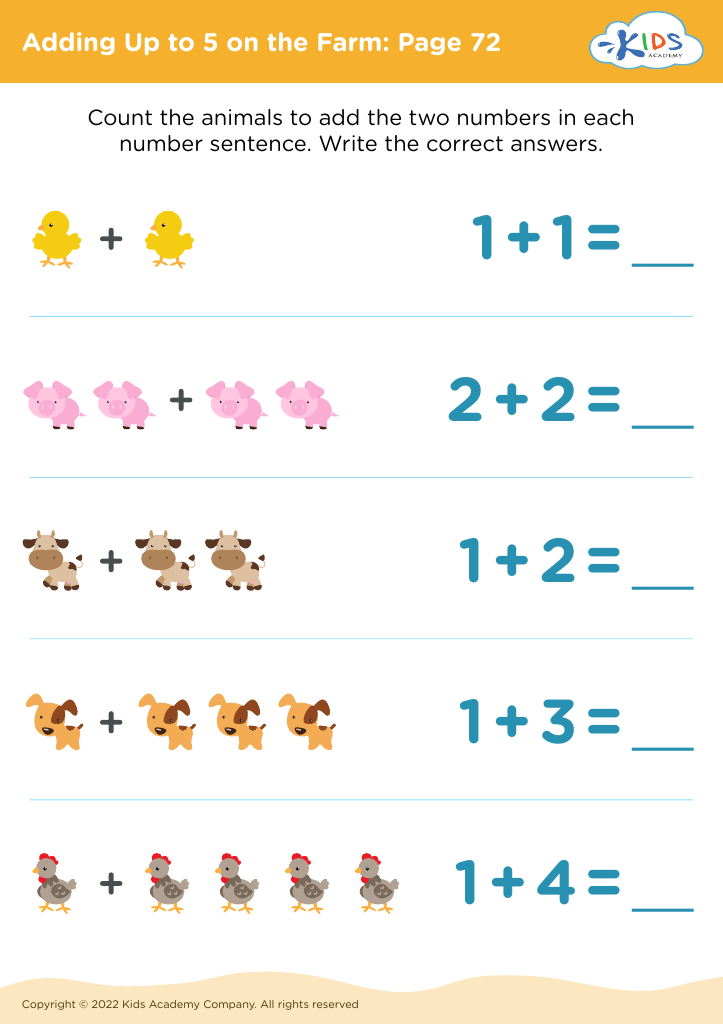
Adding Up to 5 on the Farm: Page 72
Worksheet
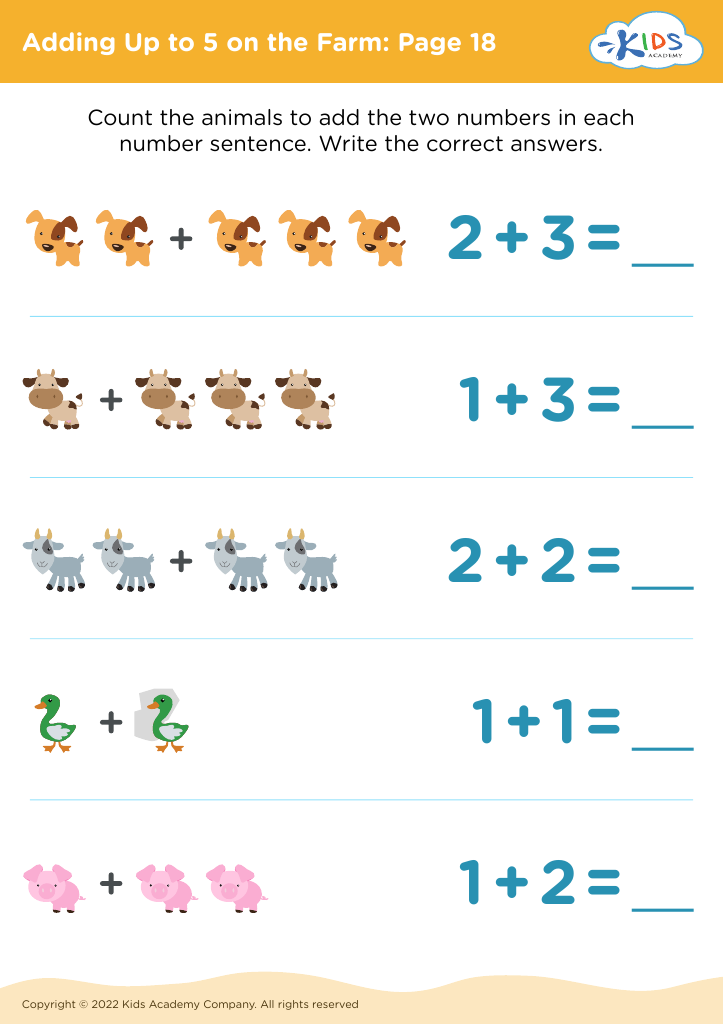
Adding Up to 5 on the Farm: Page 18
Worksheet
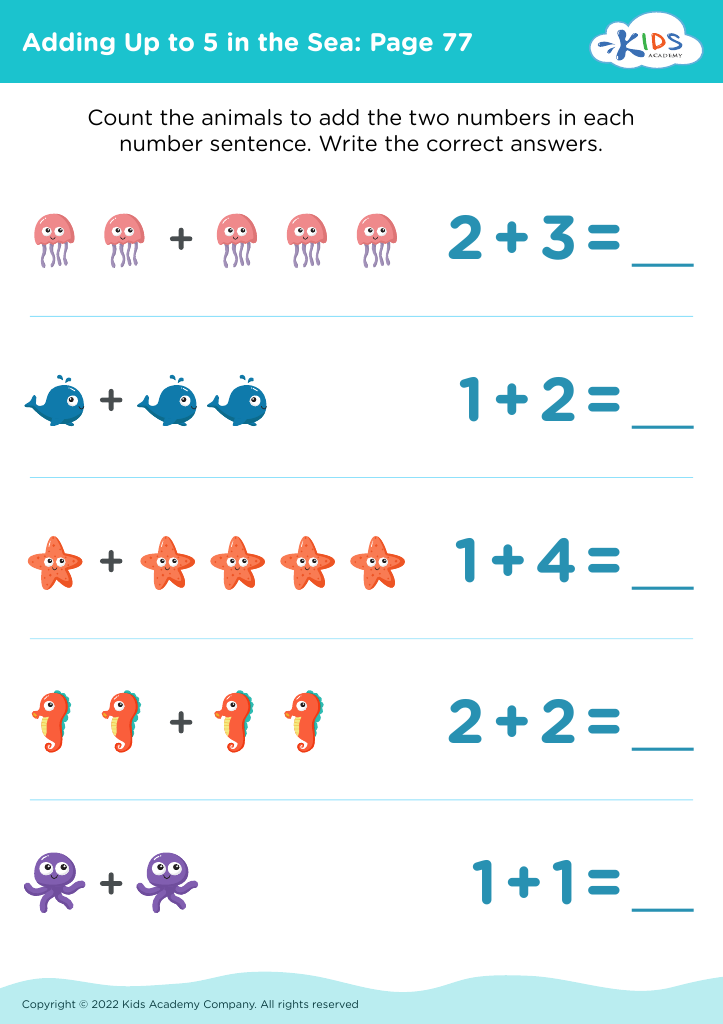
Adding Up to 5 in the Sea: Page 77
Worksheet
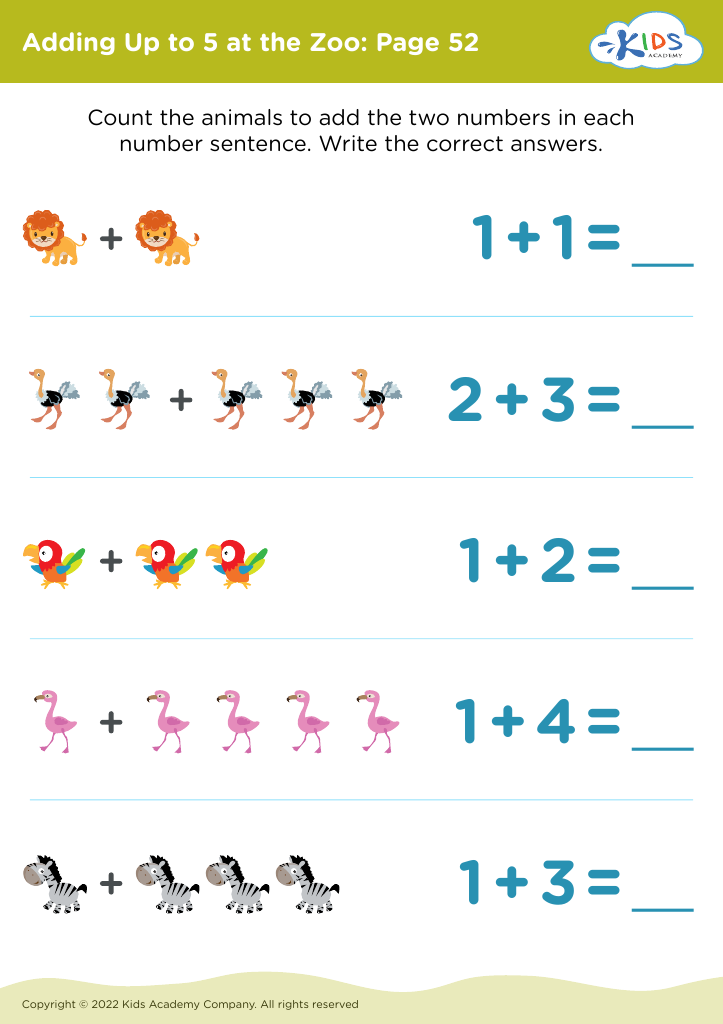
Adding Up to 5 at the Zoo: Page 52
Worksheet
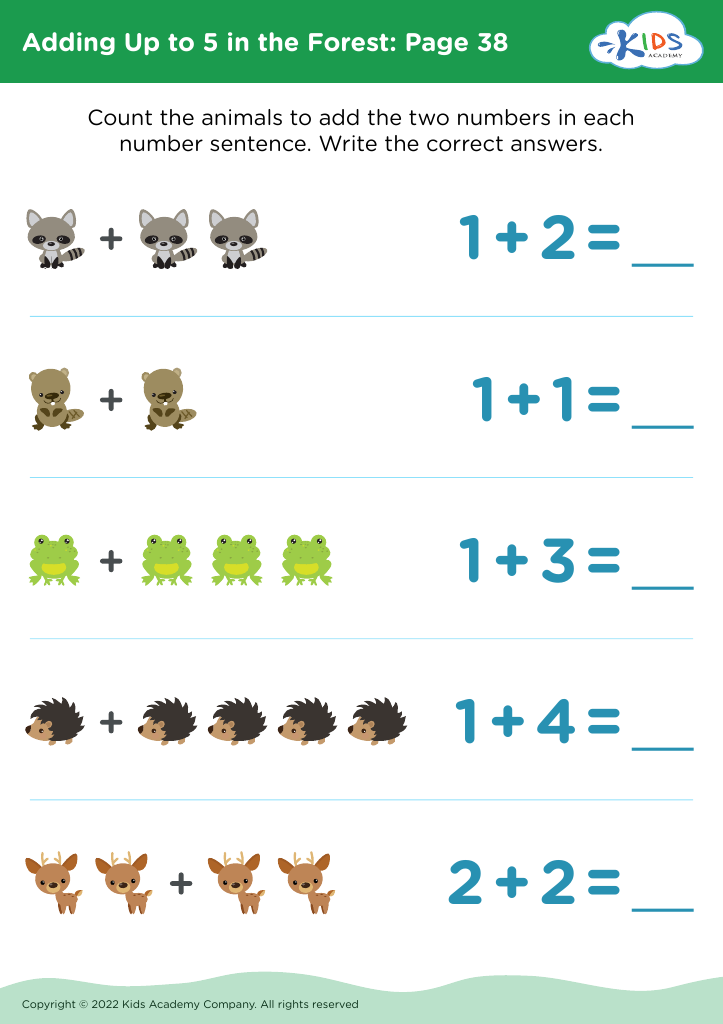
Adding Up to 5 in the Forest: Page 38
Worksheet
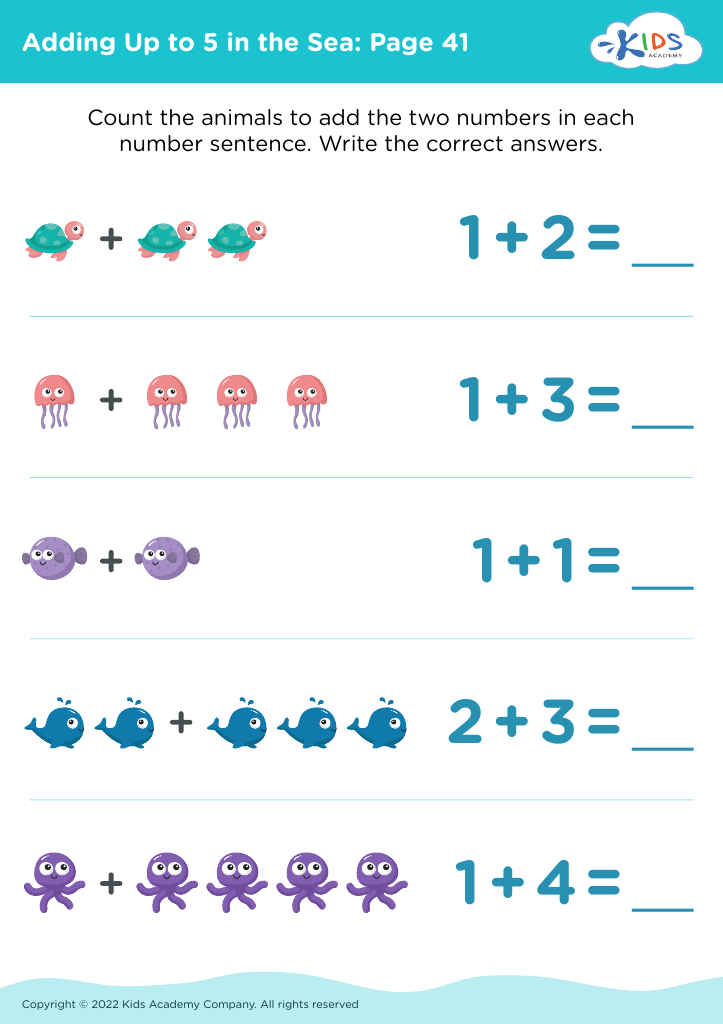
Adding Up to 5 in the Sea: Page 41
Worksheet
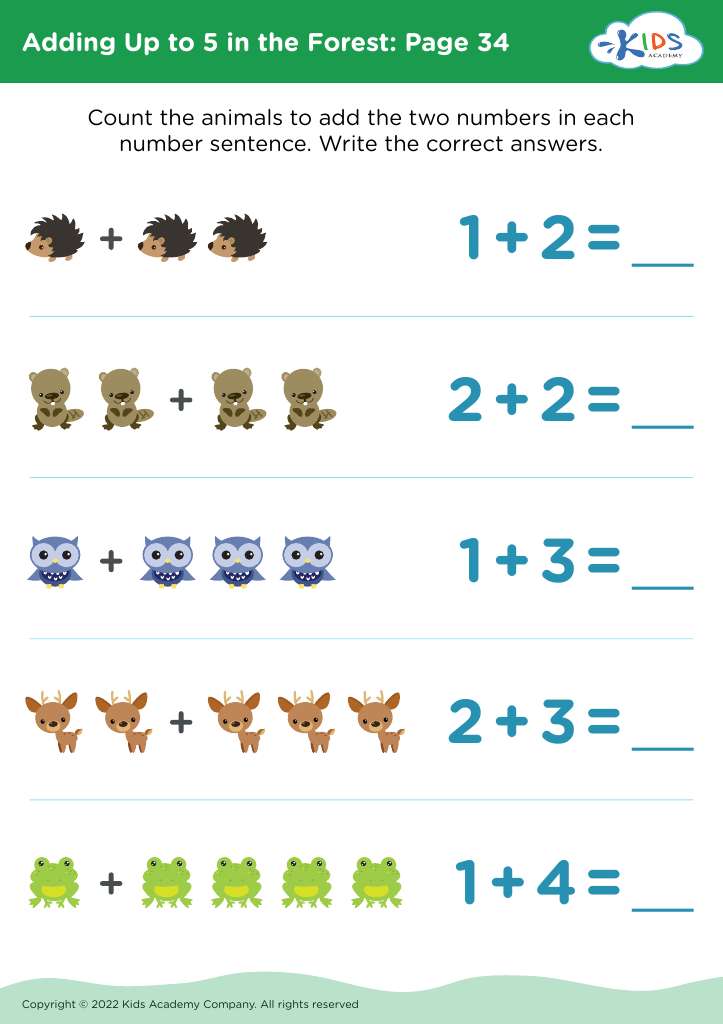
Adding Up to 5 in the Forest: Page 34
Worksheet
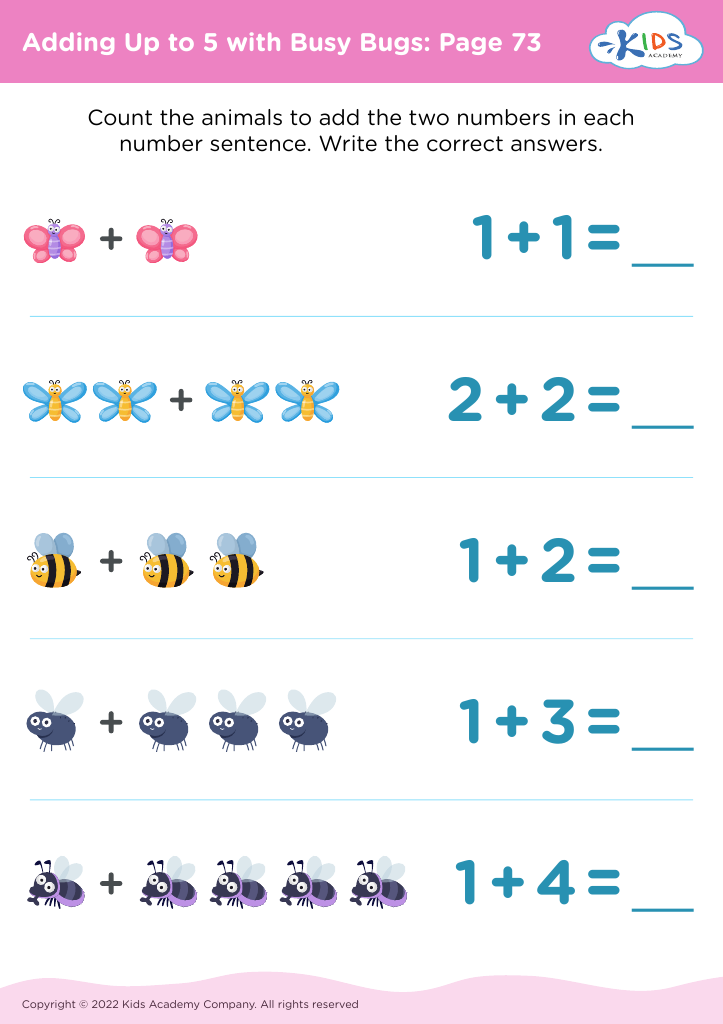
Adding Up to 5 with Busy Bugs: Page 73
Worksheet
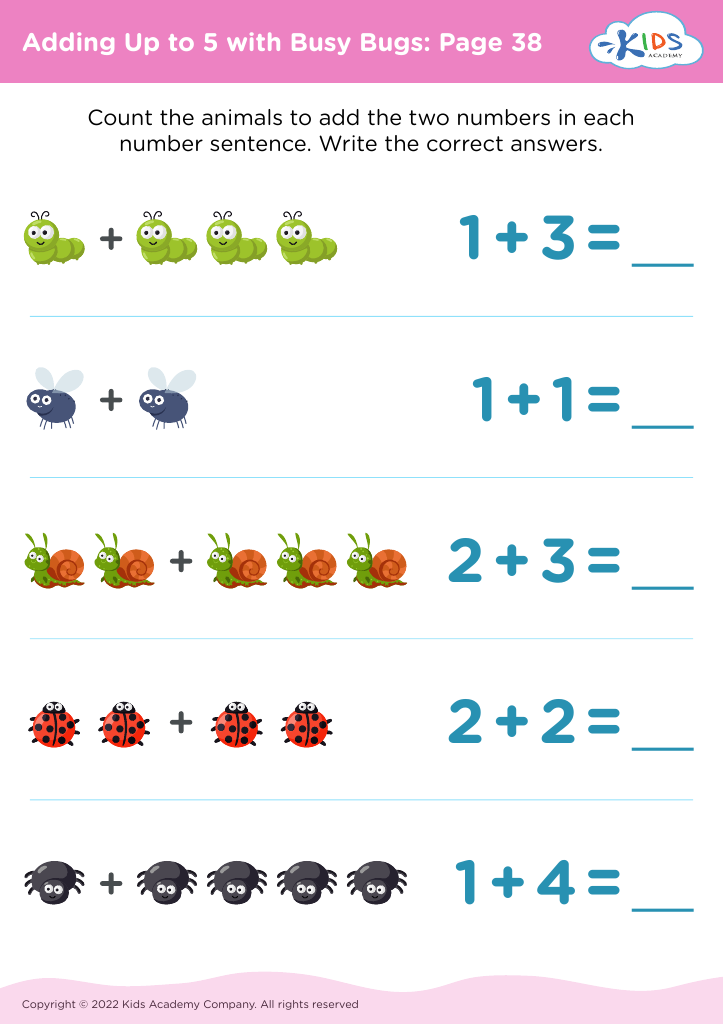
Adding Up to 5 with Busy Bugs: Page 38
Worksheet
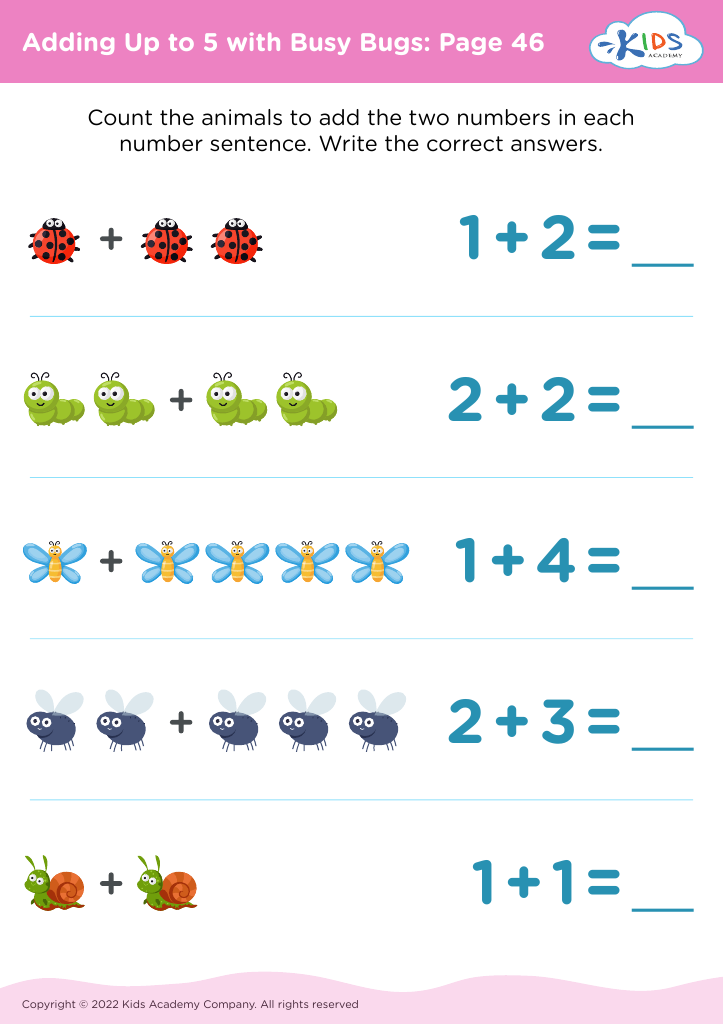
Adding Up to 5 with Busy Bugs: Page 46
Worksheet
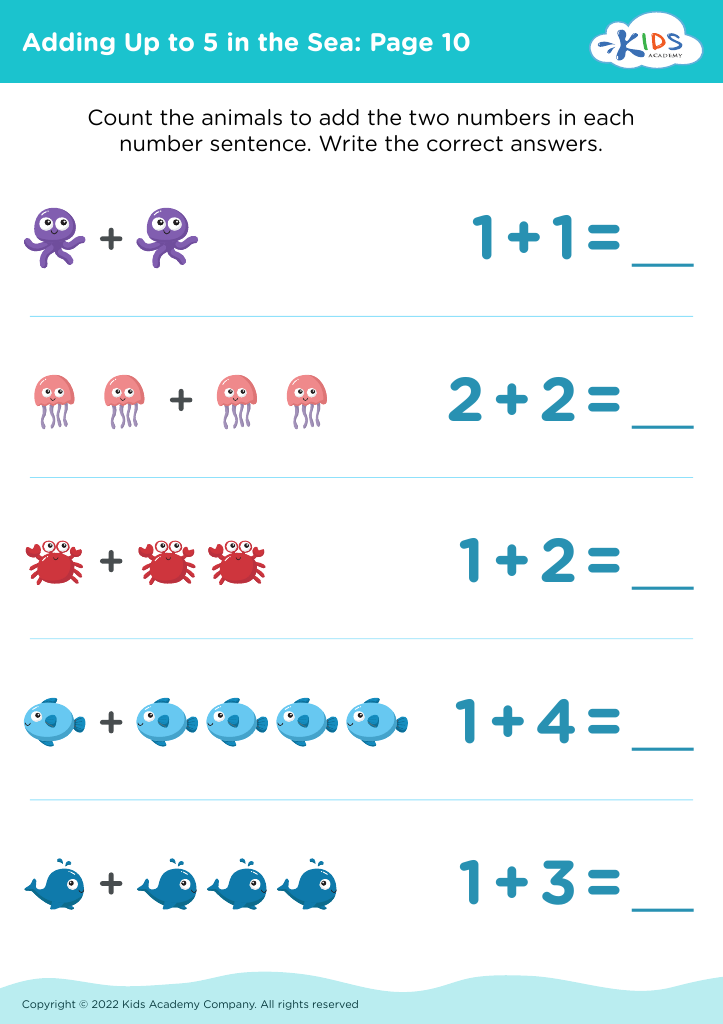
Adding Up to 5 in the Sea: Page 10
Worksheet
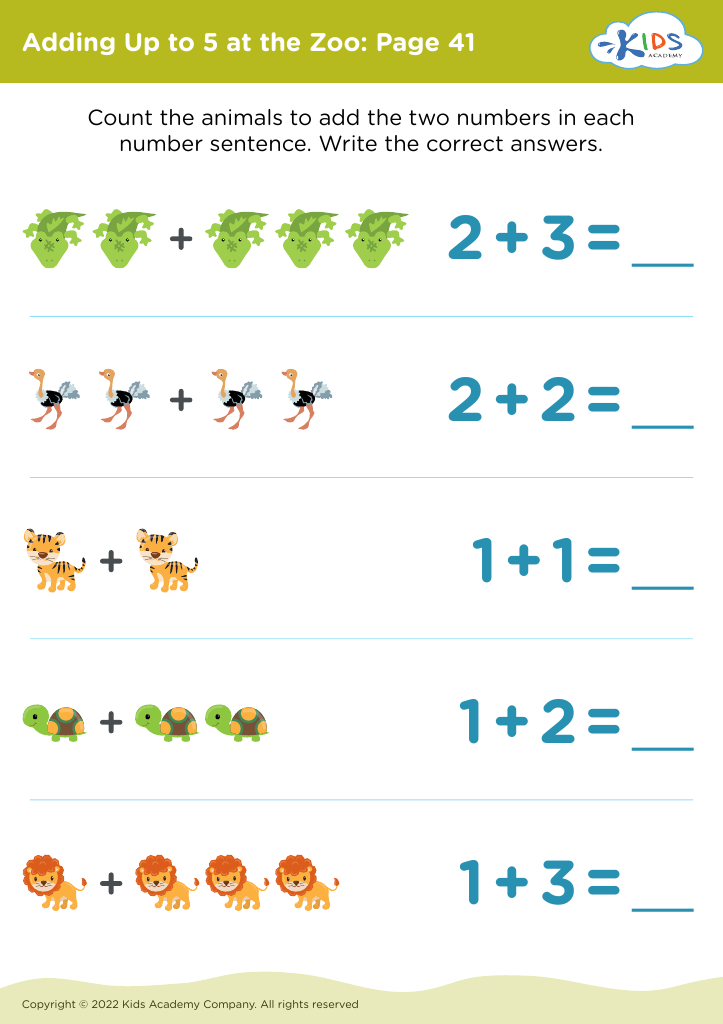
Adding Up to 5 at the Zoo: Page 41
Worksheet
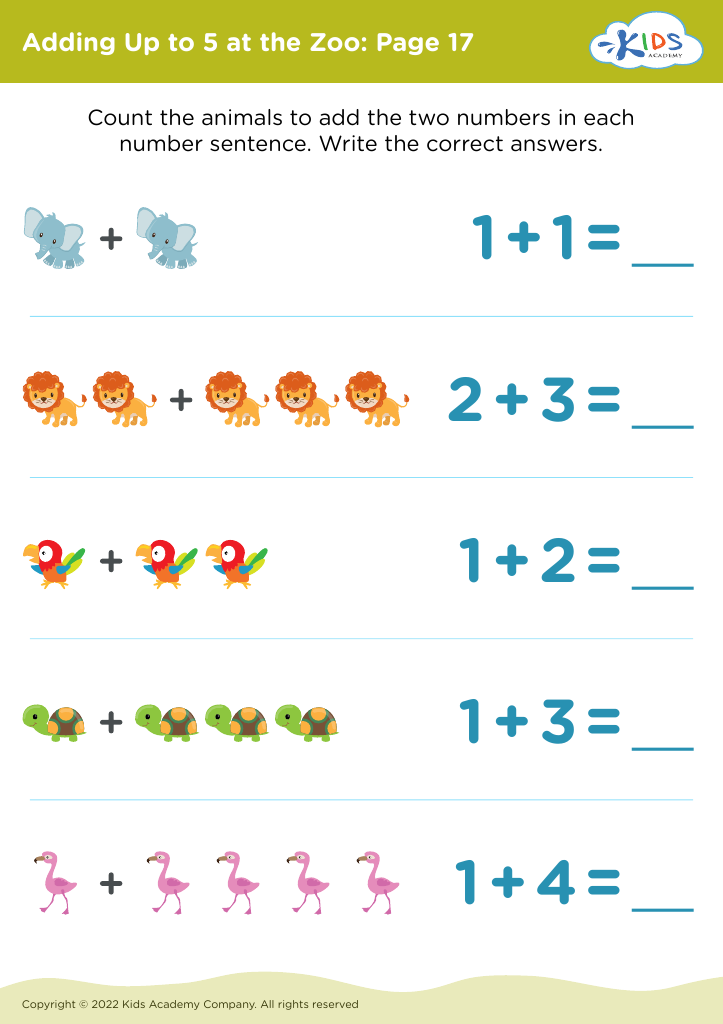
Adding Up to 5 at the Zoo: Page 17
Worksheet
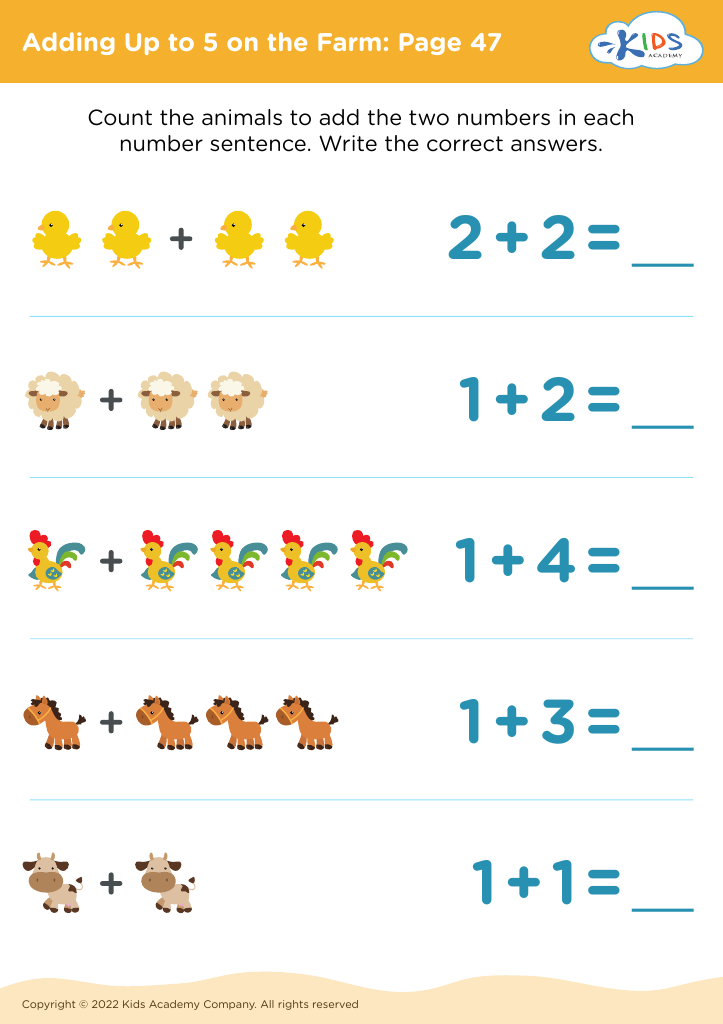
Adding Up to 5 on the Farm: Page 47
Worksheet
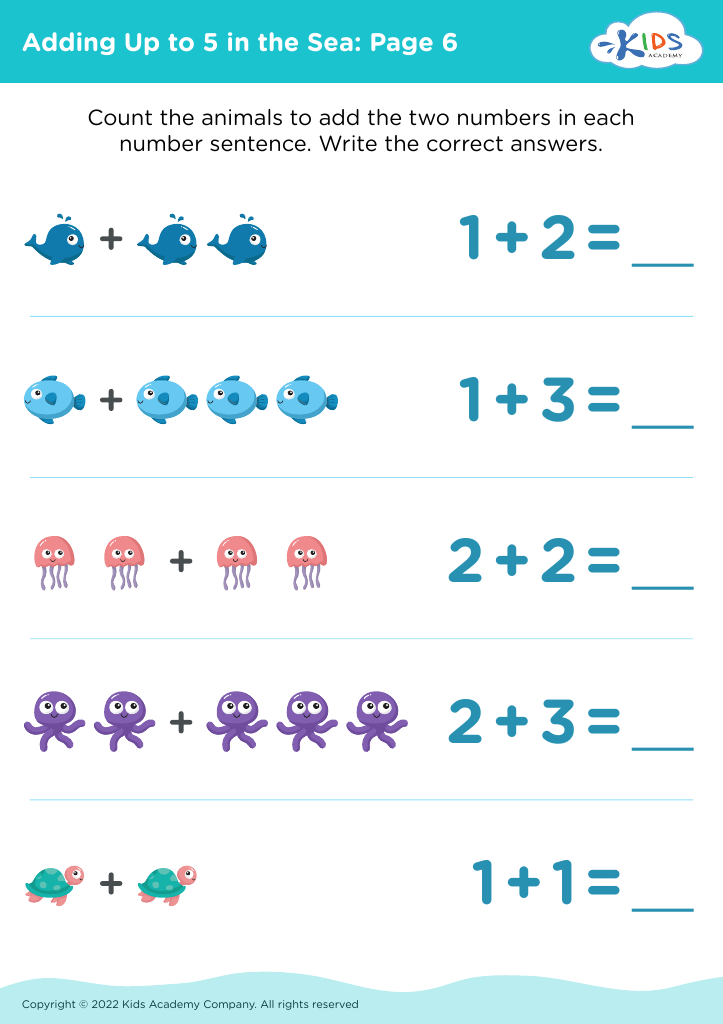
Adding Up to 5 in the Sea: Page 6

Adding Up to 5 in the Sea: Page 6

Adding Up to 5 in the Sea: Page 6
Worksheet
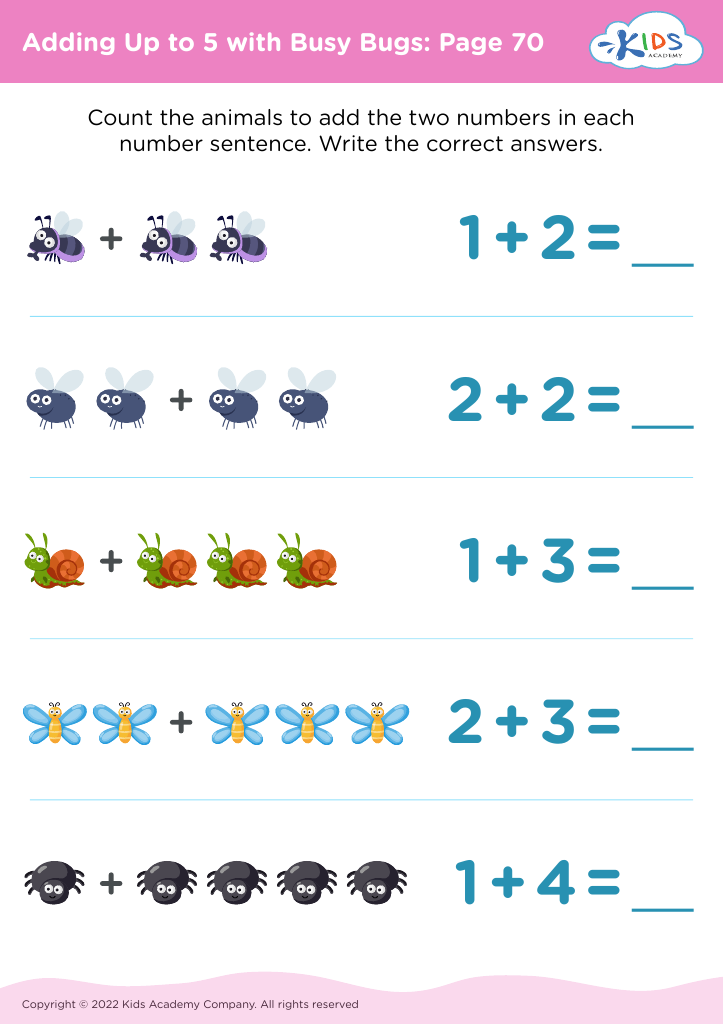
Adding Up to 5 with Busy Bugs: Page 70
Worksheet
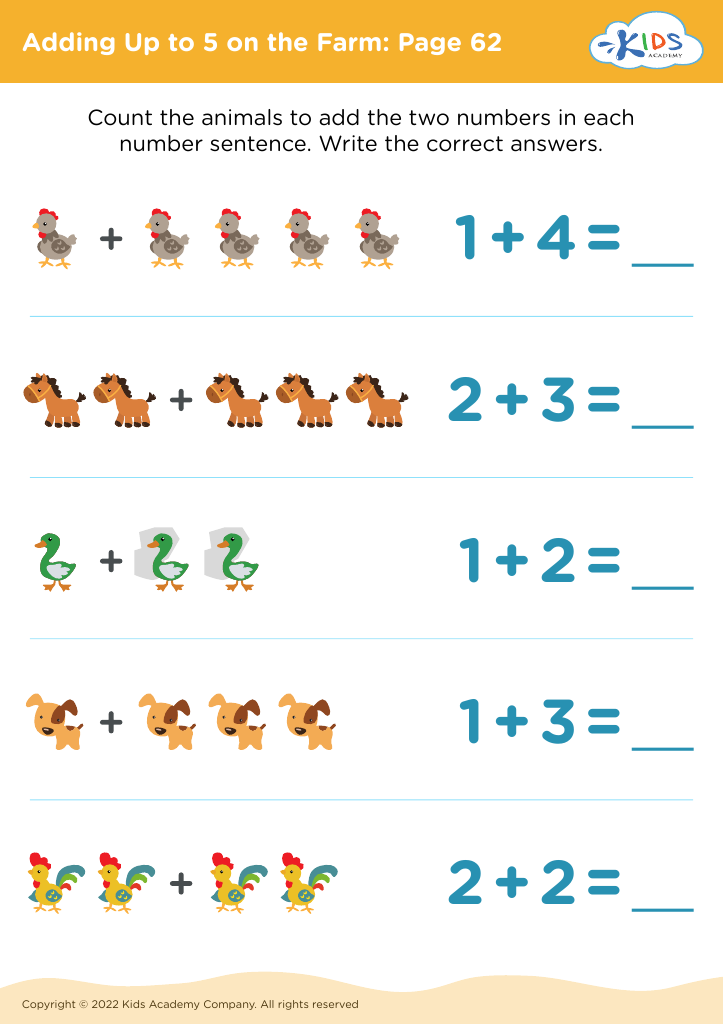
Adding Up to 5 on the Farm: Page 62
Worksheet


Basic addition and subtraction skills are foundational to a child's mathematical understanding and overall cognitive development. For children aged 4-7, these skills serve as building blocks for more complex mathematical concepts they will encounter later in life. Parents and teachers should care about nurturing these skills for several reasons.

Firstly, mastering basic operations fosters confidence in a child's abilities, encouraging them to engage with mathematical challenges positively. Early success in math can lead to a lifelong interest in the subject, which is essential in today's numerically driven world.

Secondly, addition and subtraction are not isolated skills; they are interconnected with critical life abilities, such as problem-solving and logical reasoning. Kids learn to analyze situations, make decisions, and think critically through daily experiences related to math.

Moreover, children often use these skills in practical ways, from handling money to measuring ingredients in cooking, helping them understand the relevance of math in their everyday lives. Lastly, a solid foundation in basic math enhances performance in other academic areas, paving the way for future success in school. Thus, teachers and parents should prioritize these essential skills to equip children for a bright and numerically fluent future.