Filters

27 filtered results

Clear all filters
Favorites
With answer key
Interactive

27 filtered results

Difficulty Level

Grade


Discover an exciting learning experience with our Color Identification Addition & Subtraction Worksheets designed for ages 4-7. These vibrant and engaging worksheets seamlessly combine essential math skills with color recognition activities. Perfect for young learners, each worksheet eases them into the concepts of addition and subtraction through interactive coloring tasks. By associating math problems with colors, kids enhance their cognitive skills, build a strong foundation in mathematics, and enjoy a playful learning process. Ideal for both classroom settings and home practice, our worksheets are a fun way to keep your child engaged and excited about math. Download now and watch them shine!
Check out this FREE Trial Lesson on Addition & Subtraction for age 4-7!

Short and Long Vowel Sort

Favorites
With answer key
Interactive
  • 4-7
  • Color Identification
  • Addition & Subtraction
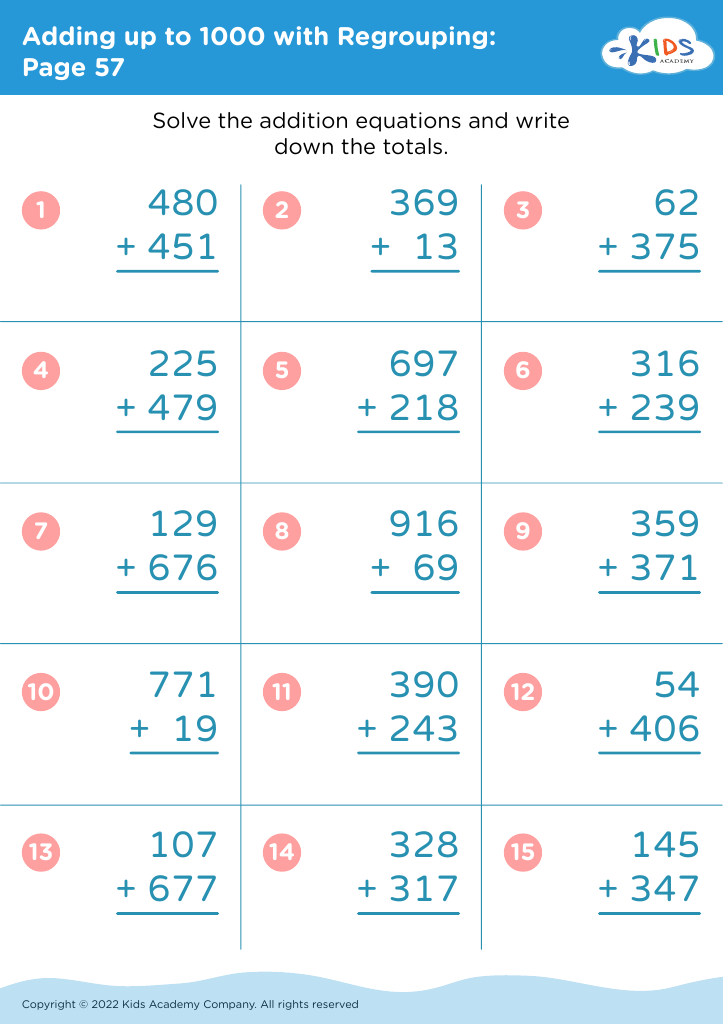
Adding up to 1000 with Regrouping: Page 57
Worksheet
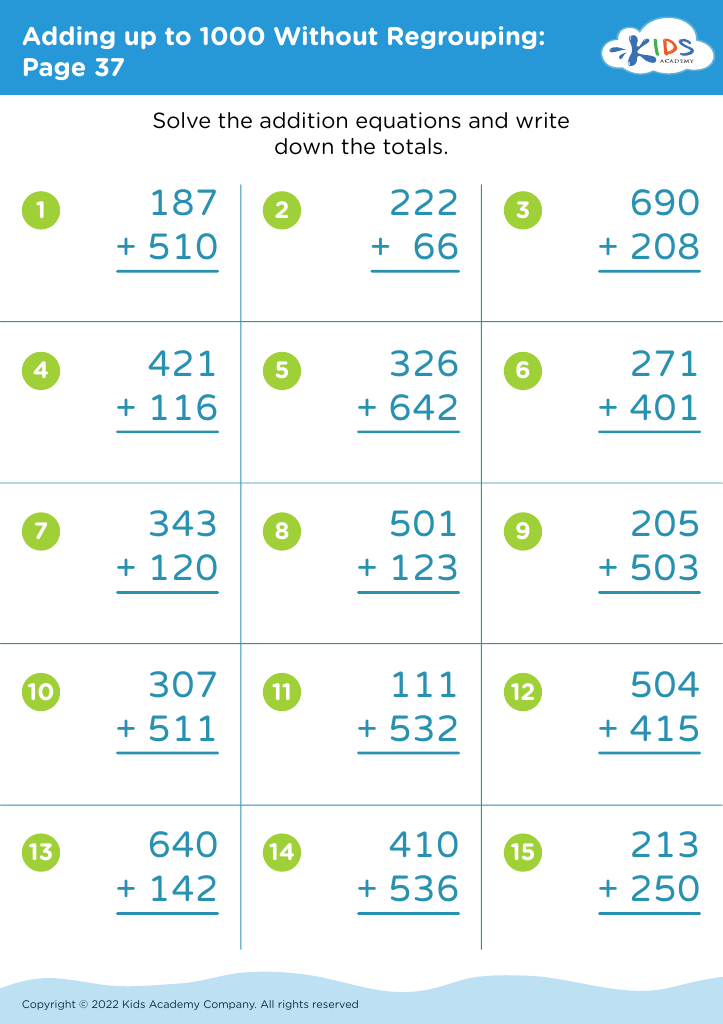
Adding up to 1000 Without Regrouping: Page 37
Worksheet
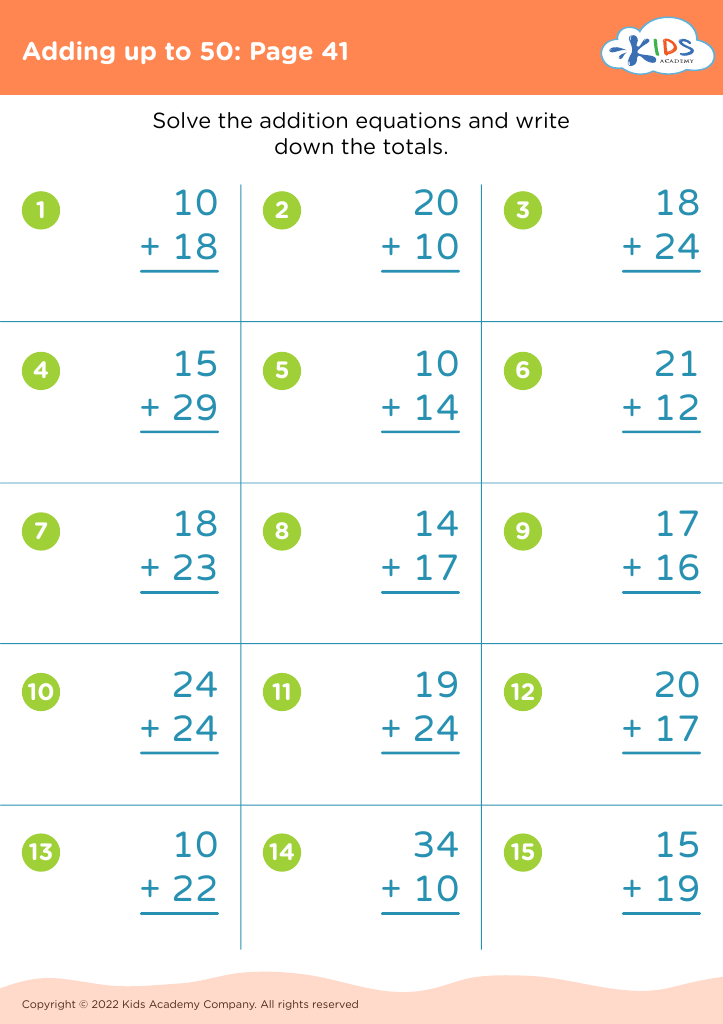
Adding up to 50: Page 41

Adding up to 50: Page 41

Adding up to 50: Page 41
Worksheet
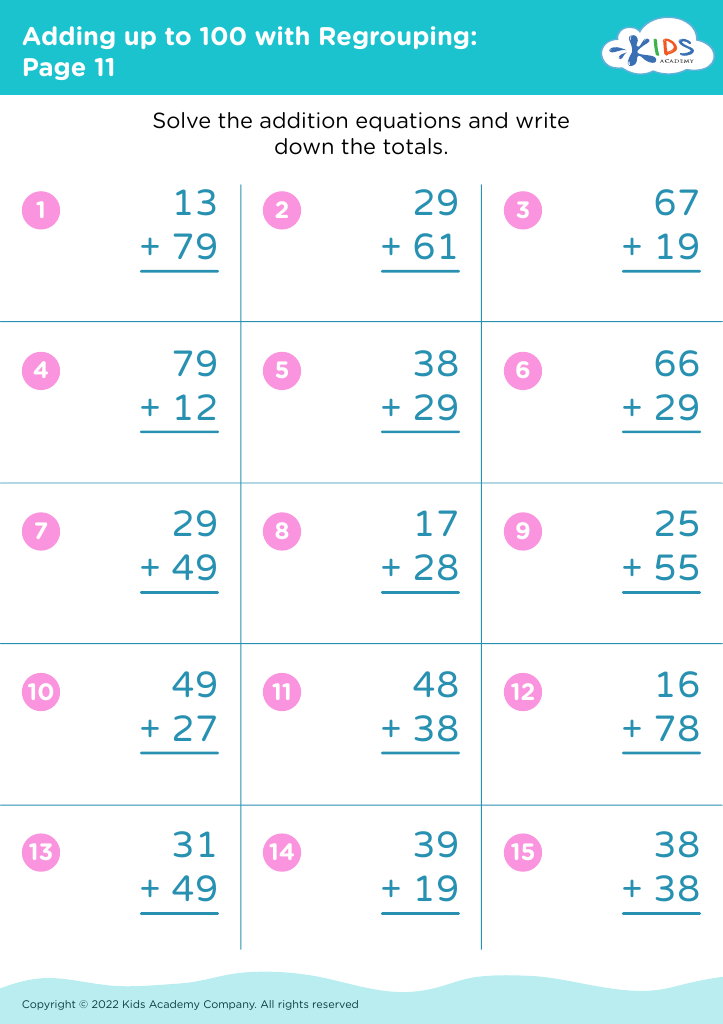
Adding up to 100 with Regrouping: Page 11
Worksheet
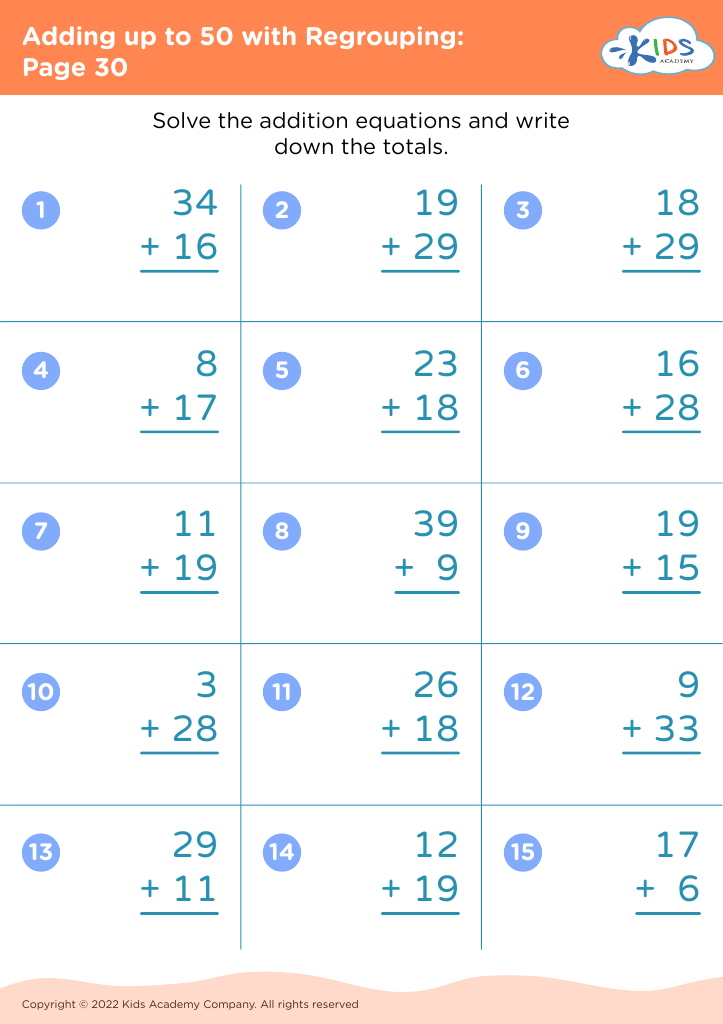
Adding up to 50 with Regrouping: Page 30
Worksheet
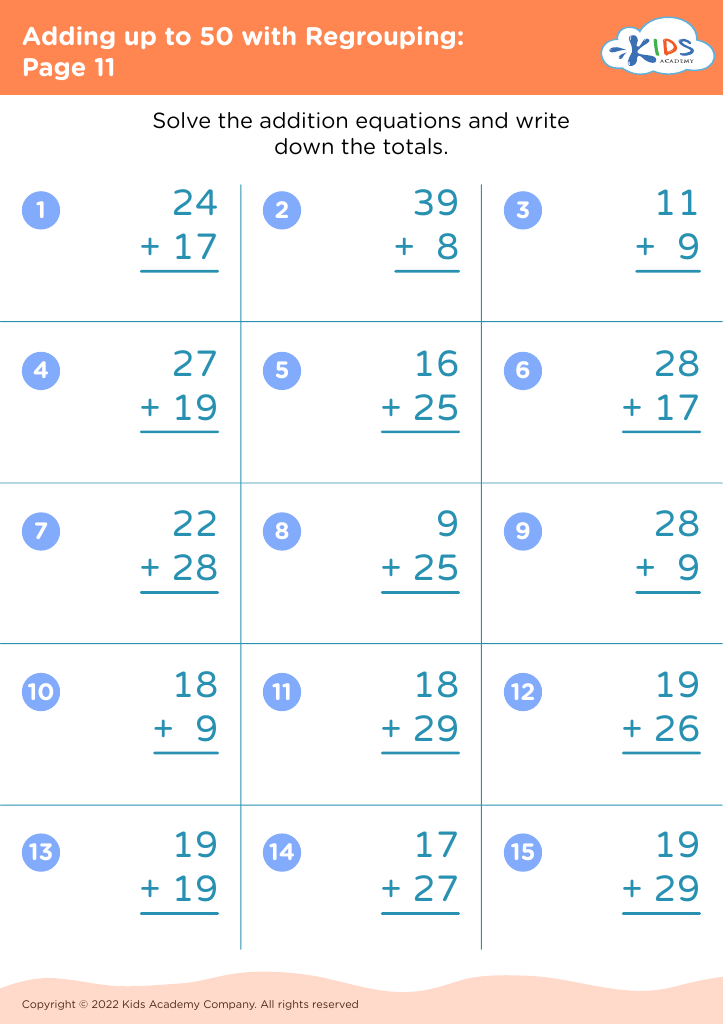
Adding up to 50 with Regrouping: Page 11
Worksheet
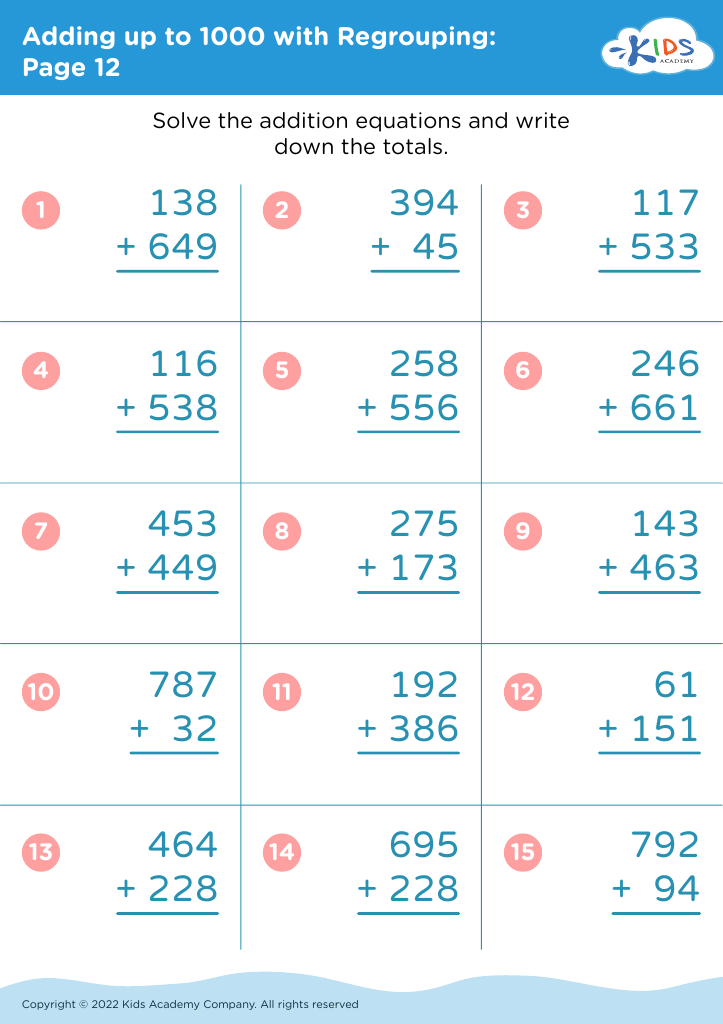
Adding up to 1000 with Regrouping: Page 12
Worksheet
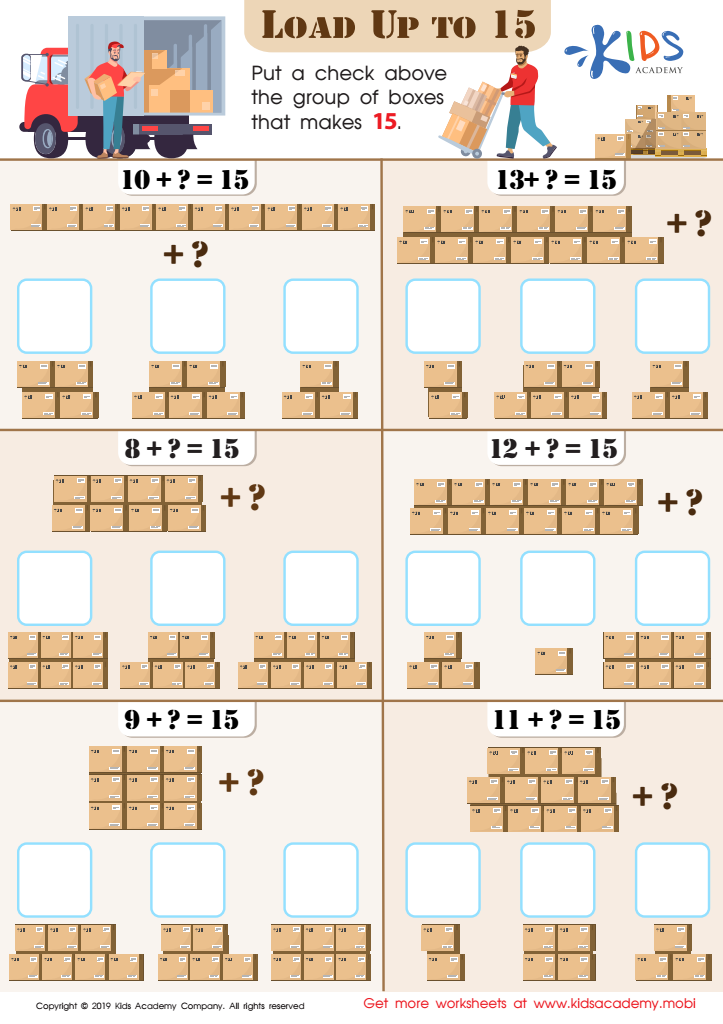
Load up to 15 Worksheet

Load up to 15 Worksheet

Your students can practice addition and counting skills with this worksheet. Each equation has 6 boxes to count. Check the group that equals 15 to complete the exercise. Help your kindergartners if they need it.
Load up to 15 Worksheet
Worksheet
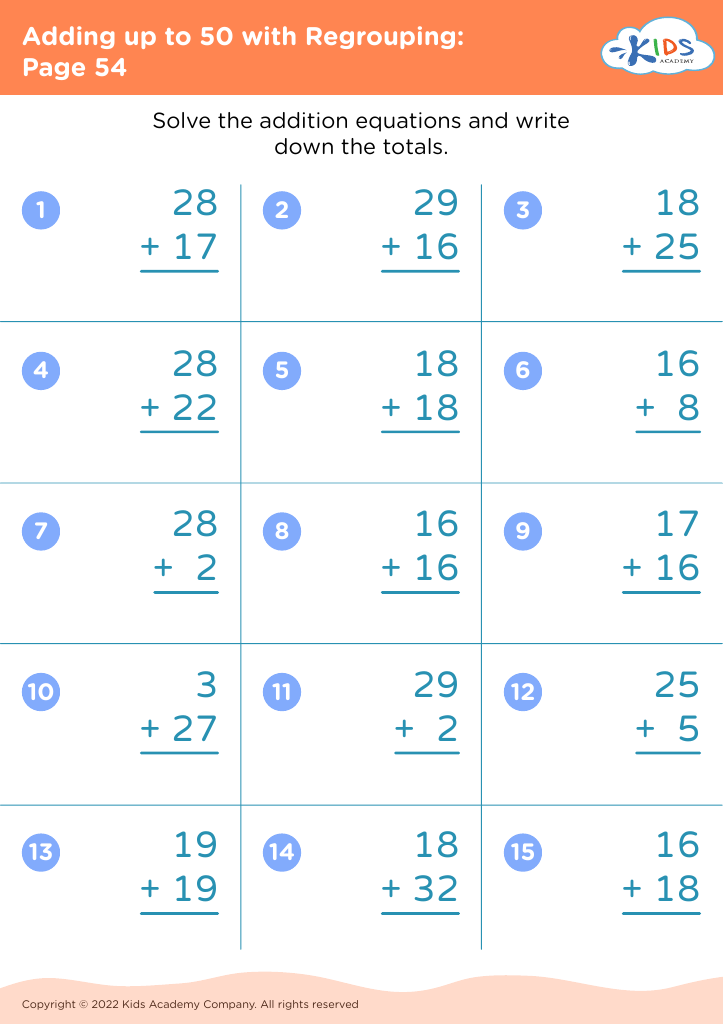
Adding up to 50 with Regrouping: Page 54
Worksheet
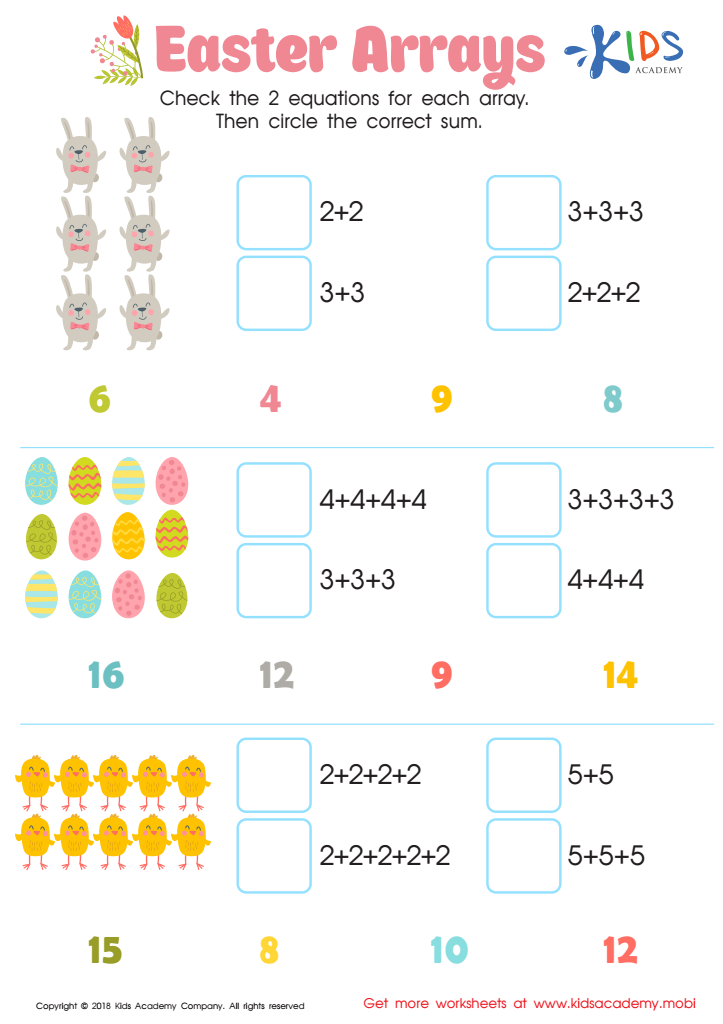
Easter Arrays Worksheet

Easter Arrays Worksheet

Does your child love Easter? Do they adore the Easter bunny and egg hunts? Help them have fun with this worksheet! Go through it with them and check the equations for each array. Then, have them circle the correct sum. It's a great way to make the holiday extra exciting!
Easter Arrays Worksheet
Worksheet
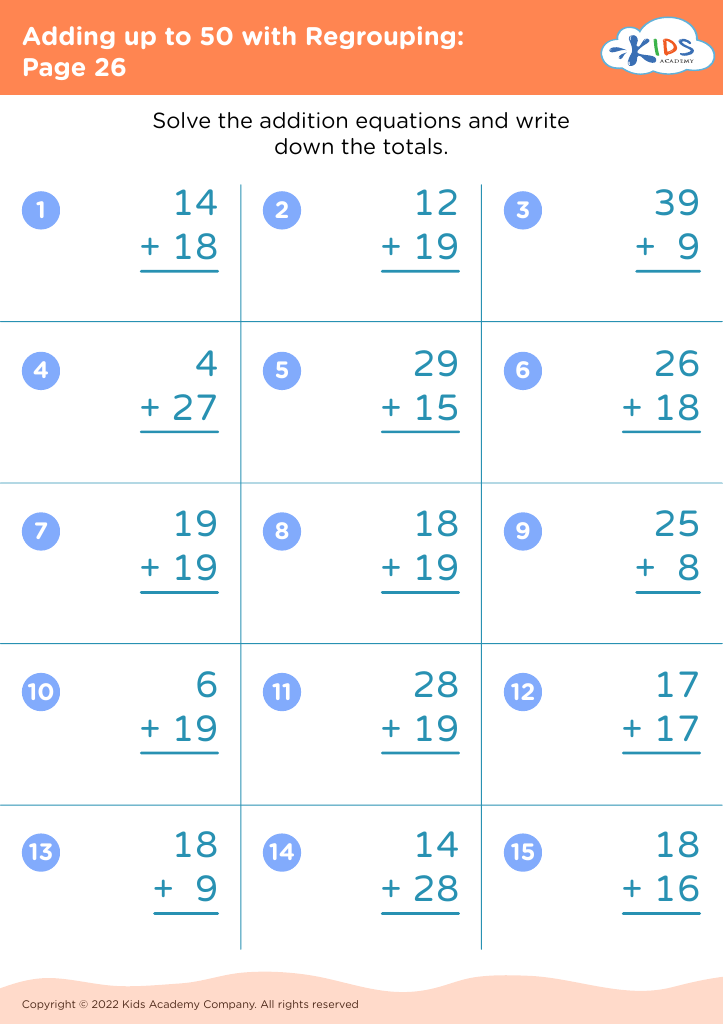
Adding up to 50 with Regrouping: Page 26
Worksheet
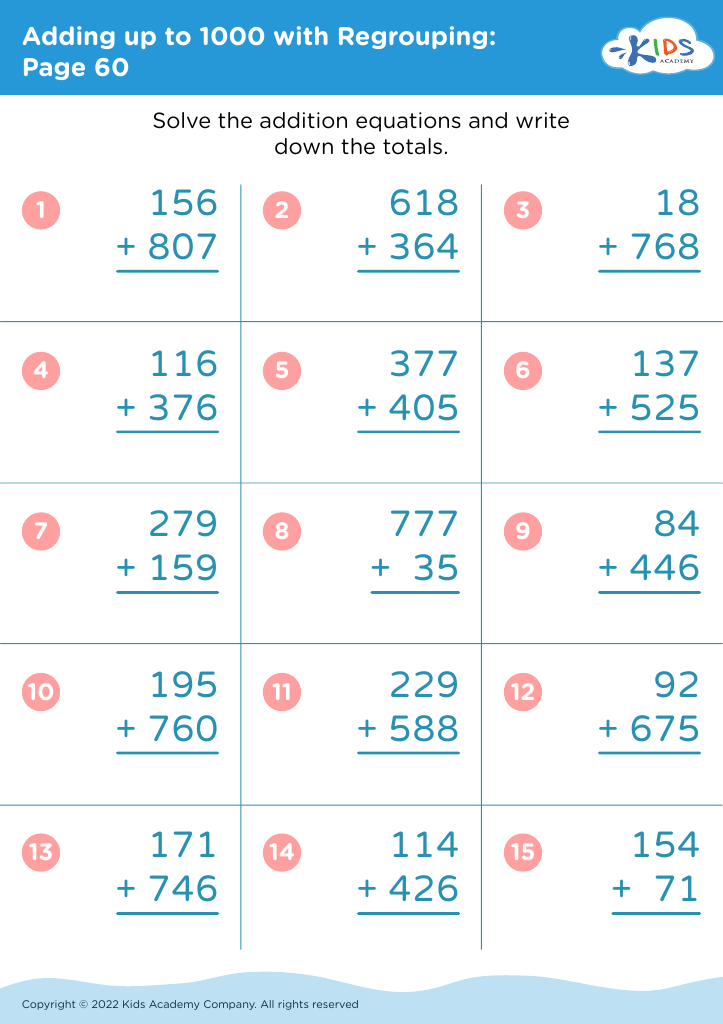
Adding up to 1000 with Regrouping: Page 60
Worksheet
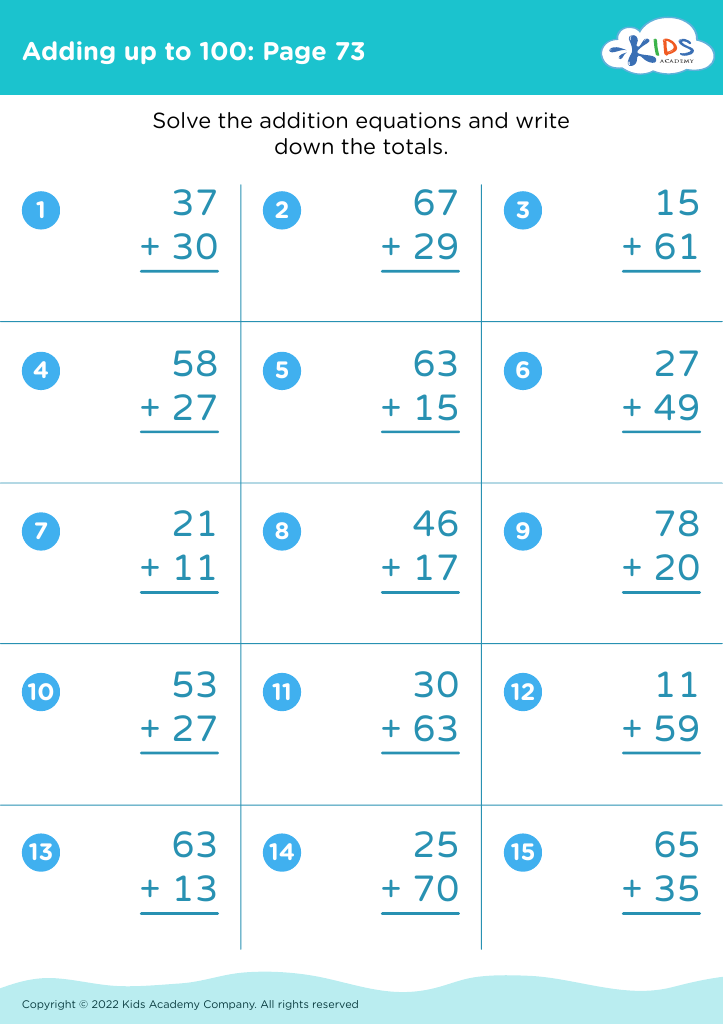
Adding up to 100: Page 73

Adding up to 100: Page 73

Adding up to 100: Page 73
Worksheet
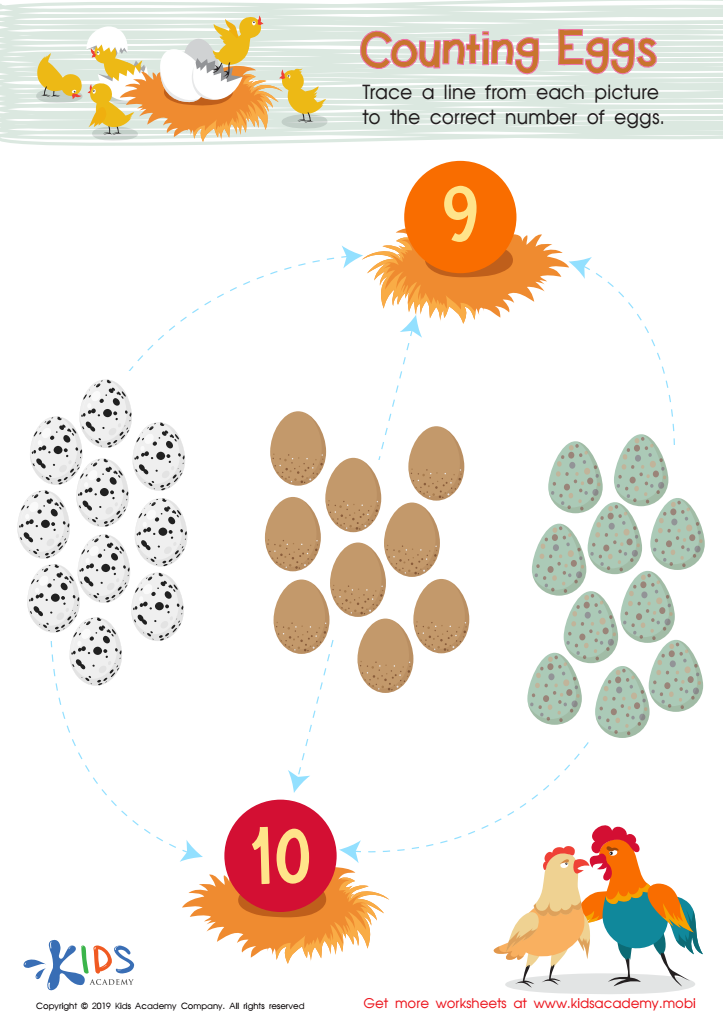
Counting Eggs Worksheet
Counting Eggs Worksheet
This worksheet is great for teaching kindergarteners to count and add numbers. It includes colorful pictures of eggs with numbers to trace. Help students count the eggs and draw a line to the right number. This will make learning fun and easy!
Counting Eggs Worksheet
Worksheet
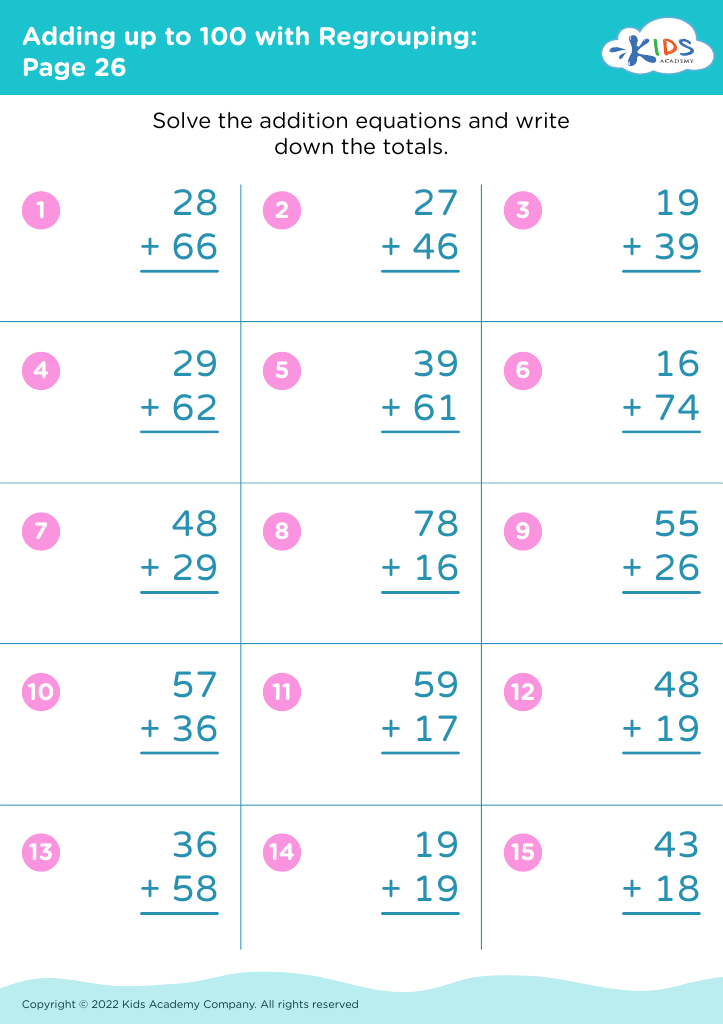
Adding up to 100 with Regrouping: Page 26
Worksheet
6 Parrots Worksheet
6 Parrots Worksheet
6 Parrots Worksheet

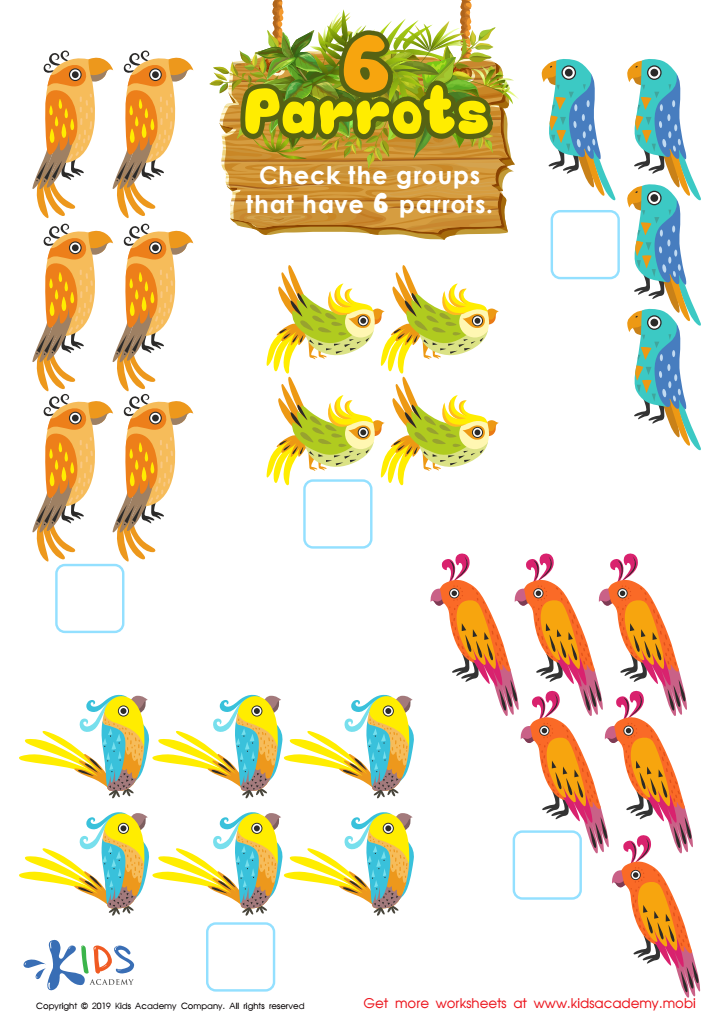
Love parrots? Here's a free worksheet to help your children practice counting to six with colorful parrot representations! Kids will adore counting the parrots and checking off groups of six - and it won't even feel like math! Just a fun way to make some new and exciting friends.
6 Parrots Worksheet
Worksheet
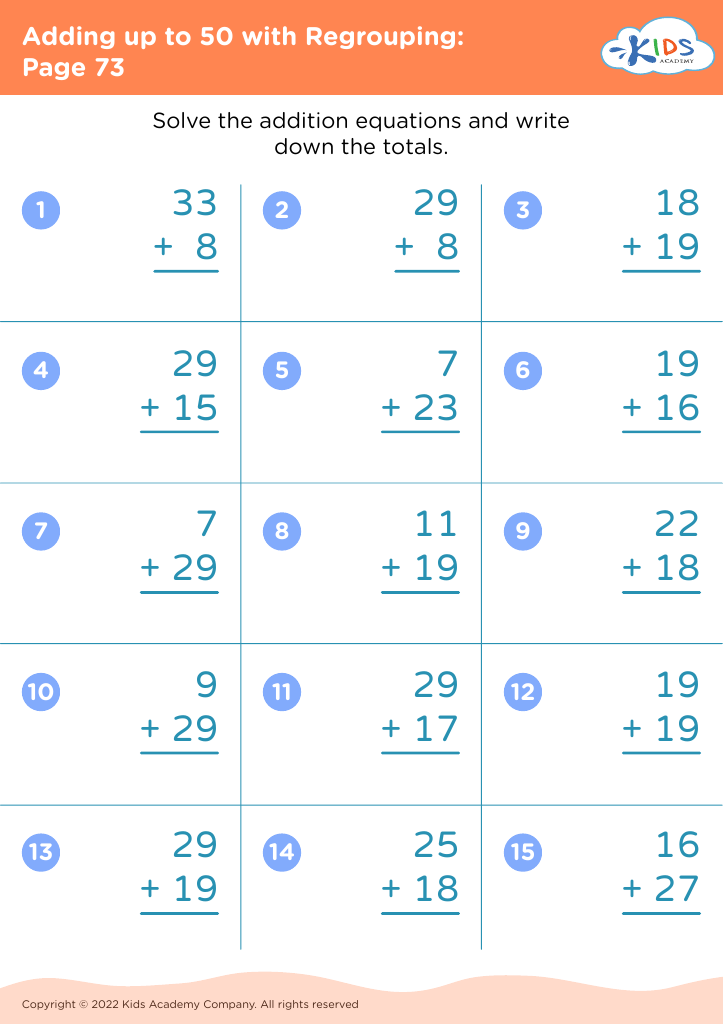
Adding up to 50 with Regrouping: Page 73
Worksheet
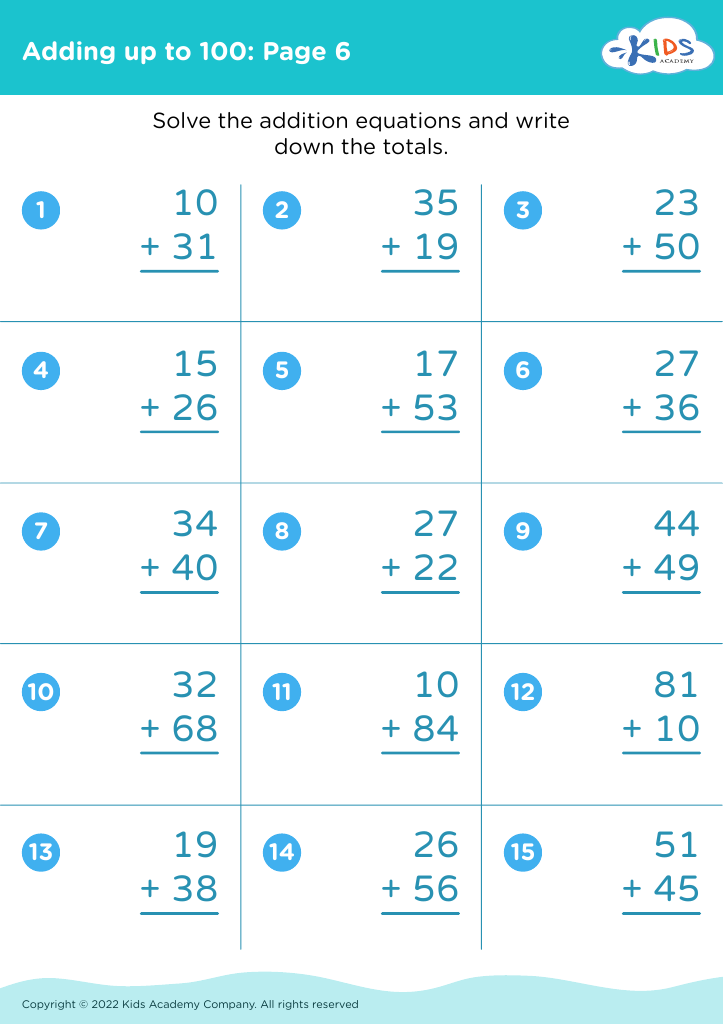
Adding up to 100: Page 6

Adding up to 100: Page 6

Adding up to 100: Page 6
Worksheet
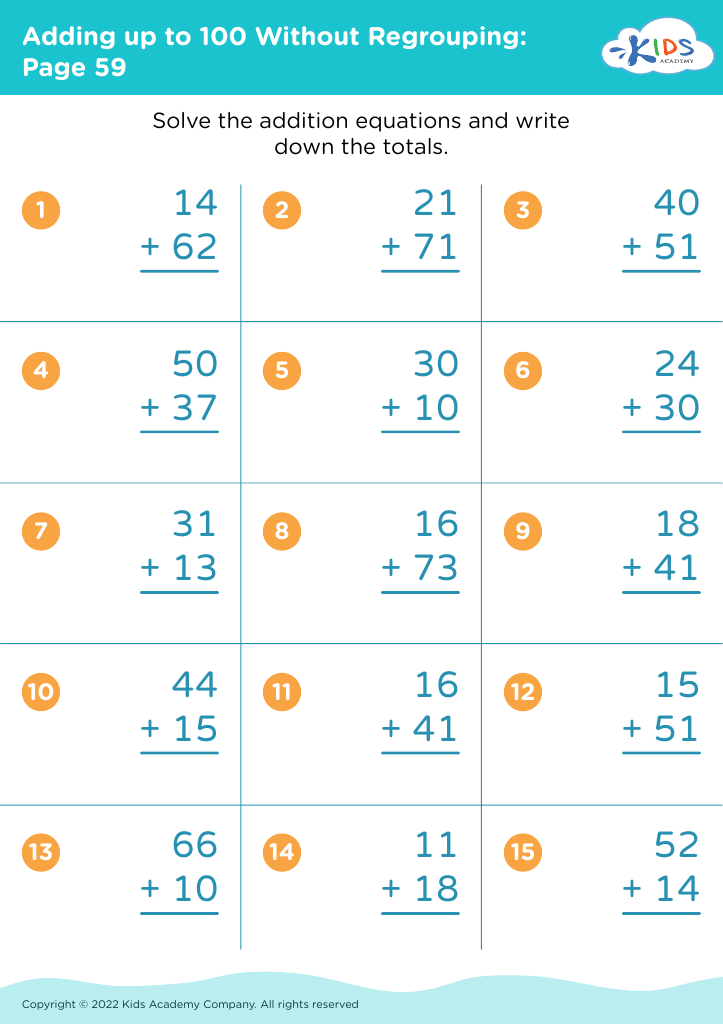
Adding up to 100 Without Regrouping: Page 59
Worksheet
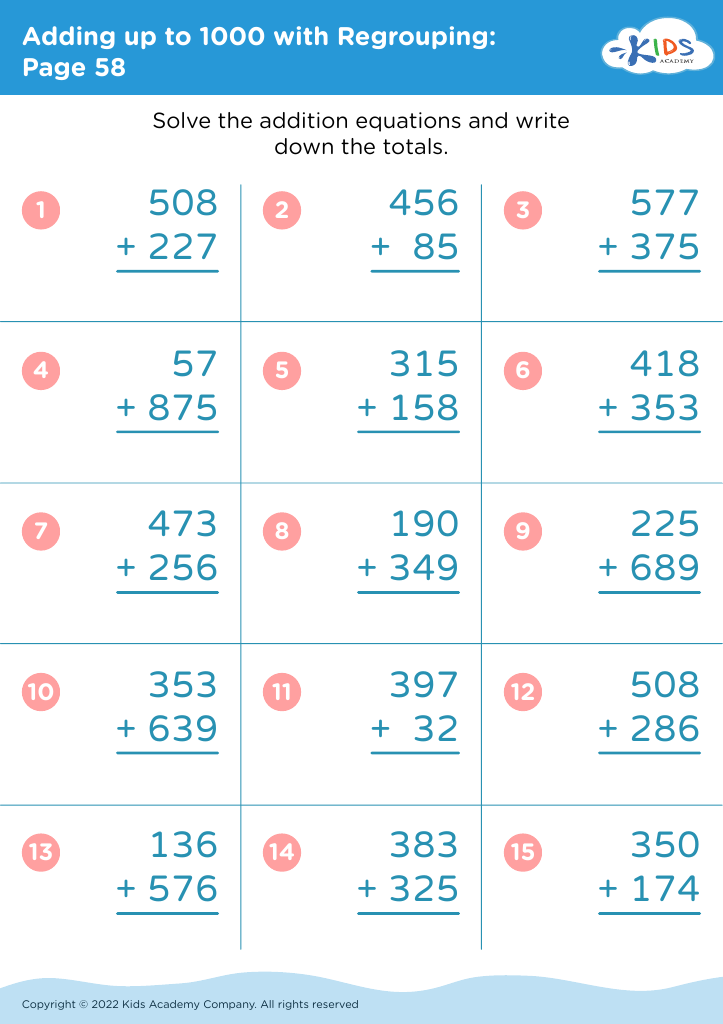
Adding up to 1000 with Regrouping: Page 58
Worksheet
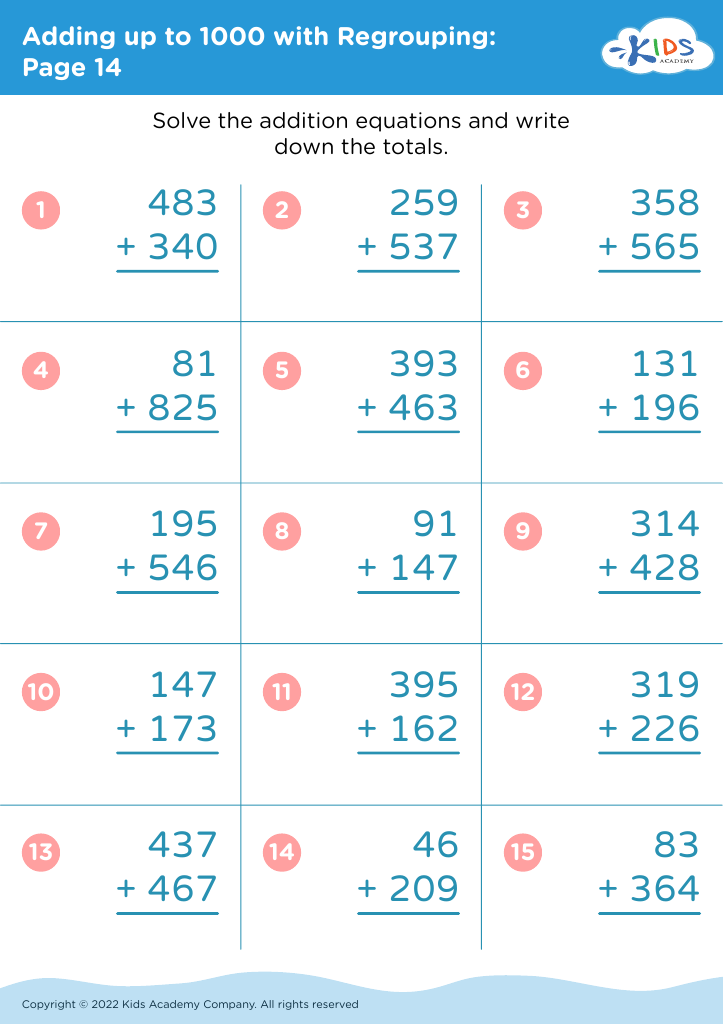
Adding up to 1000 with Regrouping: Page 14
Worksheet
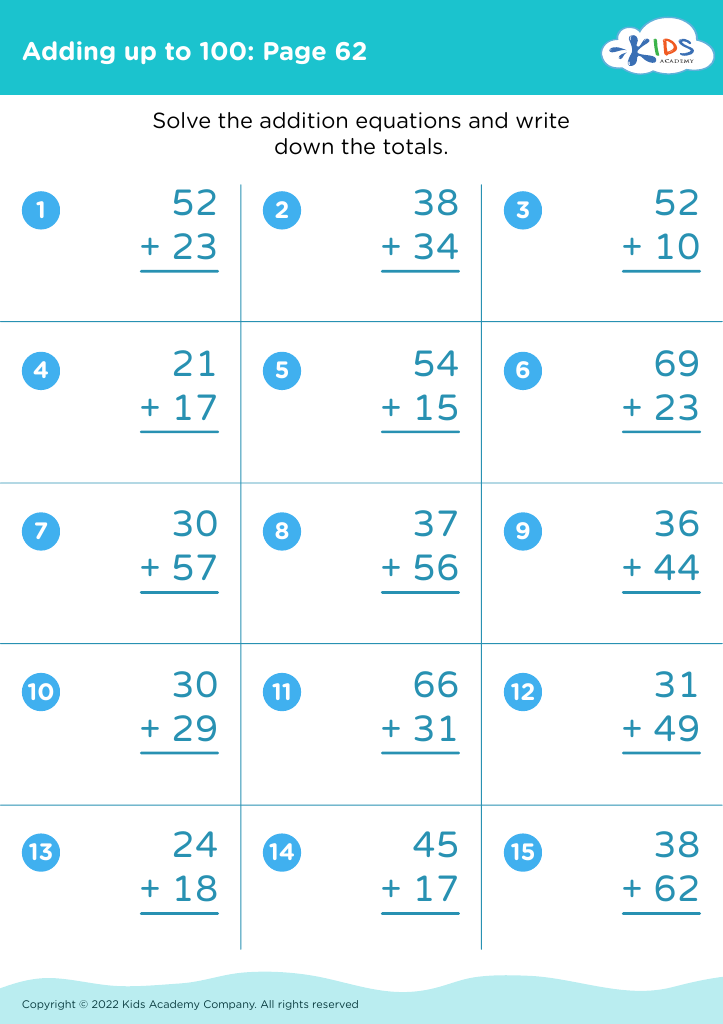
Adding up to 100: Page 62

Adding up to 100: Page 62

Adding up to 100: Page 62
Worksheet
14 in School Worksheet

14 in School Worksheet

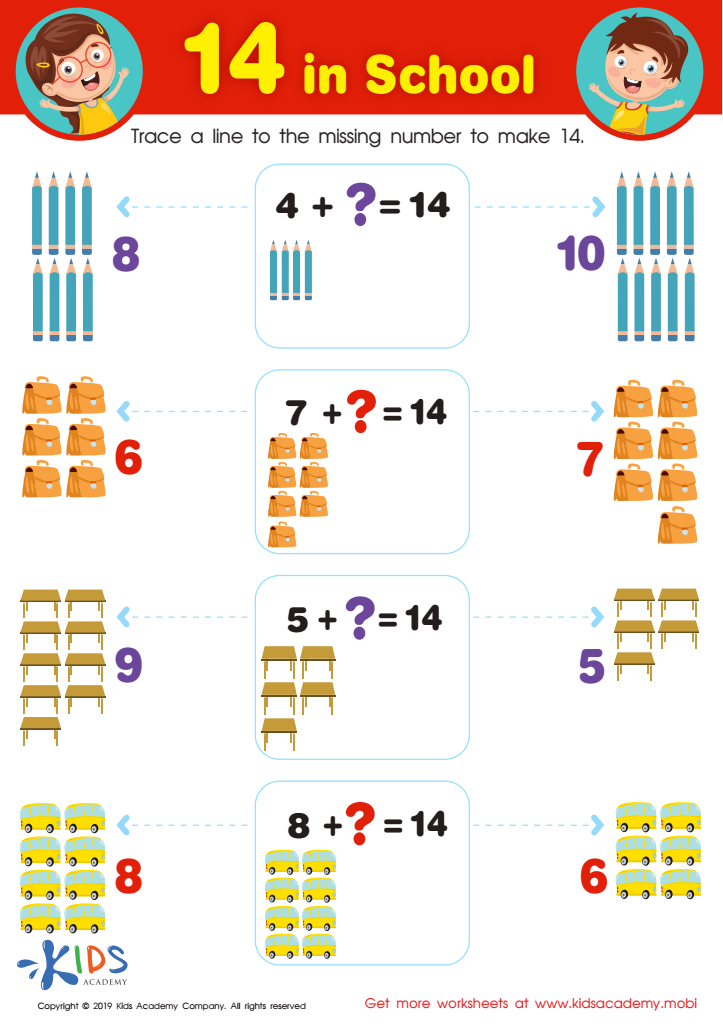
Remind your kids that adding different sets of numbers can give the same total (e.g. 2+3=5, 4+1=5). Ask them for more examples. Afterwards, work through the exercise. Help them count the objects and trace a line to the missing number that makes the total 14.
14 in School Worksheet
Worksheet
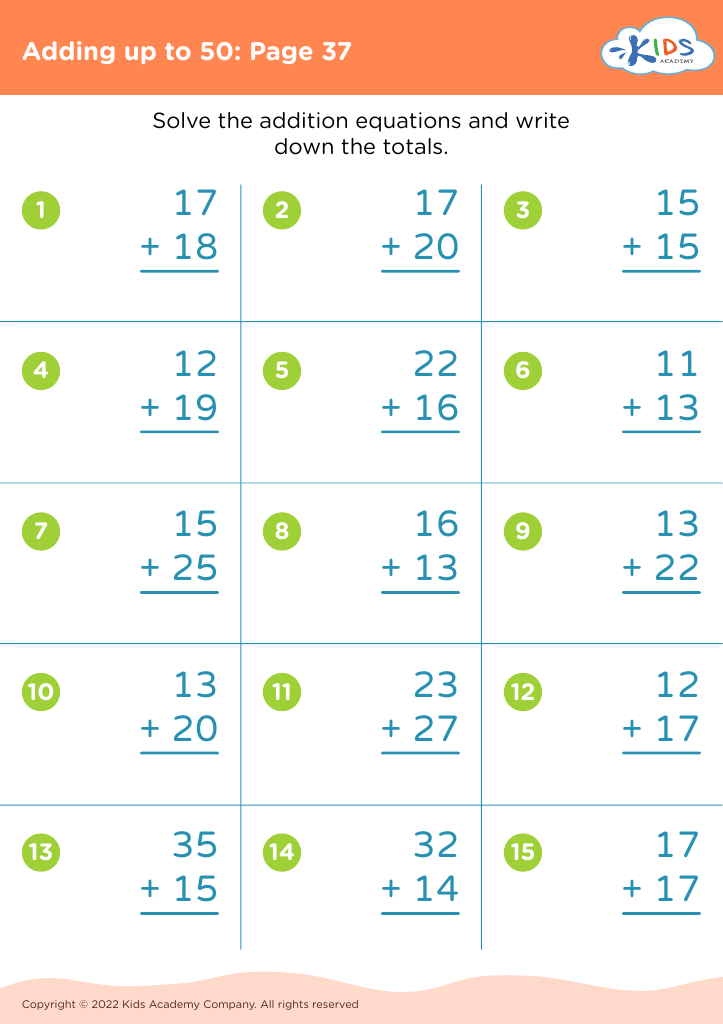
Adding up to 50: Page 37

Adding up to 50: Page 37

Adding up to 50: Page 37
Worksheet


Color Identification and foundational addition and subtraction skills are crucial building blocks for early childhood development, especially for children aged 4-7. Integrating these skills offers multiple educational benefits and prepares children for more complex learning experiences.

Firstly, color identification is often one of the first ways children make sense of the world. Recognizing and naming colors enhance cognitive development, visual perception, and language skills. This foundational knowledge is frequently intertwined with other learning activities, making it a practical and engaging starting point for more complex concepts.

Combining color identification with addition and subtraction helps consolidate multiple skills simultaneously. For young learners, manipulating colored objects can make abstract math concepts more tangible and comprehensible. For instance, using colored counters or illustration-based worksheets where colors differentiate mathematical entities can simplify the process of learning and make it enjoyable.

Additionally, these activities promote fine motor skills and hand-eye coordination as children handle and sort objects. Social skills are also developed through cooperative tasks and sharing resources during group activities or games.

Overall, embedding color identification with basic math concepts builds a solid foundation that unfolds into a child’s future academic journey, ensuring a holistic developmental approach. Teachers and parents should care because these activities imbue learning with fun, foster critical early cognitive skills, and prepare children for success in more advanced areas.