
Critical thinking development Addition & Subtraction Worksheets for Ages 4-7
3 filtered results
Difficulty Level
Grade
Age
-
From - To
Subject
Activity
Standards
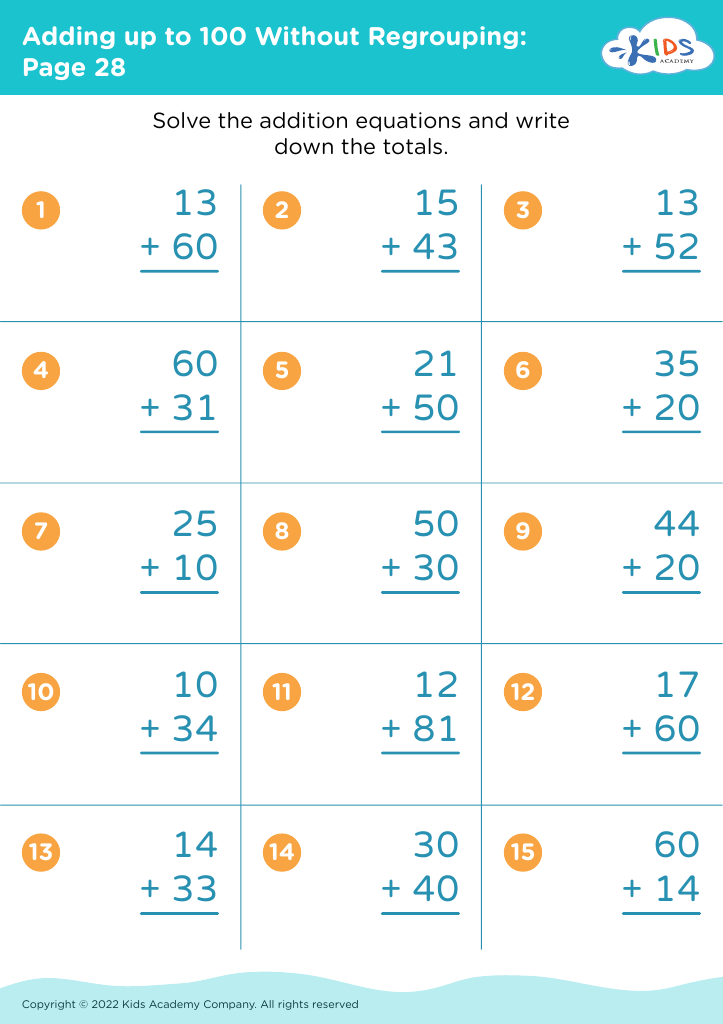
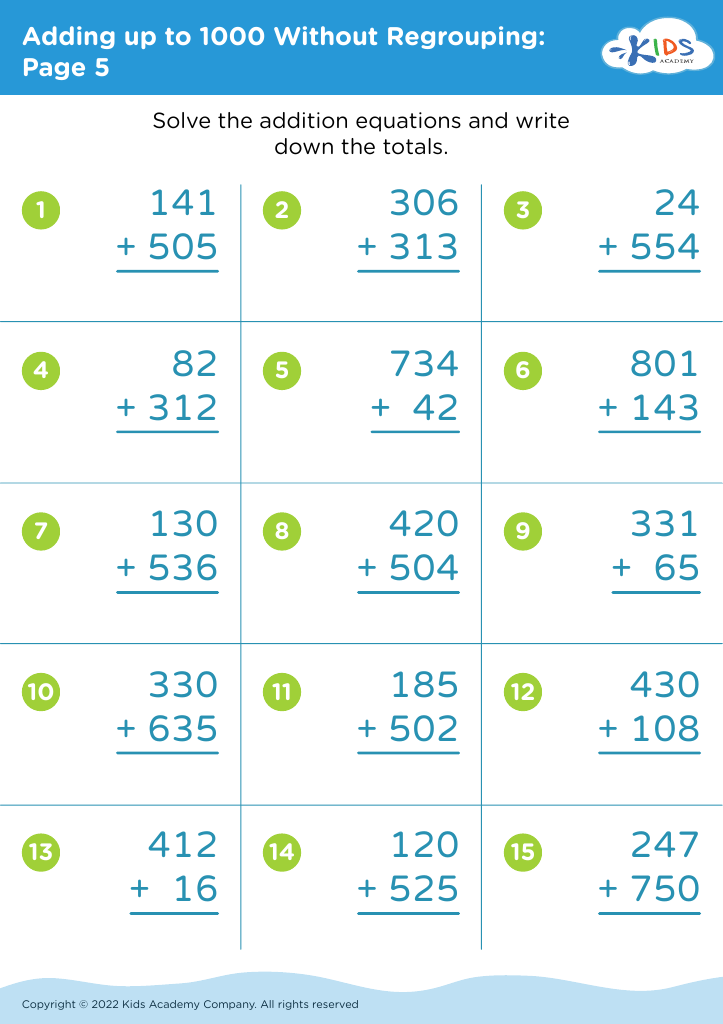
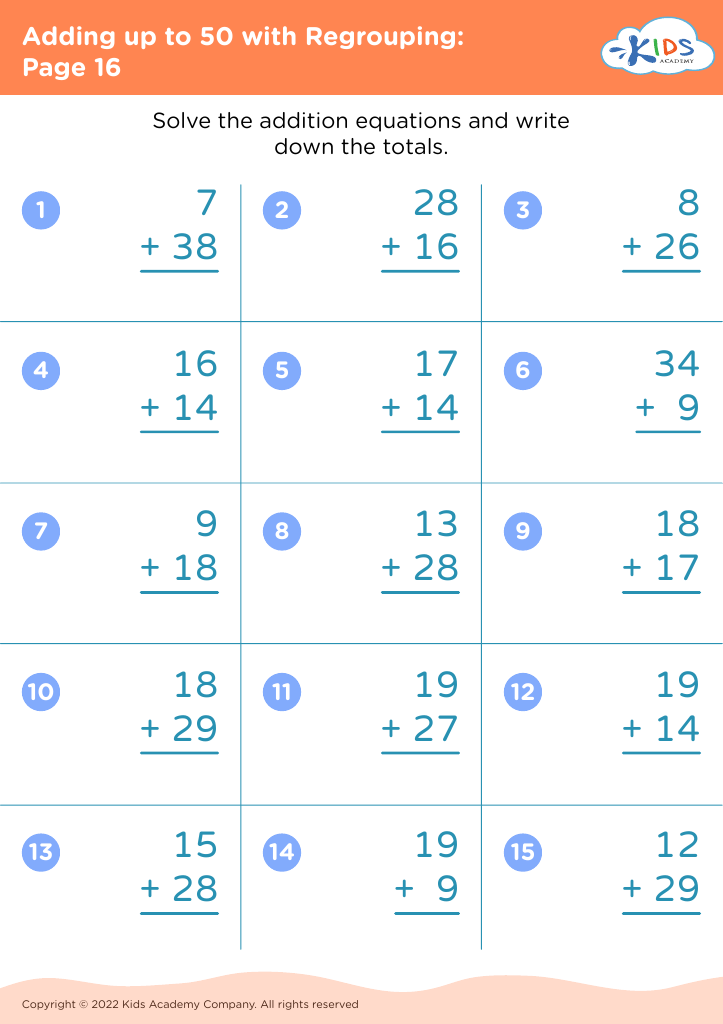
Enhance your child's problem-solving skills with our Critical Thinking Development Addition & Subtraction Worksheets tailored for ages 4-7. These engaging worksheets are designed to foster a love for learning while enhancing attention to detail, analytical skills, and mathematical proficiency. Each activity encourages young learners to think critically as they solve a mix of addition and subtraction problems. Our expertly designed exercises make foundational math concepts fun and accessible, ensuring children grasp key skills important for future academic success. Support your child's critical thinking journey with these interactive and stimulating worksheets, available at Kids Academy.
Favorites
With answer key
Interactive
Join Kids Academy for Free
Who is primarily going to use this learning content?








Critical thinking development in the context of addition and subtraction for children aged 4-7 is vital for fostering fundamental cognitive skills that will benefit their educational journey and daily life. At this formative stage, children’s brains are highly adaptable and are primed for learning foundational concepts that underlie more advanced mathematical reasoning.
Firstly, learning addition and subtraction is not just about remembering numbers or formulas; it encourages children to understand and manipulate numbers, recognize patterns, and solve problems. These activities promote logical reasoning, structured thinking, and improve their ability to evaluate situations and make decisions—skills essential for academic success and everyday problem-solving.
Moreover, early interactions with these concepts help to build confidence and a positive attitude towards mathematics. Children begin to see challenges as opportunities for growth, fostering a healthy learning mindset. This resilience is particularly important in a continually evolving world where adaptability is crucial.
Educators and parents play a pivotal role in this development by providing stimulating and supportive environments. Engaging children in playful, hands-on activities with numbers helps solidify these concepts organically, making learning both effective and enjoyable. By prioritizing critical thinking and early arithmetic, we equip children with the essential tools they need for lifelong learning and innovation.








