Developing logical thinking Addition & Subtraction Worksheets for Ages 4-7
4 filtered results
-
From - To
Empower young minds with our engaging Addition & Subtraction Worksheets designed specifically for ages 4-7. These thoughtfully crafted worksheets focus on developing logical thinking and problem-solving skills through simple arithmetic exercises. Each sheet is bubbling with fun and interactive activities that encourage children to understand and apply basic math concepts effectively. Perfect for both in-class and at-home learning, our worksheets support early math development in an enjoyable yet educational way. Begin the journey of fostering critical thinking and confidence in math with our printable resources, tailored just for the early grade years!
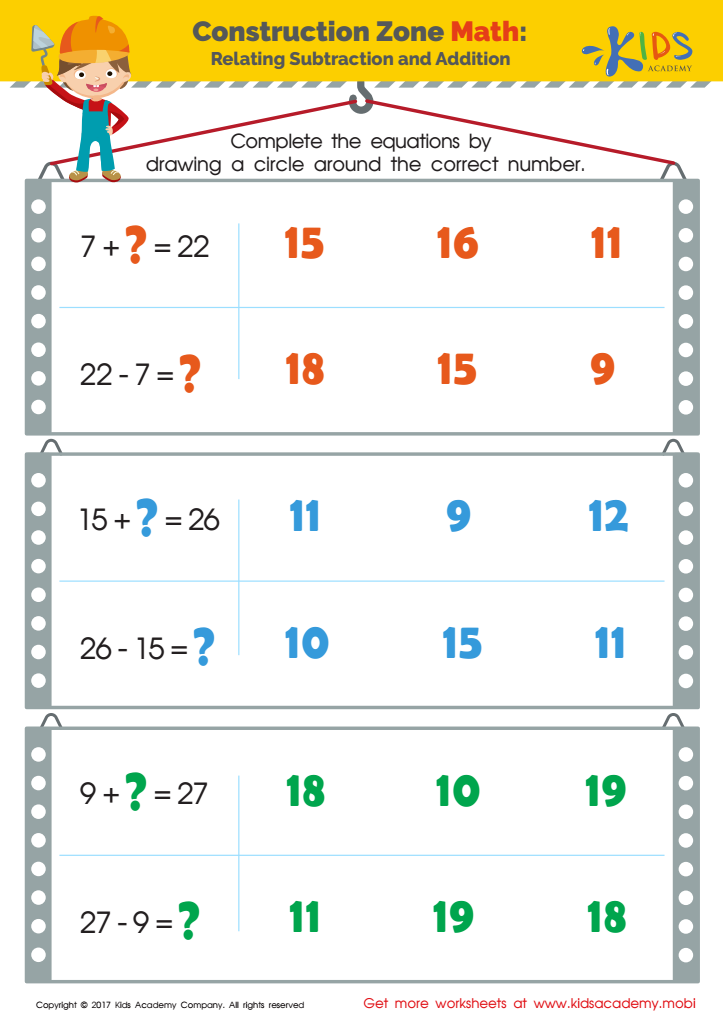
Related Addition and Subtraction Facts Worksheet
 Assign to My Students








Developing logical thinking and arithmetic skills, especially in addition and subtraction, during the formative ages of 4-7, is crucial for several reasons. Firstly, it builds a solid foundation for future math learning. These basic operations are integral to more complex math concepts encountered later. By mastering addition and subtraction early, children can approach future math tasks with greater confidence and ease.
Secondly, these skills enhance overall cognitive development. Engaging in logical thinking exercises involves critical thinking, pattern recognition, and problem-solving, which contribute to brain development. It supports children's ability to organize, prioritize tasks, and make decisions.
Moreover, early mastery of these skills can boost academic success. A child who is comfortable with math basics is more likely to enjoy the subject and excel, leading to a positive attitude toward learning in general. Additionally, competence in math improves a child's ability to perform everyday tasks, such as counting money, telling time, and measuring quantities.
Socially, engaging in mathematical activities fosters collaborative skills. Working on math problems in groups teaches children how to communicate ideas and work together.
Given these points, parents and teachers should prioritize developing logical thinking and arithmetic abilities, leading to a well-rounded, confident, and academically prepared child.








