Developing problem-solving abilities Addition & Subtraction Worksheets for Ages 4-7
5 filtered results
-
From - To
Unlock your child's potential with our engaging "Developing Problem-Solving Abilities: Addition & Subtraction Worksheets for Ages 4-7." Designed to make math fun and interactive, these worksheets help young learners build strong foundational skills. Through a variety of exercises, children will strengthen their addition and subtraction abilities, boosting their confidence and enhancing critical thinking. Perfect for both home and classroom use, our worksheets cater to different learning paces, ensuring every child can succeed. Start your child's journey to mathematical excellence today by exploring our comprehensive collection tailored specifically for kids aged 4-7!
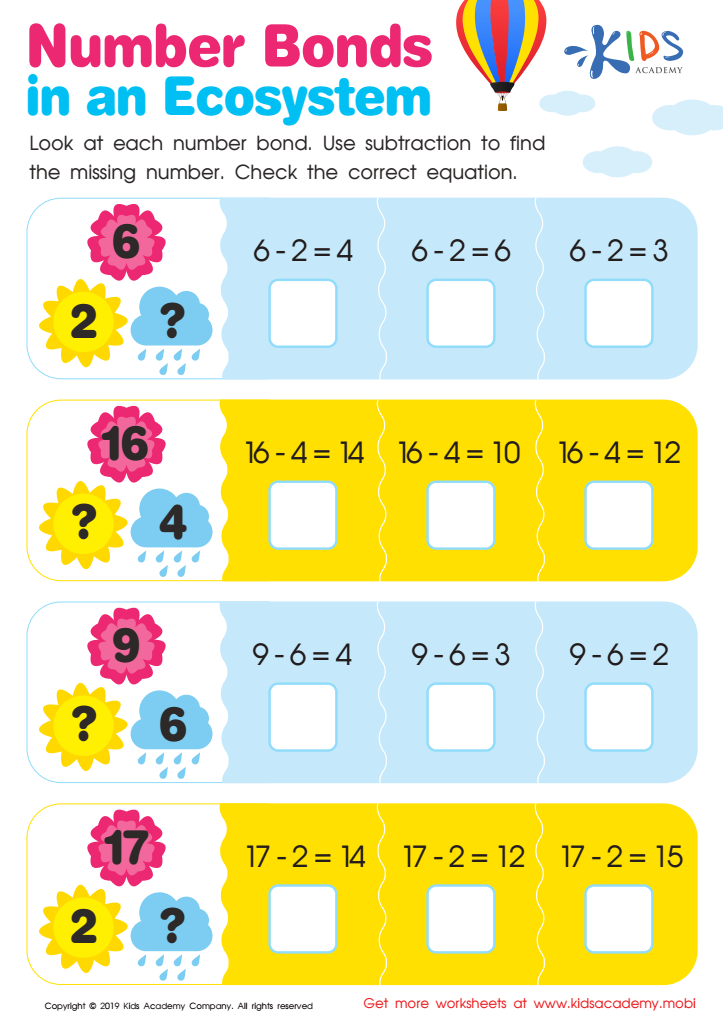
Number Bonds in an Ecosystem Worksheet
 Assign to My Students
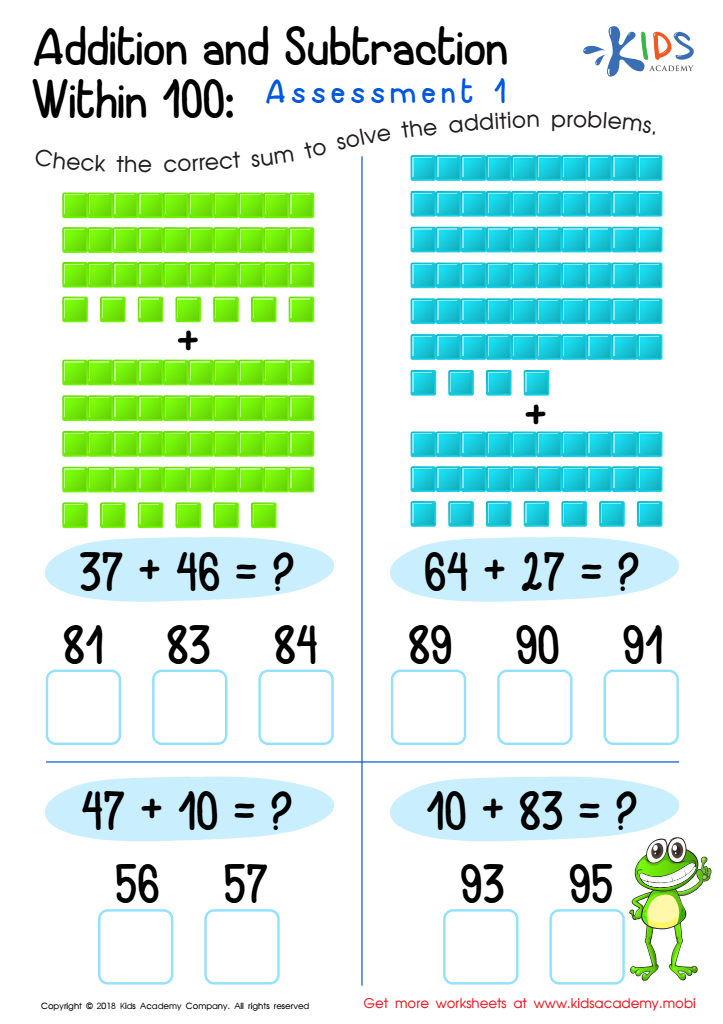
Addition and Subtraction Within 1: Assessment 1 Worksheet
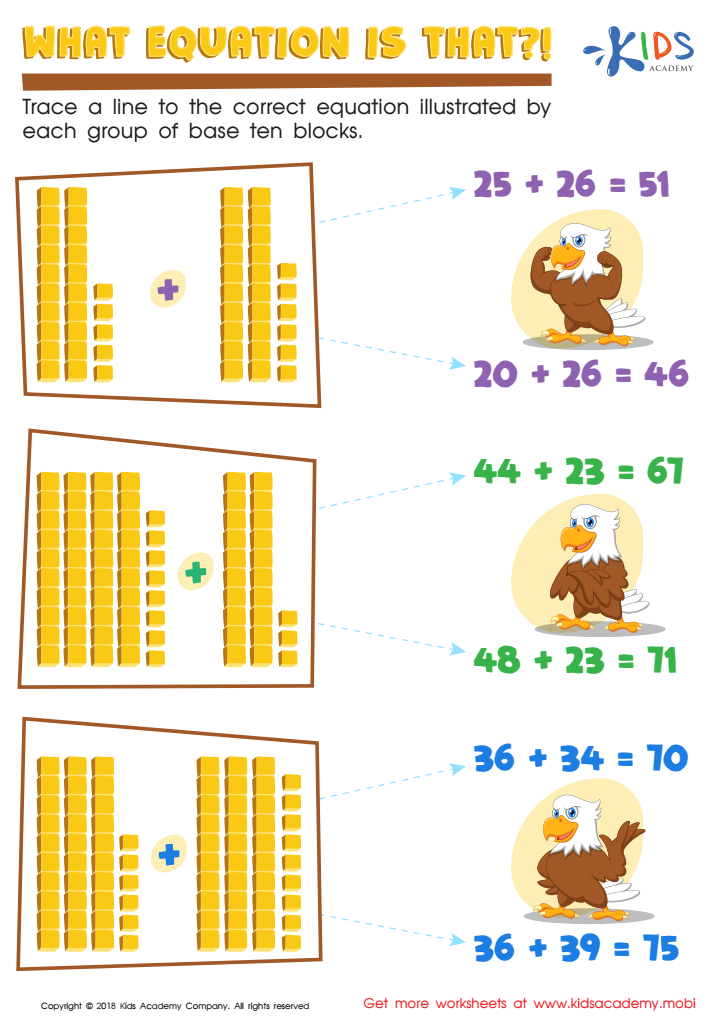
What Equation Is That? Worksheet








Developing problem-solving abilities in addition and subtraction for children aged 4-7 is essential for several key reasons. Firstly, it lays the foundation for future mathematical learning. Early competence in basic arithmetic serves as a building block for more complex math concepts, facilitating smooth progression. Moreover, fostering these skills contributes to cognitive development, enhancing critical thinking and logical reasoning abilities. As children work through addition and subtraction problems, they learn to analyze situations, identify patterns, and develop strategic thinking.
In a broader sense, math skills are integral to everyday life, from managing finances to measuring ingredients in a recipe. Early exposure helps children gain confidence with numbers and practical applications. Additionally, problem-solving in math nurtures perseverance and the resilience to tackle challenging tasks, traits beneficial across all areas of learning and life.
For parents, supporting math skills is an opportunity to engage in meaningful activities with their children, strengthening bonds while fostering intellectual growth. Teachers benefit by seeing students develop the confidence and competence that lead to greater classroom success. Enhancing problem-solving abilities in young children not only enhances academic outcomes but also prepares them to approach real-life situations with confidence and skill. The importance of these foundational skills cannot be overstated.








