Environmental awareness Addition & Subtraction Worksheets for Ages 4-7
3 filtered results
-
From - To
Discover our engaging Environmental Awareness Addition & Subtraction Worksheets designed specially for children aged 4-7! These worksheets seamlessly blend essential math skills with important environmental lessons, making learning fun and meaningful. Kids will practice addition and subtraction while learning about topics such as recycling, wildlife, and conservation. Each activity features vibrant illustrations and age-appropriate challenges that capture children's interest and foster a deeper understanding of our planet's needs. Perfect for both classroom and home use, our worksheets are an excellent way to instill environmental values while reinforcing foundational math concepts. Empower young learners with the skills they need to make a positive impact!
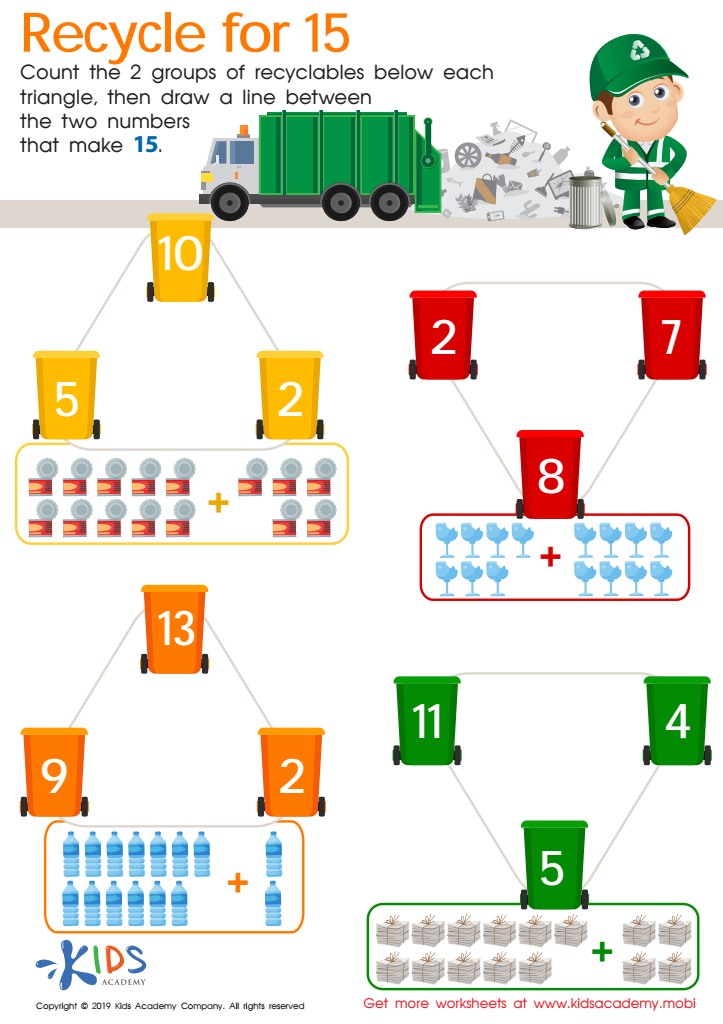
Recycle for 15 Worksheet
 Assign to My Students
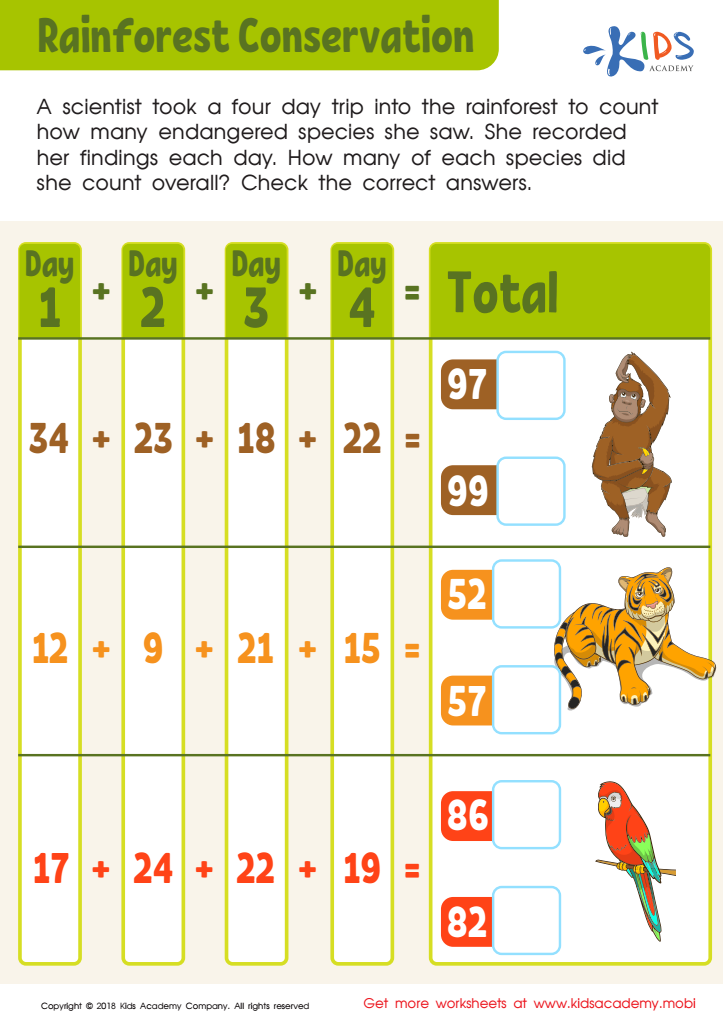
Rainforest Conservation Worksheet
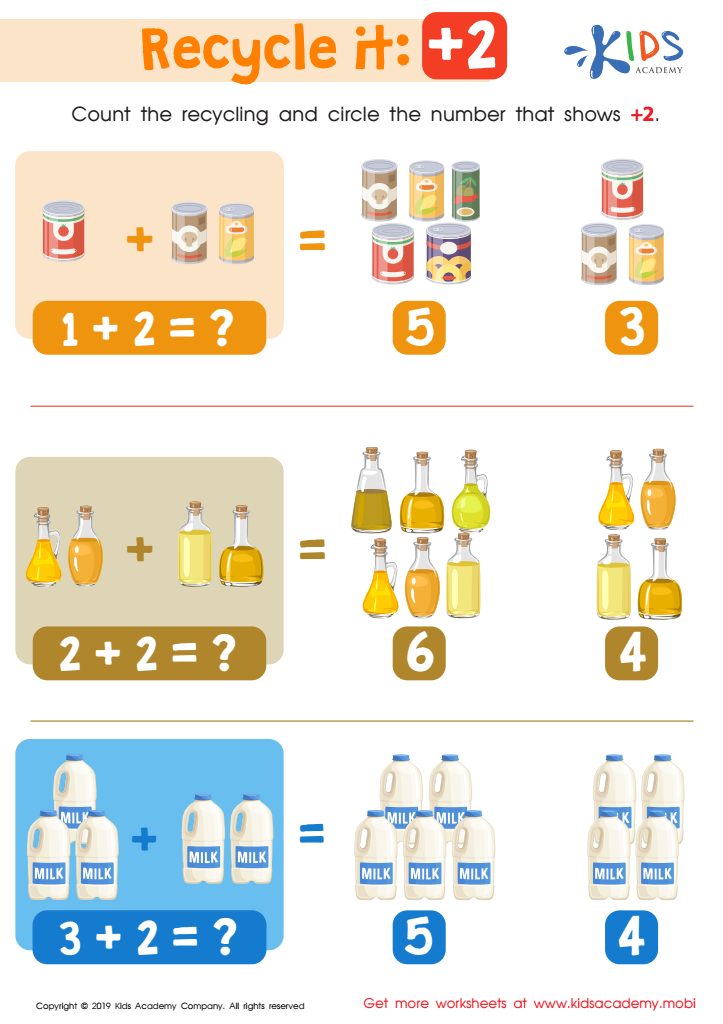
Recycle It: +2 Worksheet








Parents and teachers should prioritize environmental awareness coupled with addition and subtraction lessons for children aged 4-7 because it fosters a holistic understanding of the world and essential life skills. At this age, children are incredibly receptive, and introducing them to nature and basic math concepts simultaneously helps in building a strong foundation for both environmental stewardship and analytical thinking. Engaging children with simple math activities like counting leaves, measuring rainfall, or subtracting petals from flowers not only makes learning interactive and fun but also imbues them with respect and curiosity for the environment.
Moreover, cultivating environmental awareness early instills responsible habits such as recycling, conserving water, and appreciating nature, which can profoundly impact long-term sustainability efforts. Seamlessly integrating these concepts with basic math also enhances cognitive development by improving problem-solving skills, logical reasoning, and numerical literacy.
There’s an added emotional benefit: connecting with nature often fosters empathy, patience, and mindfulness in young learners. These skills are not only vital for academic success but are integral to becoming compassionate, well-rounded individuals. By merging environmental education with fundamental math, parents and teachers equip children with the skills and values necessary to thrive in an increasingly complex, interconnected world.








