
Fine motor development Addition & Subtraction Worksheets for Ages 4-7
4 filtered results
Difficulty Level
Grade
Age
-
From - To
Subject
Activity
Standards
Enhance your child's fine motor skills and foundational math abilities with our engaging Addition and Subtraction Worksheets tailored for ages 4-7! These printable activities not only introduce fundamental math concepts but also incorporate tracing, coloring, and cutting exercises that refine hand-eye coordination and dexterity. Designed with bright visuals and imaginative themes, our worksheets encourage learning through play, making math exciting and enjoyable. Parents and educators can effortlessly combine the development of fine motor skills with essential arithmetic practice. Ideal for home or classroom use, these worksheets are perfect for young learners ready to build confidence in their math journey! Download now and watch them thrive!
Favorites
With answer key
Interactive
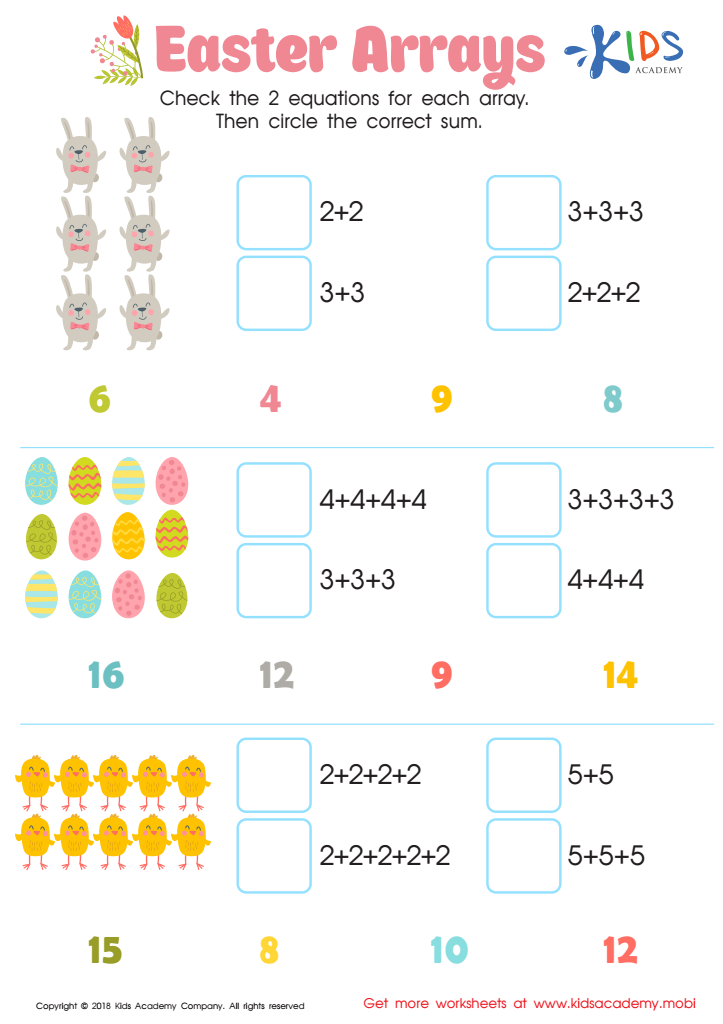
Easter Arrays Worksheet
Does your child love Easter? Do they adore the Easter bunny and egg hunts? Help them have fun with this worksheet! Go through it with them and check the equations for each array. Then, have them circle the correct sum. It's a great way to make the holiday extra exciting!
 Assign to My Students
Easter Arrays Worksheet
Worksheet
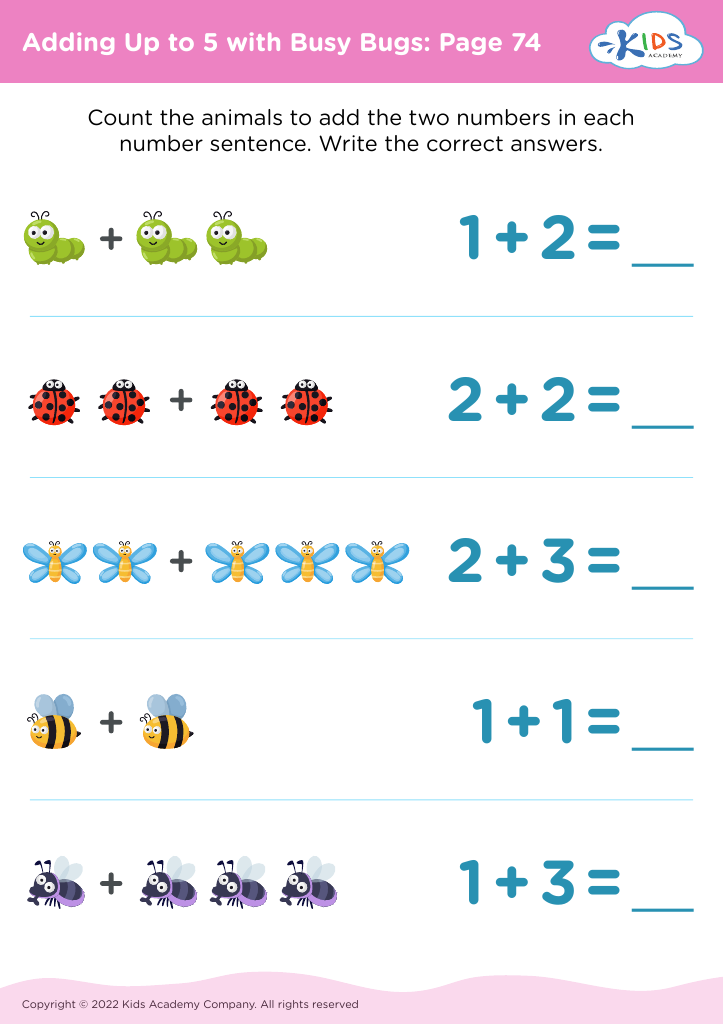
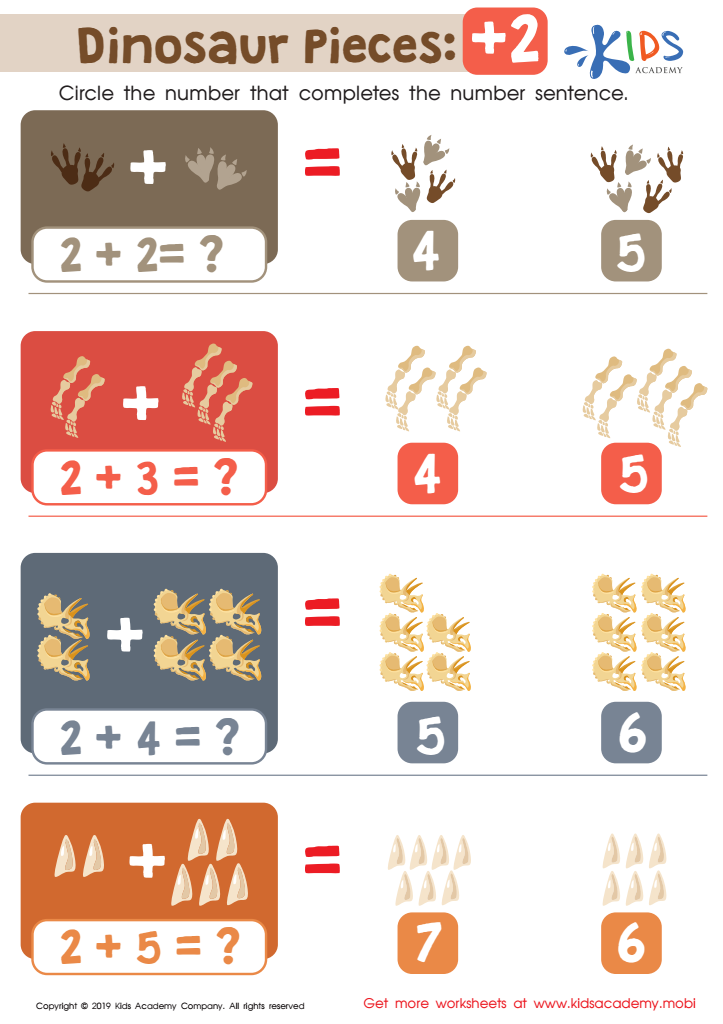
Dinosaur Pieces: +2 Worksheet
Kids love dinosaurs! See if your kids can solve these three equations featuring the mysterious creatures. Download the PDF and have them circle the number that completes each equation. Dinosaurs are extinct, not seen for thousands of years, but they can still help kids work on their math skills!
Dinosaur Pieces: +2 Worksheet
Worksheet
Join Kids Academy for Free
Who is primarily going to use this learning content?








Fine motor development is crucial for children's overall growth, especially between ages 4-7, where they acquire essential skills that underpin later academic success. During this formative period, fine motor skills—such as those involved in grasping, manipulating, and controlling small objects—are essential for effective engagement with addition and subtraction.
Parents and teachers should care because these foundational skills directly influence a child's ability to hold a pencil, use scissors, and perform other activities necessary for writing and engaging with math manipulatives. For instance, effective counting and grouping of objects during addition and subtraction exercises require precise finger movements. Strong fine motor skills also foster a sense of independence, allowing children to tackle tasks related to learning with greater confidence.
Additionally, as children learn mathematical concepts, they also develop problem-solving abilities, critical thinking, and perseverance. Early exposure to these skills through playful, hands-on activities can cultivate a positive attitude towards math, setting the stage for lifelong enjoyment and success in the subject. Supportive environments from parents and teachers that emphasize fine motor development can significantly enhance children's readiness for formal education, easing their transitions into classrooms where they will encounter more complex mathematical concepts.








