
Following instructions Addition & Subtraction Worksheets for Ages 4-7
21 filtered results
Difficulty Level
Grade
Age
-
From - To
Subject
Activity
Standards
Discover the perfect learning tool for young math enthusiasts with our "Following Instructions Addition & Subtraction Worksheets for Ages 4-7." Specially designed to foster mathematical skills and improve instruction-following abilities, these engaging sheets help children master basic arithmetic while enhancing their concentration and listening skills. Each worksheet combines fun activities with educational tasks, ensuring that learning remains exciting and interactive. Equip your child with essential skills for academic success and a solid math foundation. Ideal for parents, teachers, and homeschooling, these worksheets offer a fantastic opportunity for children to learn, practice, and grow.
Favorites
With answer key
Interactive
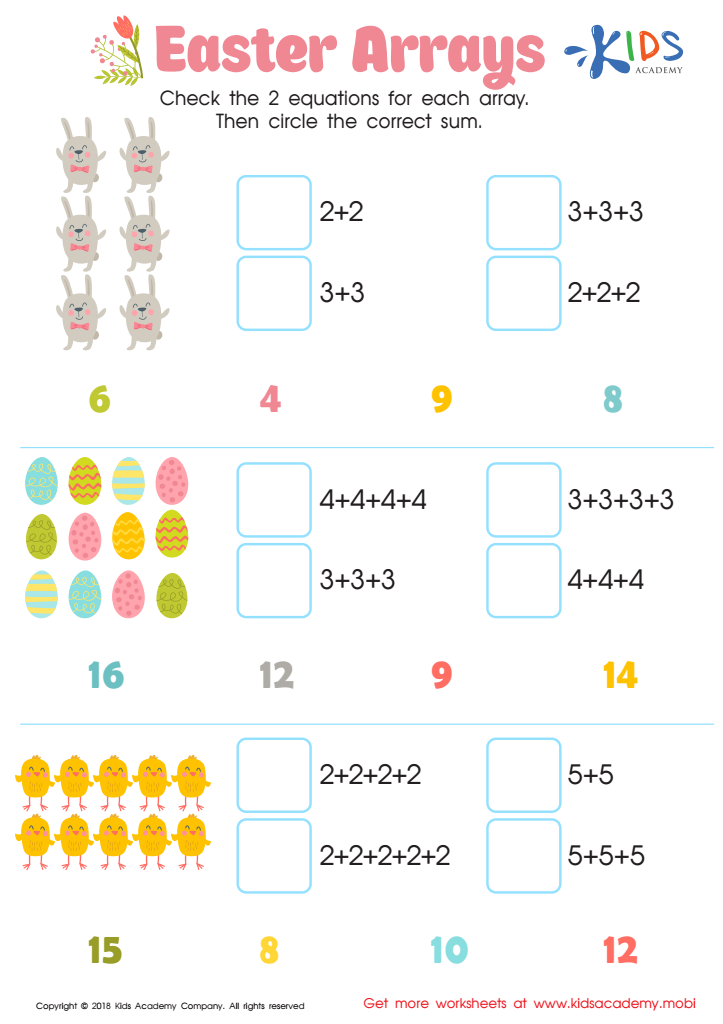
Easter Arrays Worksheet
Does your child love Easter? Do they adore the Easter bunny and egg hunts? Help them have fun with this worksheet! Go through it with them and check the equations for each array. Then, have them circle the correct sum. It's a great way to make the holiday extra exciting!
 Assign to My Students
Easter Arrays Worksheet
Worksheet
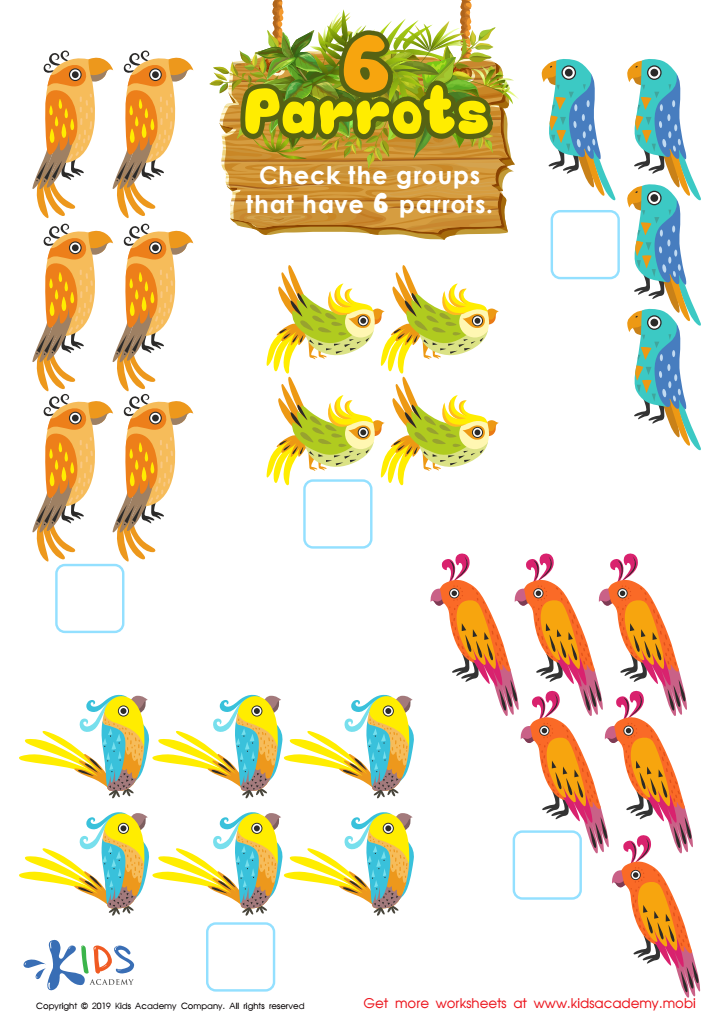
6 Parrots Worksheet
Love parrots? Here's a free worksheet to help your children practice counting to six with colorful parrot representations! Kids will adore counting the parrots and checking off groups of six - and it won't even feel like math! Just a fun way to make some new and exciting friends.
6 Parrots Worksheet
Worksheet
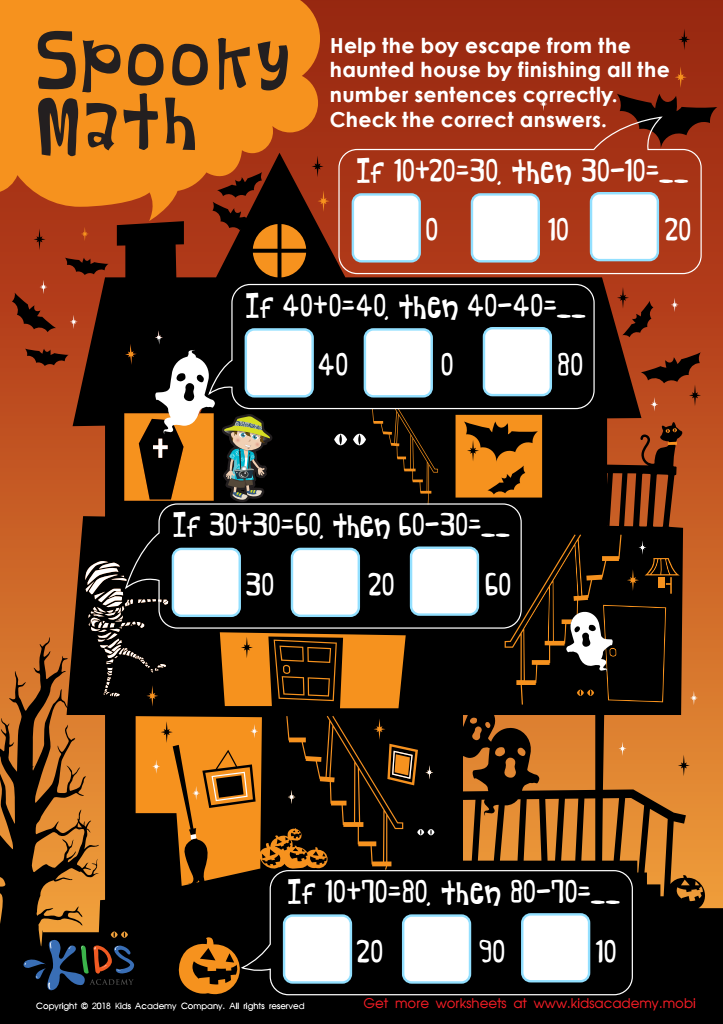
Subtract Tens: Spooky Math Worksheet
No need to fear solving math equations! Your mathematician will be a hero and help the boy escape the haunted house. Number families, if/then statements, fun graphics and increased understanding are all part of the equation. They'll have so much fun, they won't even realize it's math!
Subtract Tens: Spooky Math Worksheet
Worksheet
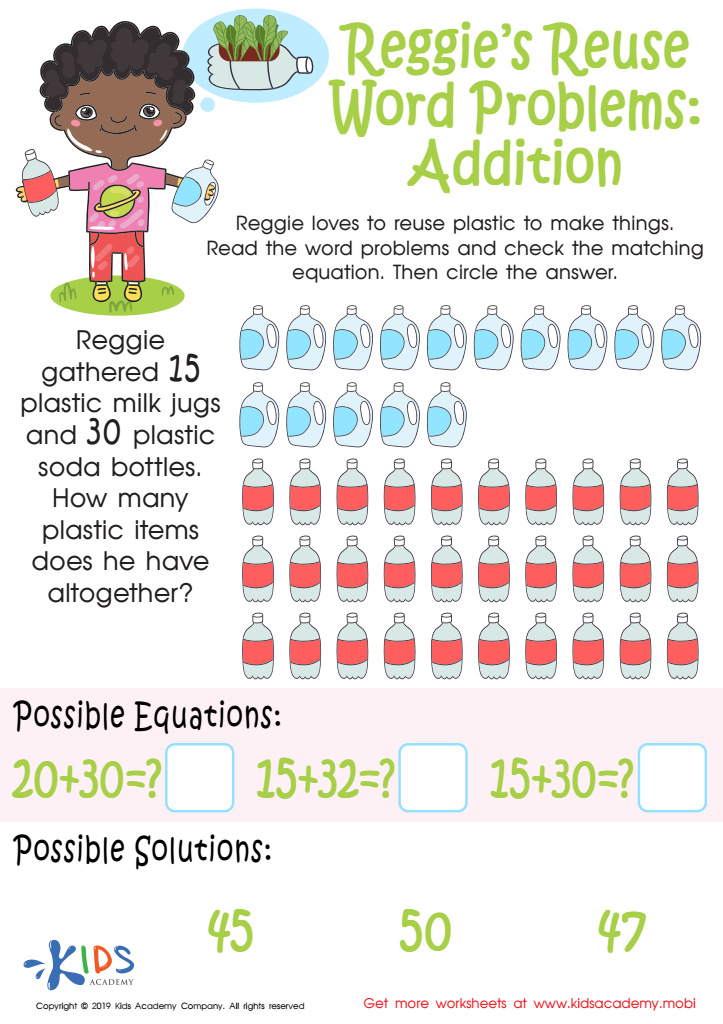
Reggie's Reuse Word Problems: Addition Worksheet
Help Reggie and your child save the planet by using this free worksheet! It reinforces addition word problems using one-to-one picture representation, and helps them pick out the correct number sentence and possible solutions. It's an easy way to help the planet and practice math!
Reggie's Reuse Word Problems: Addition Worksheet
Worksheet
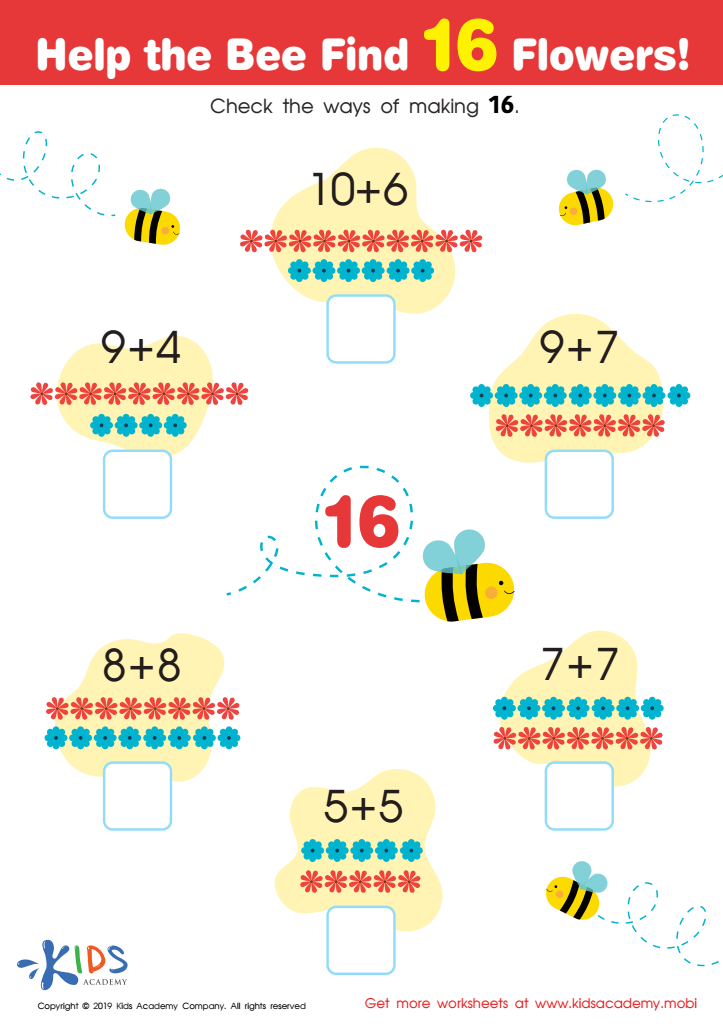
Help the Bee Find 16 Flowers Worksheet
Ask your students to count as high as they can. Show them that different numbers can equal the same figure with examples like 2+2=4 and 3+1=4. Ask for more examples, then help the bees find 16 flowers by checking the ways of making 16.
Help the Bee Find 16 Flowers Worksheet
Worksheet
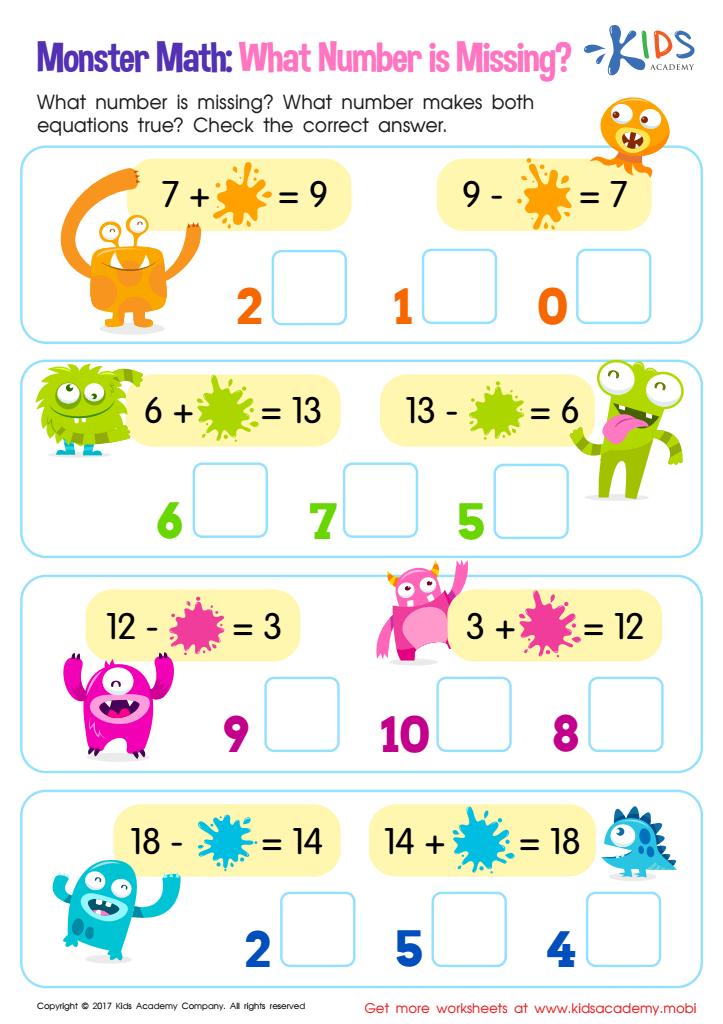
Missing Number: Monster Math Worksheet
Engage your child in monster math fun with a worksheet! They'll need to use their counting, addition and subtraction skills to solve equations on both sides. On the left side, they must complete an addition problem and on the right, the equation is in subtraction form. Assist them in selecting the right number out of the given options to make both equations true.
Missing Number: Monster Math Worksheet
Worksheet
Join Kids Academy for Free
Who is primarily going to use this learning content?








Caring about teaching "Following Instructions" and basic "Addition & Subtraction" to children aged 4-7 is crucial for several reasons. At this developmental stage, children are highly receptive and are building fundamental skills that underpin their future learning and daily life activities.
Firstly, following instructions enhances a child's ability to listen carefully, comprehend, and execute tasks accurately—skills imperative for academic success and social interaction. It cultivates respect for authority, attention to detail, and confidence in navigating structured activities. Complex tasks become simpler when a child can follow directions, preparing them for more extensive learning in later years.
Additionally, mastering basic addition and subtraction lays the groundwork for all future math concepts. Early proficiency builds a positive attitude toward math, eliminating fear and anxiety associated with the subject. Mathematical skills promote logical thinking, problem-solving, and cognitive development, integral to navigating everyday scenarios—from measuring ingredients for a recipe to understanding time and managing money.
Combined, these abilities foster independence, critical thinking, and decision-making. They prepare children not just for academic success but also for practical life challenges, making it imperative for parents and teachers to focus on them during these formative years. Investing in these skills ensures children develop into capable, confident learners and members of society.








