Identifying equivalent fractions Addition & Subtraction Worksheets for Ages 4-7
7 filtered results
-
From - To
Introduce your little learners to the fascinating world of fractions with our "Identifying Equivalent Fractions Addition & Subtraction Worksheets for Ages 4-7." These engaging worksheets help young children understand how to identify and compare equivalent fractions through fun, interactive exercises. By combining addition and subtraction problems, kids can strengthen their foundational math skills in an enjoyable and approachable way. Our carefully designed activities not only build confidence in fraction concepts but also nurture critical thinking and problem-solving abilities. Perfect for classrooms or at-home learning, empower your child with the tools they need for math success!
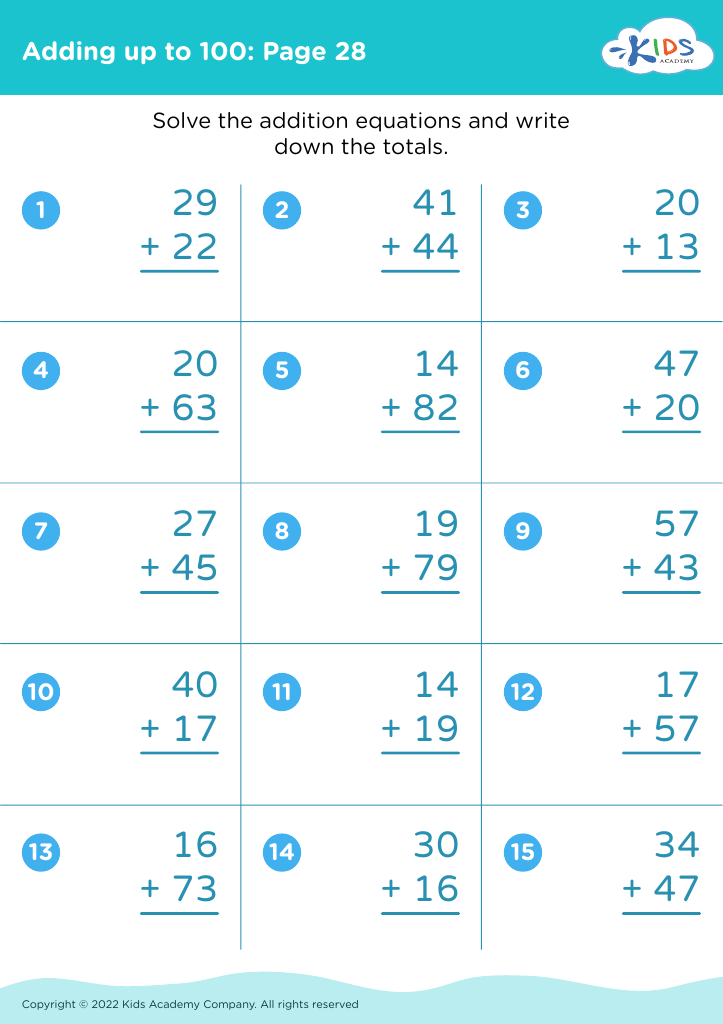
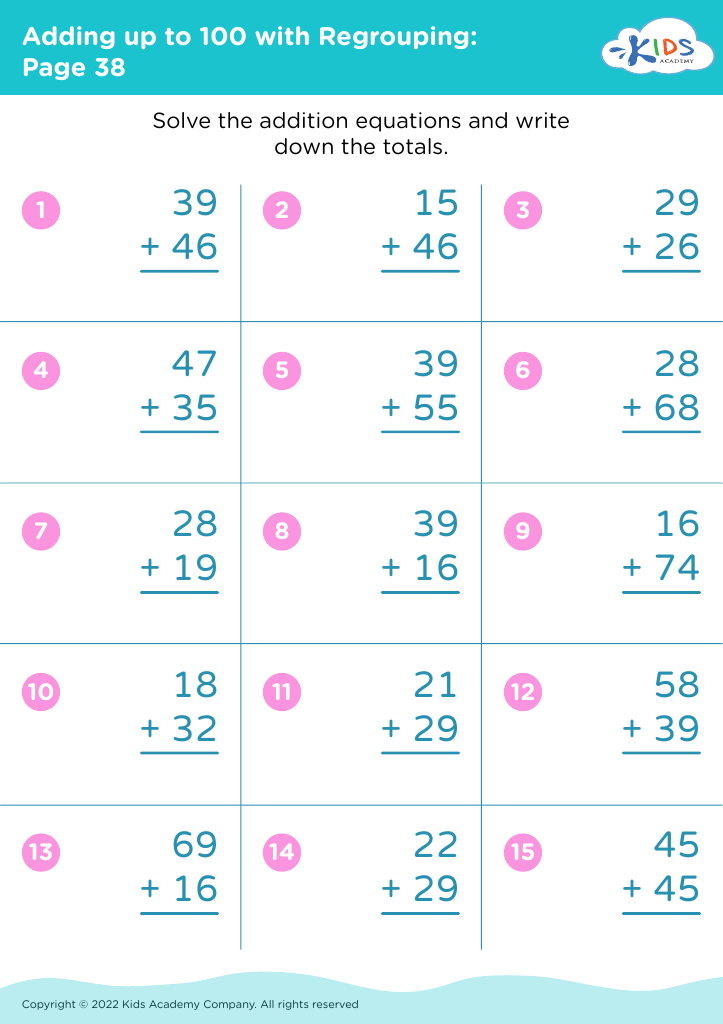
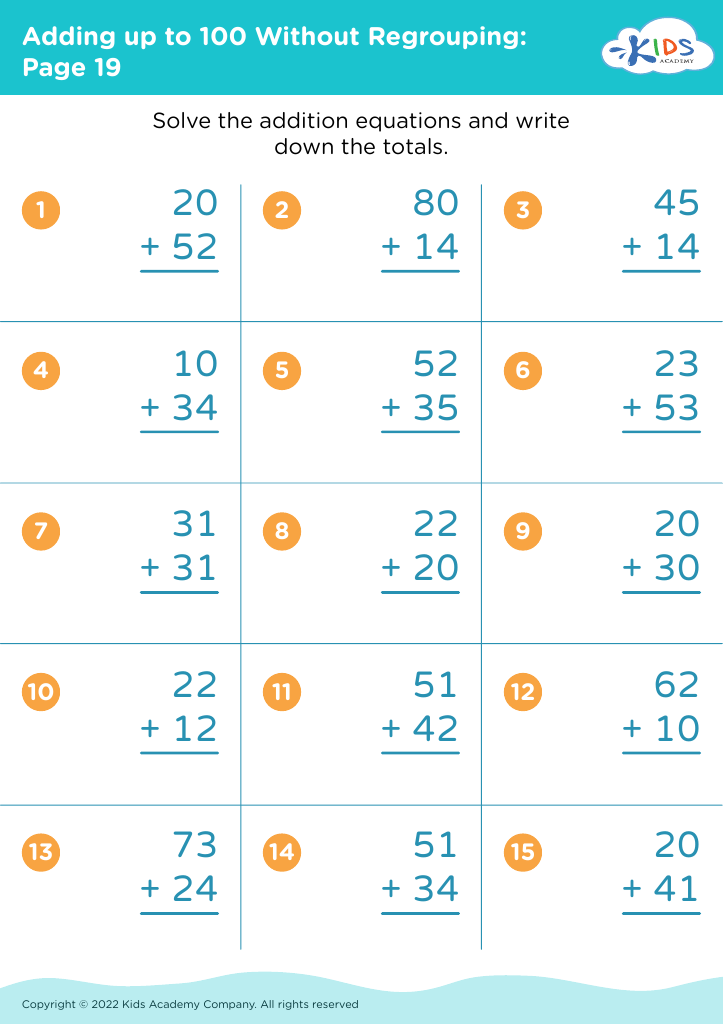
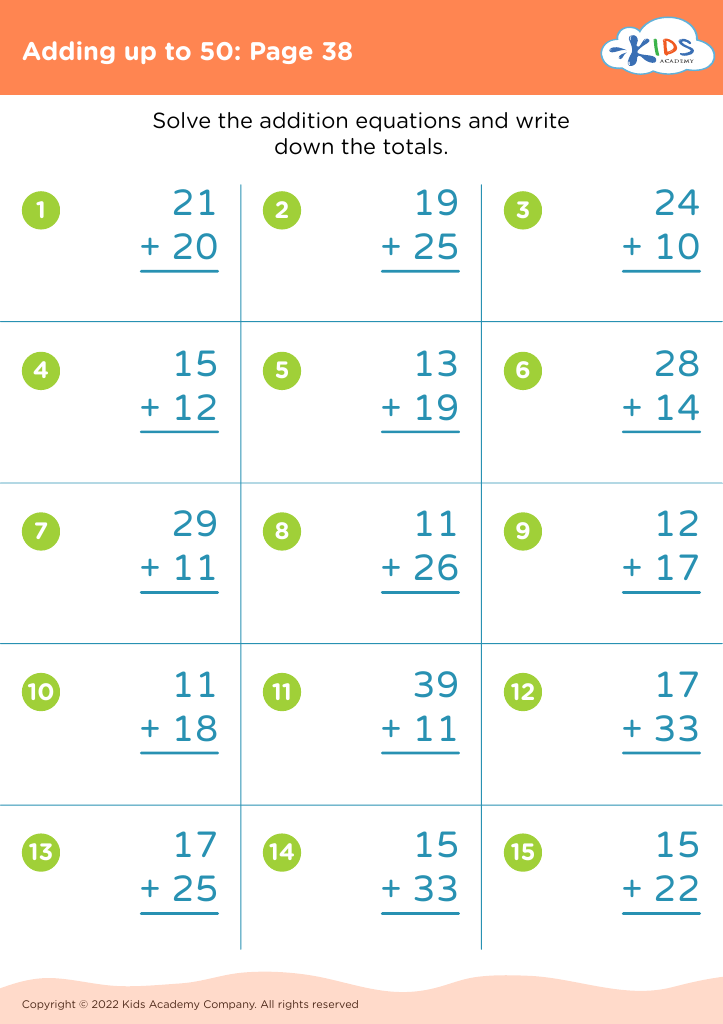
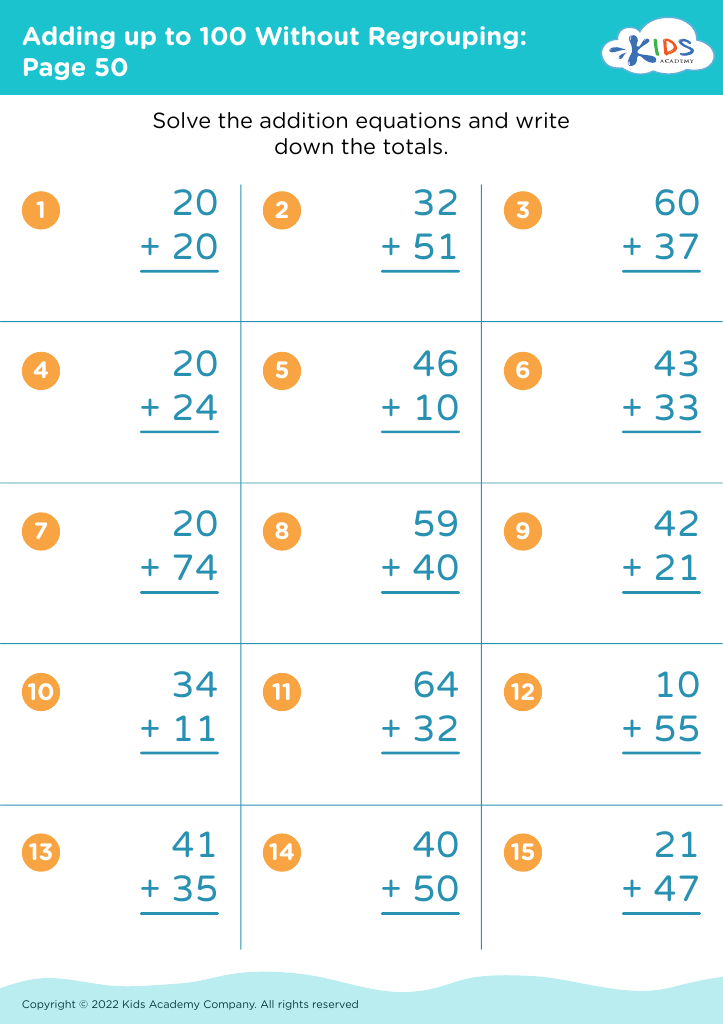
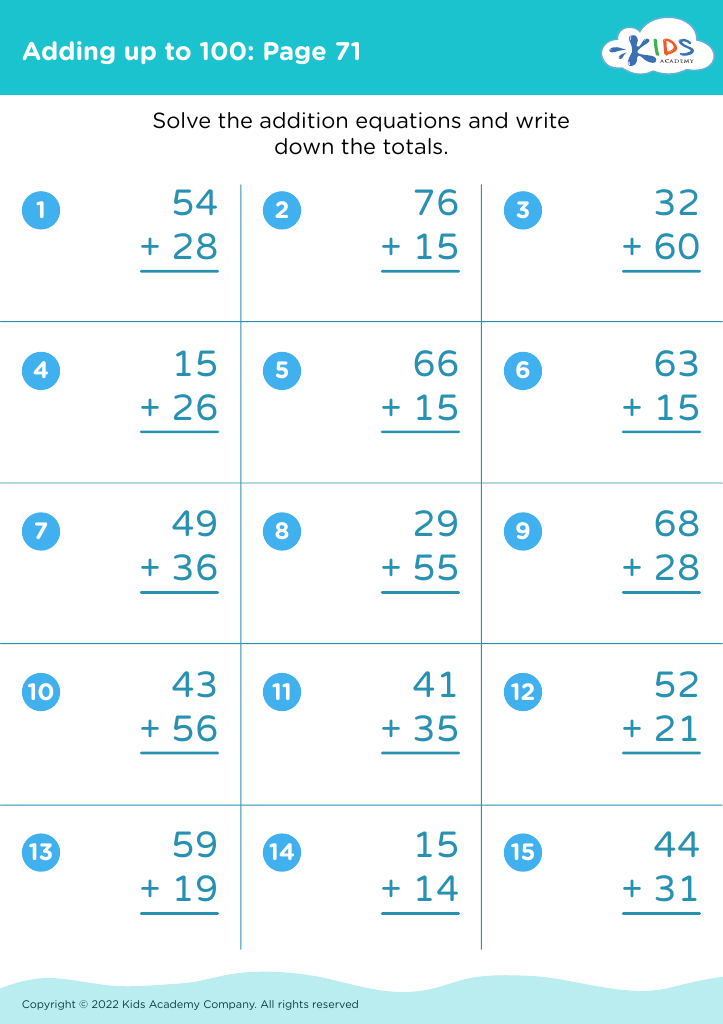
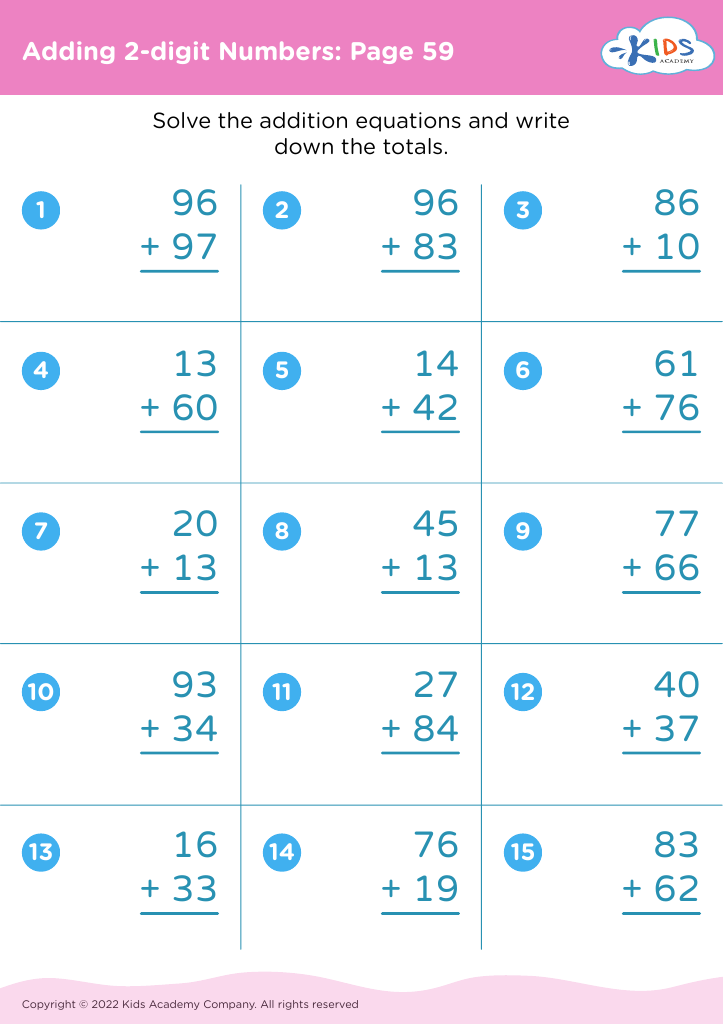








Introducing young children, ages 4 to 7, to the concept of equivalent fractions and the basics of addition and subtraction is foundational for several reasons. At this developmental stage, kids are natural explorers with an eagerness to understand the world around them, making it an ideal time to cultivate their mathematical thinking.
Understanding equivalent fractions lays the groundwork for grasping more complex math concepts later on, such as algebra and division. This understanding helps them see that numbers can be expressed and reorganized in various ways, enhancing their number sense and versatility in math. For instance, realizing that 1/2 is the same as 2/4 and 4/8 fosters a stronger conceptual grasp of fractions and mathematical relationships.
Addition and subtraction are the building blocks of arithmetic. Early familiarity with these operations helps children develop problem-solving skills, logical thinking, and the ability to follow sequential steps. Competency in these areas contributes to academic confidence and success in math, allowing smoother progression to more advanced topics.
Early exposure to these concepts also integrates cognitive skills like pattern recognition and supports other areas of learning, including reading comprehension and scientific inquiry. Parents and teachers who prioritize these foundational skills in young learners encourage a lifelong appreciation and competence in mathematics, setting children up for academic achievement and a better understanding of everyday life scenarios that involve math.








