
Improve counting Addition & Subtraction Worksheets for Ages 4-7
3 filtered results
Difficulty Level
Grade
Age
-
From - To
Subject
Activity
Standards
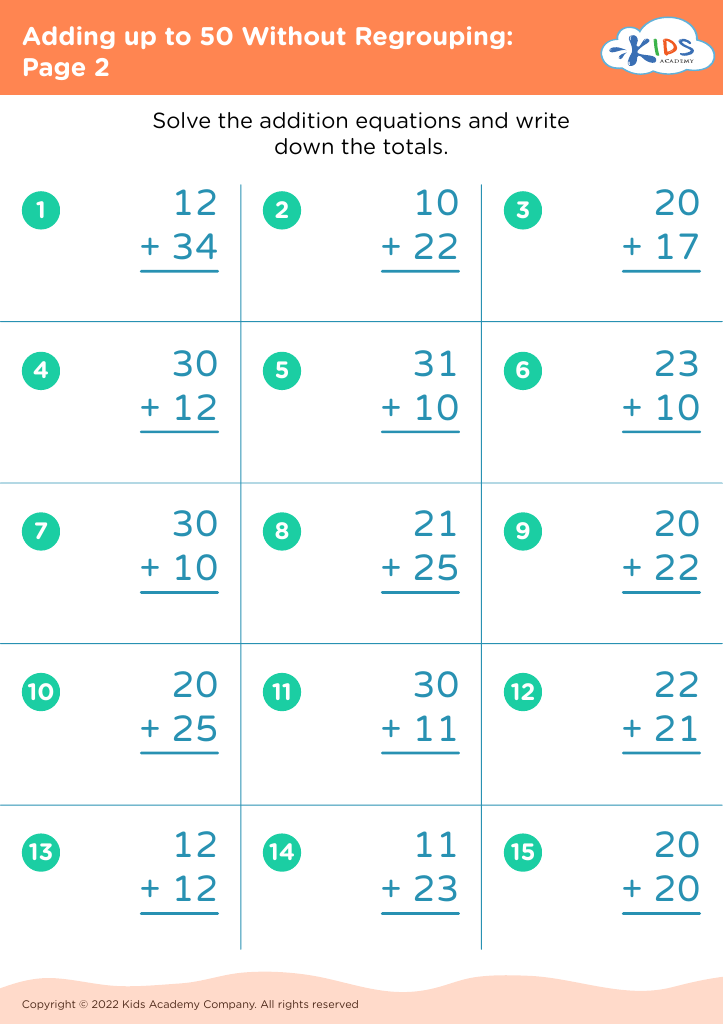
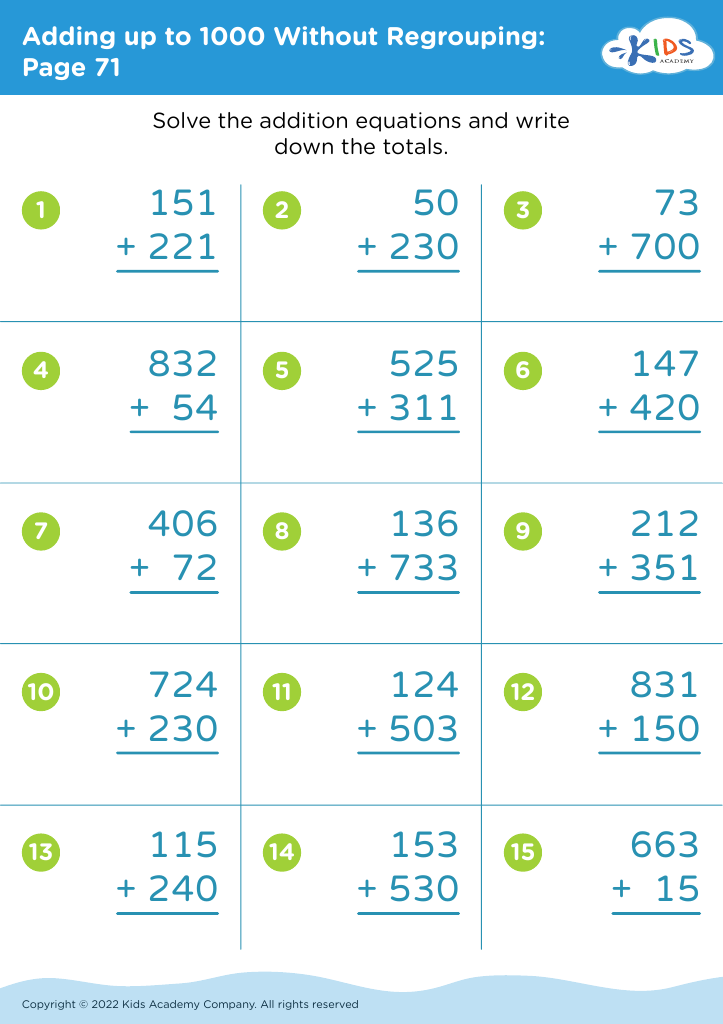
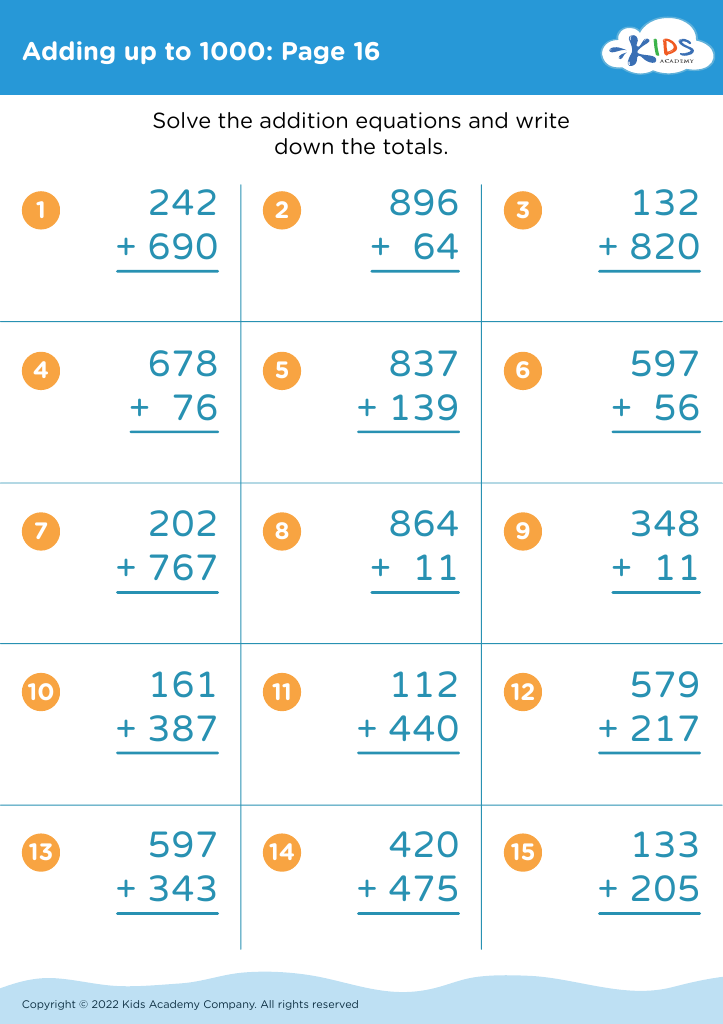
Unlock the world of math for young learners with our "Improve Counting Addition & Subtraction Worksheets" designed specifically for ages 4-7. These engaging worksheets aim to enhance counting skills while making learning fun. Through vibrant illustrations and interactive exercises, children will practice essential addition and subtraction concepts, reinforcing their understanding of numbers. Ideal for parents and teachers alike, our comprehensive resources support early math development at home or in the classroom. Empower your child with the foundational skills they need to succeed in math and beyond. Explore our collection today and make counting a joyful journey for your little ones!
Favorites
With answer key
Interactive
Join Kids Academy for Free
Who is primarily going to use this learning content?








Improving counting, addition, and subtraction skills for children ages 4-7 is crucial for several reasons. First, these foundational math skills are essential for early academic success. Children who master these concepts are more likely to excel in future mathematics, as they develop critical problem-solving abilities and logical thinking. Strong basic math skills also foster confidence, allowing children to engage more fully in classroom activities and discussions.
Additionally, understanding numbers helps children make sense of the world around them. For instance, they engage in practical applications, such as counting objects during play or solving simple problems while shopping. This fosters real-life application of math, making it more relevant and engaging for young learners.
Moreover, early exposure to counting and arithmetic strengthens cognitive development. It enhances memory, attention, and critical reasoning skills- essential tools not just for math, but for learning in other subjects as well.
Finally, educational engagement from parents and teachers is pivotal in fostering a positive attitude toward math. When adults take an active interest in children's learning, it builds a strong foundation for collaborative learning and ensures that children are well-prepared for future academic challenges.








