Learning addition Addition & Subtraction Worksheets for Ages 4-7
3 filtered results
-
From - To
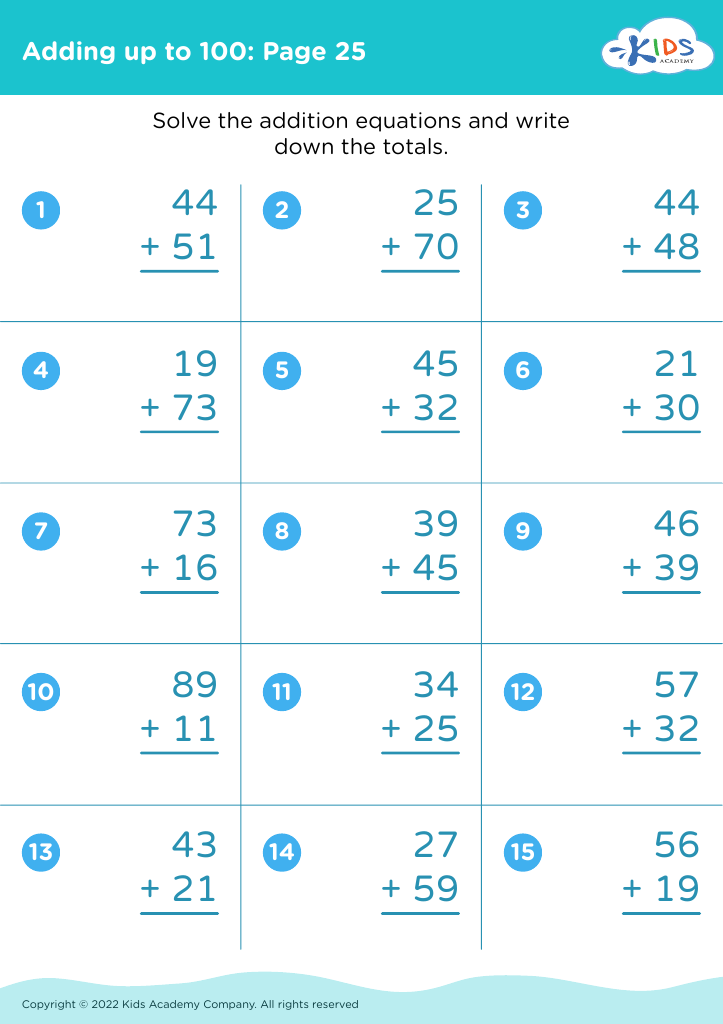
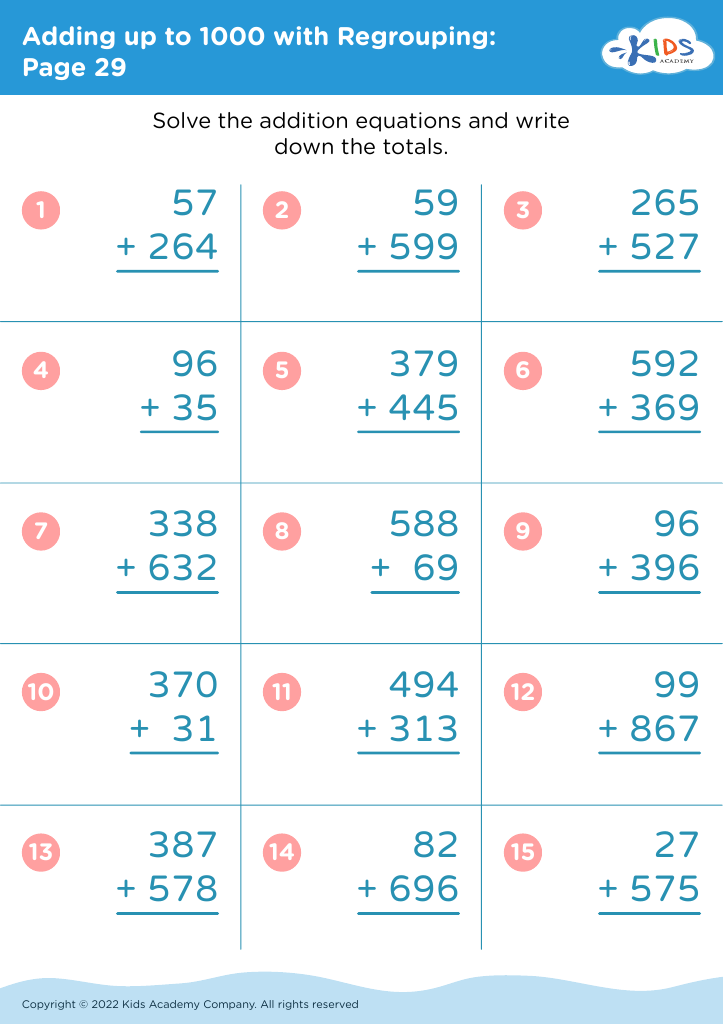
Discover our engaging "Learning Addition & Subtraction Worksheets" designed specifically for children ages 4-7! These worksheets provide a fun and interactive way to help your child grasp basic math concepts, boosting their confidence and skills in addition and subtraction. Each worksheet features colorful illustrations and age-appropriate exercises that make learning enjoyable. With varying difficulty levels, our resources cater to different learning stages, ensuring every child can progress at their own pace. Perfect for home or classroom use, these worksheets serve as fantastic tools to support early math education. Visit us today to enhance your child's mathematical journey!
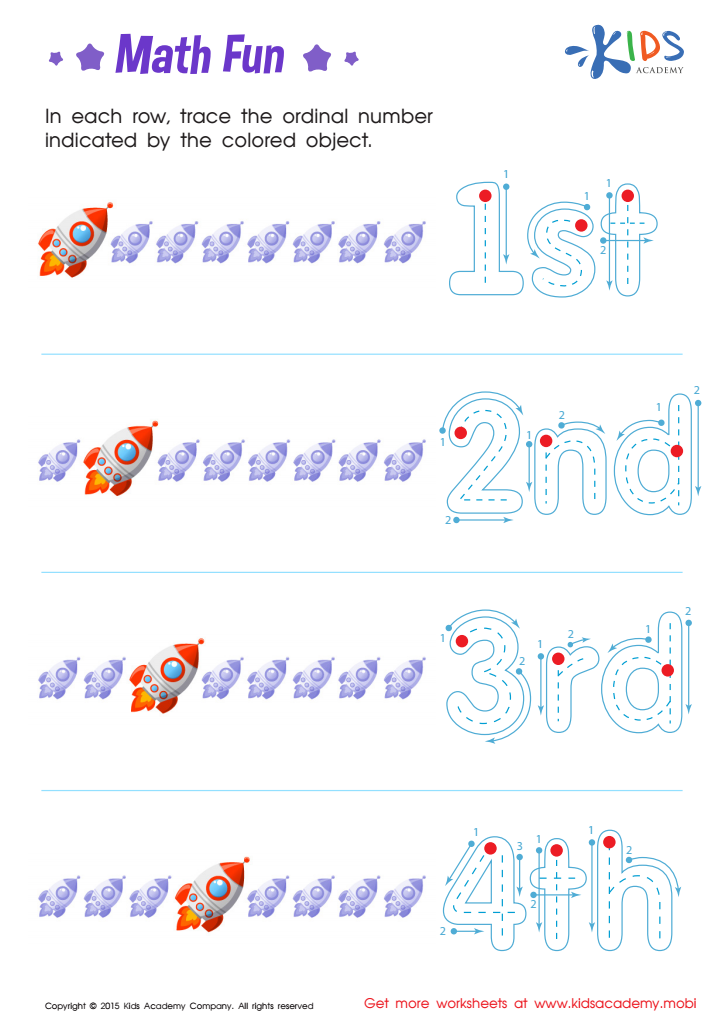
Ordinal Numbers: Math Fun Worksheet
 Assign to My Students








Caring about addition and subtraction for children aged 4-7 is crucial for several reasons. First, foundational math skills set the stage for future academic success. At this age, children develop numerical sense and problem-solving abilities, which are critical for more complex mathematics later on. Understanding addition and subtraction aids in building cognitive skills such as logical reasoning and critical thinking.
Second, these concepts enhance everyday life skills. From simple tasks like counting toys or sharing snacks to understanding time and money, early exposure empowers children to navigate the world independently. It fosters confidence and encourages a positive attitude toward math as they recognize its relevance.
Moreover, early math skills contribute to social-emotional development. Working with peers or adults on math problems encourages teamwork, patience, and persistence. Parents and teachers can reinforce these skills through engaging, playful activities, making learning a joyful experience.
Finally, early mastery of addition and subtraction lays a strong academic foundation, reducing anxiety around mathematics in later years. When parents and teachers prioritize these essential skills, they help children build a robust framework for lifelong learning and resilience in facing academic challenges.








