Logical thinking Addition & Subtraction Worksheets for Ages 4-7
9 filtered results
-
From - To
Enhance your child's mathematical skills with our "Logical Thinking Addition & Subtraction Worksheets" designed specifically for ages 4-7! These engaging worksheets foster logical reasoning through exciting exercises that blend addition and subtraction with critical thinking challenges. Children will solve problems, identify patterns, and develop strong analytical skills while having fun! Perfect for early learners, our printable resources support classroom learning and provide valuable practice at home. Whether your child is just starting or looking to strengthen their skills, our logical thinking worksheets ensure an enjoyable and educational experience, setting a solid foundation for future math success. Try them today!
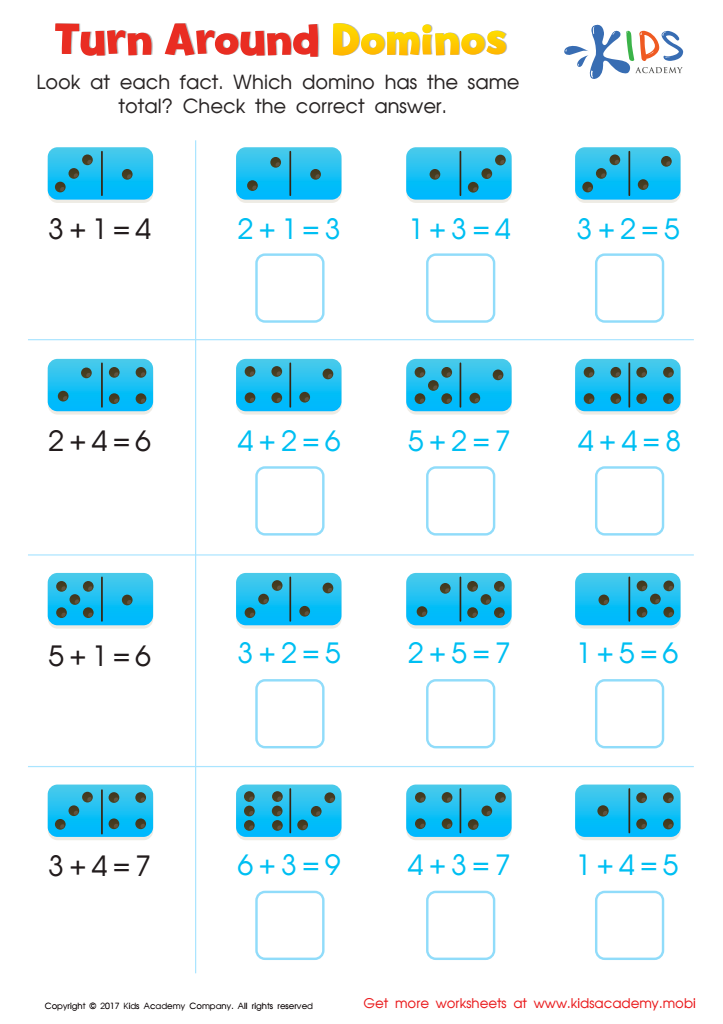
Turn Around Dominos Worksheet
 Assign to My Students
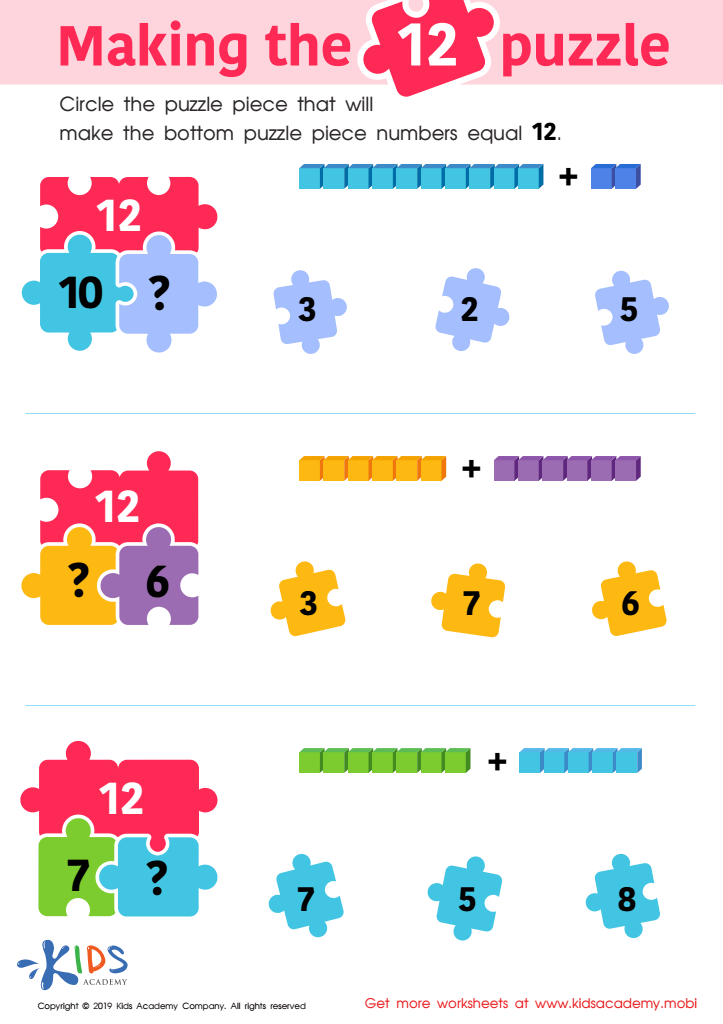
Making the 12 Puzzle Worksheet








Logical thinking in addition and subtraction for ages 4-7 is crucial for several reasons. During these formative years, children's cognitive skills are rapidly developing, and fostering logical reasoning enhances their ability to approach problems systematically. This foundational mathematical concept allows them to understand relationships between numbers, which is essential for further learning in mathematics and other subjects.
When parents and teachers prioritize logical thinking in addition and subtraction, they help children develop essential skills such as critical thinking, problem-solving, and mathematical reasoning. Engaging with numbers in a logical context enables children to make connections between different concepts, which enhances retention and understanding.
Moreover, incorporating logical thinking in early math education encourages a growth mindset. Children learn that challenges can be tackled with strategies, fostering resilience and confidence in their abilities. As they practice logical sequences, they also hone their ability to engage in discussions, articulate their thought processes, and work collaboratively with peers.
Ultimately, instilling logical thinking in addition and subtraction lays the groundwork for successful mathematical proficiency, encouraging academic achievement and a lifelong appreciation for learning. Investing in these skills early on equips children not only for school but for real-world problem-solving situations they will encounter throughout life.








