Practicing mental arithmetic Addition & Subtraction Worksheets for Ages 4-7
3 filtered results
-
From - To
Promote your child's math confidence with our "Practicing Mental Arithmetic: Addition & Subtraction Worksheets for Ages 4-7." These expertly crafted worksheets are designed to help young learners build a strong foundation in essential math skills. Engaging and colorful, our worksheets transform learning into an enjoyable experience, encouraging your child to practice and master addition and subtraction. Perfect for parents and teachers alike, these age-appropriate resources support early learners in developing their mental arithmetic abilities, paving the way for future math success. Visit us at Kids Academy to access our full range of educational materials and kickstart your child's learning journey.
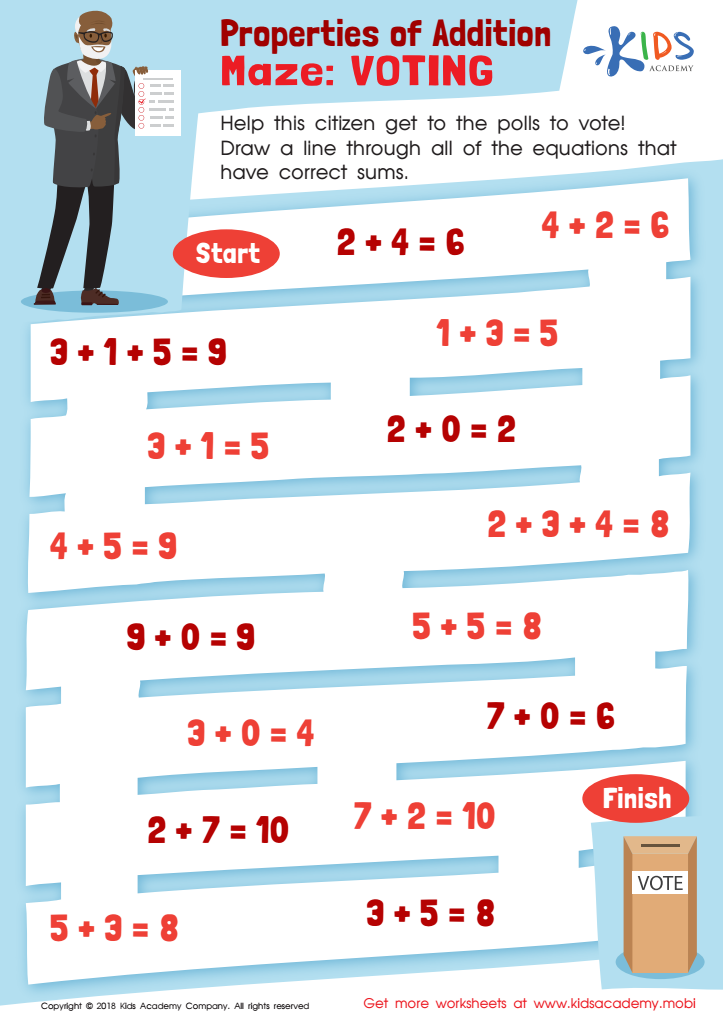
Properties of Addition Maze: Voting Worksheet
 Assign to My Students
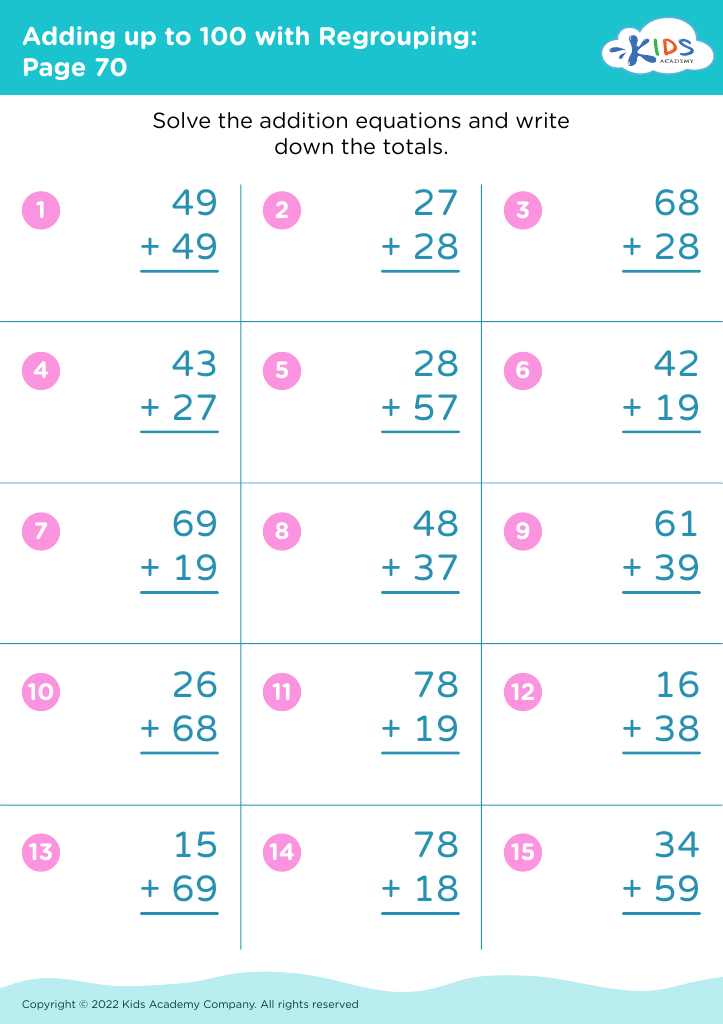
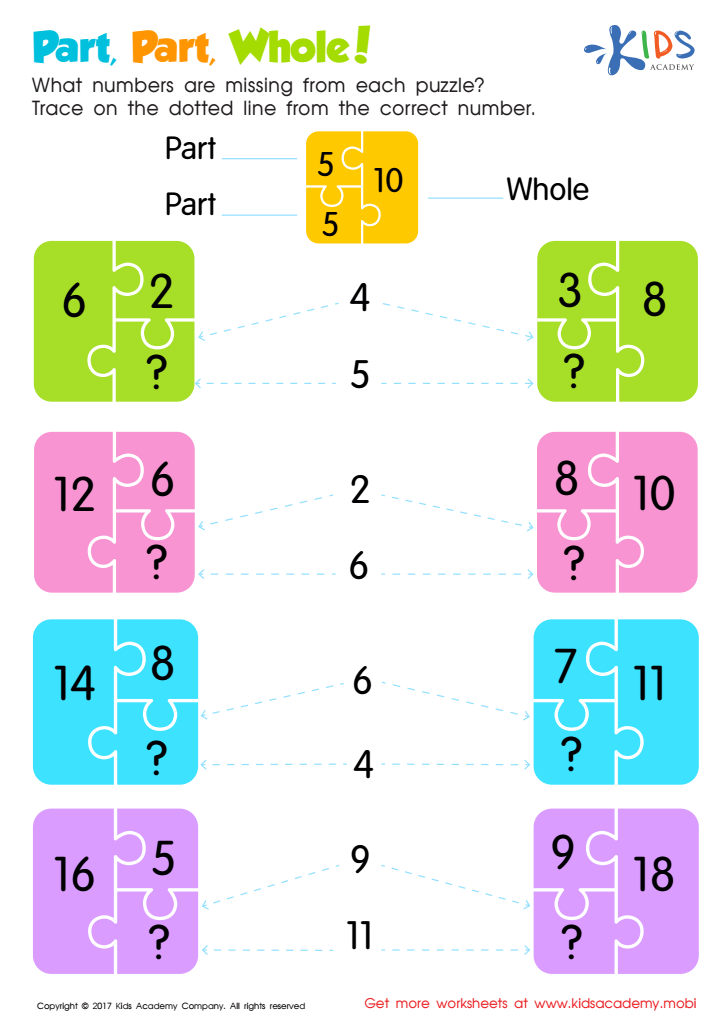
Part, Part, Whole Worksheet








Practicing mental arithmetic in addition and subtraction for children aged 4-7 is crucial for several foundational reasons that impact their overall academic and cognitive development. At this early stage, the brain is incredibly receptive, and building strong numerical skills lays the groundwork for future mathematical proficiency. Mental arithmetic enhances memory, sharpens concentration, and develops problem-solving skills, which are vital for academic success across subjects.
When children practice addition and subtraction, they learn to recognize patterns, understand relationships between numbers, and develop a sense of numerical order. These fundamental skills foster a deeper understanding of more complex mathematical concepts encountered later in their education. Furthermore, practicing these skills mentally rather than relying solely on paper exercises or calculators encourages flexible thinking and adaptability, helping children to approach problems from different angles and devise efficient solutions.
Additionally, regular practice boosts children's confidence and reduces math anxiety by making numeracy an integral, everyday part of their lives. This piques their interest and enjoyment in learning, creating a positive attitude towards mathematics. Importantly, mastering basic arithmetic early bridges the gap between concrete counting and abstract reasoning, setting the stage for success in higher-order math and STEM fields. Thus, both parents and teachers should actively encourage regular practice of mental arithmetic to empower children with essential lifelong skills.








