Solve word problems Addition & Subtraction Worksheets for Ages 4-7
3 filtered results
-
From - To
Our "Solve Word Problems: Addition & Subtraction Worksheets for Ages 4-7" are designed to turn math practice into a fun and engaging experience. These expertly crafted worksheets help young learners build a strong foundation in problem-solving by presenting real-life scenarios that require basic arithmetic. Suitable for preschool through first grade, each worksheet balances challenge with accessibility, fostering critical thinking and confidence. Kids will enjoy colorful illustrations, while parents and educators will appreciate the clear instructions and learning objectives. Perfect for at-home practice or in the classroom, these worksheets are a fantastic resource for nurturing early math skills.
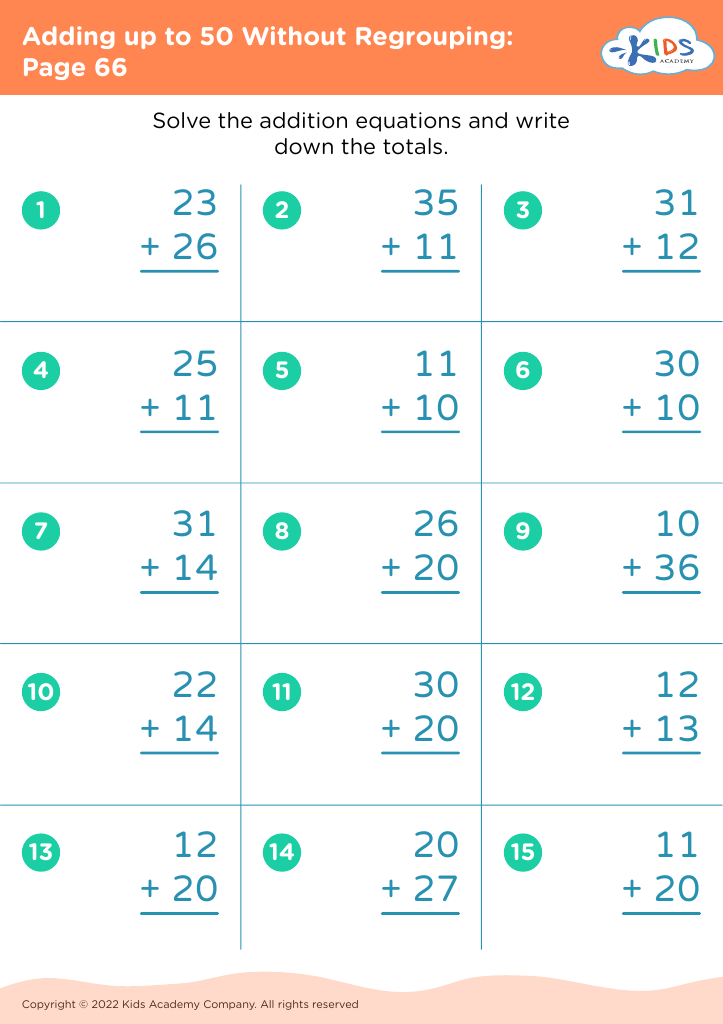
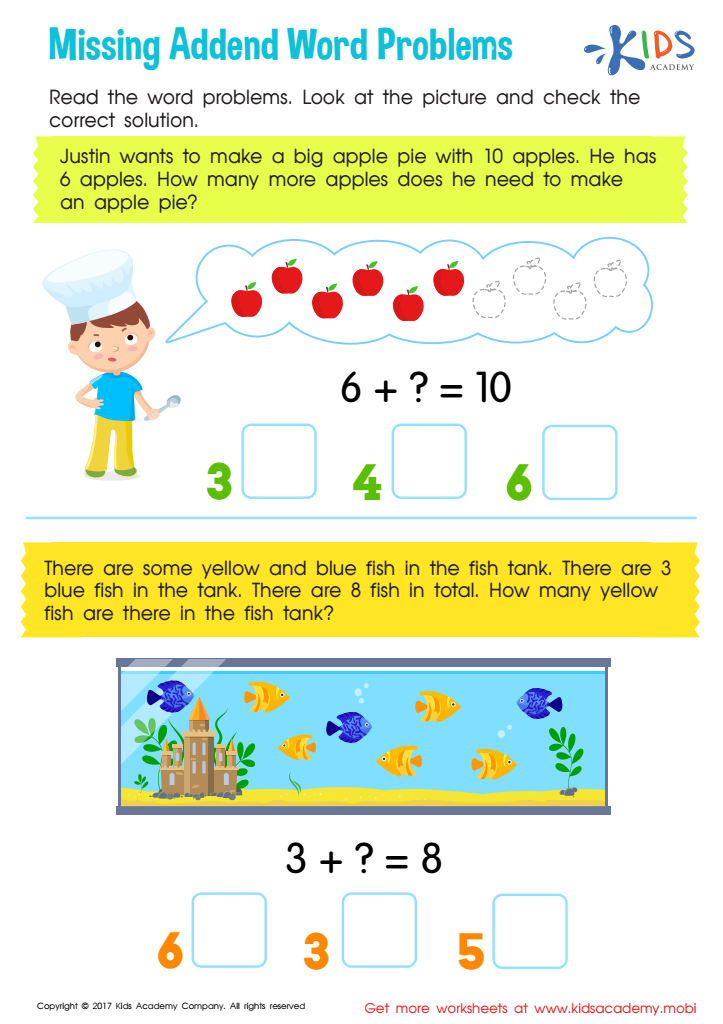
Missing Addend Word Problems Worksheet
 Assign to My Students
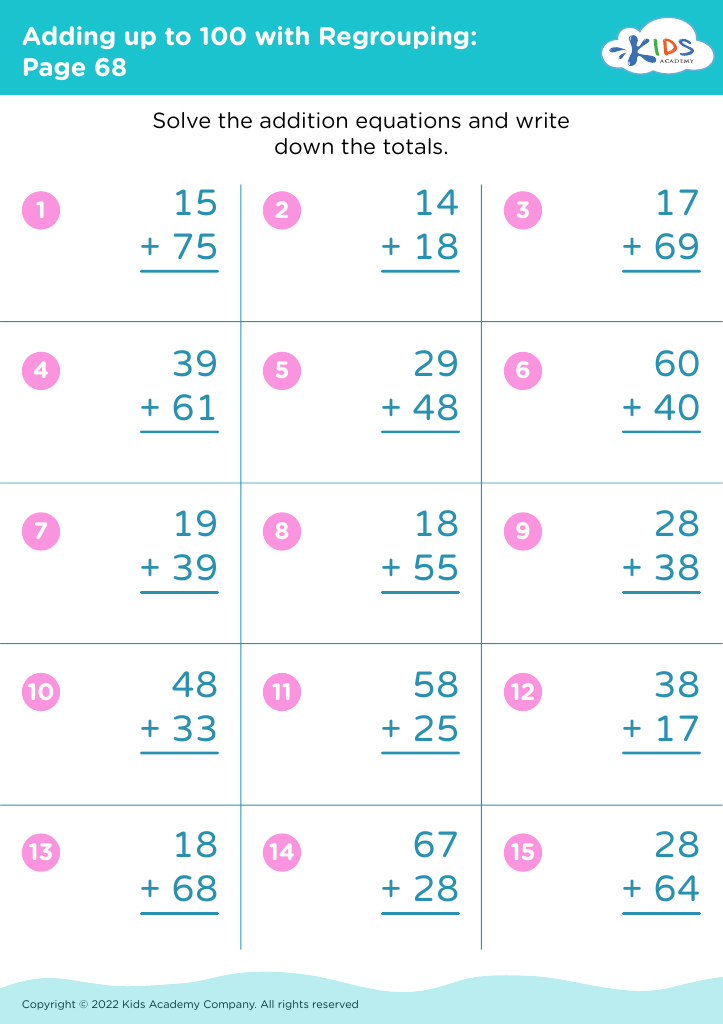








Caring about teaching addition and subtraction word problems at ages 4-7 goes beyond simple number manipulation; it lays a foundation for critical thinking and problem-solving skills. At this age, children's brains are in crucial developmental stages where they form core cognitive abilities. By introducing word problems, parents and teachers help kids learn to apply mathematical concepts to real-world scenarios, enhancing their logical reasoning and ability to think abstractly.
Understanding mathematical principles early leads to better academic performance later. Importantly, word problems blend literacy and math, prompting kids to read, comprehend questions, and determine the operational steps needed to find solutions. This interlinking supports both language and numerical skills, fostering well-rounded development.
In addition, solving word problems builds confidence. Children learn through successful experiences that they can tackle challenges and solve problems independently. This empowerment cultivates a positive mindset towards learning and overcoming difficulties in various contexts, whether within the classroom or in everyday life situations.
Lastly, active parental and teacher engagement shows children that education is important. When adults exhibit interest and enthusiasm in fundamental learning stages, they model positive attitudes toward education, which children are likely to emululate.
In essence, nurturing these early skills incites holistic growth, preparing children for future academic and life challenges.








