Understand sequences Addition & Subtraction Worksheets for Ages 4-7
5 filtered results
-
From - To
Introduce young learners to the exciting world of math with our "Understand Sequences Addition & Subtraction Worksheets" designed for ages 4-7. These engaging and educational worksheets help children grasp the concepts of sequencing, addition, and subtraction in a fun and interactive way. Each activity is crafted to enhance critical thinking, pattern recognition, and problem-solving skills. Perfect for both classroom and at-home learning, our worksheets provide a strong foundation in math fundamentals while keeping kids motivated and entertained. Give your child the tools they need to succeed in math with our expertly designed and age-appropriate worksheets.
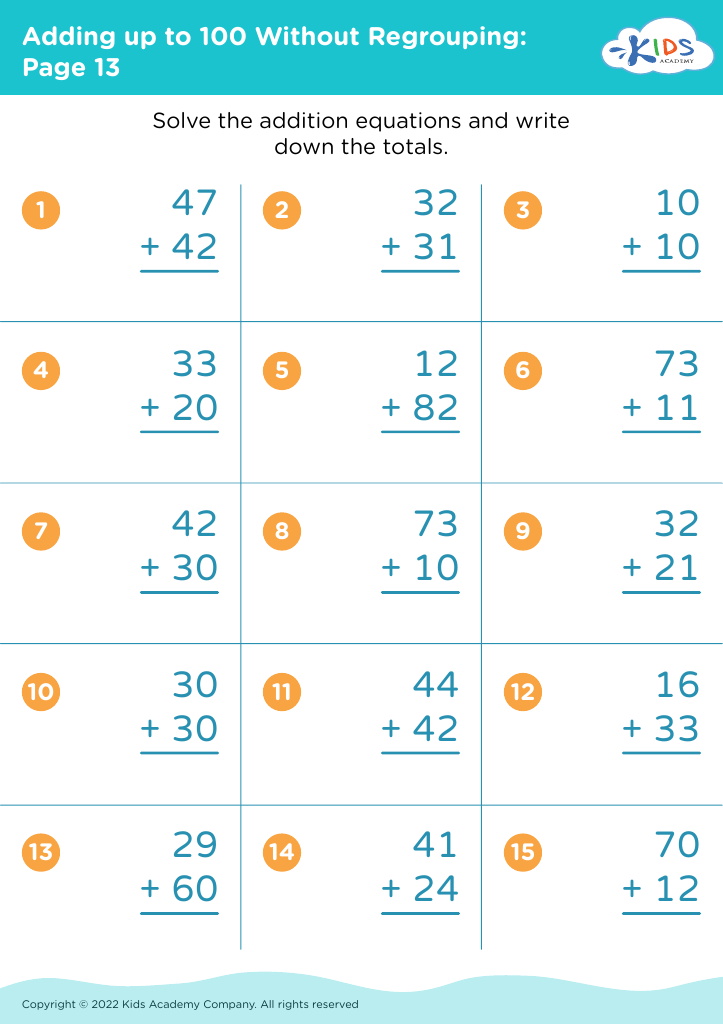
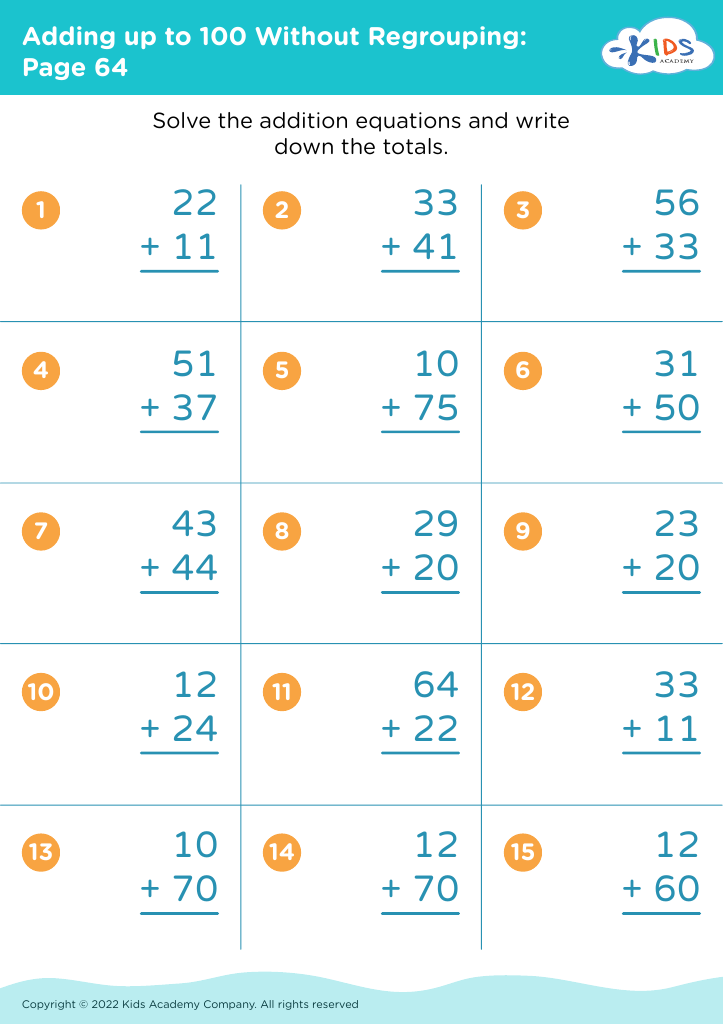
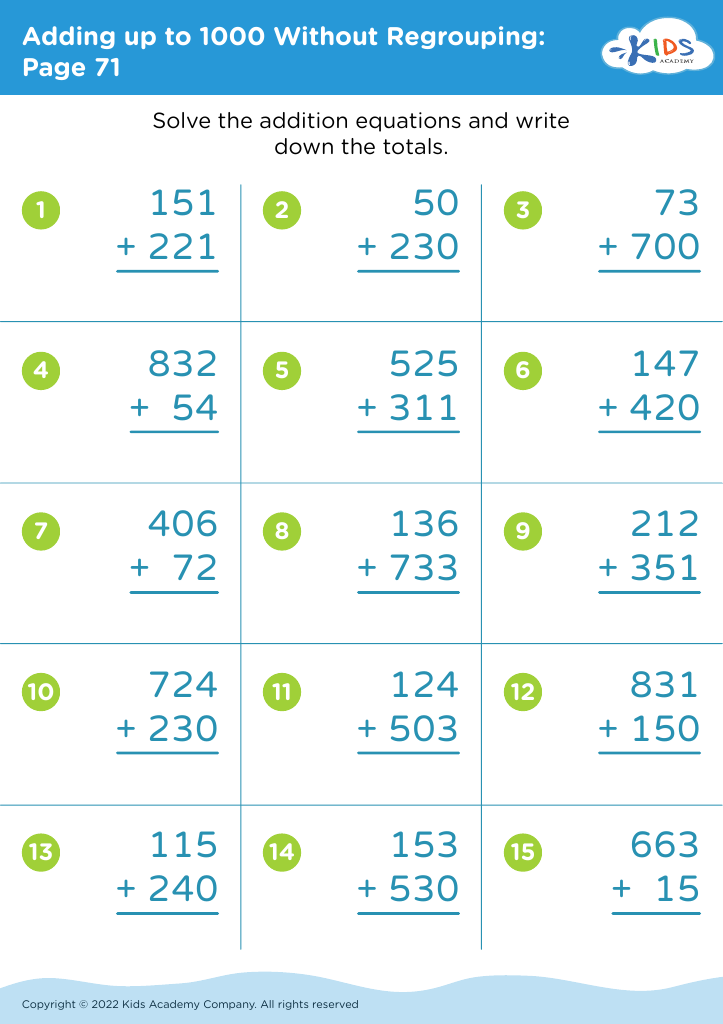
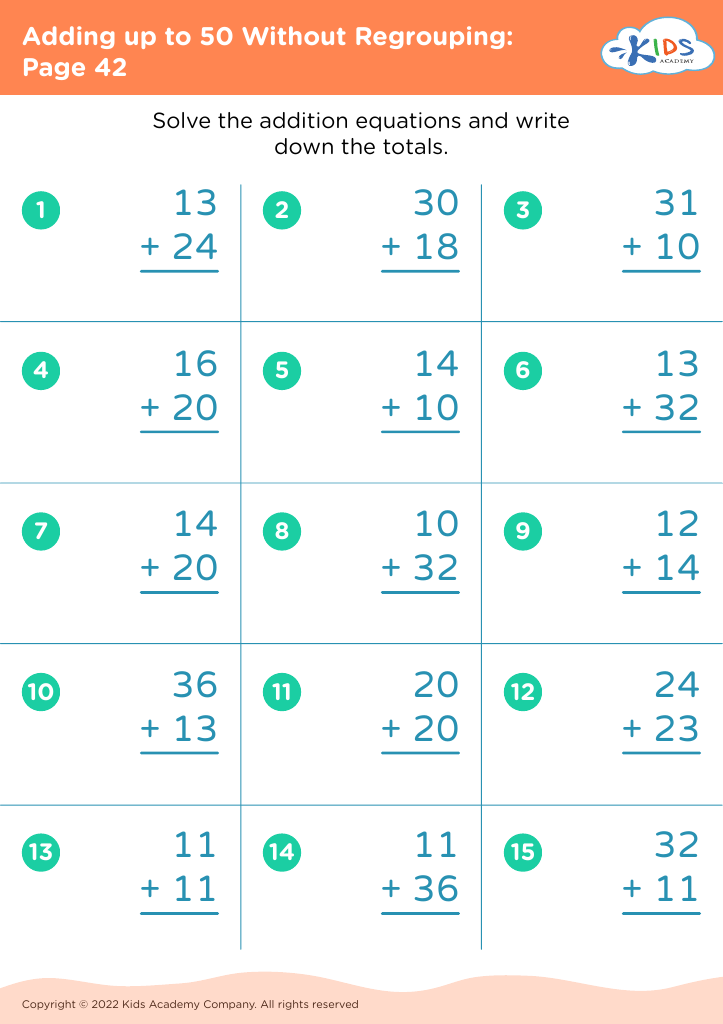
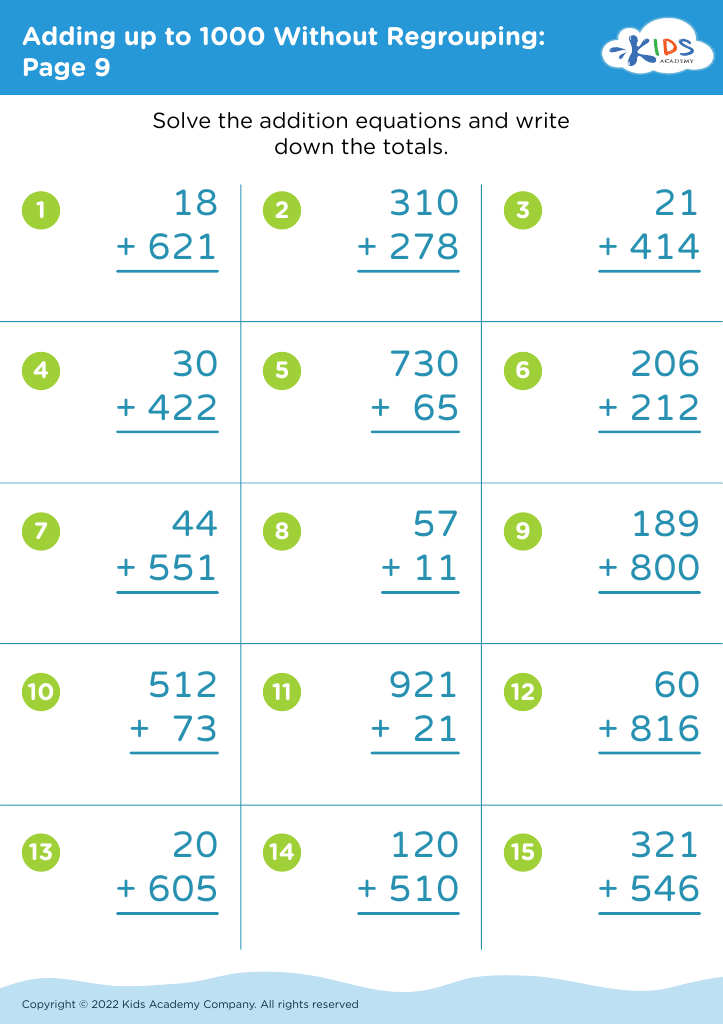








Understanding sequences, addition, and subtraction for children aged 4-7 is crucial for several reasons. Firstly, these foundational math skills form the bedrock for all future math learning. Sequences help children recognize patterns, essential for problem-solving and logical thinking. For example, understanding that numbers follow a predictable order supports counting abilities and sets the stage for more complex ideas like skip counting and basic algebra.
In addition, addition and subtraction are fundamental arithmetic operations that children will use throughout their lives. These skills carry over into everyday activities, such as measuring ingredients for a recipe or determining how many more minutes until bedtime. Practicing these operations improves children's number sense, making them comfortable and confident with numbers.
Early exposure to these concepts fosters cognitive development and enhances critical thinking. Kids who grasp these basics early tend to perform better academically. Furthermore, learning in an engaging and supportive environment boosts confidence and curiosity, key traits for lifelong learning.
Lastly, sequencing, addition, and subtraction skills contribute to a child's ability to follow instructions and complete tasks sequentially and logically, which are vital life skills. By focusing on these areas, parents and teachers equip children with the necessary tools to succeed in both academic and real-world scenarios.








