Understanding patterns Addition & Subtraction Worksheets for Ages 4-7 - Page 2
34 filtered results
-
From - To
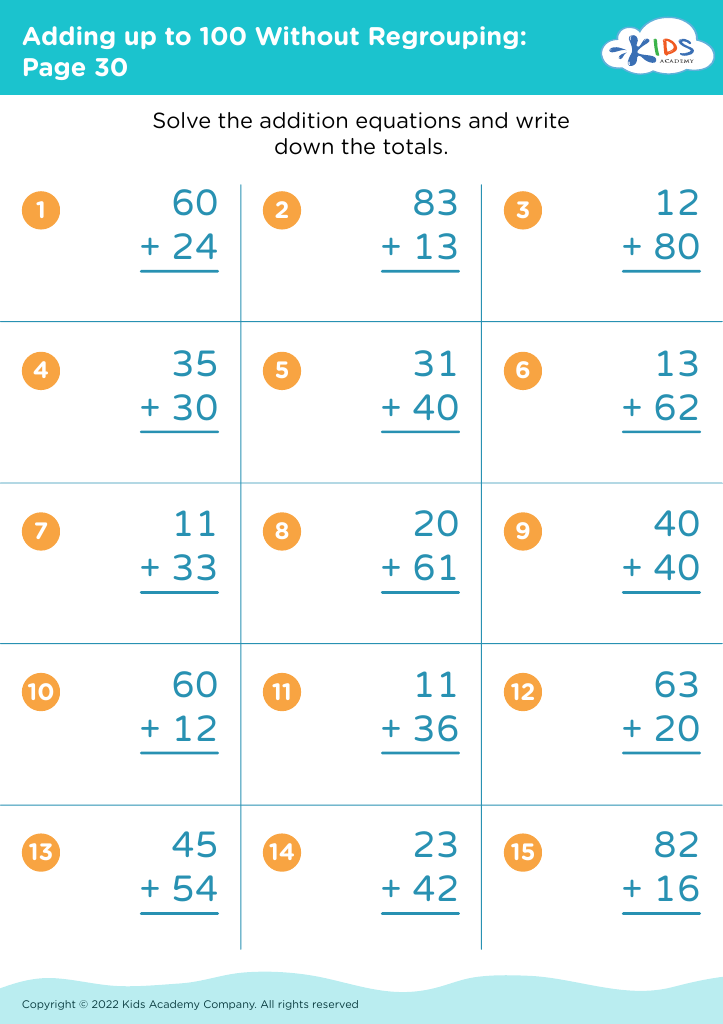
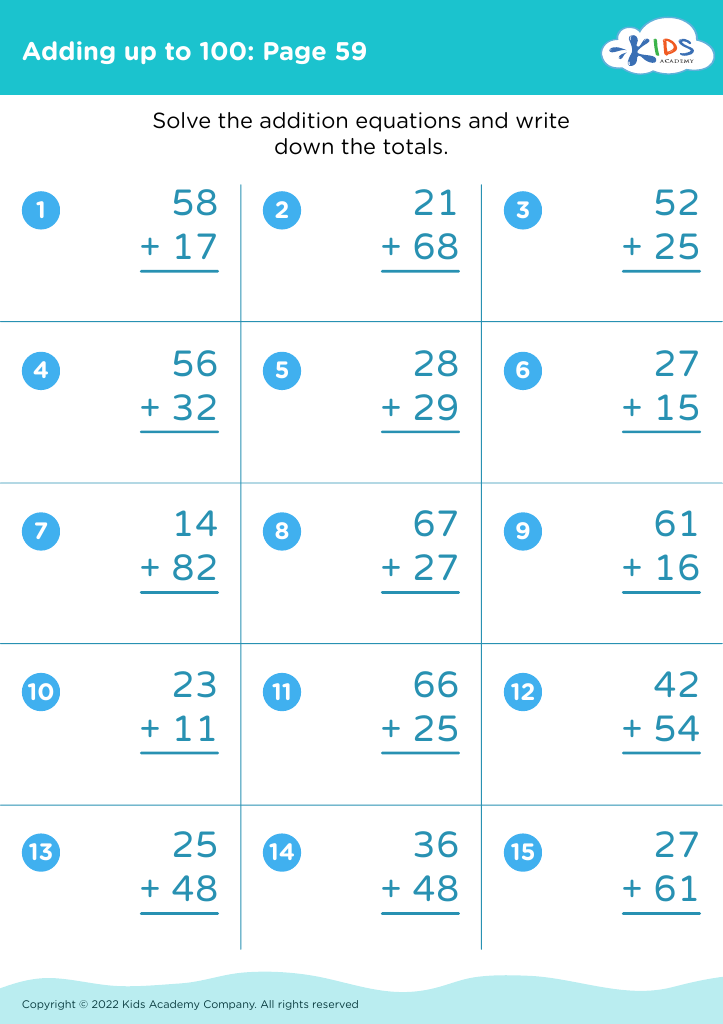
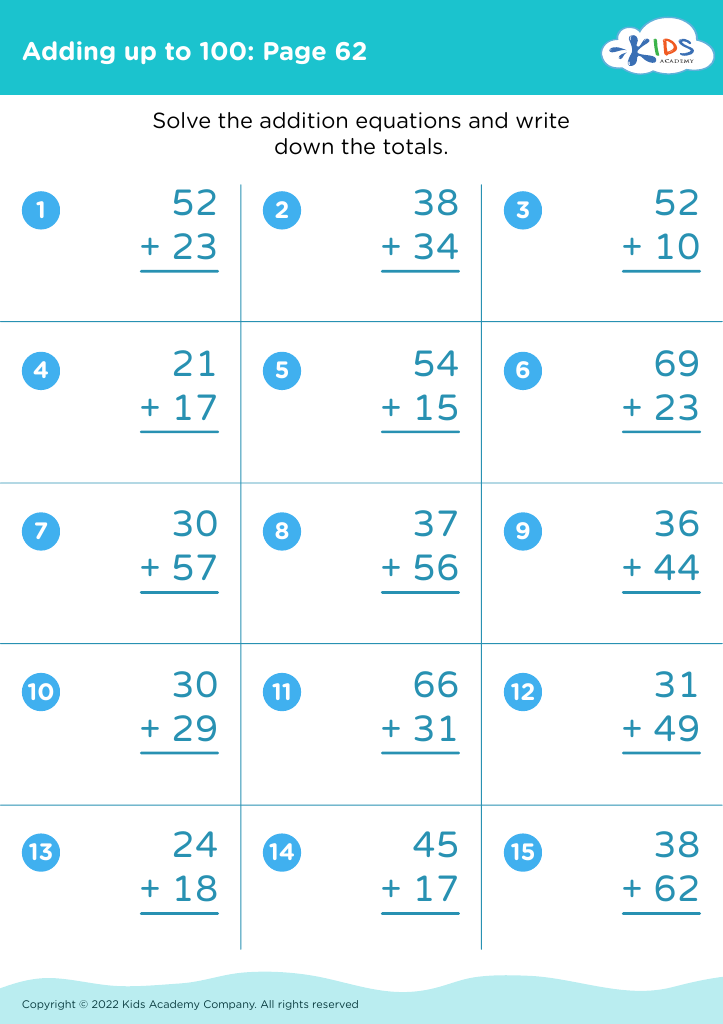
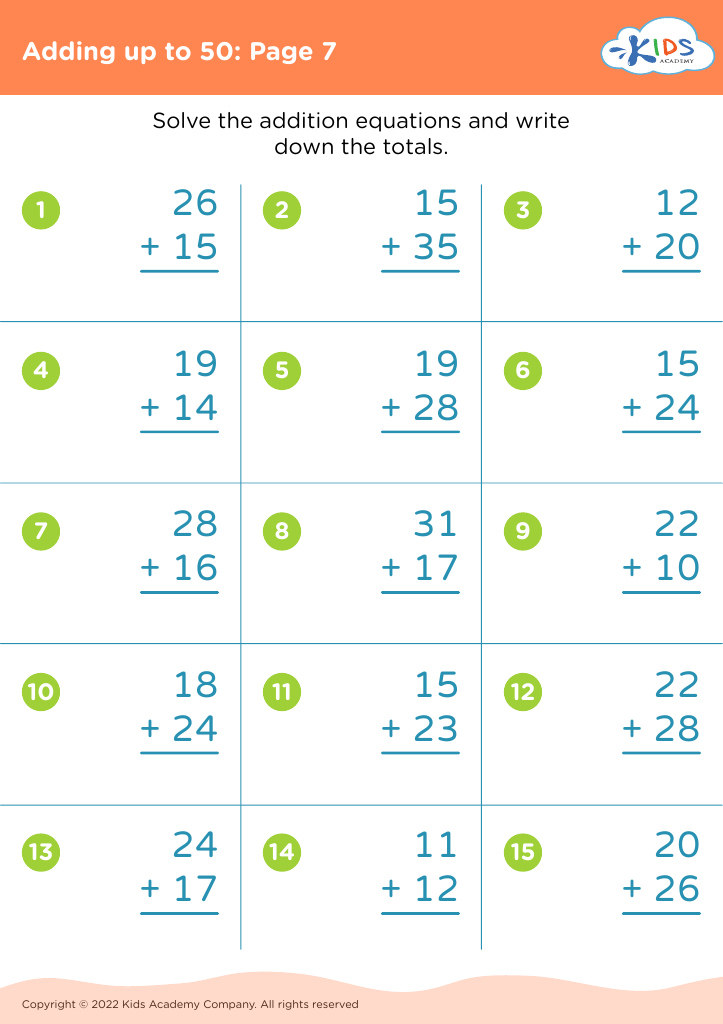
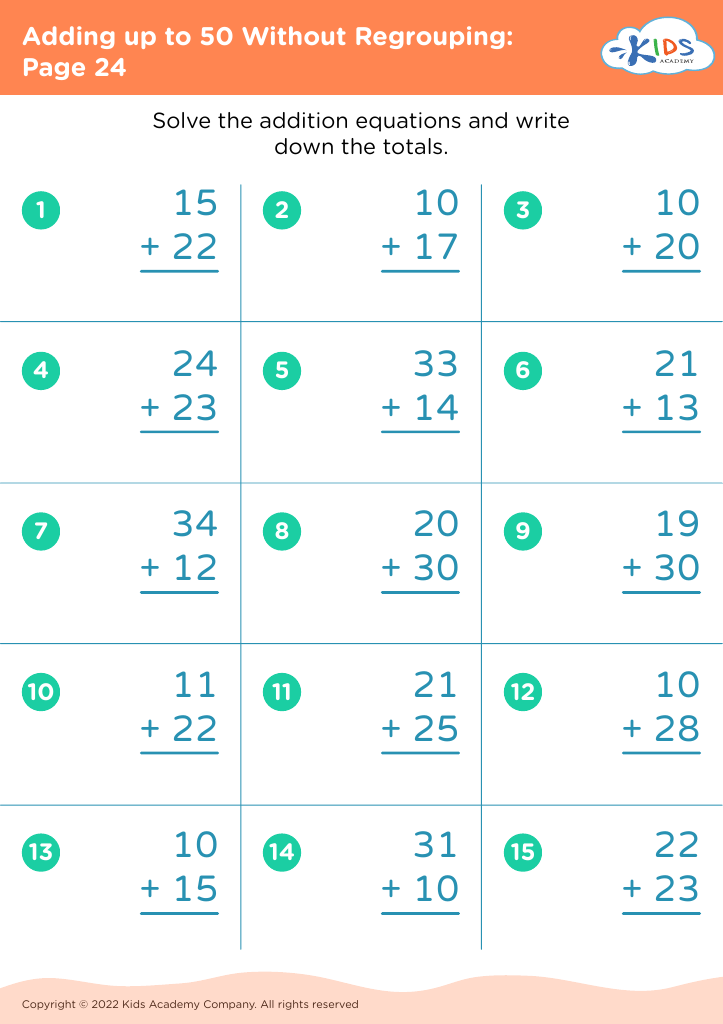
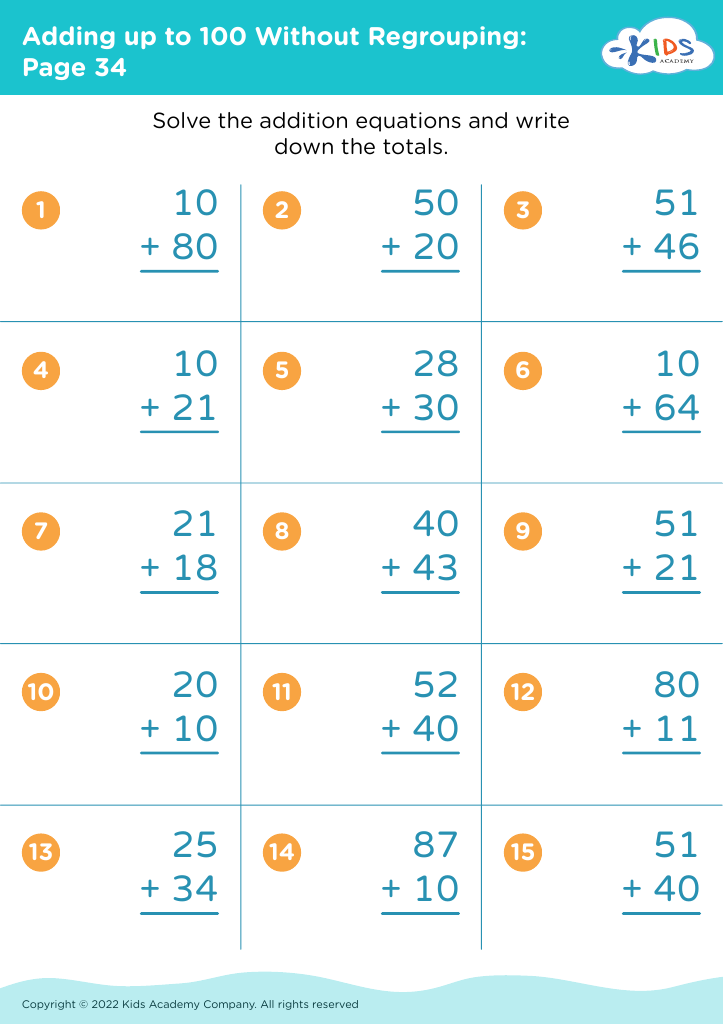
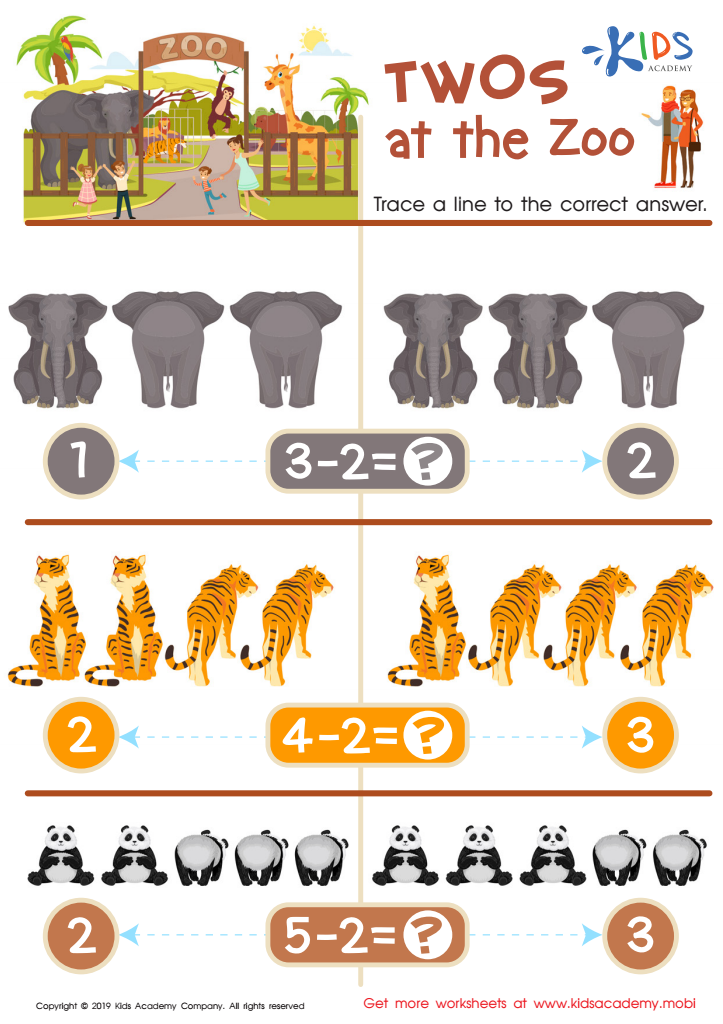
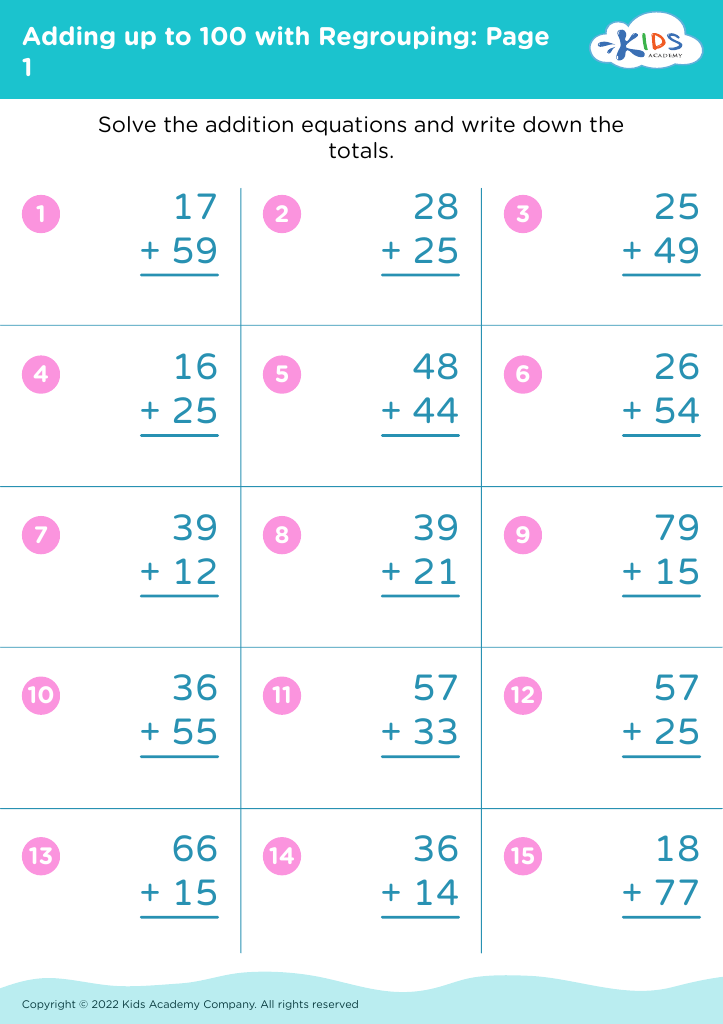
Twos at the Zoo Worksheet
 Assign to My Students
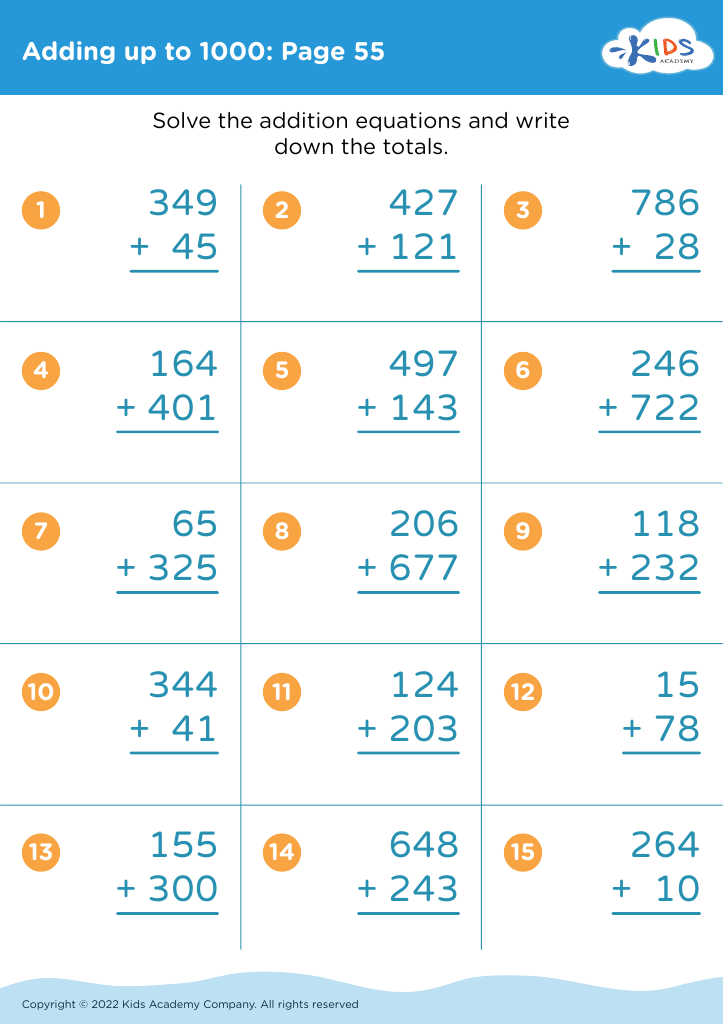
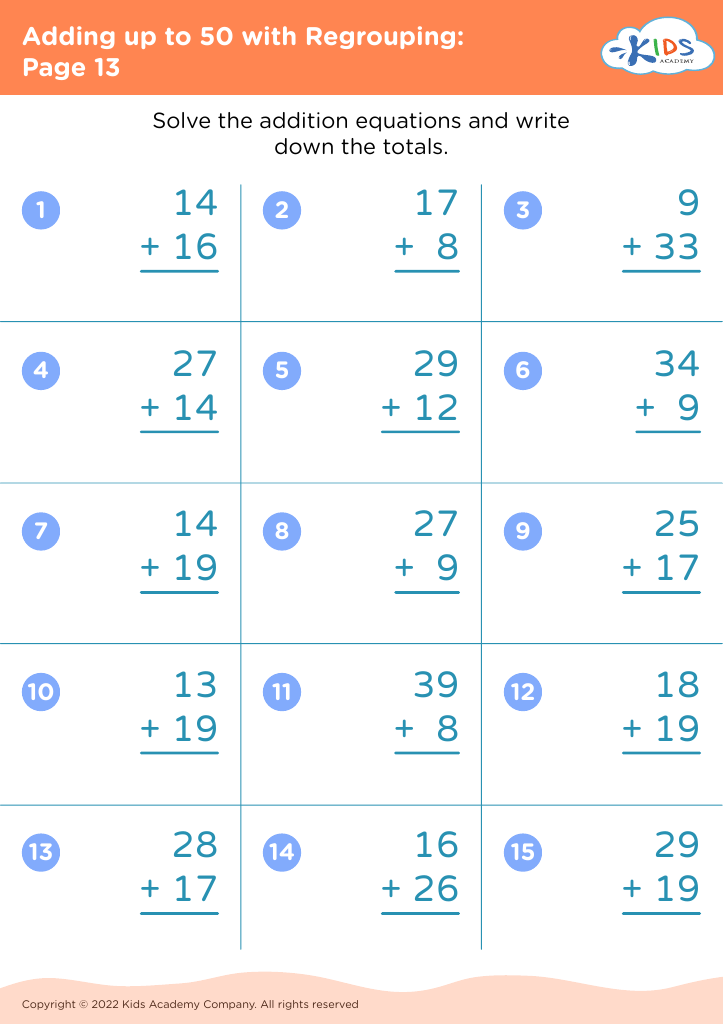







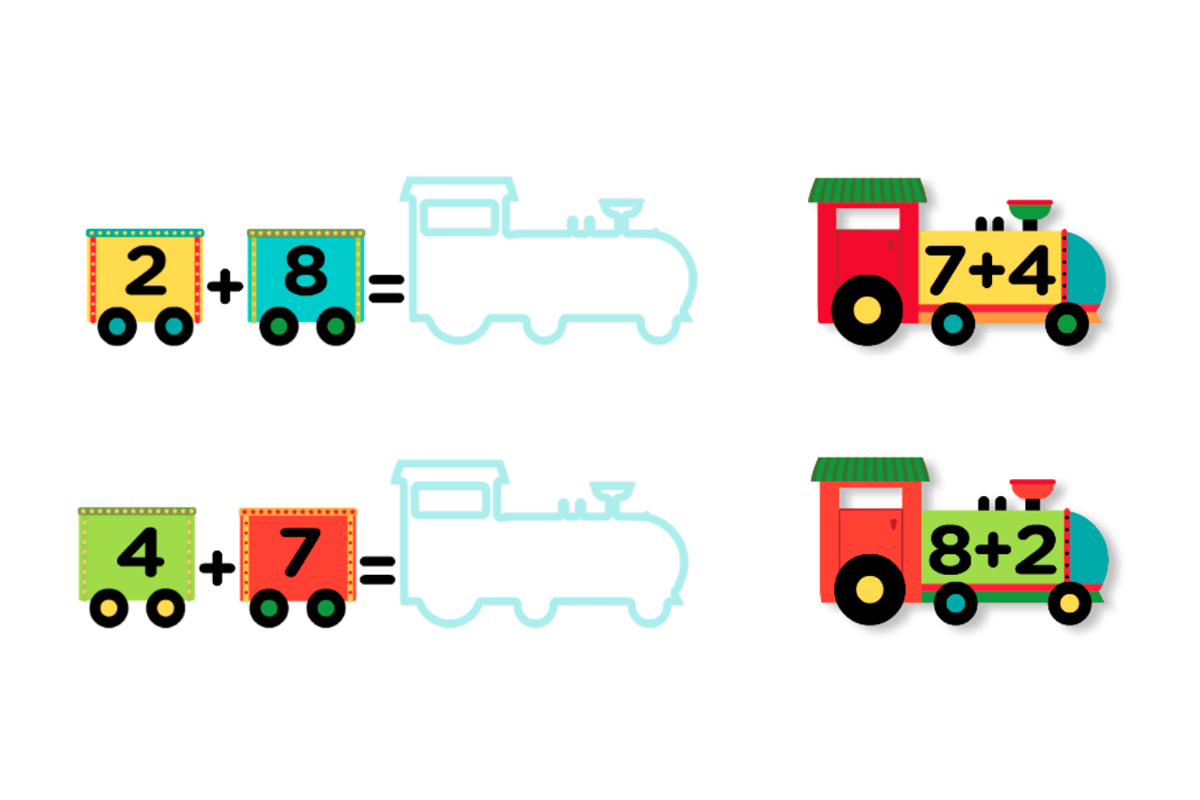
Understanding patterns in addition and subtraction for children aged 4-7 is crucial because it lays the foundation for future mathematical learning and cognitive development. At this age, children's brains are highly receptive to new concepts, making it the perfect time to introduce them to basic arithmetic patterns. Recognizing these patterns helps them understand the relationship between numbers, which is essential for more complex problem-solving skills later on.
First, grasping patterns allows children to predict outcomes and recognize logical sequences, stimulating their analytical thinking. For example, when they see that adding 1 to a number consistently increases it by 1, they start to understand the fundamental principle behind addition. This simple concept can make more complex ideas, like multiplication and division, easier to understand later.
Moreover, understanding these patterns develops a child's confidence in handling numbers, boosting their overall self-esteem. It encourages a sense of achievement and an eagerness to learn more. Additionally, problem-solving and critical thinking skills are significantly enhanced, as children learn to approach tasks methodically and logically.
For teachers and parents, fostering this understanding at an early age ensures that children have a strong mathematical foundation upon which more advanced concepts can be built. This early intervention is key to ensuring long-term academic success and a positive attitude toward learning.








