Understanding sequencing Addition & Subtraction Worksheets for Ages 4-7
7 filtered results
-
From - To
Unlock your child's potential with our "Understanding Sequencing Addition & Subtraction Worksheets" tailored for ages 4-7. These engaging resources guide young learners through the fundamental concepts of addition and subtraction while simultaneously enhancing their sequencing skills. Each worksheet is designed to be both fun and educational, ensuring your child remains captivated as they build essential math competencies. Perfect for classroom and home use, these worksheets provide a solid foundation in early math skills, helping children grasp the importance of order and process in math operations. Set your child on the path to mathematical success with our expertly crafted worksheets.
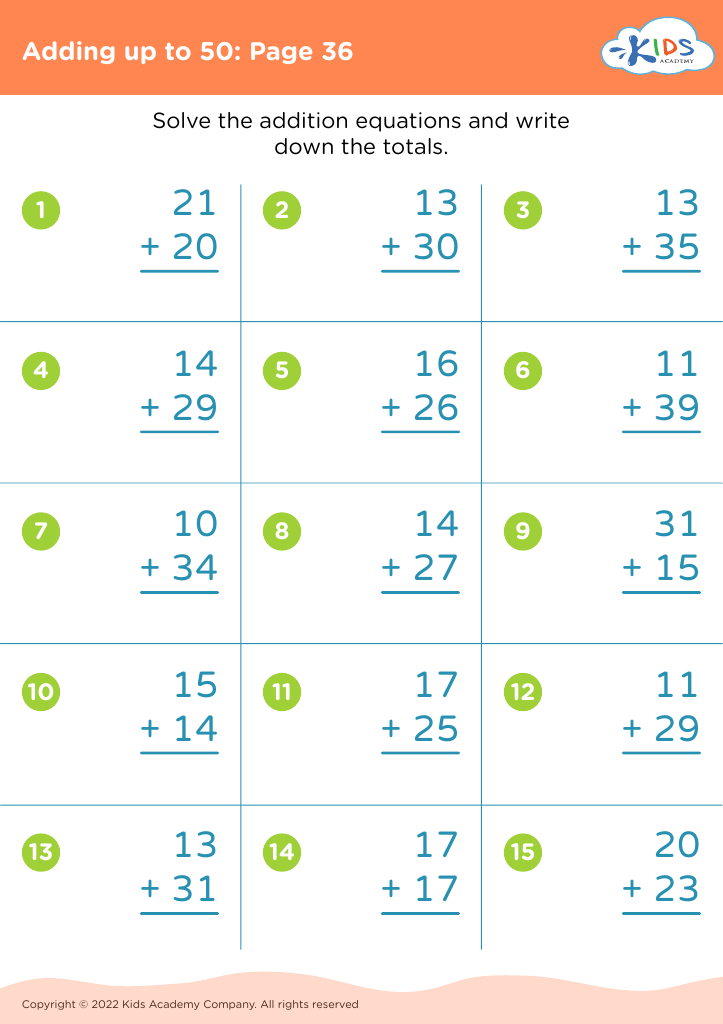
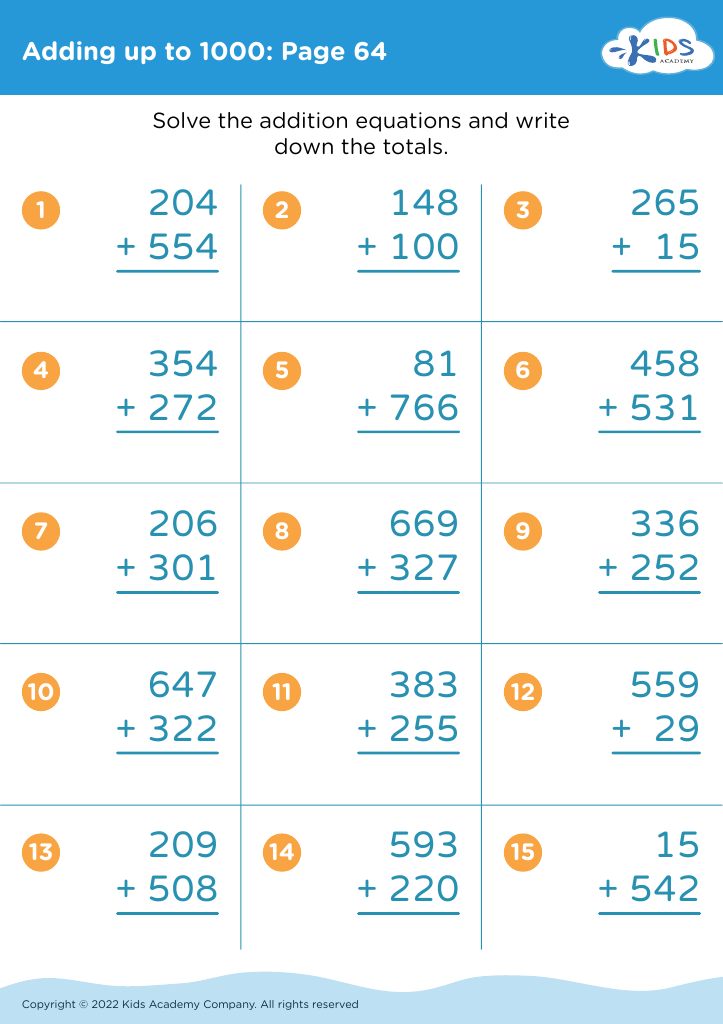
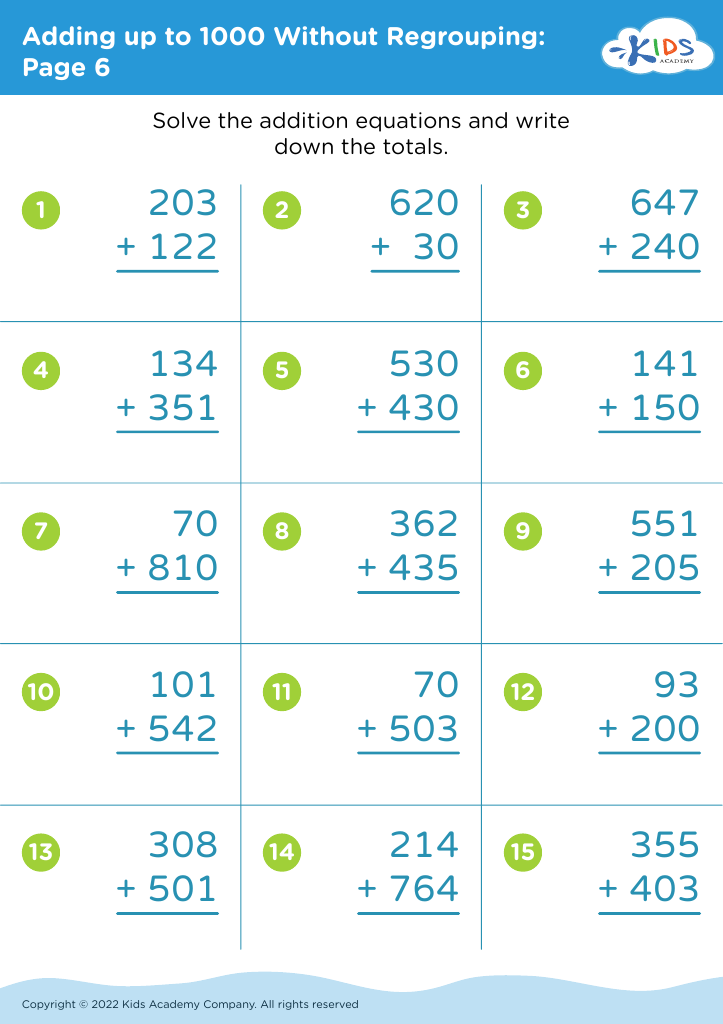
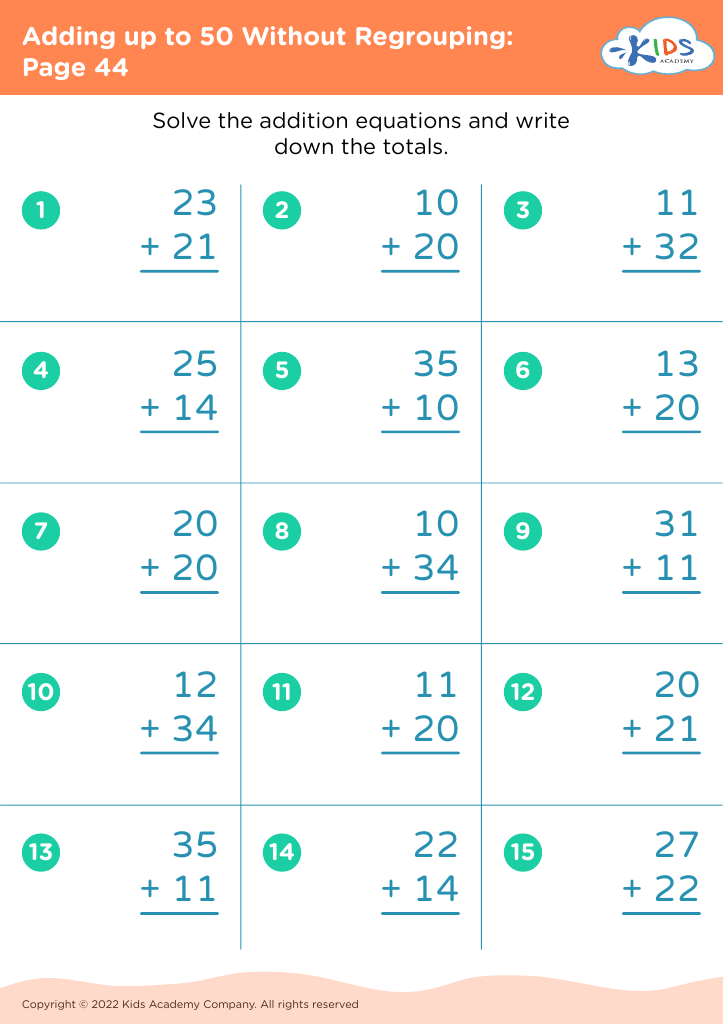








Understanding sequencing in addition and subtraction for ages 4-7 is crucial as it lays the foundation for all future mathematical learning and problem-solving skills. At this developmental stage, children start building their number sense, which is the ability to understand and work with numbers. Grasping the concept of sequencing helps them grasp more complex mathematical concepts down the line.
When young children learn the sequence and order of numbers in addition and subtraction, they begin to understand the relationships between numbers. For example, they can comprehend that adding more increases a number and subtracting decreases it. This basic arithmetic forms the groundwork for understanding place value, which is critical for advanced operations like multiplication and division.
Sequencing also improves logical thinking and cognitive development. It helps children to follow steps in a particular order, which is essential not just in mathematics but in everyday tasks and problem-solving scenarios. For instance, knowing the sequence of operations can help them understand algorithms in technology, cooks follow recipes, or complete a series of tasks in the right order.
Furthermore, proficiency in early math sequencing leads to increased confidence and a positive attitude towards learning. When children succeed in these fundamental concepts, they are more likely to engage with and enjoy math, setting them on a path to future academic success. Parents and teachers should, therefore, prioritize sequencing in addition and subtraction exercises to equip children with these vital skills.








