Visual interpretation Addition & Subtraction Worksheets for Ages 4-7
5 filtered results
-
From - To
Introducing our engaging Visual Interpretation Addition & Subtraction Worksheets designed for children aged 4-7! Our worksheets beautifully blend visual aids with basic math operations to build a strong foundation in arithmetic. Young learners will enjoy colorful images, fun exercises, and various visual cues to seamlessly grasp concepts of addition and subtraction. These innovative resources not only make learning enjoyable but also enhance cognitive and critical thinking skills. Perfect for early grade teachers and parents, our worksheets are crafted to support and enrich a child’s nurturing journey into the world of math. Start today and watch your little mathematicians thrive!
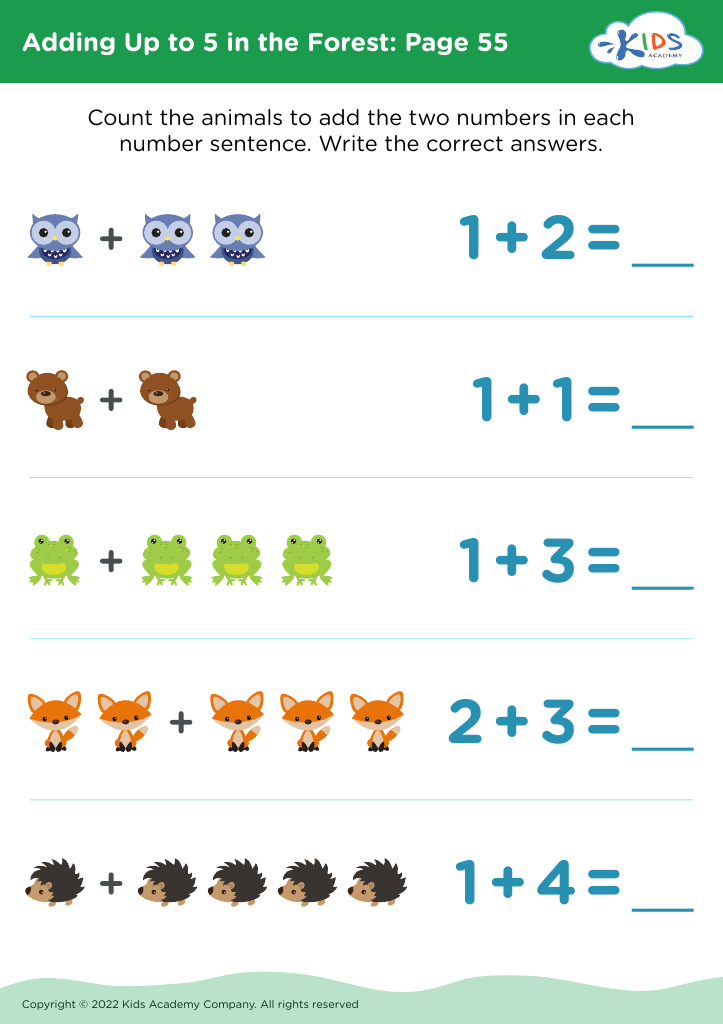
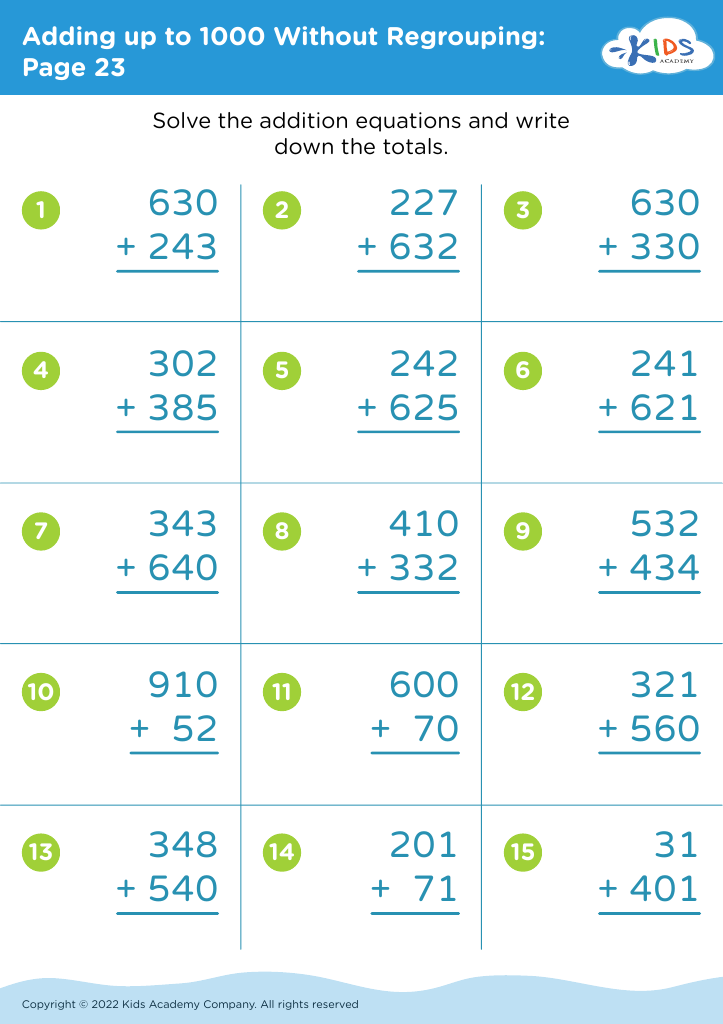
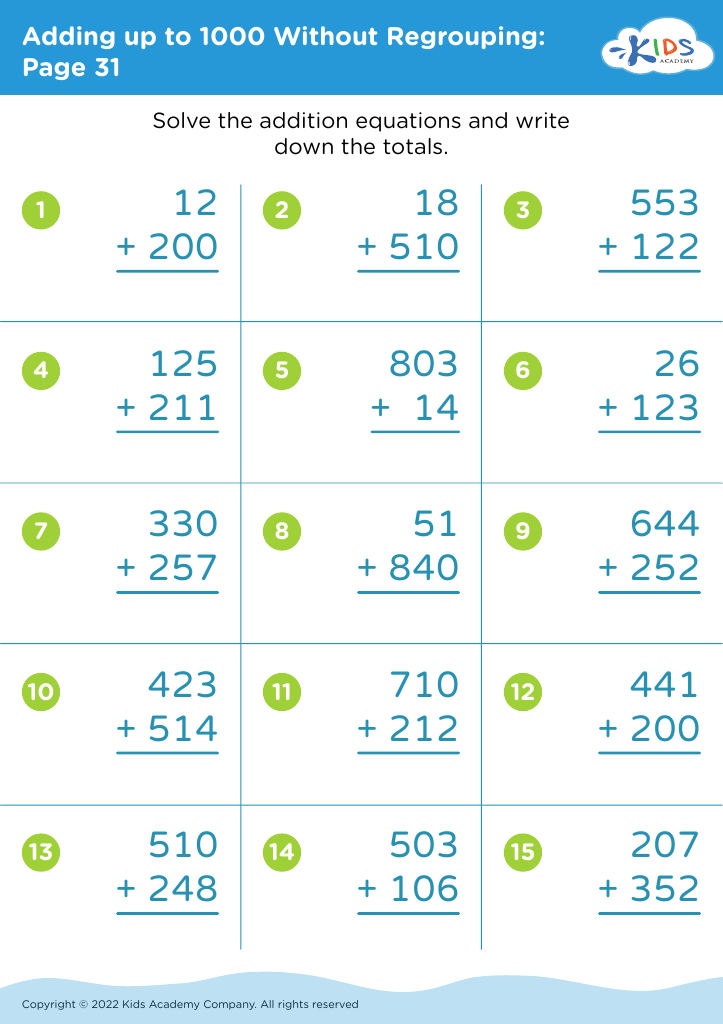
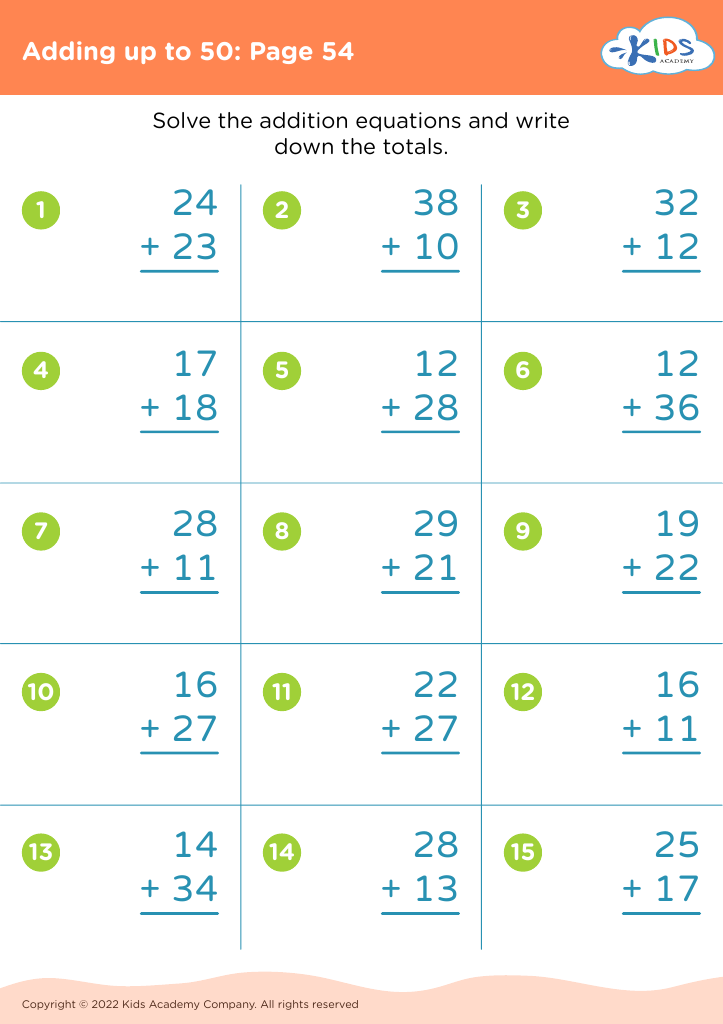
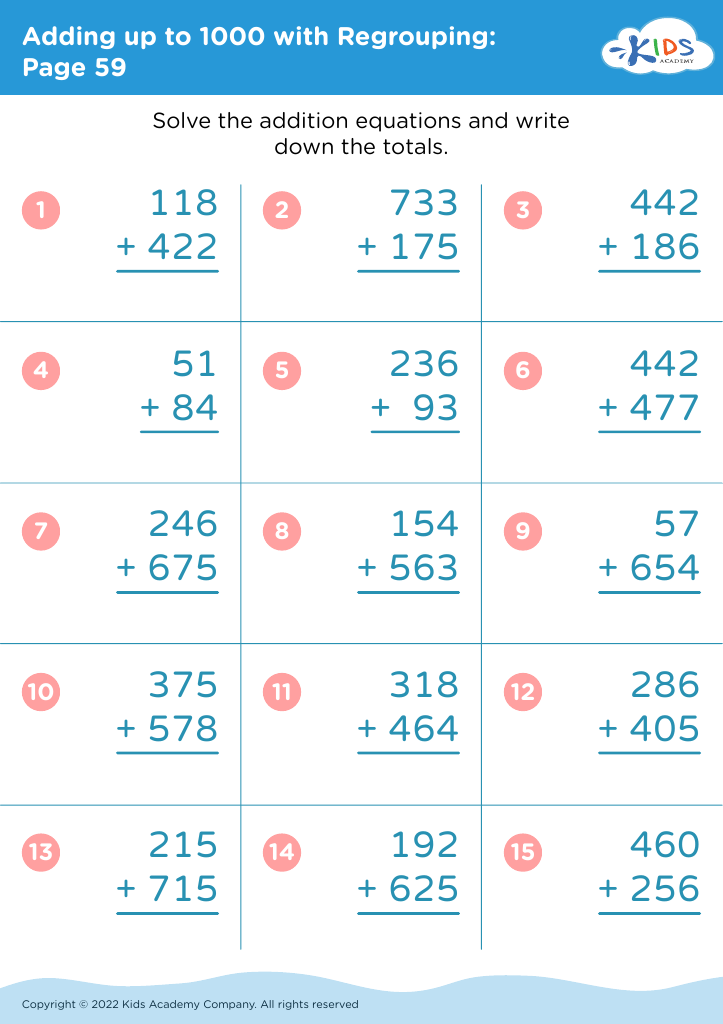








Understanding visual interpretation of addition and subtraction is crucial for children aged 4-7 because it lays a solid foundation for their future mathematical skills. During these formative years, young children are highly visual and tend to grasp concepts better through images and hands-on activities. Visual tools such as number lines, counters, and pictorial representations transform abstract mathematical ideas into accessible, concrete realities.
When children use visual aids to add and subtract, they develop a more comprehensive understanding of mathematical operations. For example, seeing five apples and adding three more helps children visually grasp that the total is eight. These methods enhance their number sense, which is an instinctive understanding of how numbers work and relate to one another.
Additionally, visual interpretation builds confidence. When young learners clearly see the processes and patterns involved, they are less likely to feel overwhelmed. Confident children are more likely to engage with increasingly complex mathematical concepts in the future, fostering a positive attitude toward math as a whole.
Implementing visual strategies in teaching also nurtures critical thinking and problem-solving skills. It encourages children to observe, analyze, and make connections, all of which are essential skills not just in math but in their broader education and everyday lives. Therefore, parents and teachers should prioritize visual interpretation in early math education to ensure a robust, lasting mathematical foundation.








