Animal identification Addition Worksheets for Ages 4-7 - Page 2
27 filtered results
-
From - To
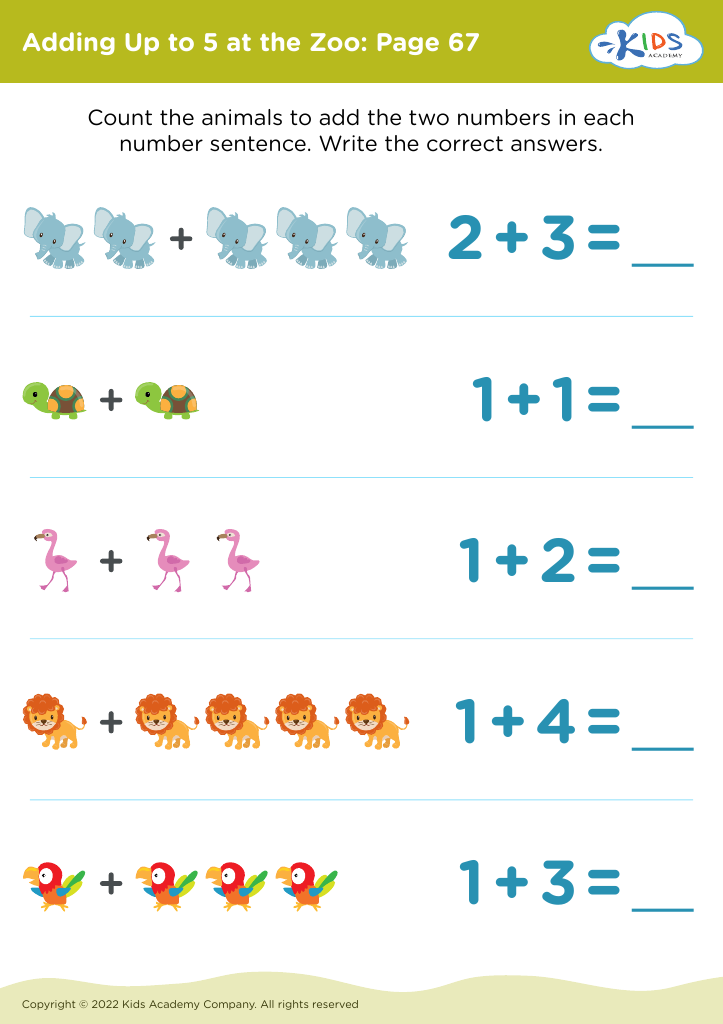
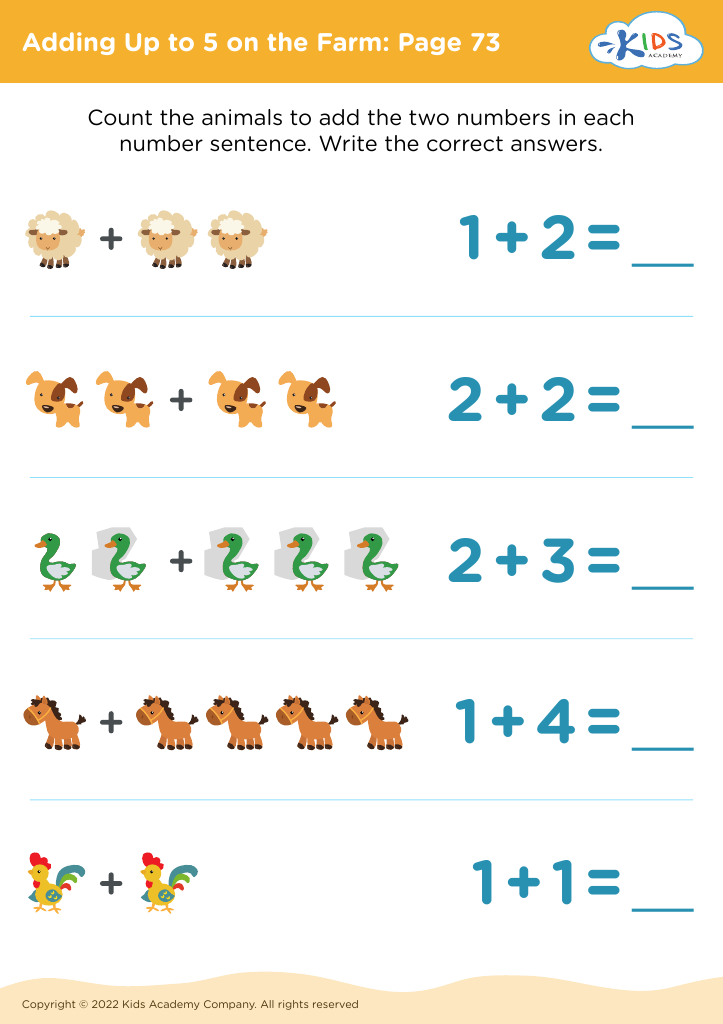
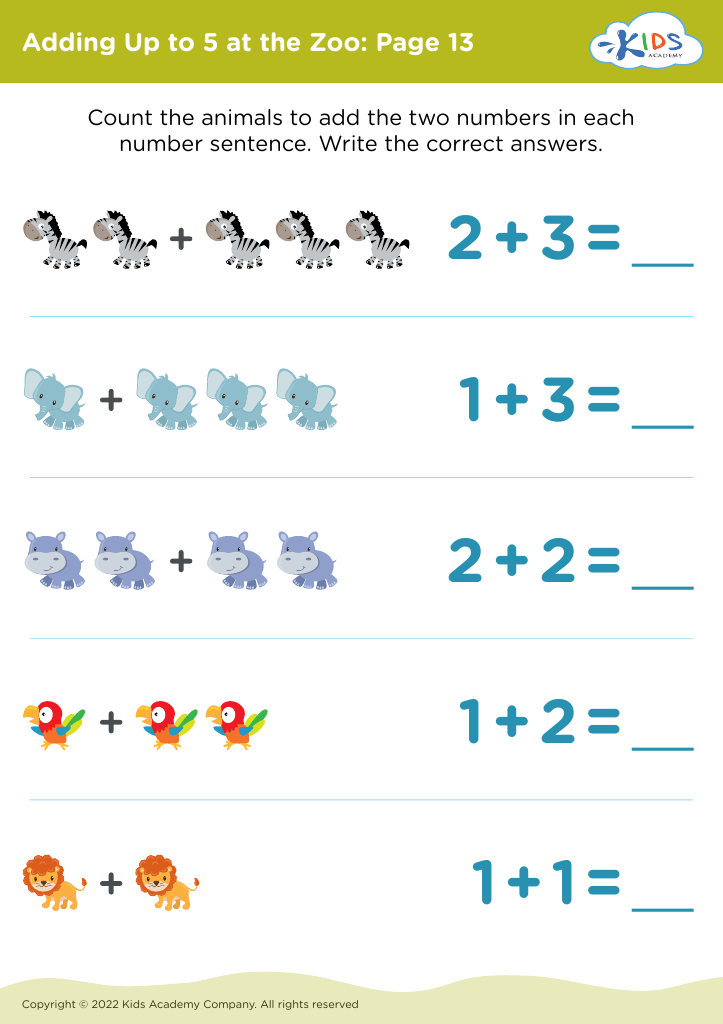








Animal identification addition is a foundational educational activity that significantly benefits children aged 4-7. This stage is critical for cognitive development, where children explore numerical concepts through engaging and relatable contexts. By combining animal identification with addition, educators can create a fun and interactive learning atmosphere that cultivates both math skills and an appreciation for nature.
Parents and teachers should care about this approach because it sparks curiosity and fosters a love for learning. Young children often connect well with animals, making it easier for them to grasp abstract mathematical concepts through real-world examples. For instance, using pictures of animals, children can visually count and add, reinforcing their understanding of numbers while also enhancing their vocabulary related to animal species.
Moreover, this method supports the development of critical thinking skills as children learn to categorize and compare different animals while solving addition problems. Building strong foundational math skills in early childhood sets the stage for more complex mathematical understanding in later years. Ultimately, combining animal identification and addition not only aids in academic development but also encourages emotional intelligence, curiosity, and respect for the natural world, making it an invaluable teaching practice for young learners.








