Attention to Detail Addition Worksheets for Ages 4-7
4 filtered results
-
From - To
Our "Attention to Detail Addition Worksheets for Ages 4-7" offer engaging exercises designed to enhance young learner's math skills and focus. Each worksheet provides fun and interactive addition problems that require careful observation and precision. Perfect for building a strong mathematical foundation, these activities not only strengthen computational abilities but also sharpen attention to detail. Tailored for children aged 4 to 7, the worksheets feature vibrant themes and clear instructions to keep kids motivated and on track. Help your child develop critical thinking and meticulousness in early math with our expertly crafted materials.
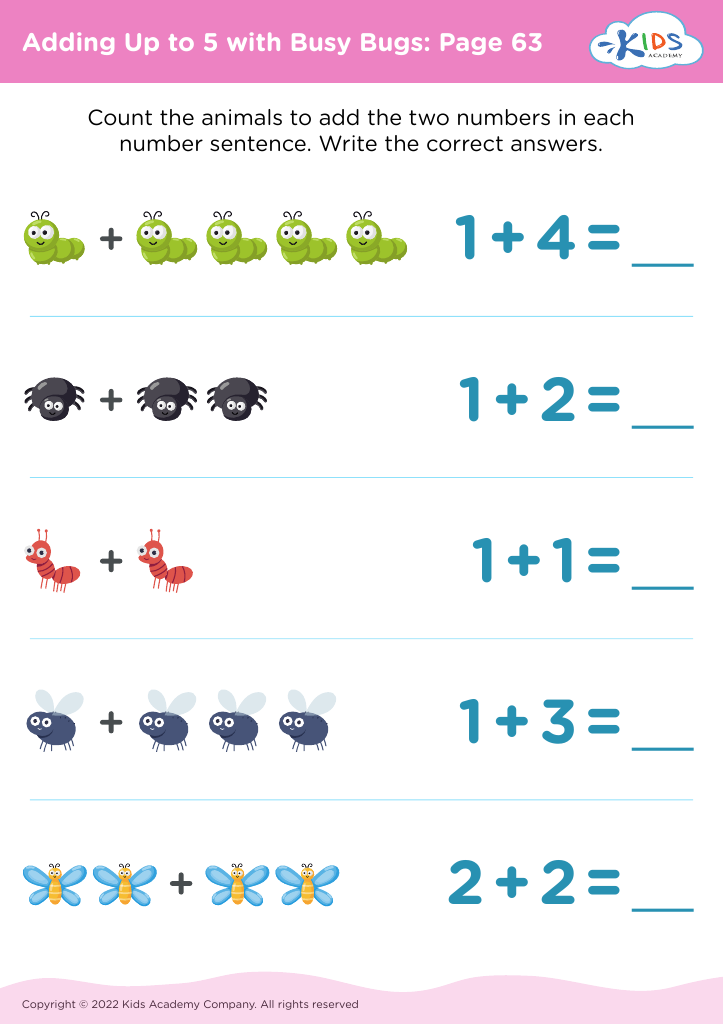
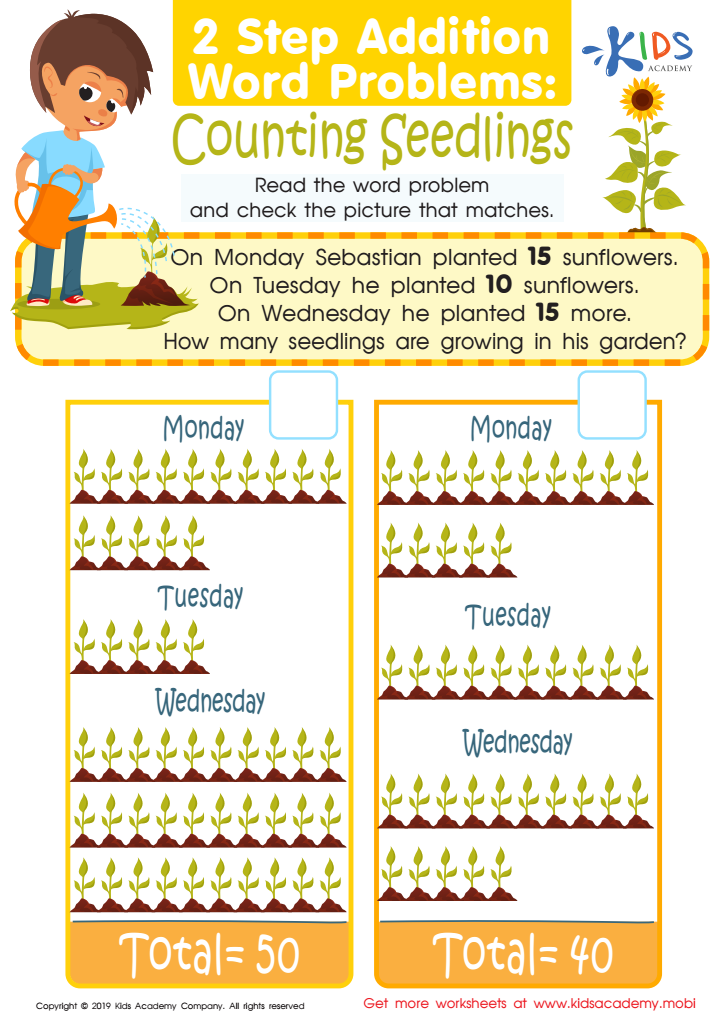
Counting Seedlings Worksheet
 Assign to My Students
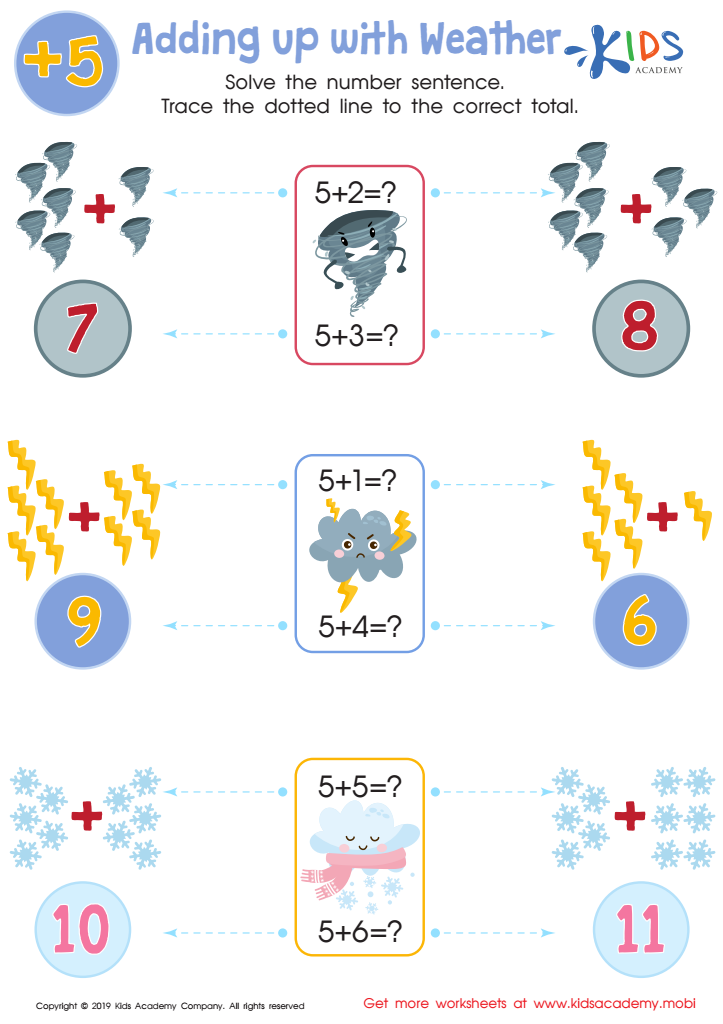
Adding up With Water Worksheet
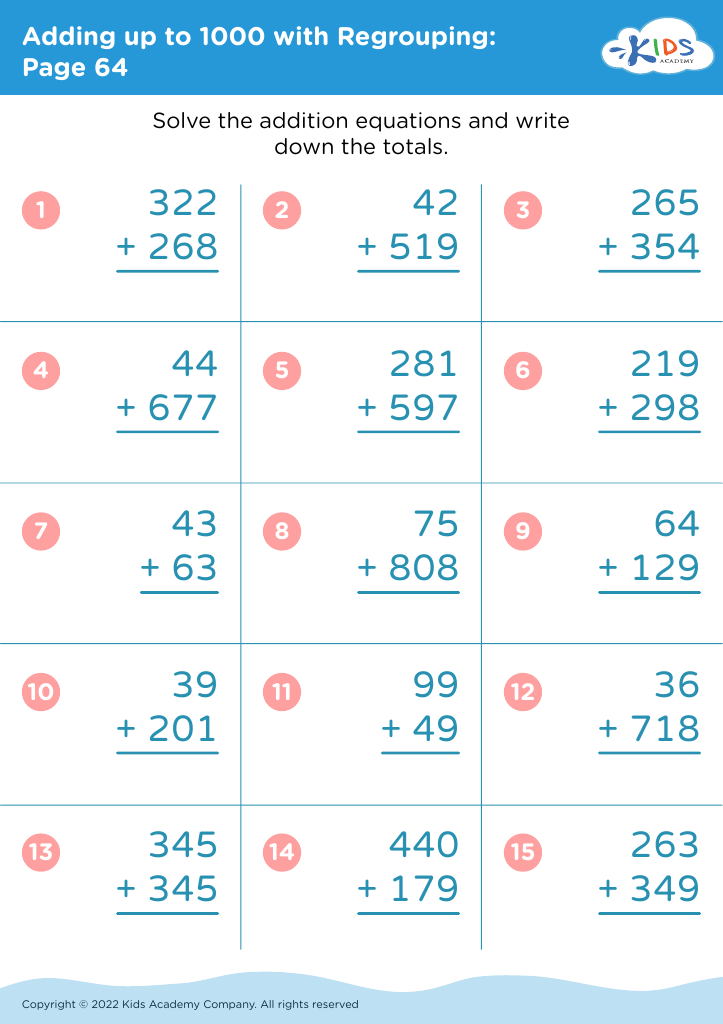




.jpg)
.jpg)


Parents and teachers should prioritize developing Attention to Detail in children aged 4-7 because it lays the groundwork for success in both academic and everyday activities. This skill helps children notice small but important aspects of instructions, tasks, or problems, leading to improved performance and fewer mistakes in their work. Teaching kids to pay attention to details can foster better handwriting, spelling, and mathematical abilities, as errors often occur due to oversight rather than a lack of understanding.
Additionally, attention to detail cultivates a child's focus and concentration. These practices encourage deeper engagement with their tasks, whether it is classroom activities, homework, or recreational projects like puzzles and crafts. Enhanced focus can lead to increased competency over time, helping children feel more confident and motivated to take on new challenges.
In their social interactions, paying attention to details allows children to be more considerate and empathetic. They become adept at noticing their peers' and adults' cues and reactions, which can improve their relationships and teamwork abilities. Thus, nurturing this skill from an early age not only accelerates academic growth but also aids in the development of well-rounded, observant, and conscientious individuals.








