Filters

16 filtered results

Clear all filters
Favorites
With answer key
Interactive

16 filtered results

Difficulty Level

Grade


Discover our engaging Basic Addition Worksheets designed for children ages 4-7! These interactive and fun resources are perfect for young learners who are just starting their math journey. Each worksheet features colorful illustrations and simple problems tailored to help kids grasp essential addition concepts through practice. By using these worksheets, children will develop their number recognition, counting skills, and problem-solving abilities in a playful manner. Our user-friendly format allows parents and teachers to easily print and incorporate these activities into learning routines. Dive into the world of math with our Basic Addition Worksheets and watch your little ones excel in their addition skills!
Check out this FREE Trial Lesson on Addition for age 4-7!

X

Favorites
With answer key
Interactive
  • 4-7
  • Basic Addition
  • Addition
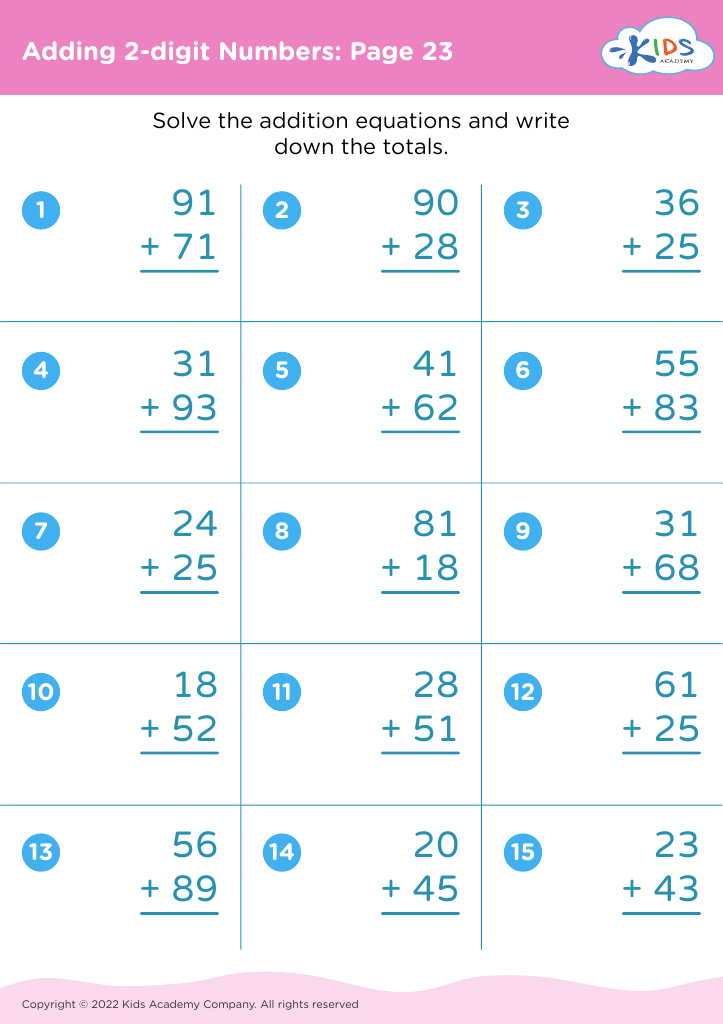
Adding 2-digit Numbers: Page 23

Adding 2-digit Numbers: Page 23

Adding 2-digit Numbers: Page 23
Worksheet
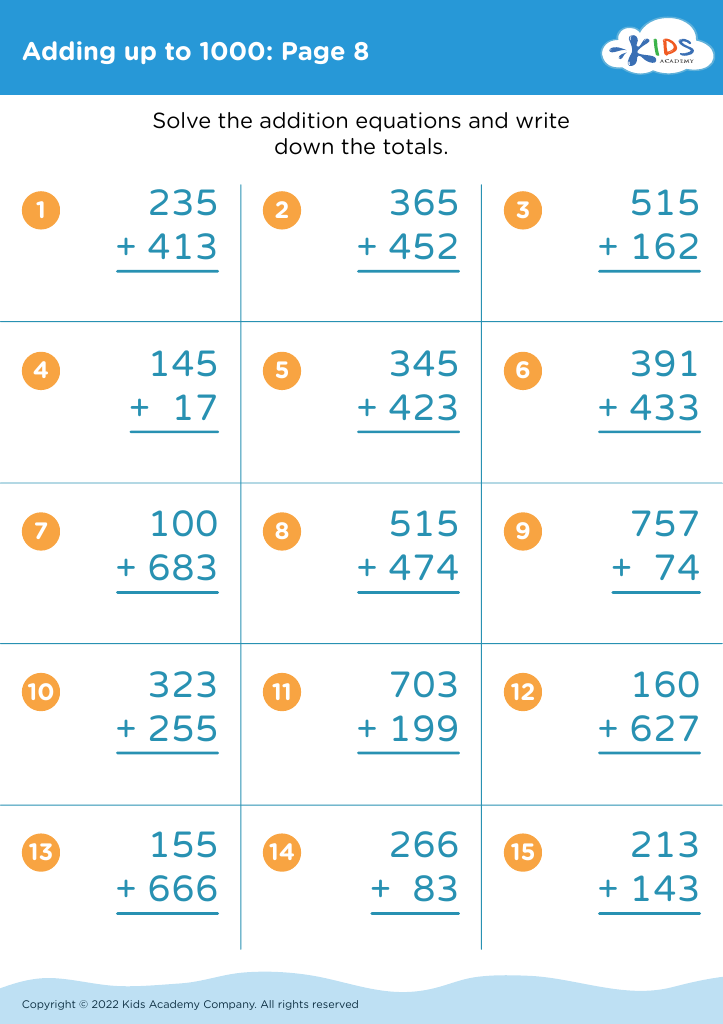
Adding up to 1000: Page 8

Adding up to 1000: Page 8

Adding up to 1000: Page 8
Worksheet
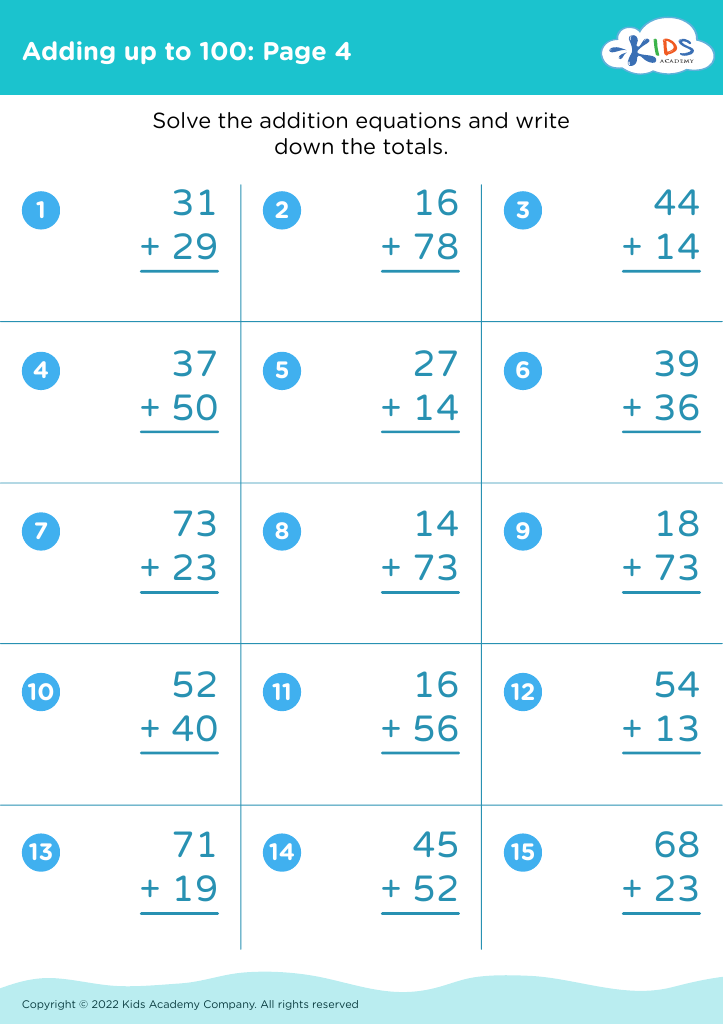
Adding up to 100: Page 4

Adding up to 100: Page 4

Adding up to 100: Page 4
Worksheet
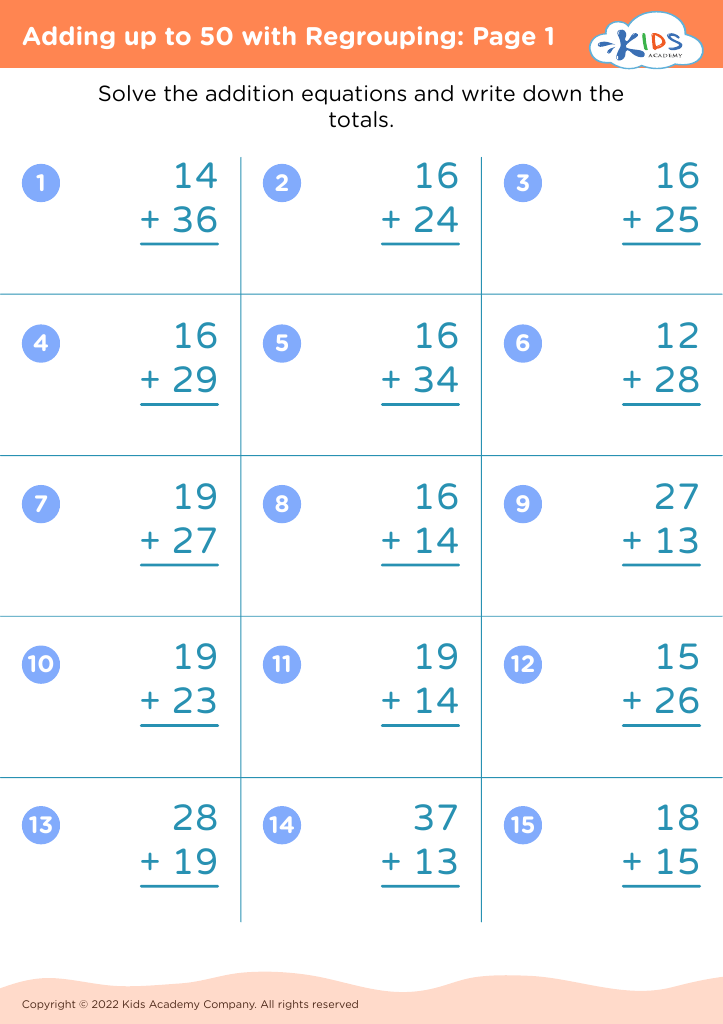
Adding up to 50 with Regrouping: Page 1
Worksheet
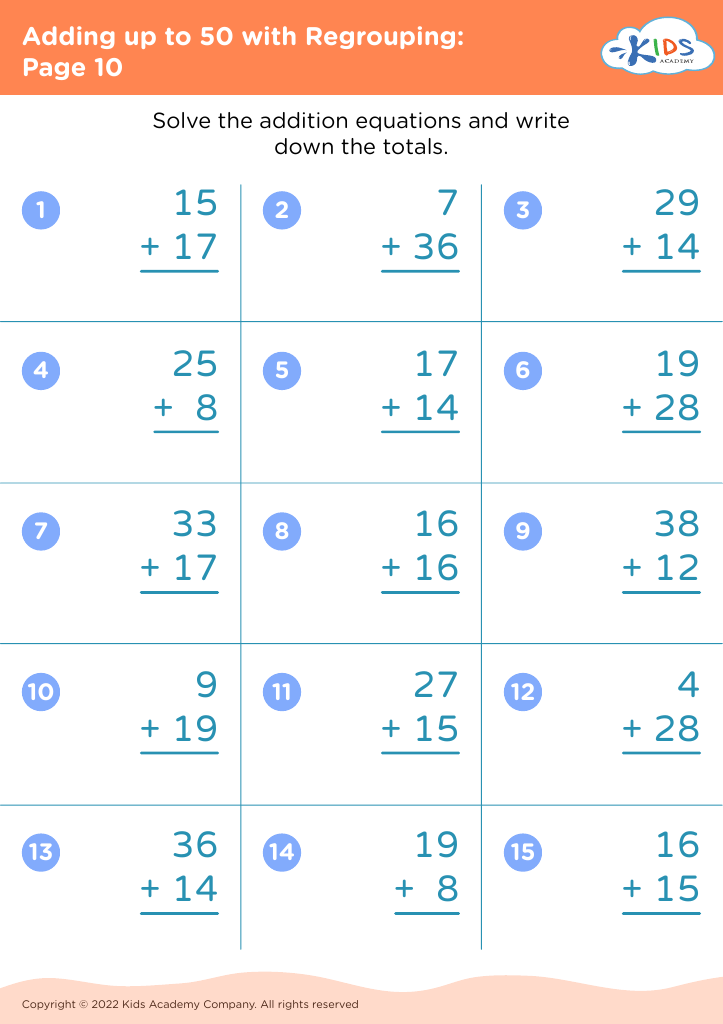
Adding up to 50 with Regrouping: Page 10
Worksheet
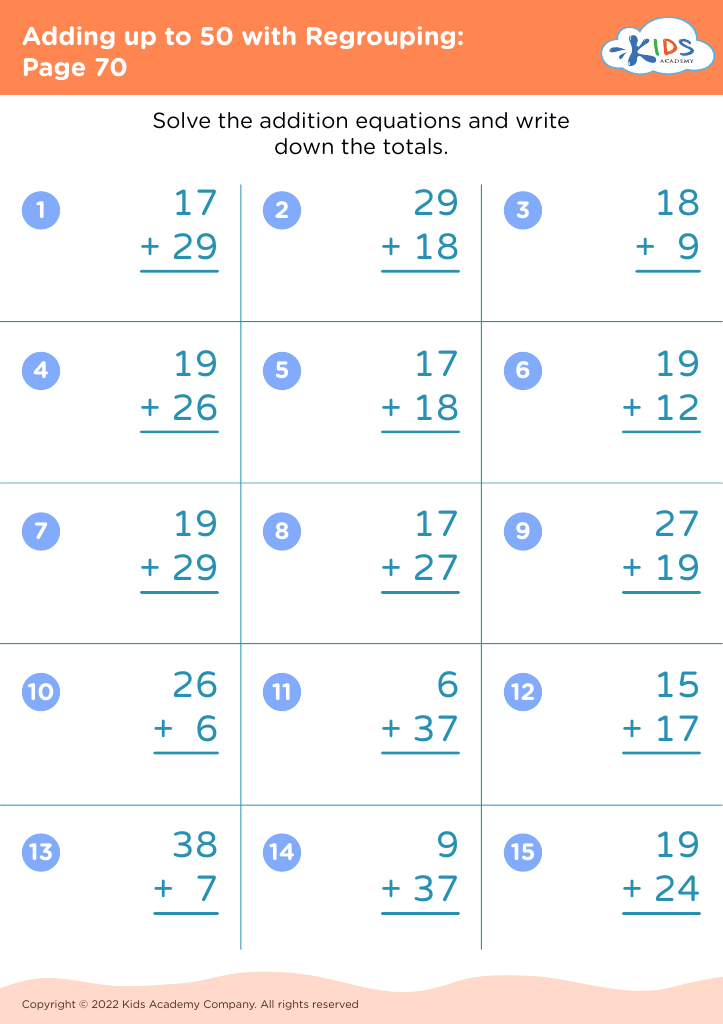
Adding up to 50 with Regrouping: Page 70
Worksheet
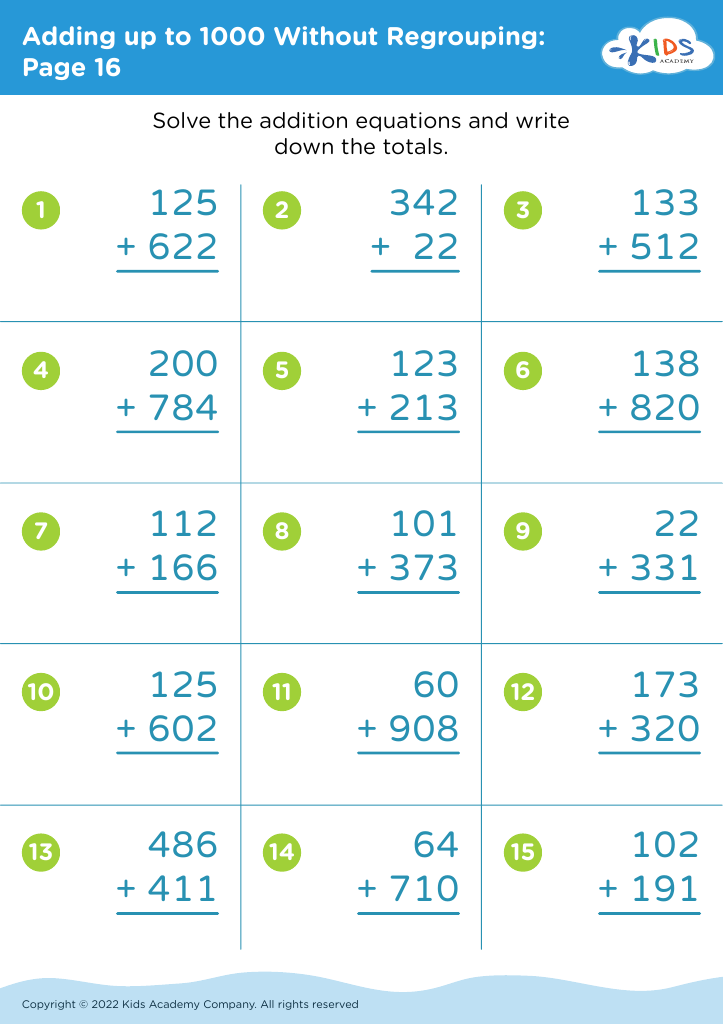
Adding up to 1000 Without Regrouping: Page 16
Worksheet
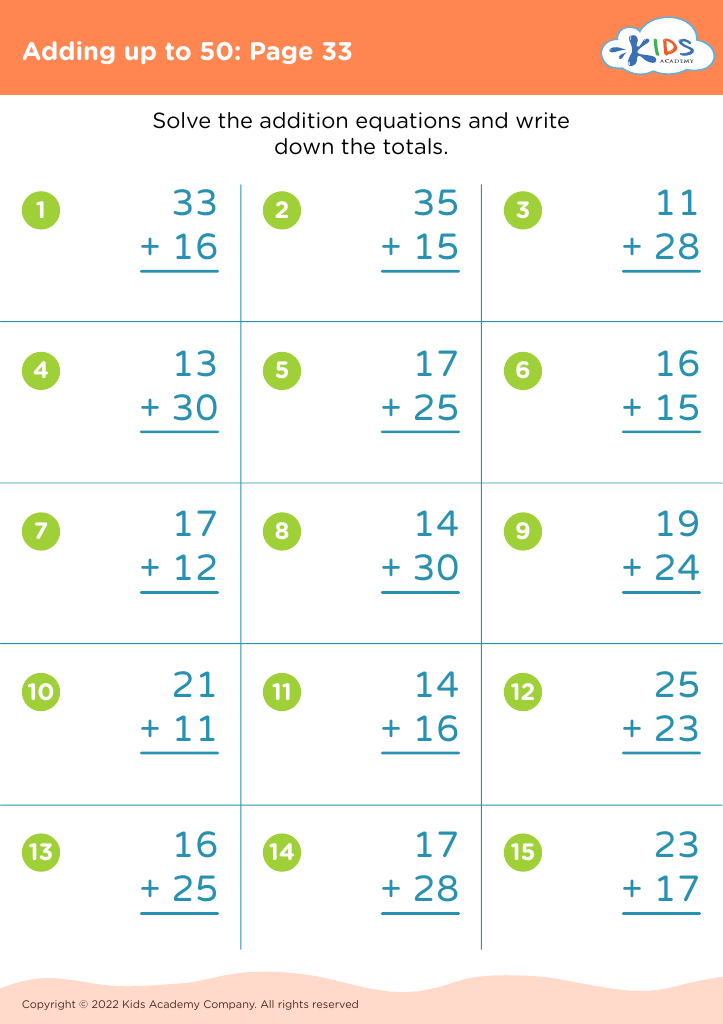
Adding up to 50: Page 33

Adding up to 50: Page 33

Adding up to 50: Page 33
Worksheet
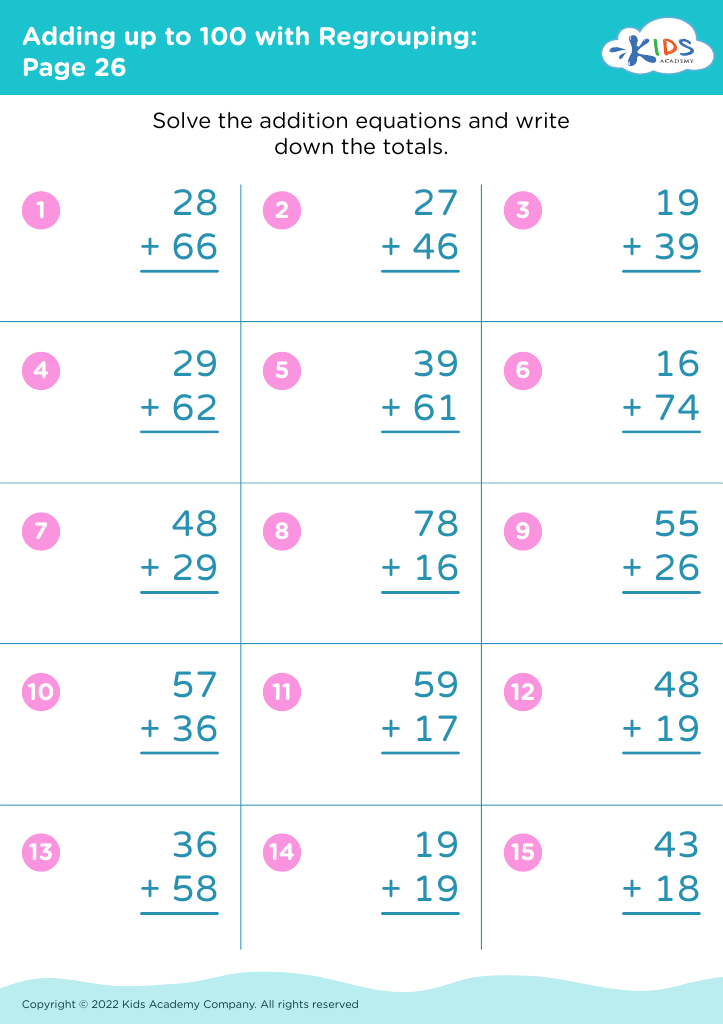
Adding up to 100 with Regrouping: Page 26
Worksheet
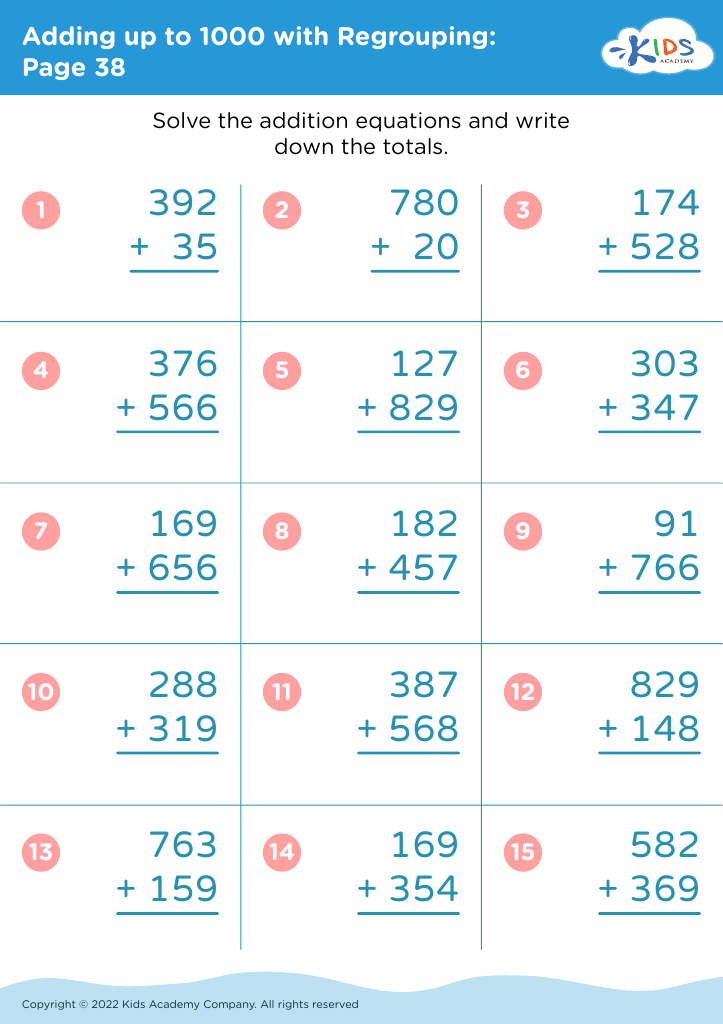
Adding up to 1000 with Regrouping: Page 38
Worksheet
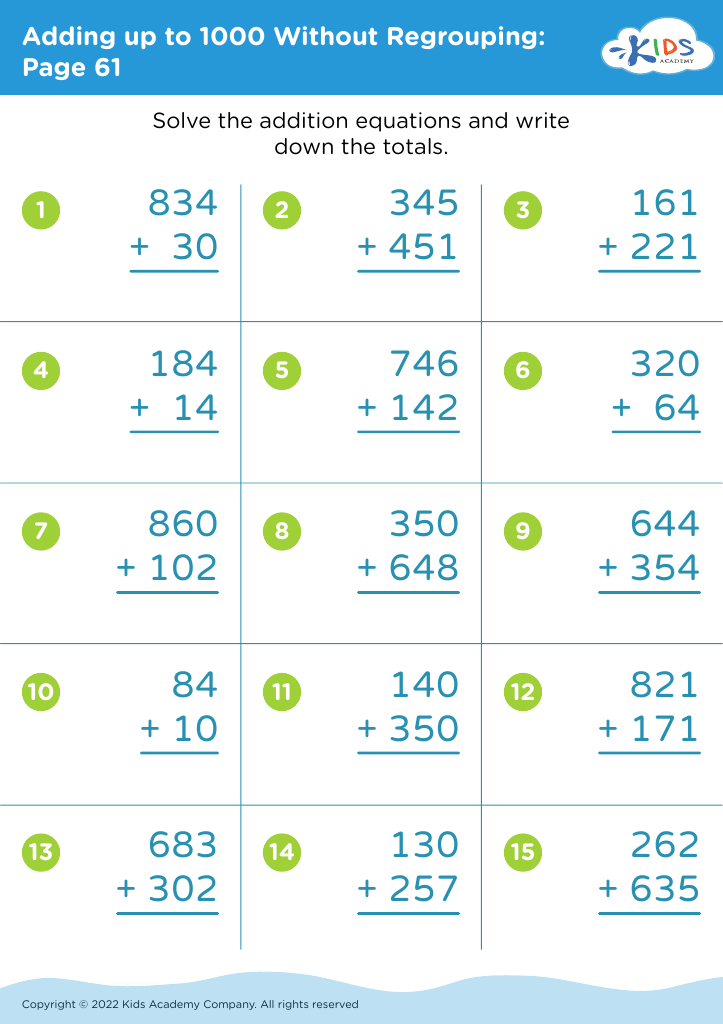
Adding up to 1000 Without Regrouping: Page 61
Worksheet
Adding up to 50 Without Regrouping: Page 67
Worksheet
Adding up to 50 Without Regrouping: Page 48
Worksheet
Adding up to 50: Page 1

Adding up to 50: Page 1

Adding up to 50: Page 1
Worksheet
Adding up to 1000 Without Regrouping: Page 57
Worksheet
Adding up to 1000 Without Regrouping: Page 70
Worksheet


Basic addition is a foundational skill that supports a child's overall mathematical development and cognitive growth. For children aged 4 to 7, mastering addition lays the groundwork for more complex concepts such as subtraction, multiplication, and problem-solving. By grasping basic additions, children also build their confidence in dealing with numbers and mathematics, which can influence their attitudes towards learning in general.

Moreover, early engagement with addition stimulates critical thinking and encourages the development of reasoning skills. This early exposure makes math fun and enjoyable, helping children view challenges positively instead of seeing them as intimidating obstacles. It further enhances their ability to recognize patterns, understand relationships, and develop spatial awareness.

Parents and teachers play a crucial role in this stage by providing various interactive and playful learning experiences. Incorporating math into everyday activities—like shopping or cooking—creates relatable scenarios that reinforce these skills. Engaging children in games can also promote social skills while they learn.

Overall, by prioritizing basic addition, caregivers nurture a child's mathematical journey, fostering a lifelong love for learning and laying a solid foundation for academic success in mathematics and beyond.