Filters

114 filtered results

Clear all filters
Favorites
With answer key
Interactive

114 filtered results

Difficulty Level

Grade


Subject

Check out this FREE Trial Lesson on Addition for age 4-7!

H

Favorites
With answer key
Interactive
  • 4-7
  • Cognitive Development
  • Addition
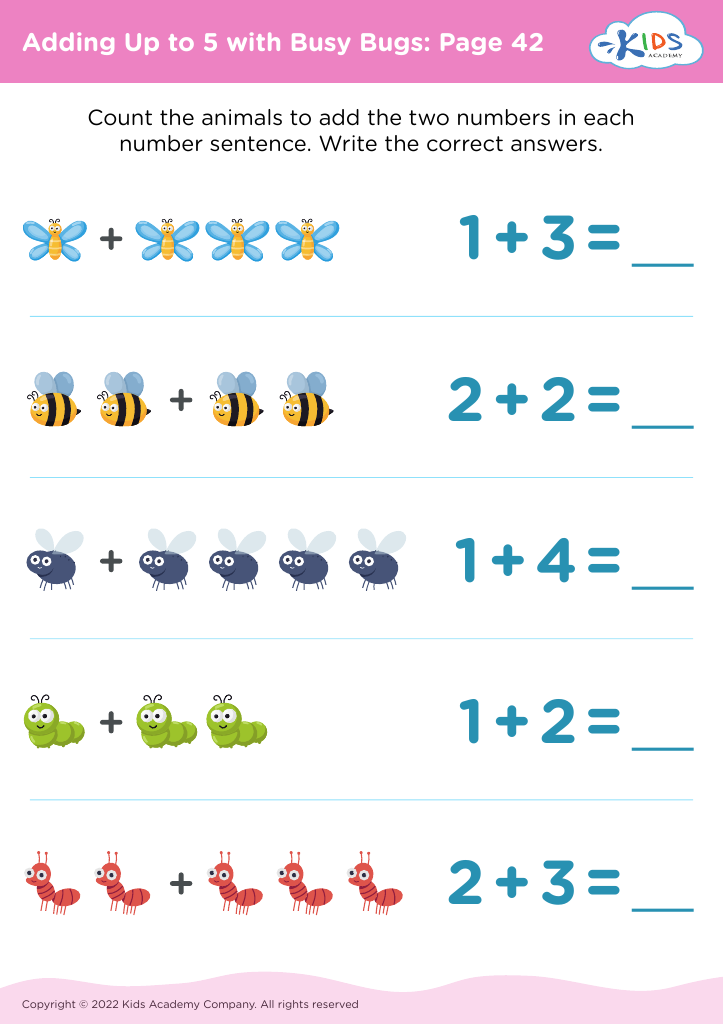
Adding Up to 5 with Busy Bugs: Page 42
Worksheet
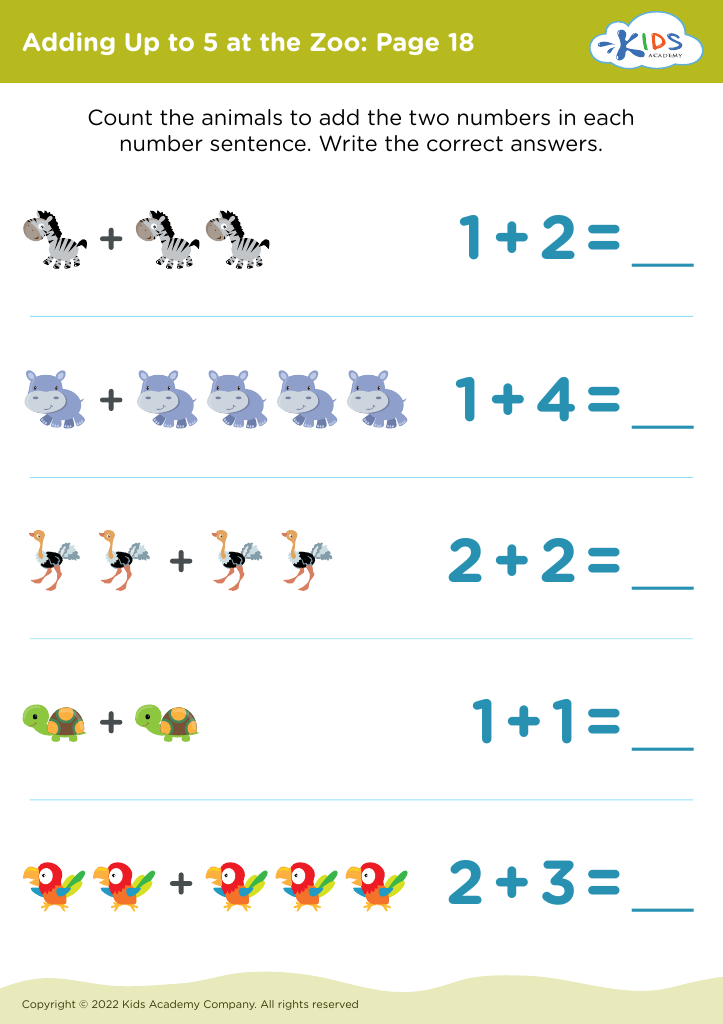
Adding Up to 5 at the Zoo: Page 18
Worksheet
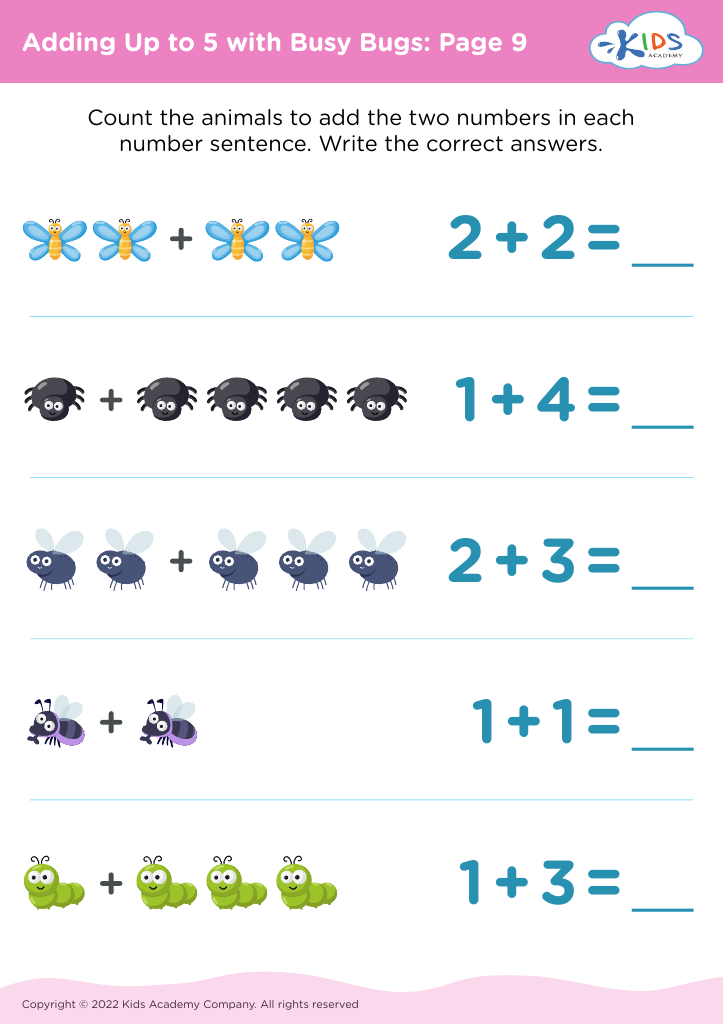
Adding Up to 5 with Busy Bugs: Page 9
Worksheet
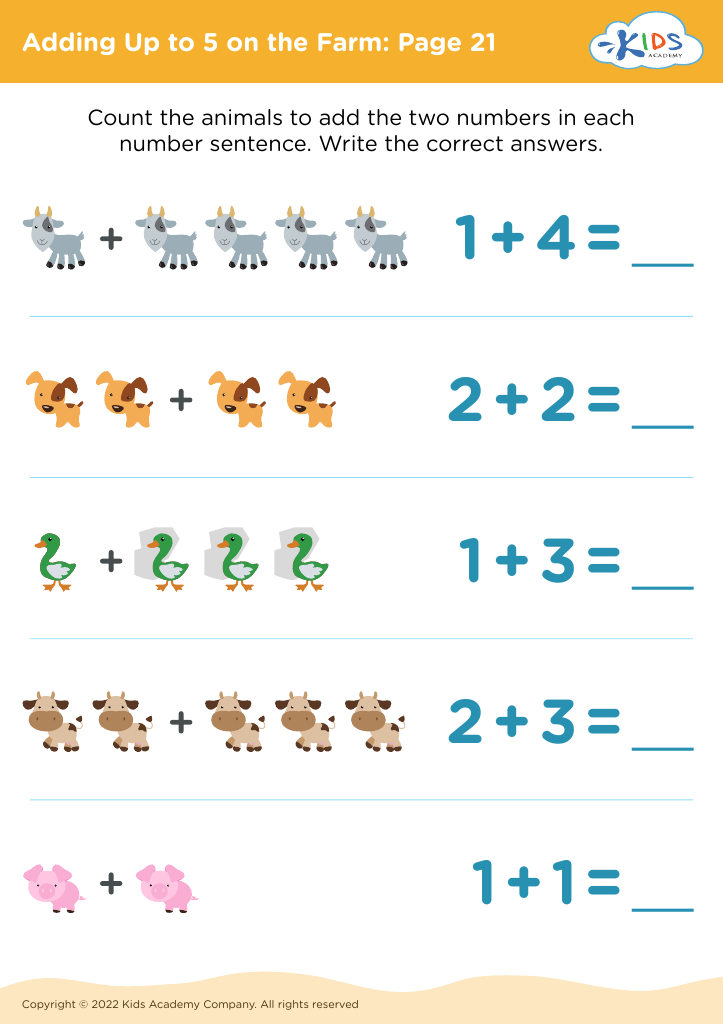
Adding Up to 5 on the Farm: Page 21
Worksheet
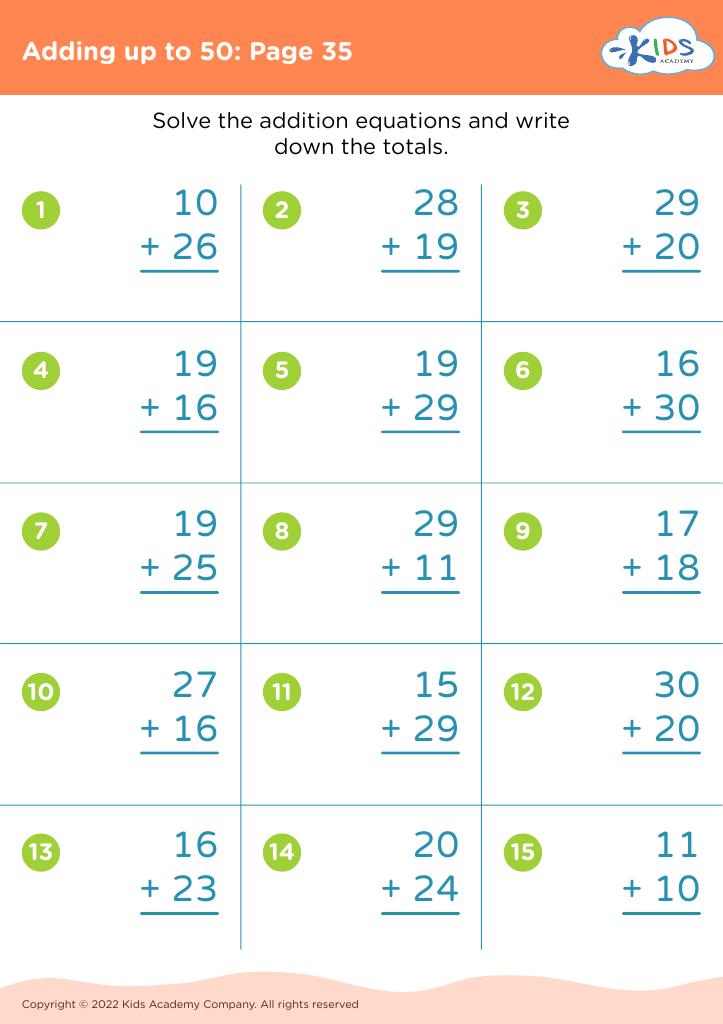
Adding up to 50: Page 35

Adding up to 50: Page 35

Adding up to 50: Page 35
Worksheet
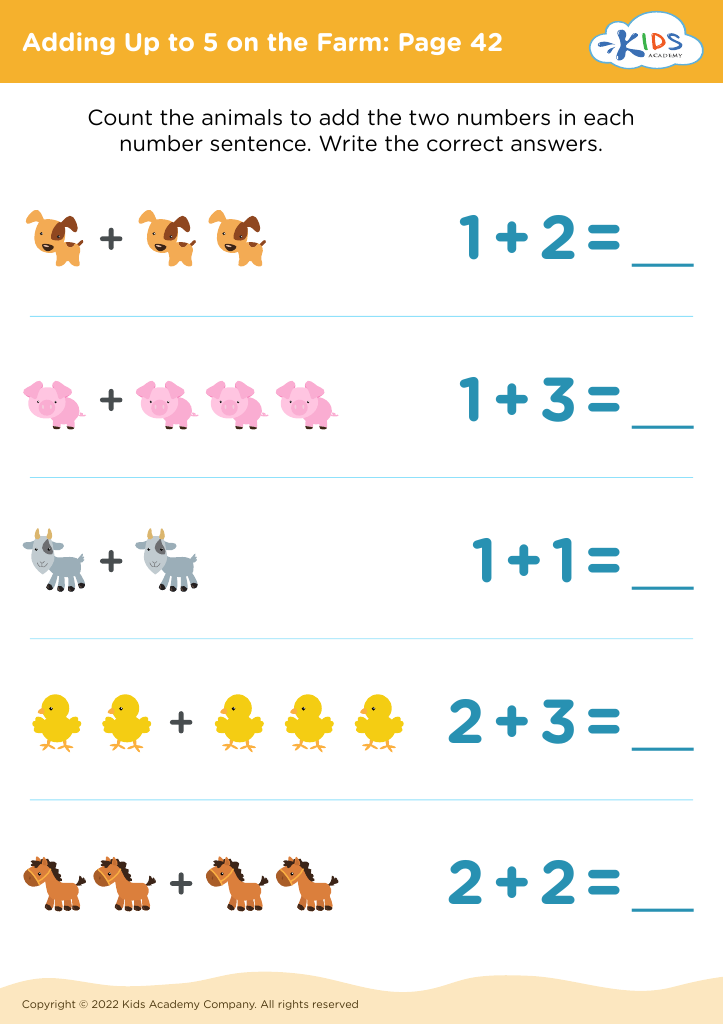
Adding Up to 5 on the Farm: Page 42
Worksheet
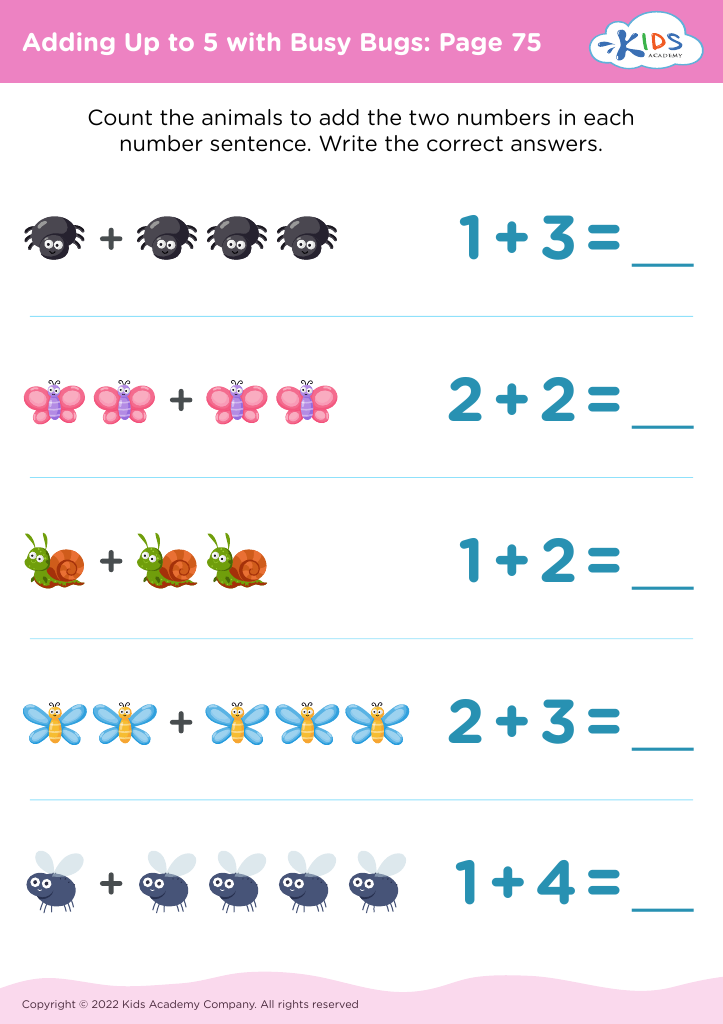
Adding Up to 5 with Busy Bugs: Page 75
Worksheet
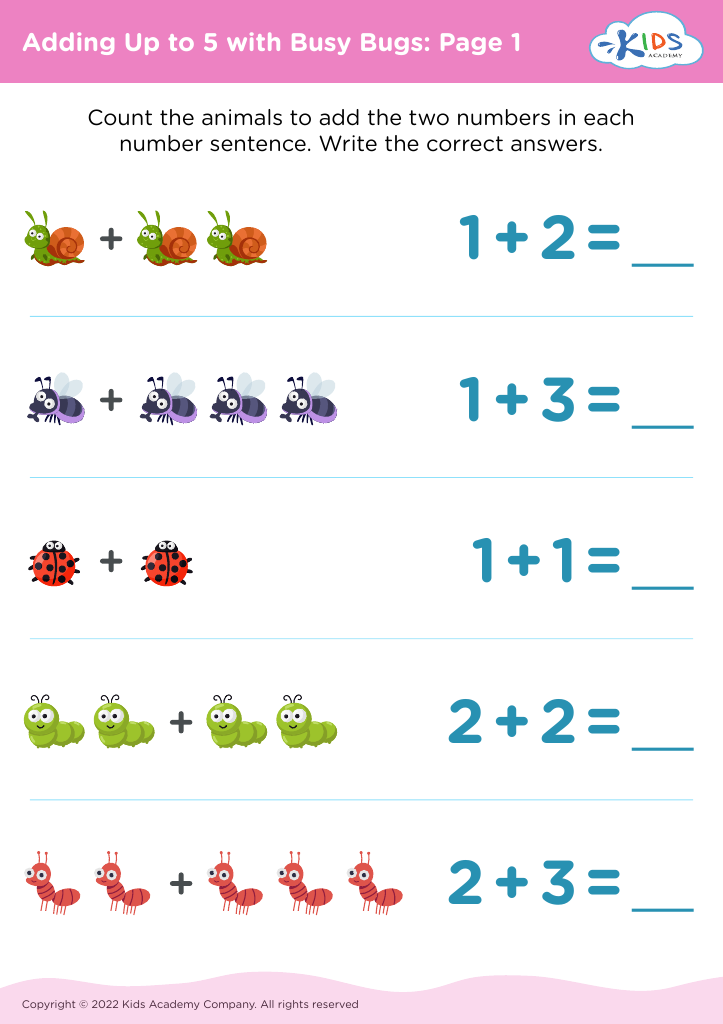
Adding Up to 5 with Busy Bugs: Page 1
Worksheet
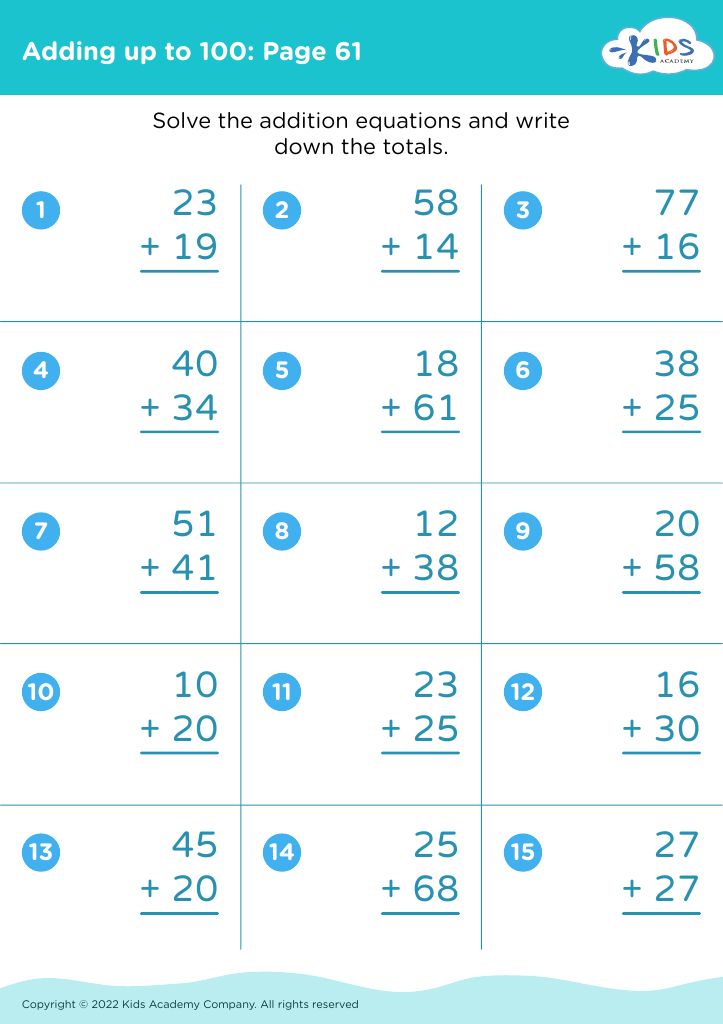
Adding up to 100: Page 61

Adding up to 100: Page 61

Adding up to 100: Page 61
Worksheet
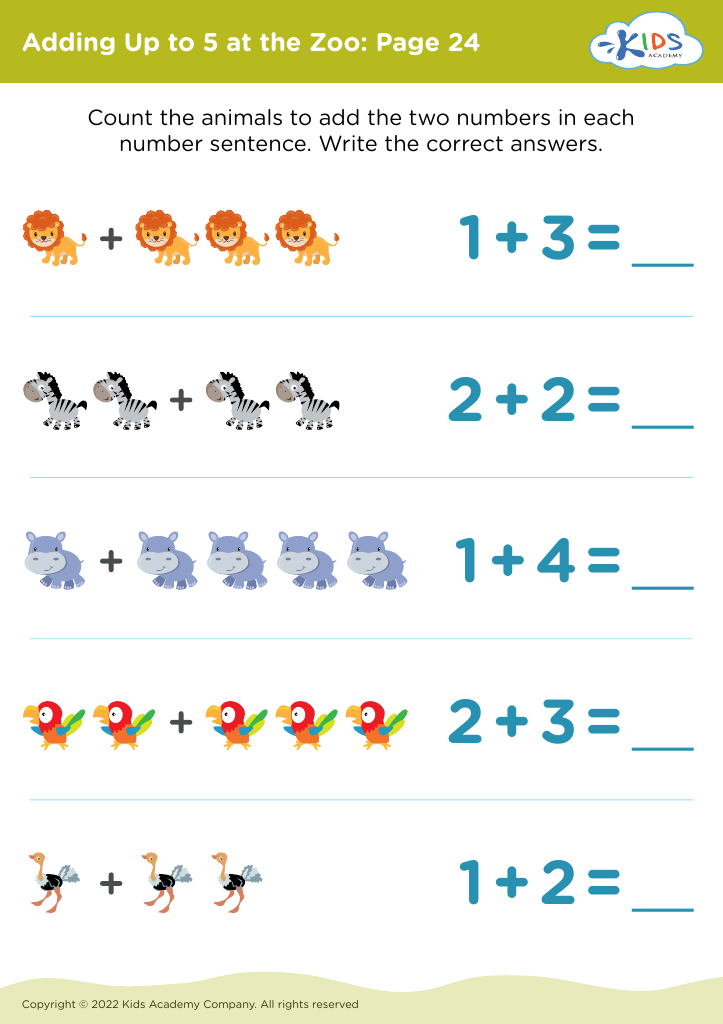
Adding Up to 5 at the Zoo: Page 24
Worksheet
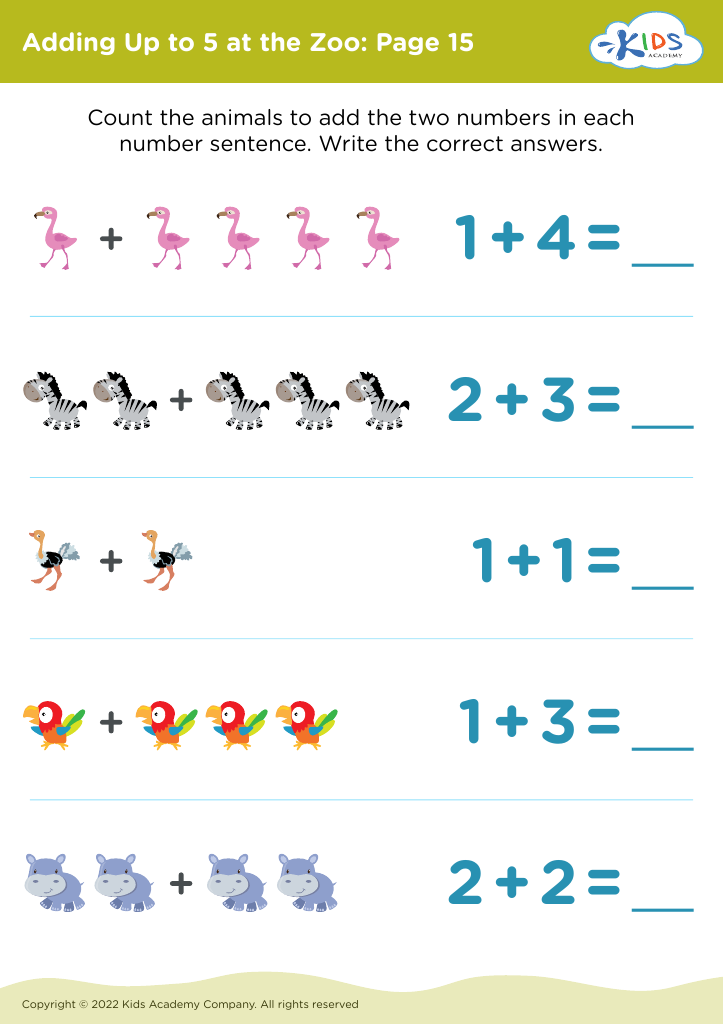
Adding Up to 5 at the Zoo: Page 15
Worksheet
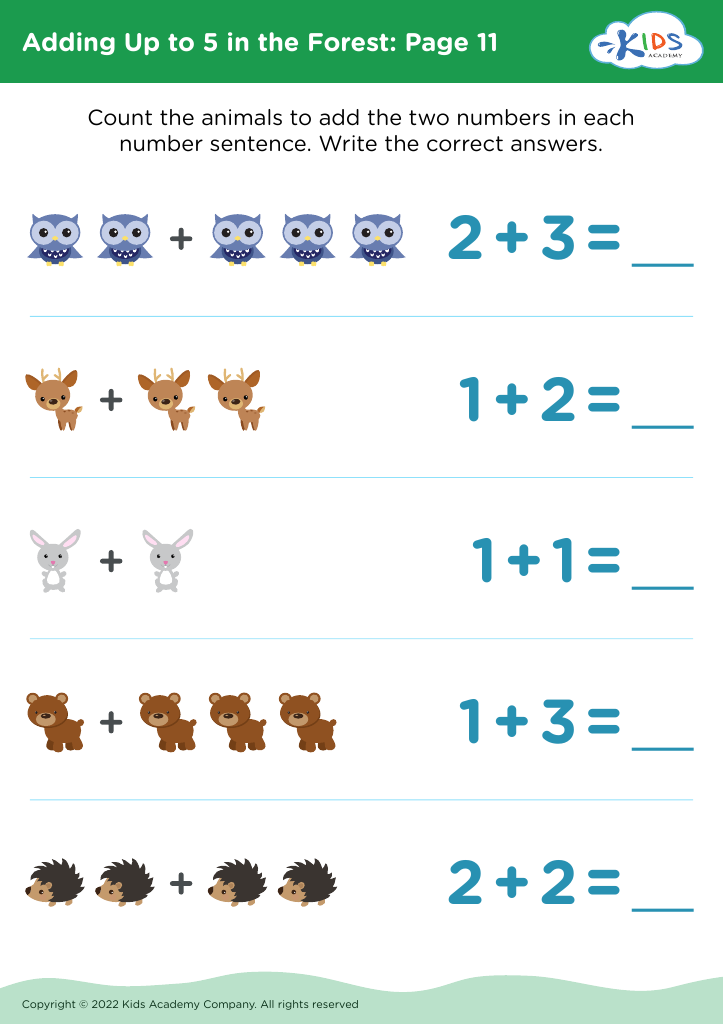
Adding Up to 5 in the Forest: Page 11
Worksheet
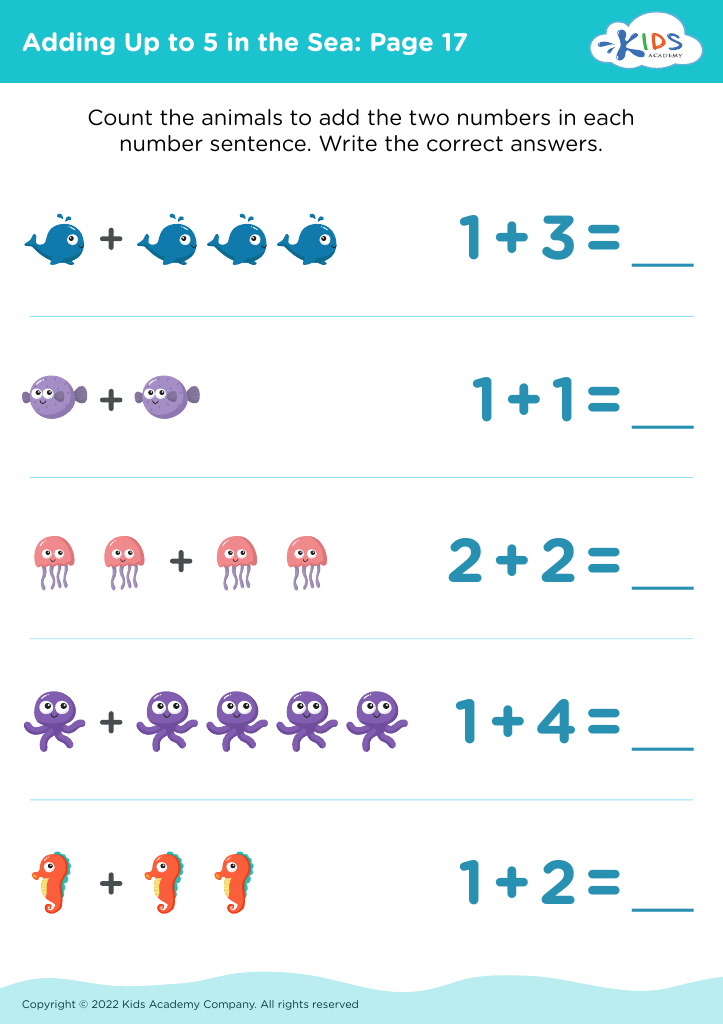
Adding Up to 5 in the Sea: Page 17
Worksheet
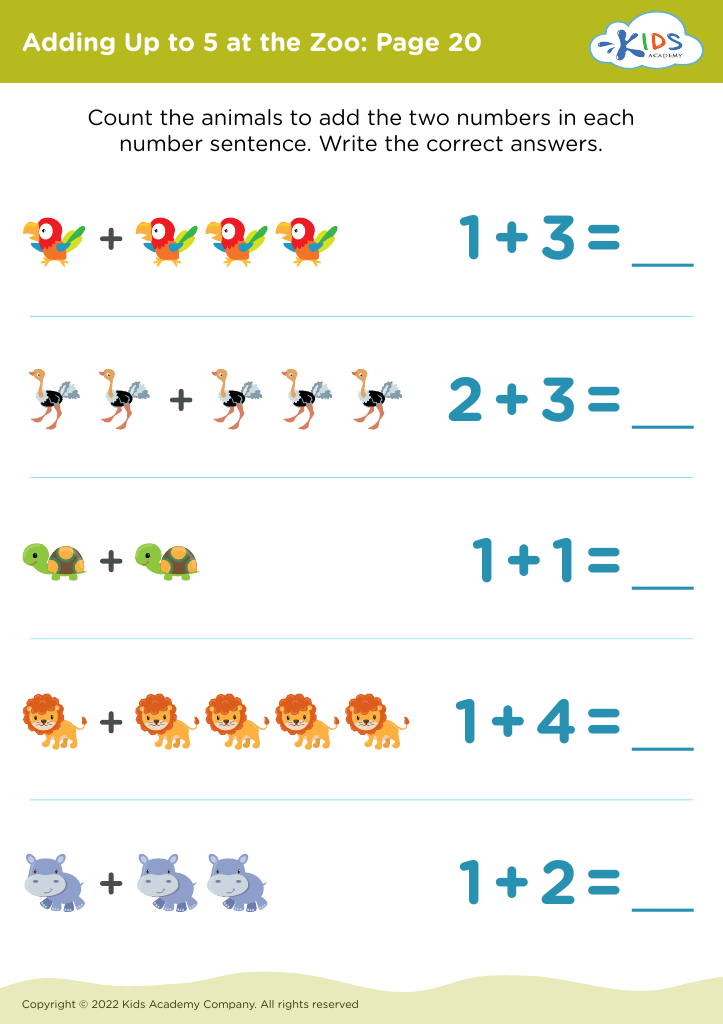
Adding Up to 5 at the Zoo: Page 20
Worksheet
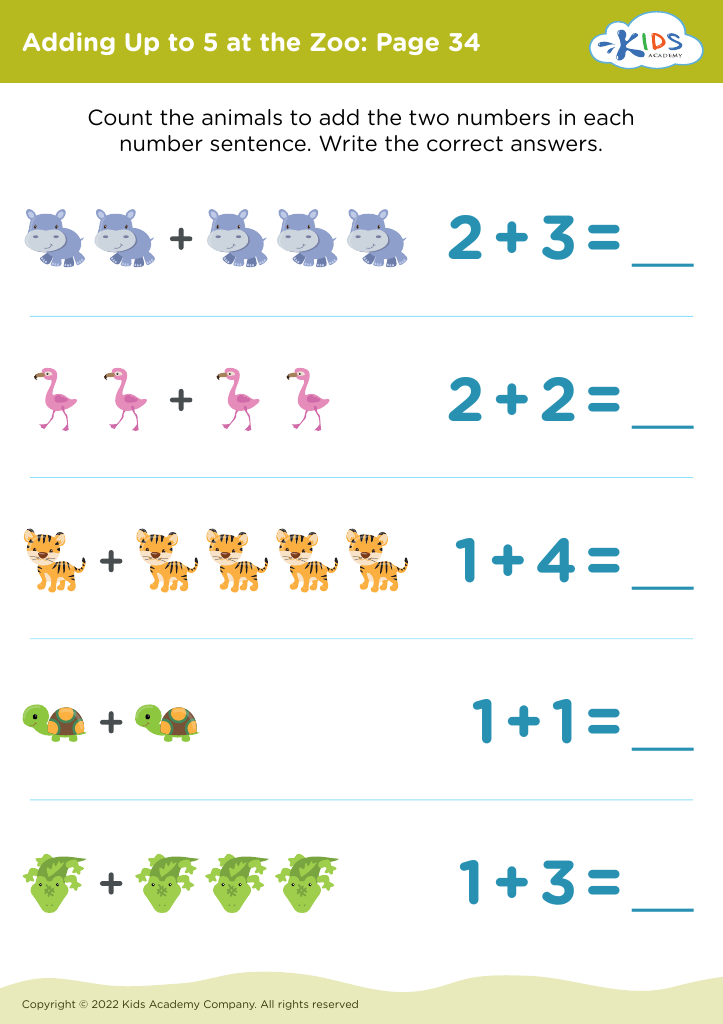
Adding Up to 5 at the Zoo: Page 34
Worksheet
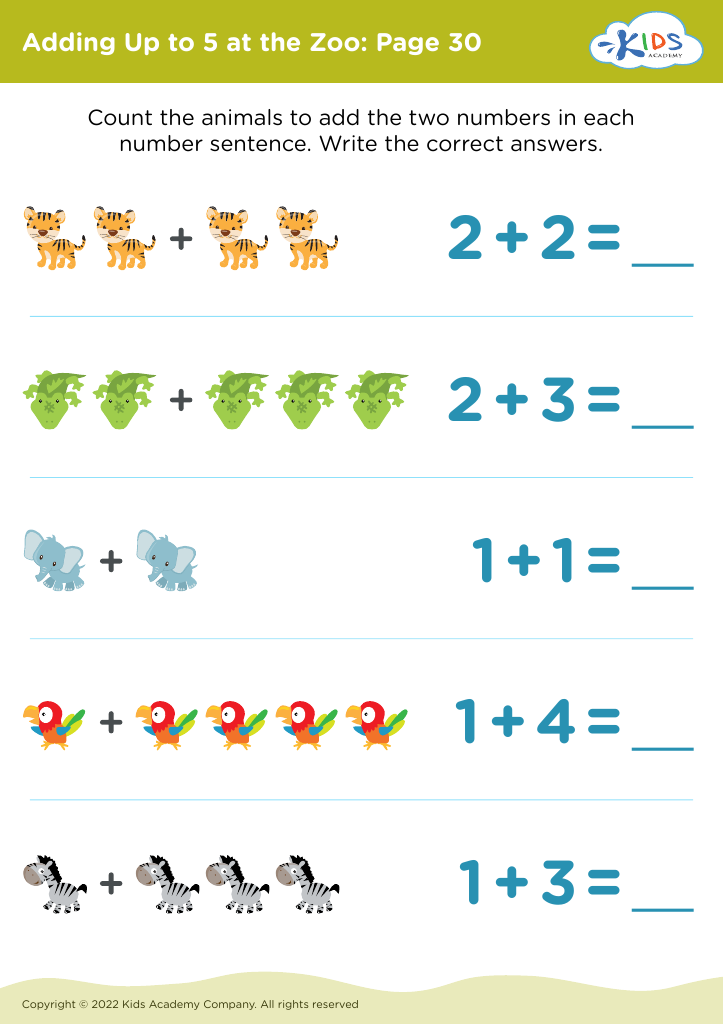
Adding Up to 5 at the Zoo: Page 30
Worksheet
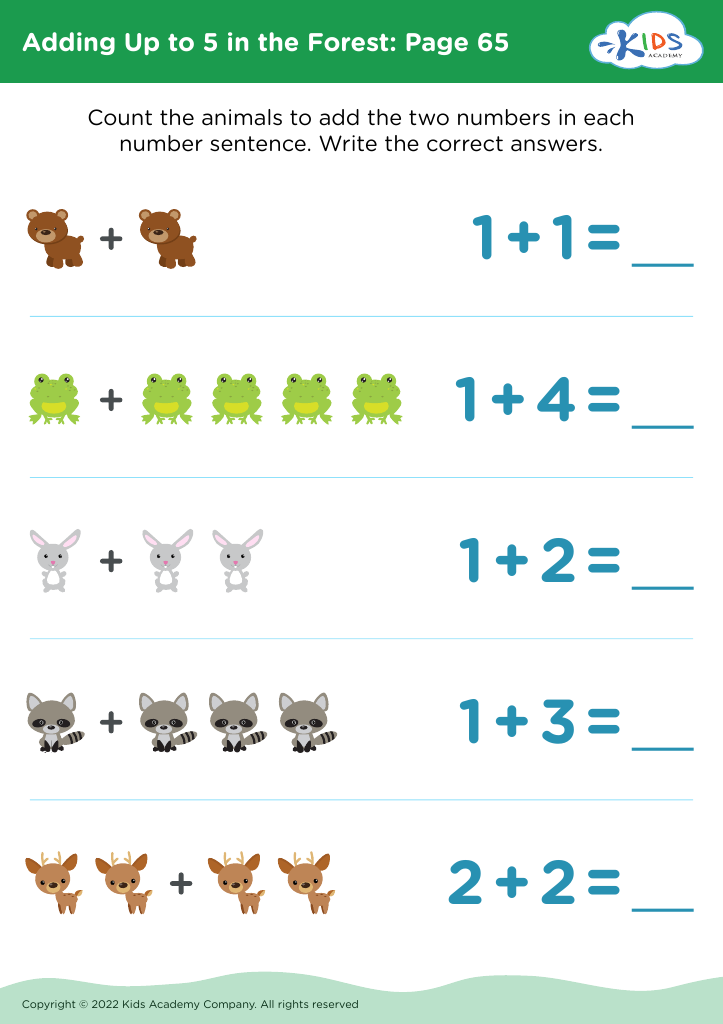
Adding Up to 5 in the Forest: Page 65
Worksheet
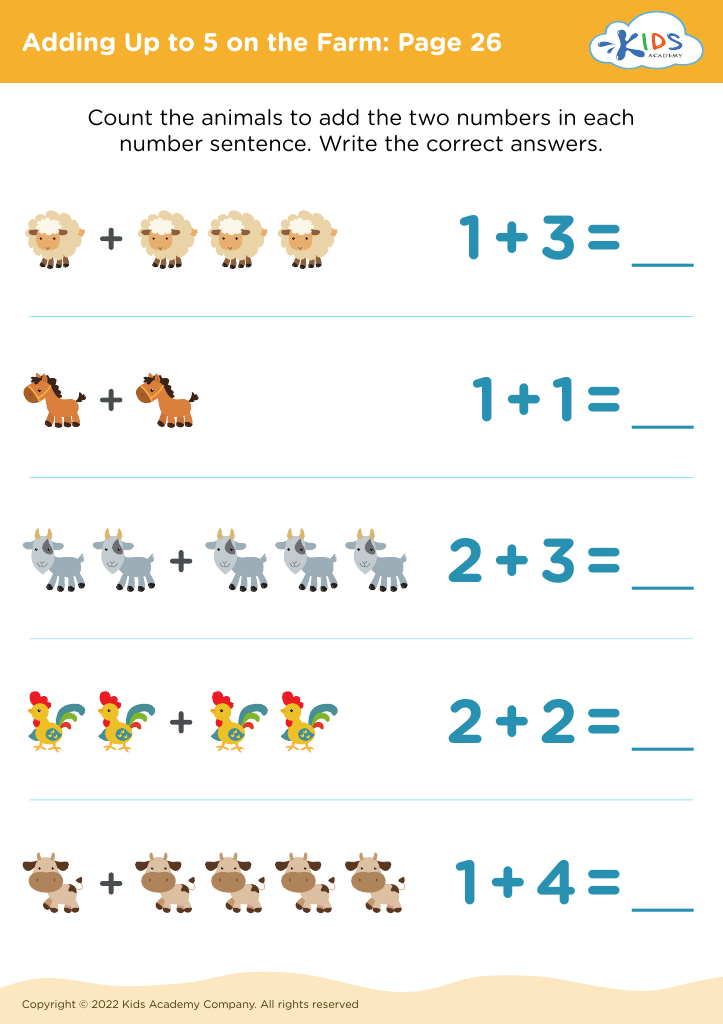
Adding Up to 5 on the Farm: Page 26
Worksheet
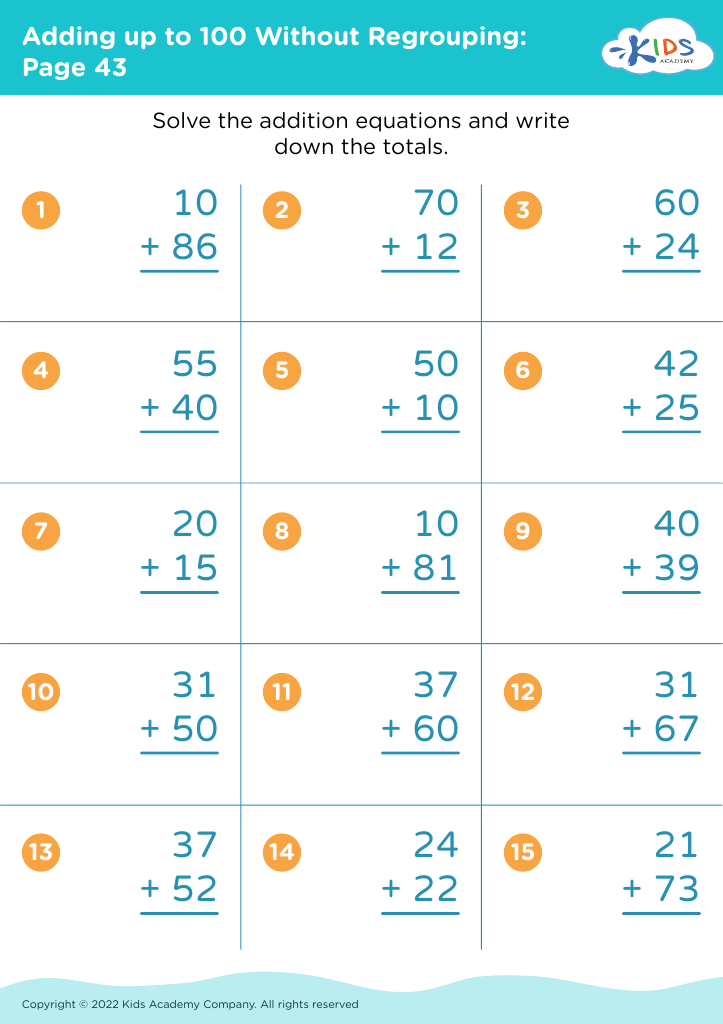
Adding up to 100 Without Regrouping: Page 43
Worksheet
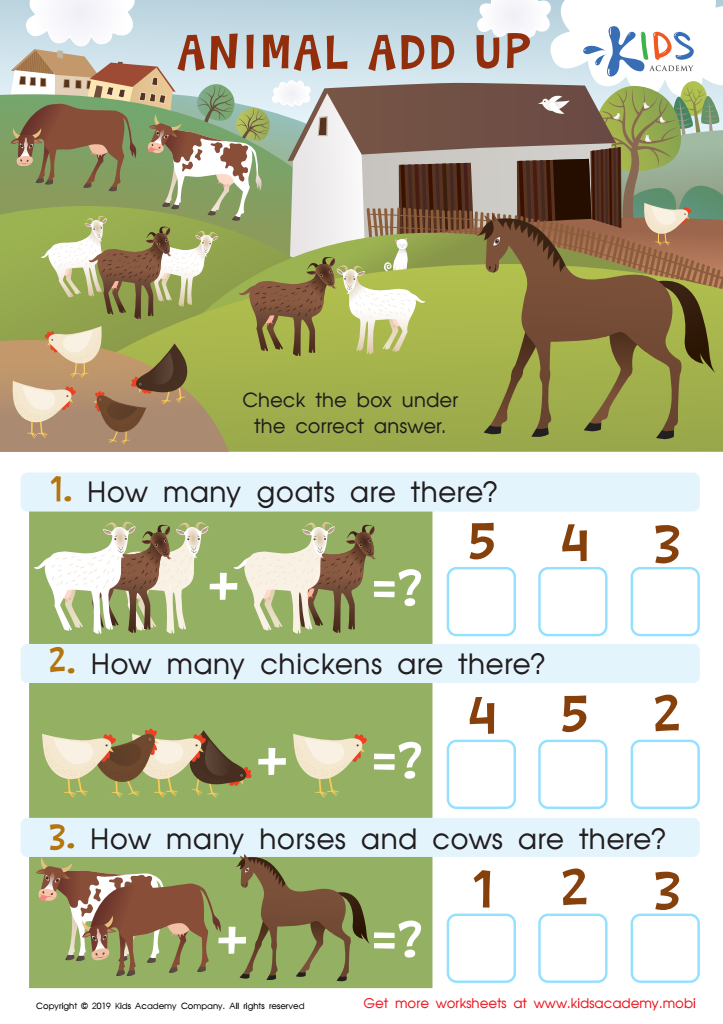
Animal Add Up Worksheet

Animal Add Up Worksheet

Animals are fun to observe and interact with. They can be seen at the zoo, parks, farms and in homes with pets. This worksheet helps kids identify animals, and build addition skills. Look at the picture with them and help name each animal. After that, add the animals up and check the box for the correct answer. 80 words.
Animal Add Up Worksheet
Worksheet
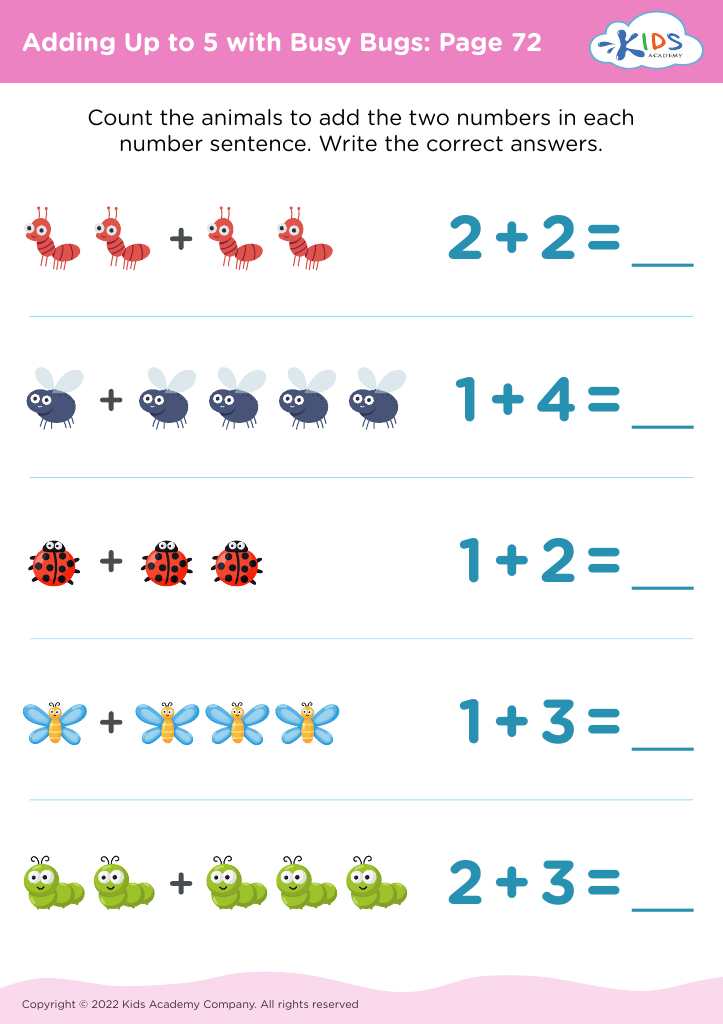
Adding Up to 5 with Busy Bugs: Page 72
Worksheet
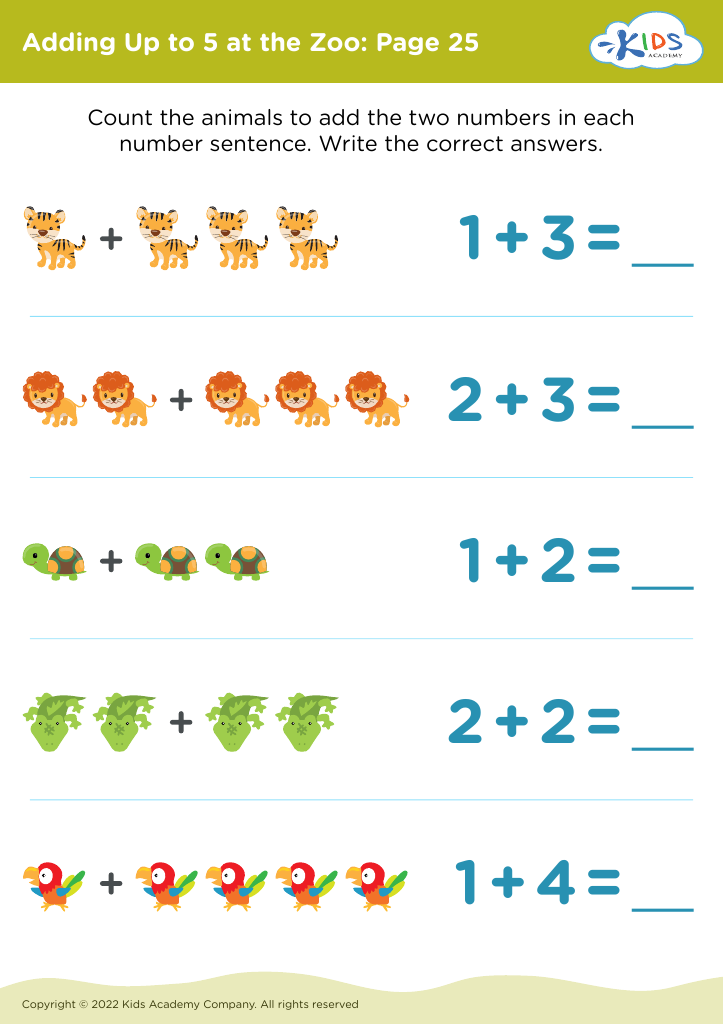
Adding Up to 5 at the Zoo: Page 25
Worksheet
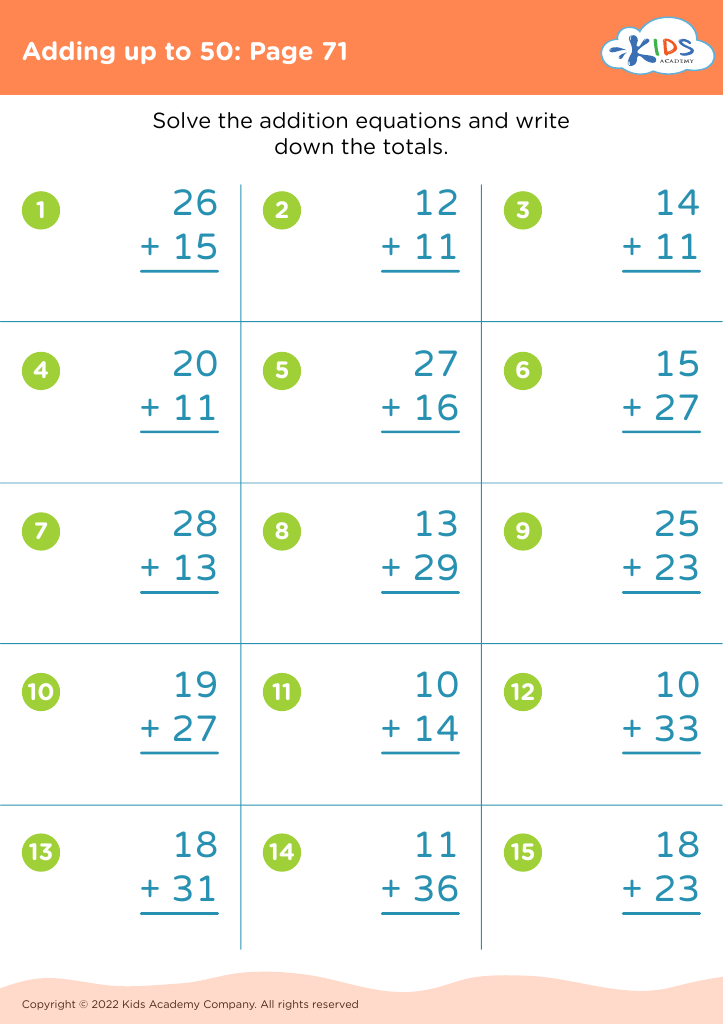
Adding up to 50: Page 71

Adding up to 50: Page 71

Adding up to 50: Page 71
Worksheet
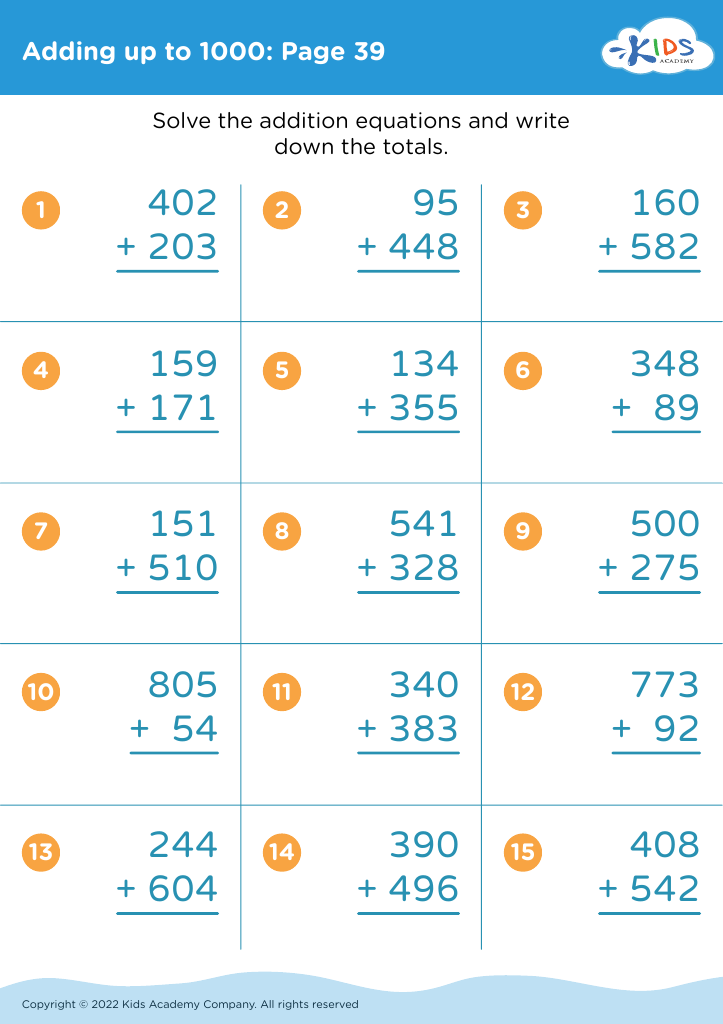
Adding up to 1000: Page 39

Adding up to 1000: Page 39

Adding up to 1000: Page 39
Worksheet


Cognitive development during early childhood, particularly in the ages of 4 to 7, is crucial as it lays the foundation for a child’s ability to think, learn, and interact with the world. At this stage, children are developing essential cognitive skills such as problem-solving, critical thinking, and logical reasoning. Understanding addition is not just about numbers; it ignites curiosity, fosters resilience, and nurtures a sense of achievement when children grasp new concepts.

Parents and teachers should care because proficiency in foundational math skills like addition directly influences overall academic success. A solid grasp of mathematics at this early age correlates with enhanced learning capabilities in other subjects, fostering a love for learning that extends throughout life. Moreover, through engaging activities involving addition, educators and parents can promote positive social interactions and cooperative skills, as children often tackle these challenges in groups.

Furthermore, recognizing and supporting cognitive development helps address potential learning difficulties early on, allowing for timely intervention. In a supportive environment, children flourish, developing not only academically but socially and emotionally. Ultimately, fostering cognitive development in young learners is an investment in their future well-being and success.