Developing fine motor skills Addition Worksheets for Ages 4-7
4 filtered results
-
From - To
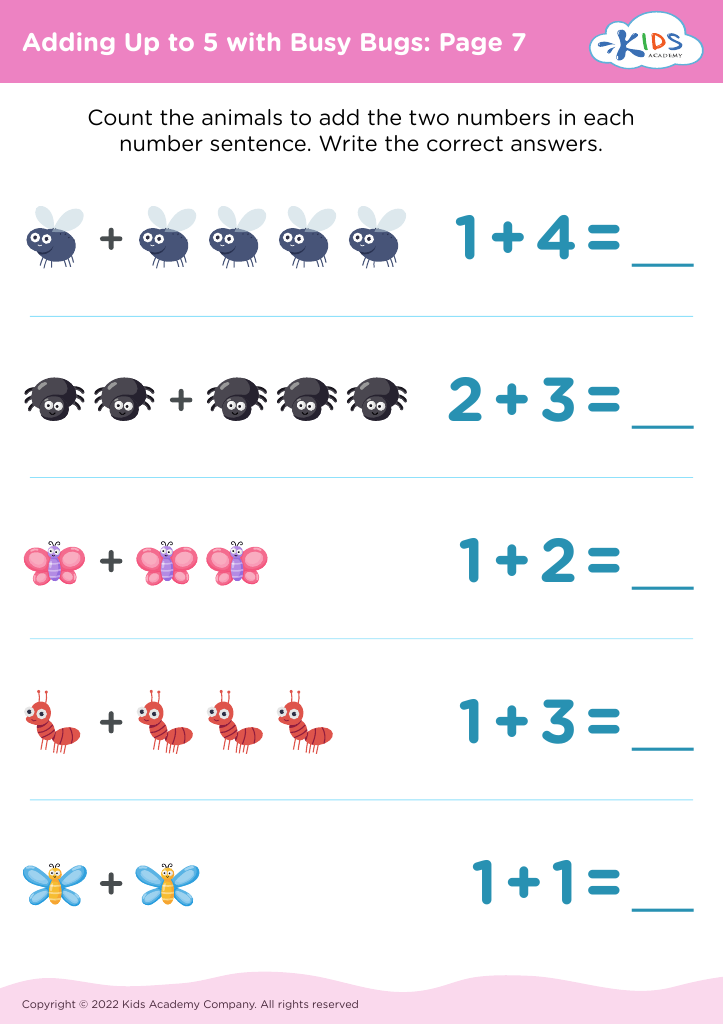
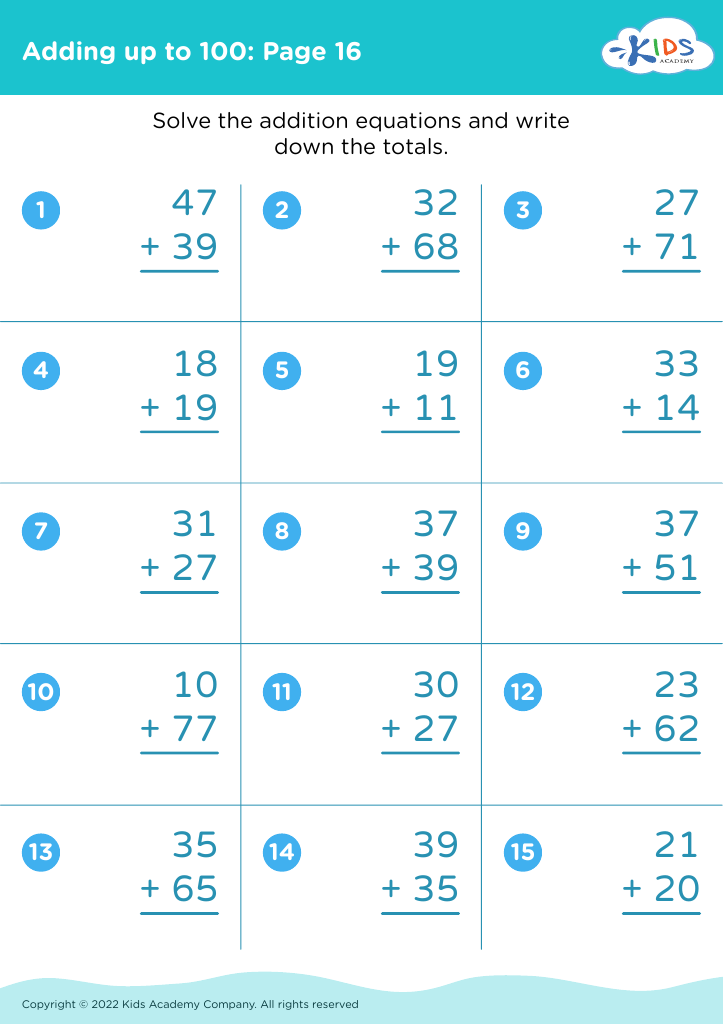
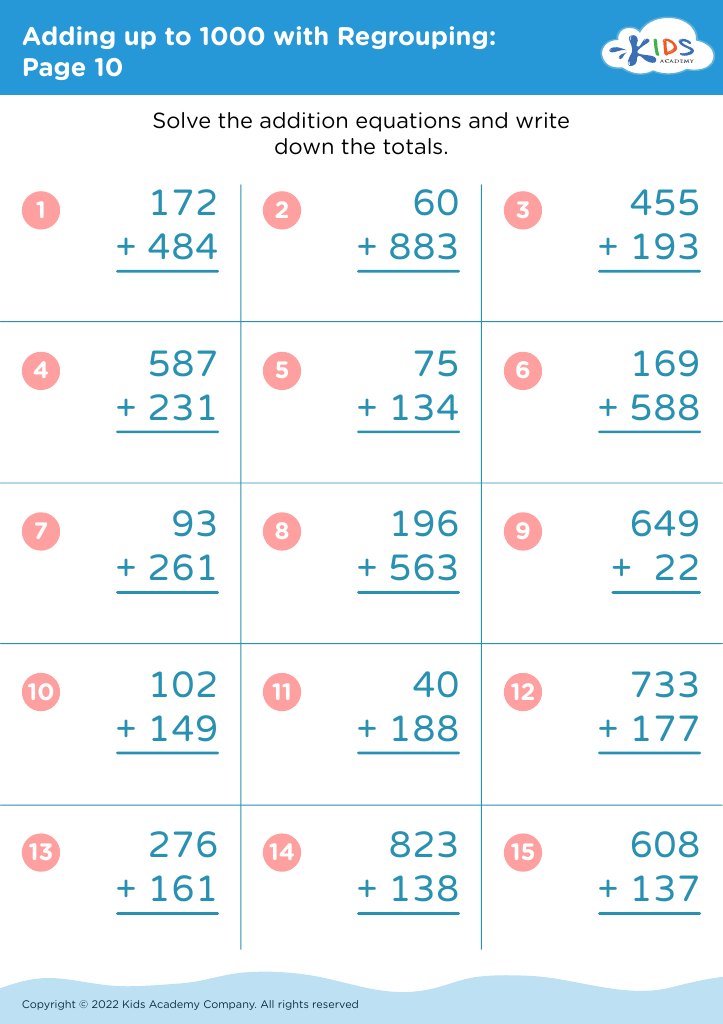
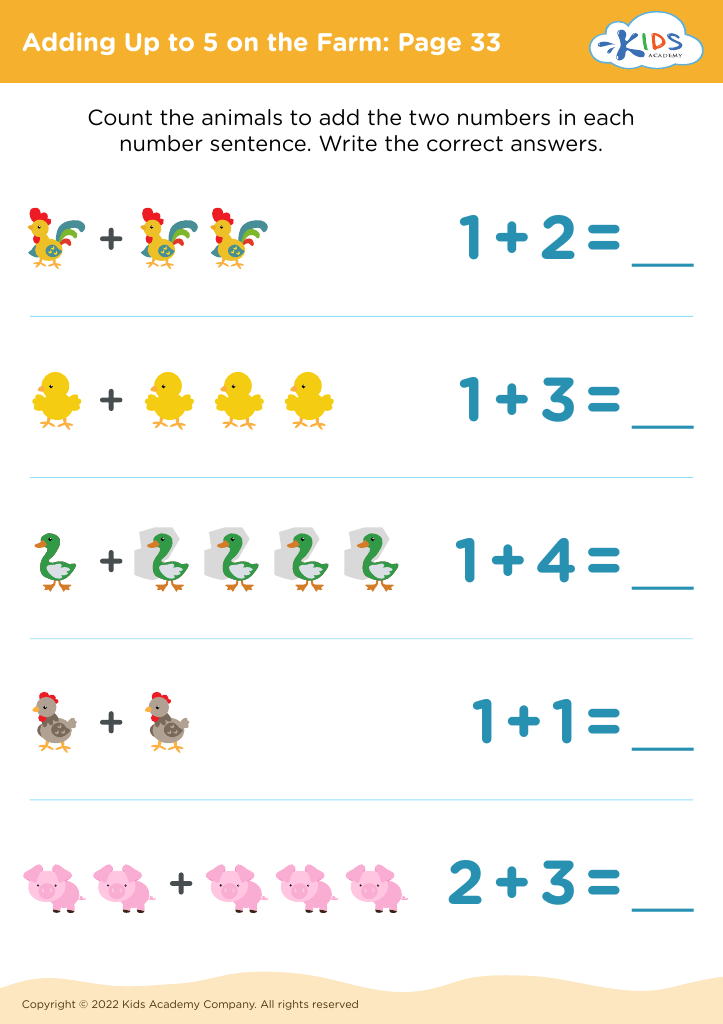
Enhance your child's fine motor skills with our engaging Addition Worksheets, specially crafted for ages 4 to 7. These worksheets offer a fun and interactive way for young learners to practice addition while simultaneously refining their hand-eye coordination and dexterity. Encourage your child to trace numbers, draw shapes, and complete activities that seamlessly integrate math concepts with fine motor development. Perfect for homeschoolers and classroom settings alike, these resources foster early math competency while keeping children entertained. Dive into our collection and watch your little one grow in confidence and skill as they master both addition and fine motor prowess!








Developing fine motor skills in children aged 4-7 is crucial for their overall growth and learning. These skills encompass small muscle movements, which are essential for daily tasks, such as writing, buttoning shirts, and using utensils. Strong fine motor skills lay the foundation for academic success, particularly in literacy and mathematics, where precision and coordination are vital.
Parents and teachers should care about this development because it enhances a child's ability to engage in classroom activities. Proficient fine motor skills reflect a child's readiness to tackle challenging tasks confidently. As children practice activities like cutting, drawing, and manipulating small objects, they improve their hand-eye coordination and dexterity, which contributes to increased self-esteem and independence.
Additionally, these skills foster cognitive development. As children engage in hands-on activities, they enhance their problem-solving ability, creativity, and spatial awareness. This skill set supports essential early learning benchmarks, thereby enhancing their readiness for future learning. Parental involvement is particularly impactful, as guided play and daily routines can provide ample opportunities for skill development. Overall, nurturing fine motor skills in young children is fundamental in promoting lifelong learning and enhancing their pre-academic and personal achievements.








