Developing problem-solving skills Addition Worksheets for Ages 4-7
6 filtered results
-
From - To
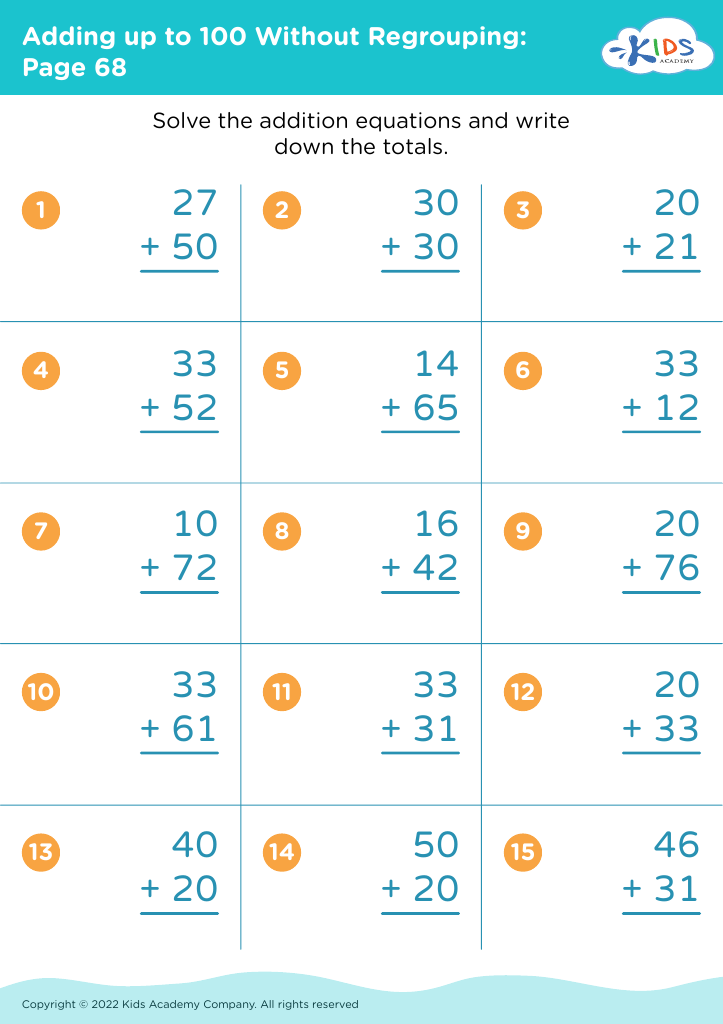
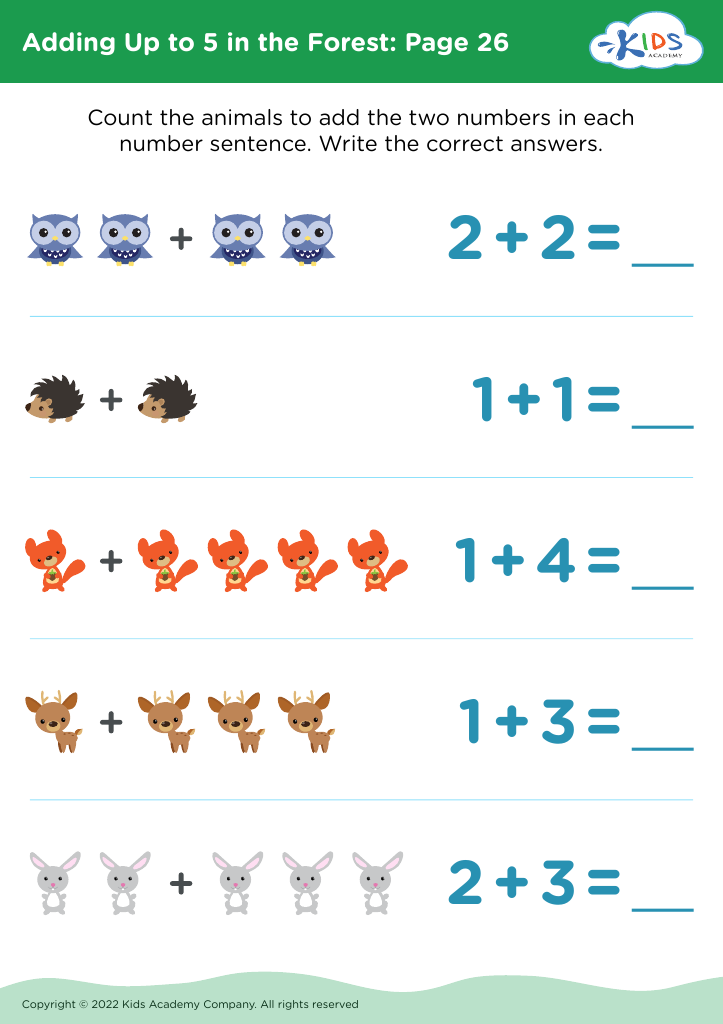
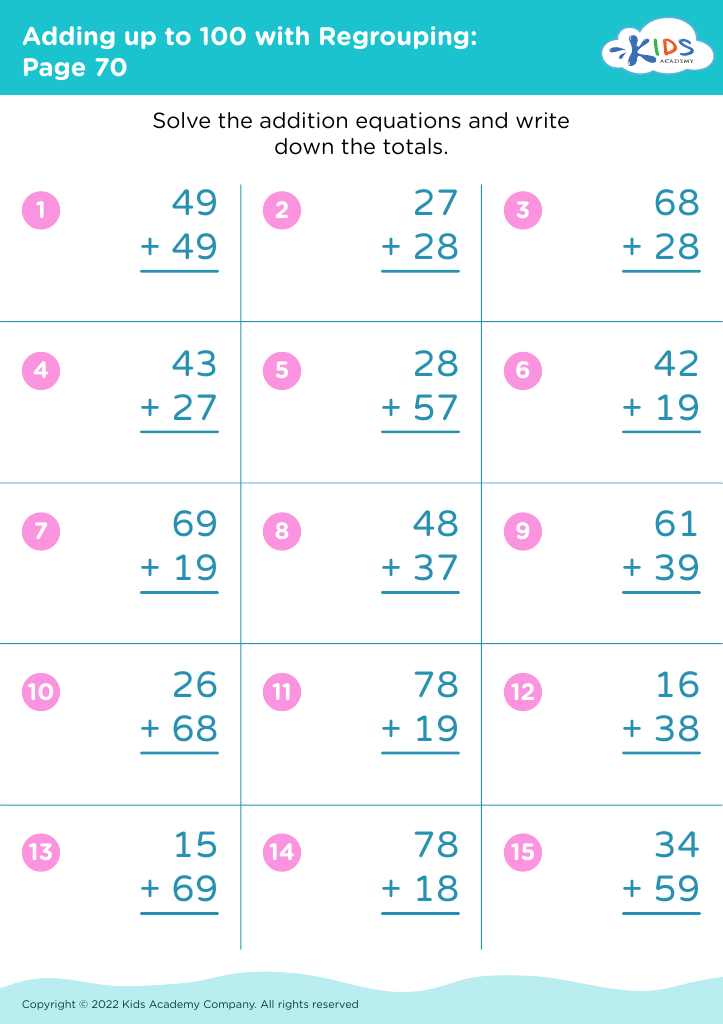
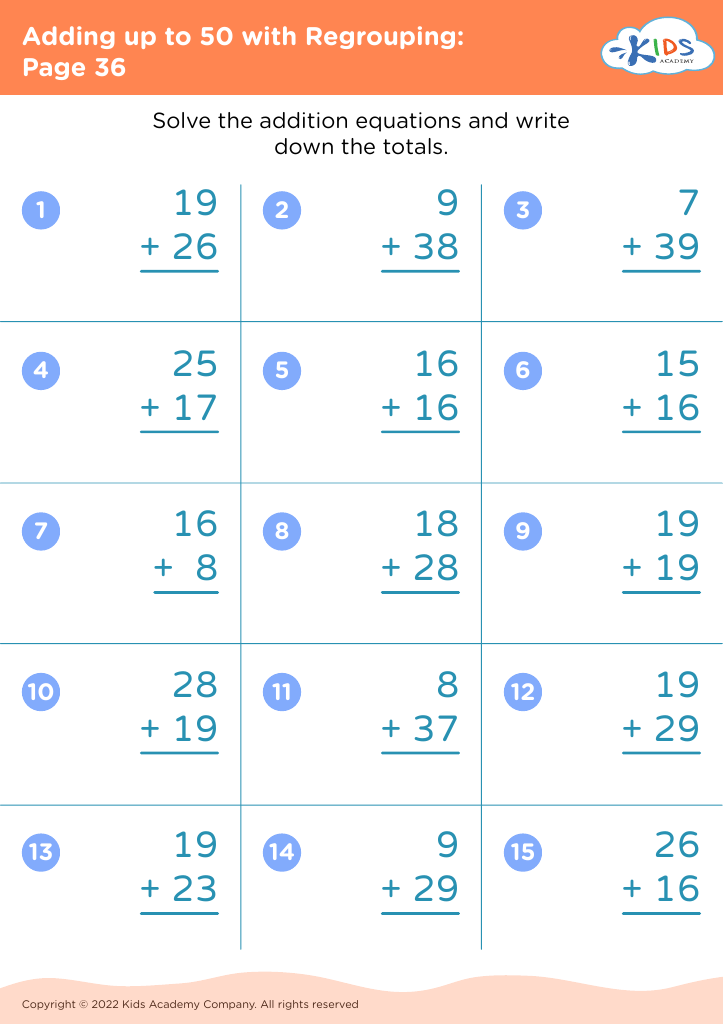
Unlock the potential of young learners with our "Developing Problem-Solving Skills Addition Worksheets" designed for ages 4-7. These engaging resources combine essential addition practice with critical thinking exercises, helping children enhance their mathematical understanding and reasoning abilities. Each worksheet is designed to not only teach basic addition concepts but also to present fun, problem-solving challenges that spark curiosity and engagement. Perfect for both classroom use and at-home learning, these worksheets encourage kids to think creatively and approach problems from different angles. Equip your child with the skills they need for academic success while fostering a love for learning!

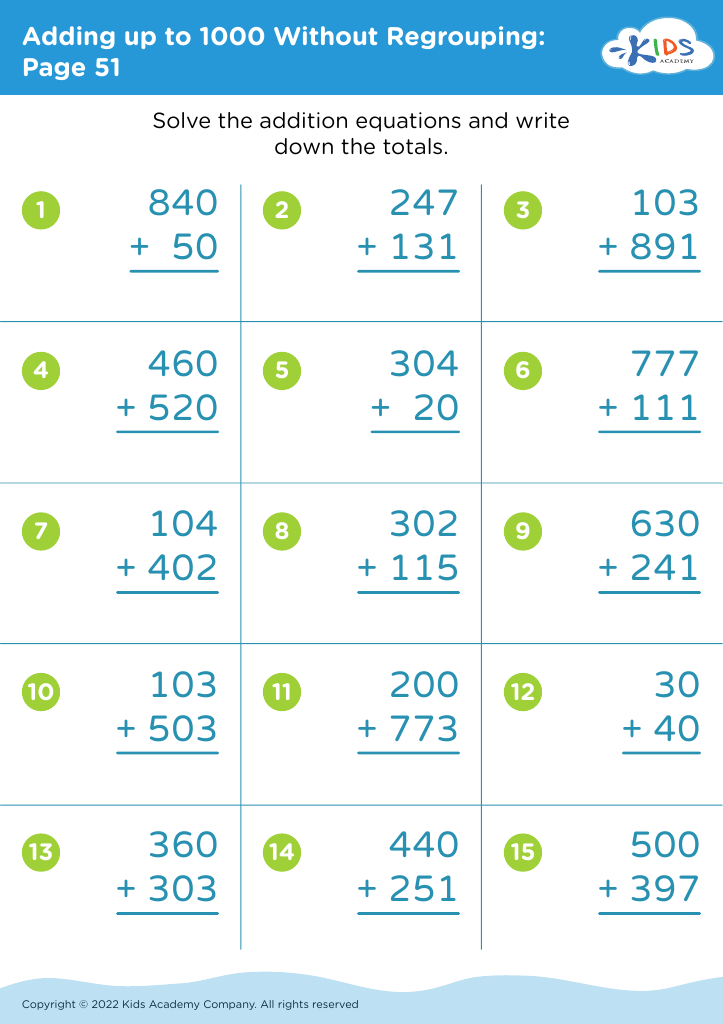








Developing problem-solving skills in young children, particularly in the context of addition, is crucial for their overall cognitive development. For ages 4-7, this skill set lays a foundational framework for logical thinking, critical reasoning, and mathematical abilities that will benefit them throughout their lives.
When children engage in problem-solving activities related to addition, they learn not just the mechanics of numbers, but the process of approaching challenges in organized ways. This encourages persistence and resilience, traits that are essential for overcoming obstacles academically and in real life. Moreover, these activities enhance their ability to think creatively and recognize patterns, which are vital skills in advanced mathematics and other fields.
For parents and teachers, fostering these skills also enriches their emotional and social development. As children work together to solve addition problems, they practice communication, collaboration, and even negotiation. Such interactions build empathy and teamwork.
Ultimately, prioritizing problem-solving in addition helps children develop a love for learning and a strong sense of confidence in their abilities. This foundation supports their journey towards academic success and equips them with essential life skills that extend beyond the classroom. Therefore, investing time in problem-solving activities is crucial for nurturing well-rounded individuals.








