Enhance concentration Addition Worksheets for Ages 4-7
5 filtered results
-
From - To
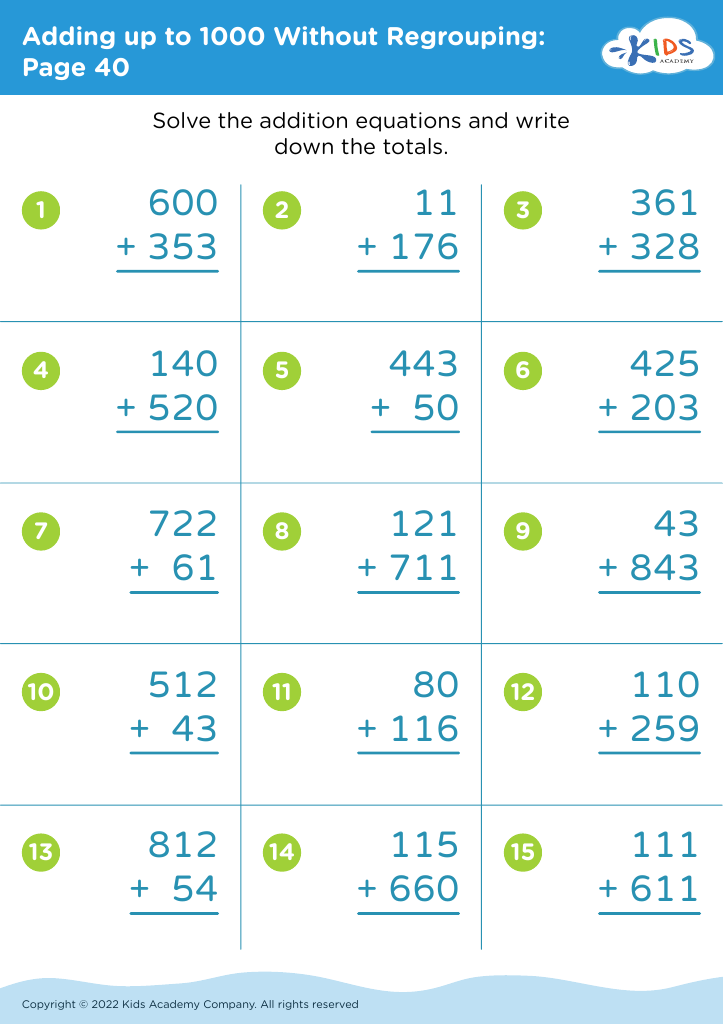
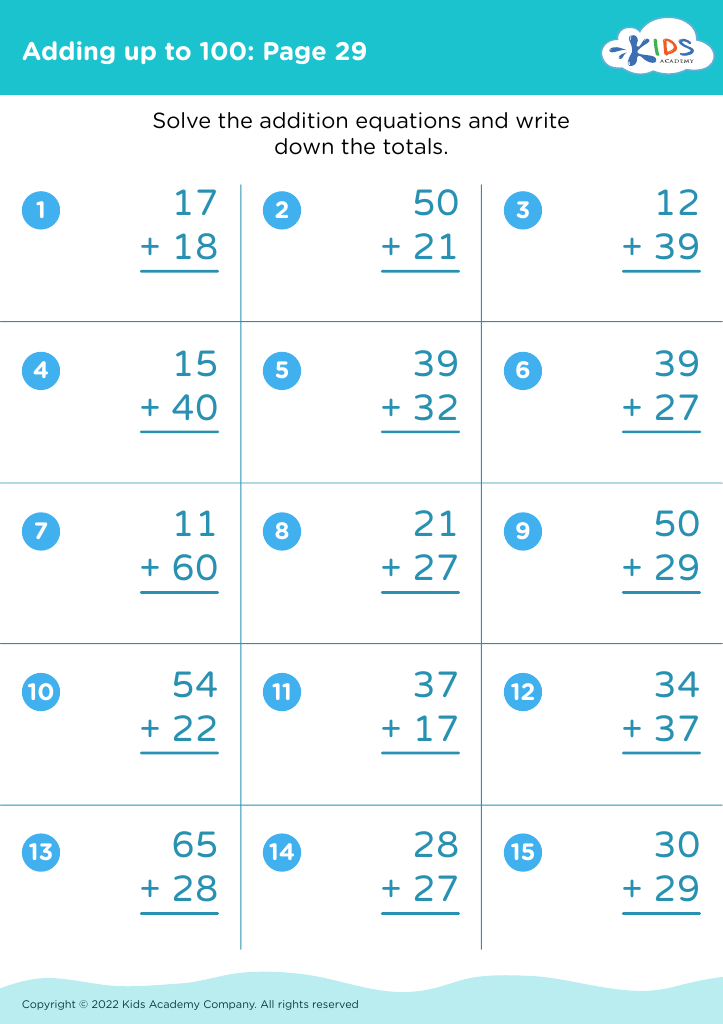
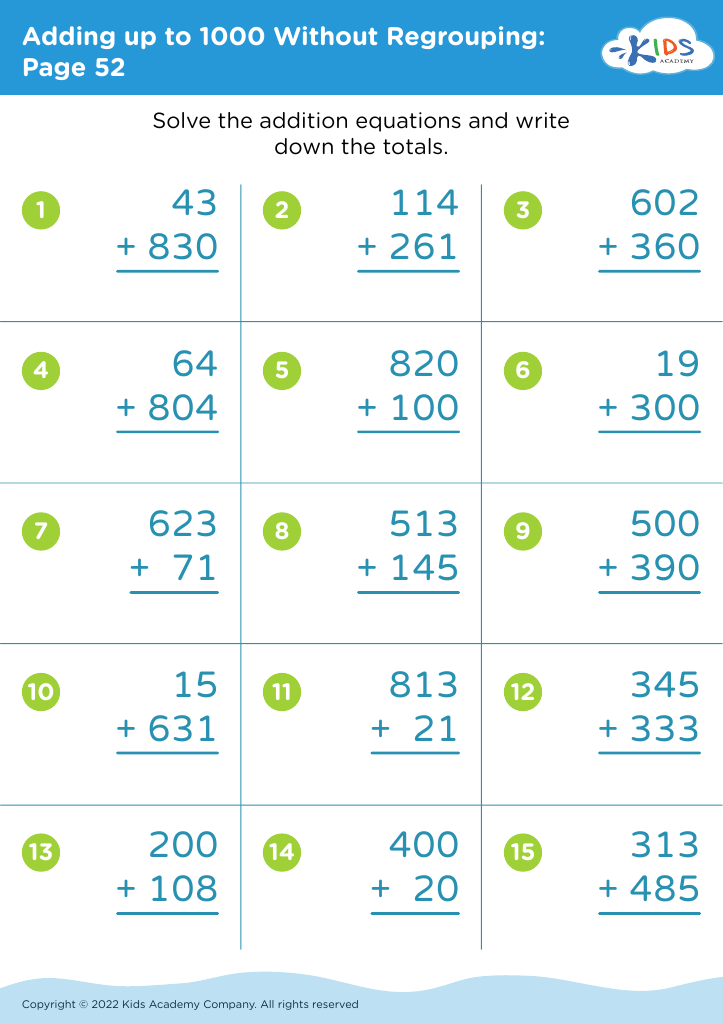
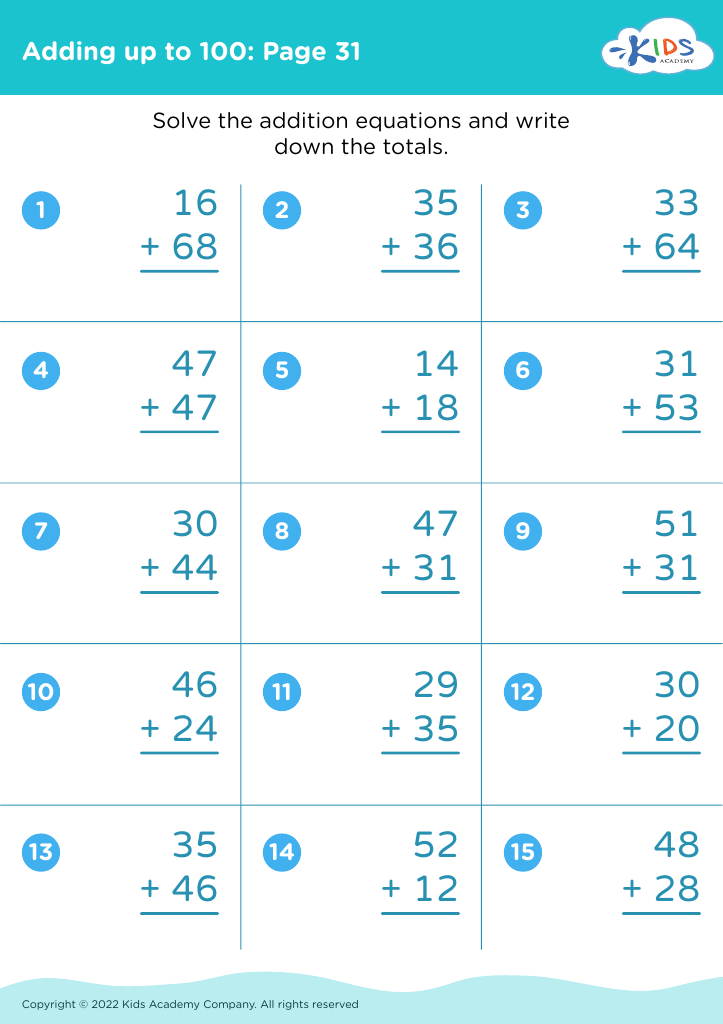
Discover our "Enhance Concentration Addition Worksheets" designed specifically for children aged 4-7! These engaging worksheets focus on developing essential math skills while nurturing concentration and attention. Each activity blends fun and learning, encouraging young minds to solve addition problems with increasing complexity. Colorful illustrations and interactive exercises captivate your child’s interest, making math a delightful experience. Ideal for classroom use or at-home practice, our materials foster independent learning and boost confidence in foundational math concepts. Help your child thrive academically and sharpen their concentration with our curated selection of addition worksheets. Explore now for a smarter, more focused learner!
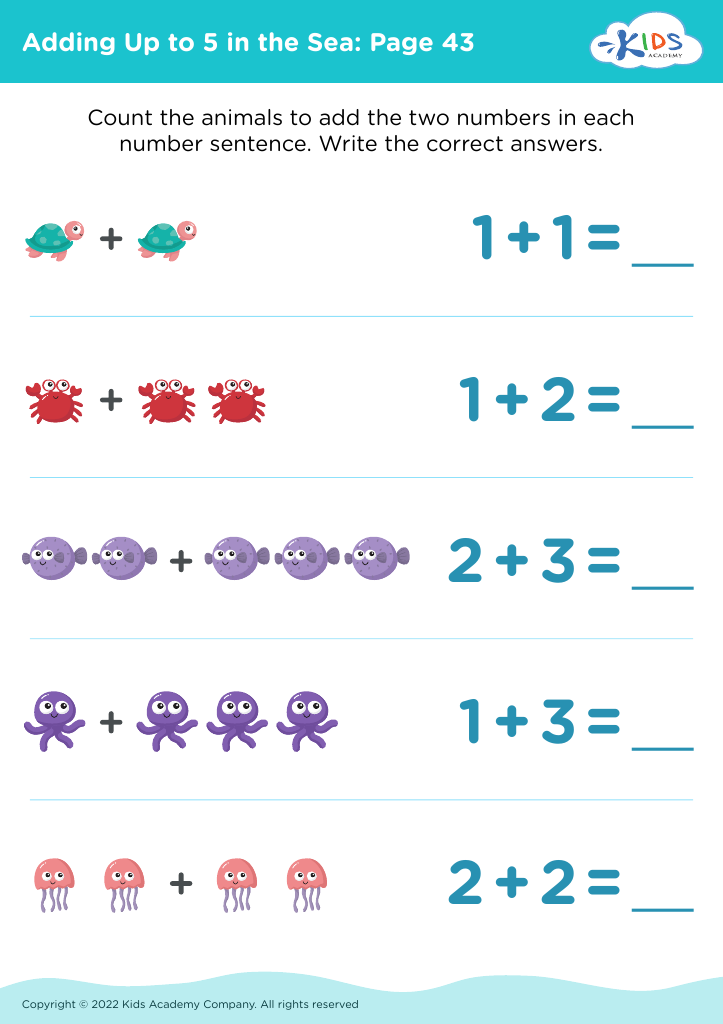








Parents and teachers should prioritize enhancing concentration in young children, particularly in topics like addition, because it serves as a foundational skill for lifelong learning. Children aged 4-7 are in a critical developmental stage where their ability to focus can significantly influence their academic success, social interactions, and emotional well-being. Strengthening concentration while learning addition reinforces problem-solving skills and boosts confidence, making math less intimidating.
As children learn to concentrate, they improve their ability to grasp complex concepts later on, setting the stage for higher-level thinking in subjects beyond math. This focus can lead to better retention of information, enhancing classroom participation and collaboration with peers. Engaging techniques—like interactive games, storytelling, or hands-on activities—can make learning addition enjoyable, turning it into a shared experience that nurtures enthusiasm for learning.
Moreover, developing concentration skills can help mitigate challenges associated with distractions in today's digital age. By cultivating a focused mindset early on, children can manage tasks more efficiently and develop self-discipline, which is essential for both academic success and behavior management in the classroom. Investing time and resources in enhancing concentration for addition at this age is thus an investment in their future.








