Enhance number recognition Addition Worksheets for Ages 4-7
17 filtered results
-
From - To
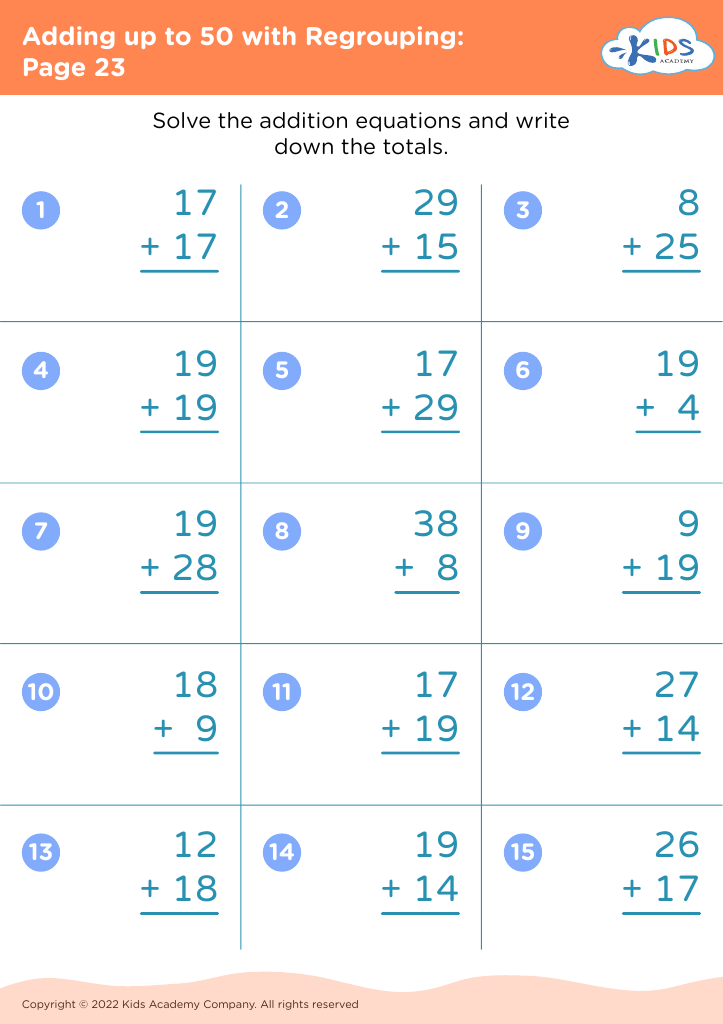
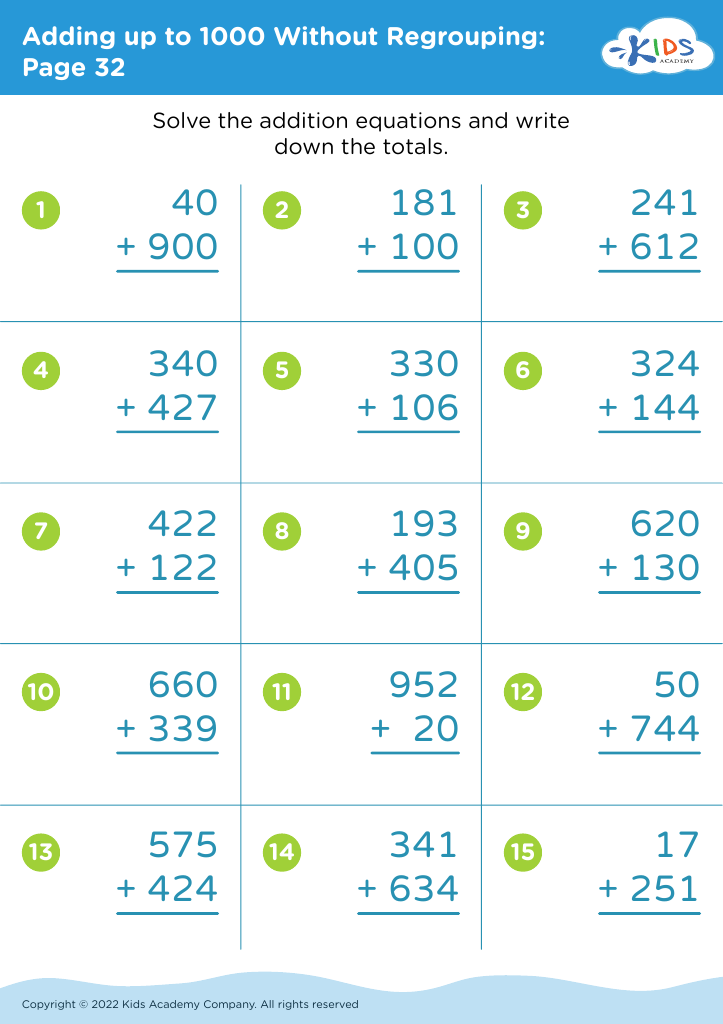
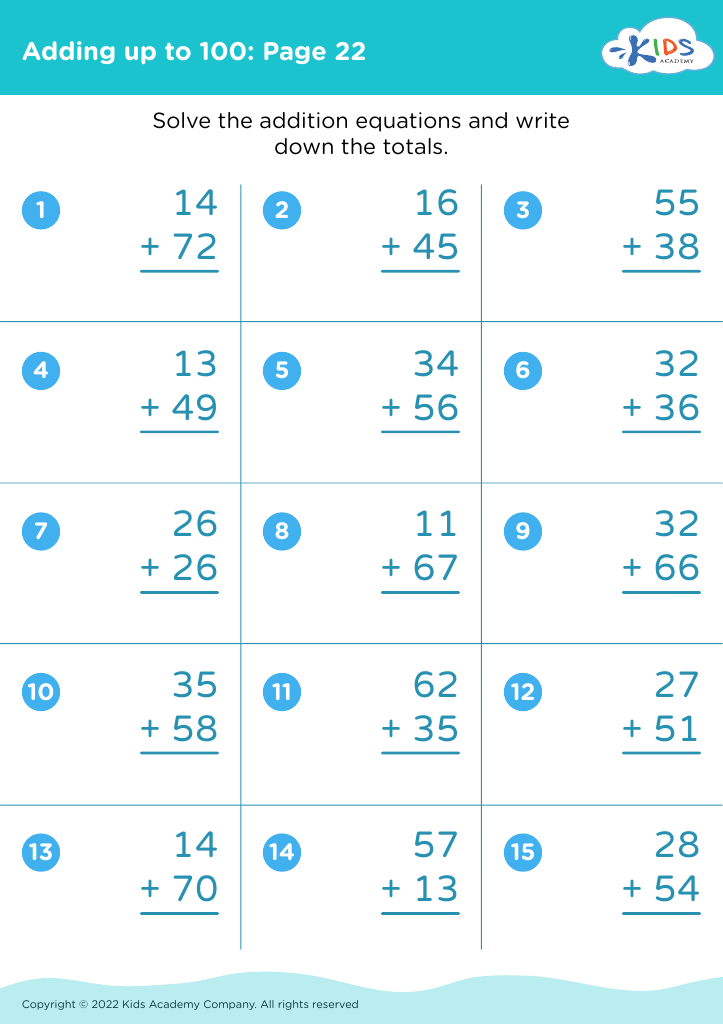
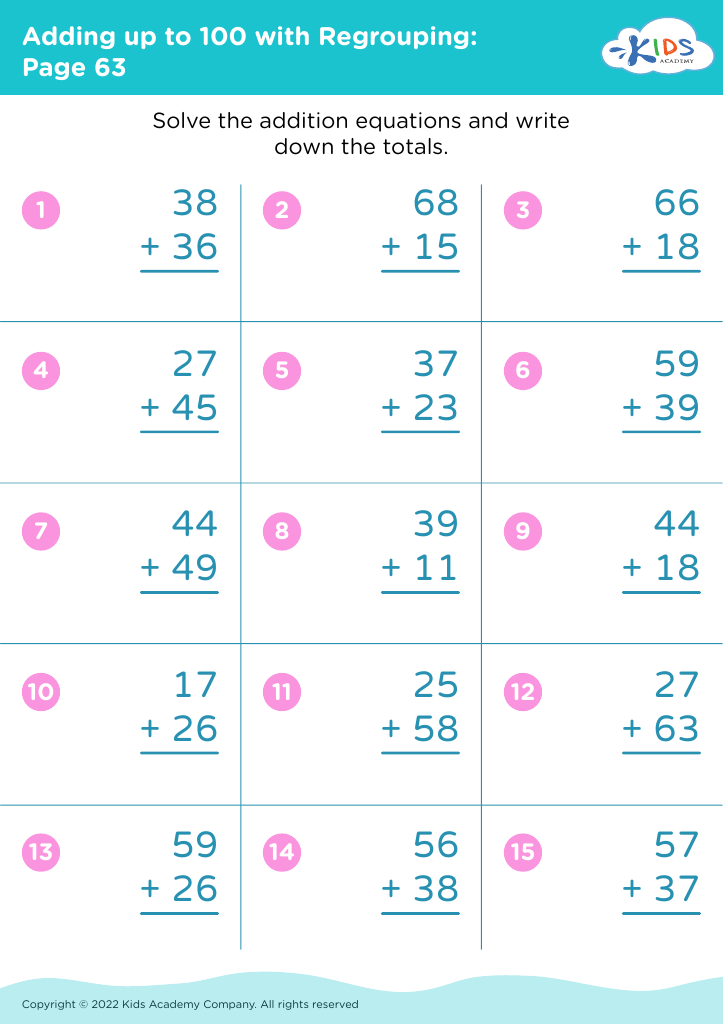
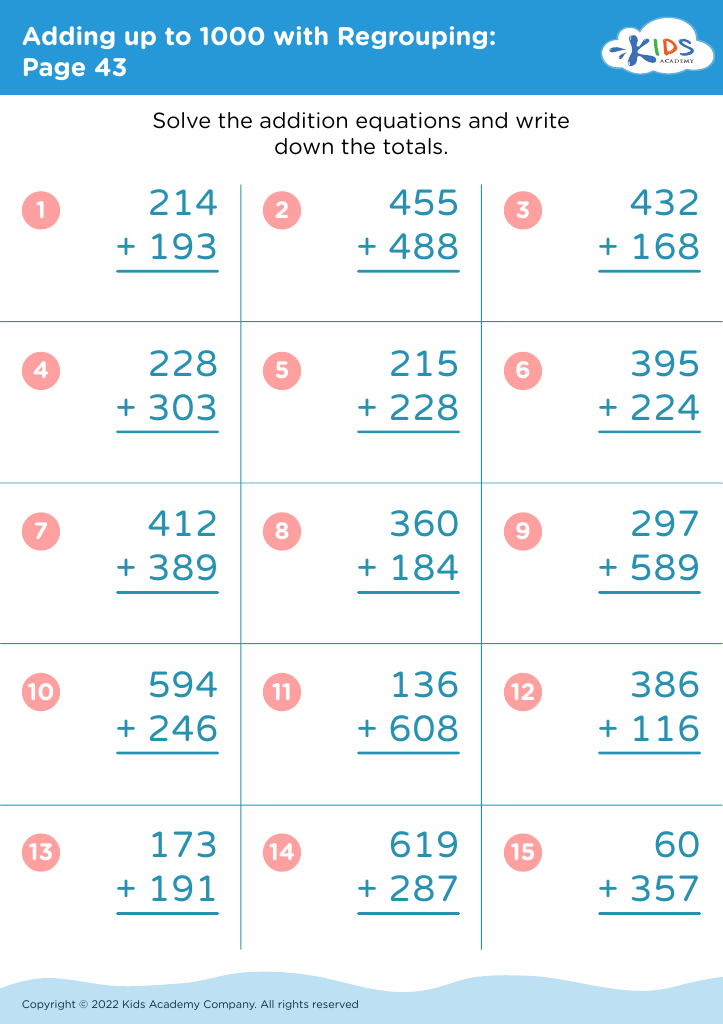
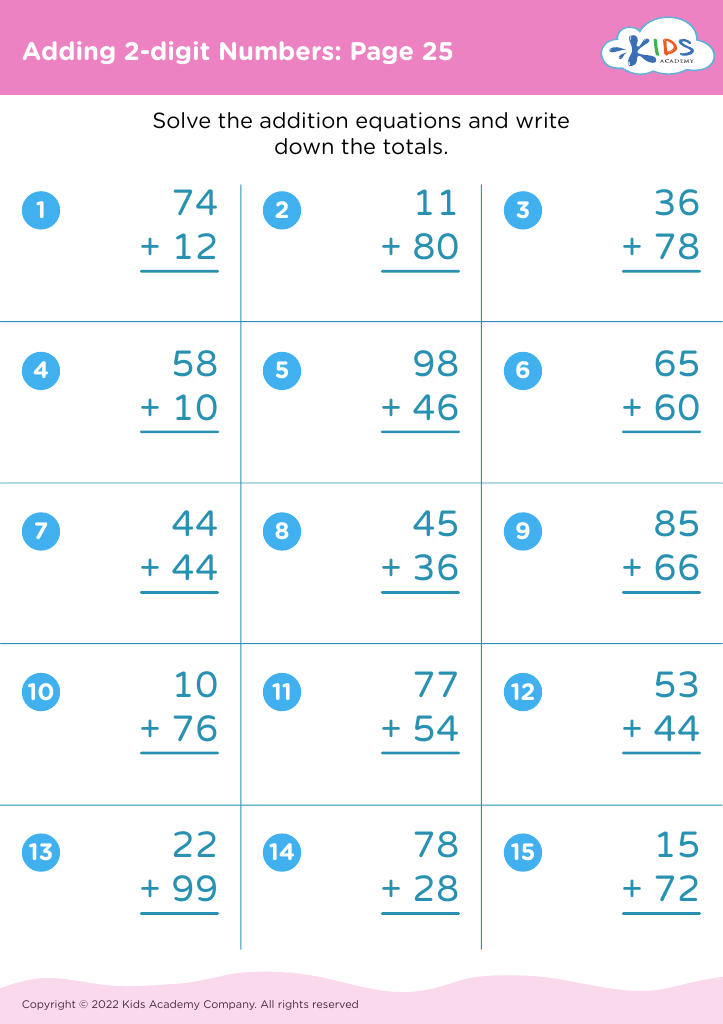
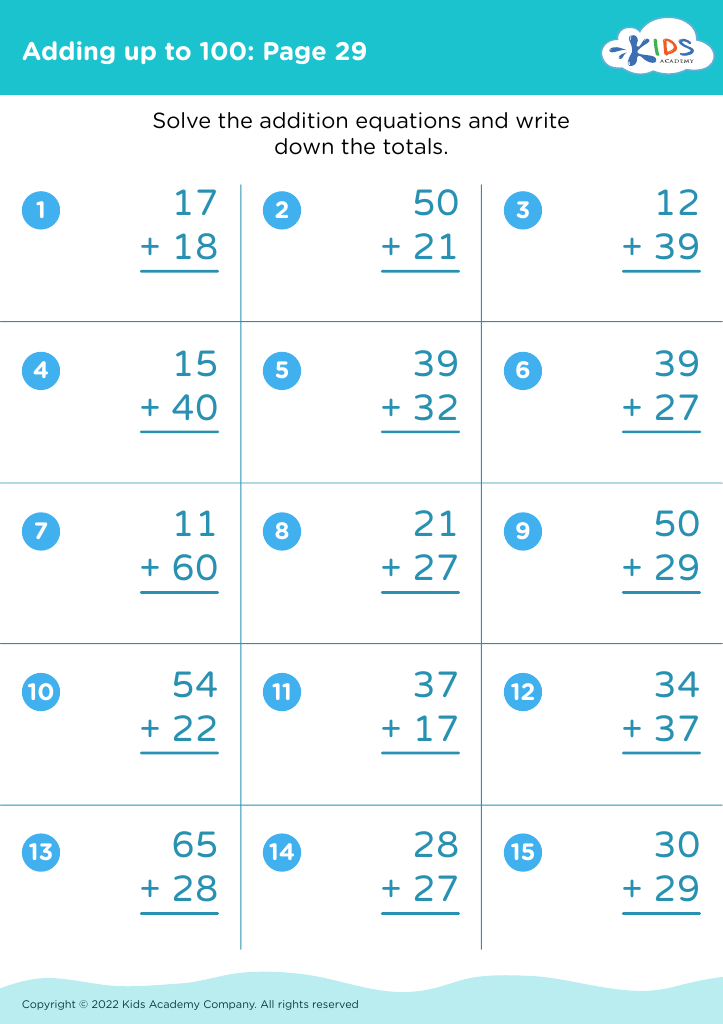
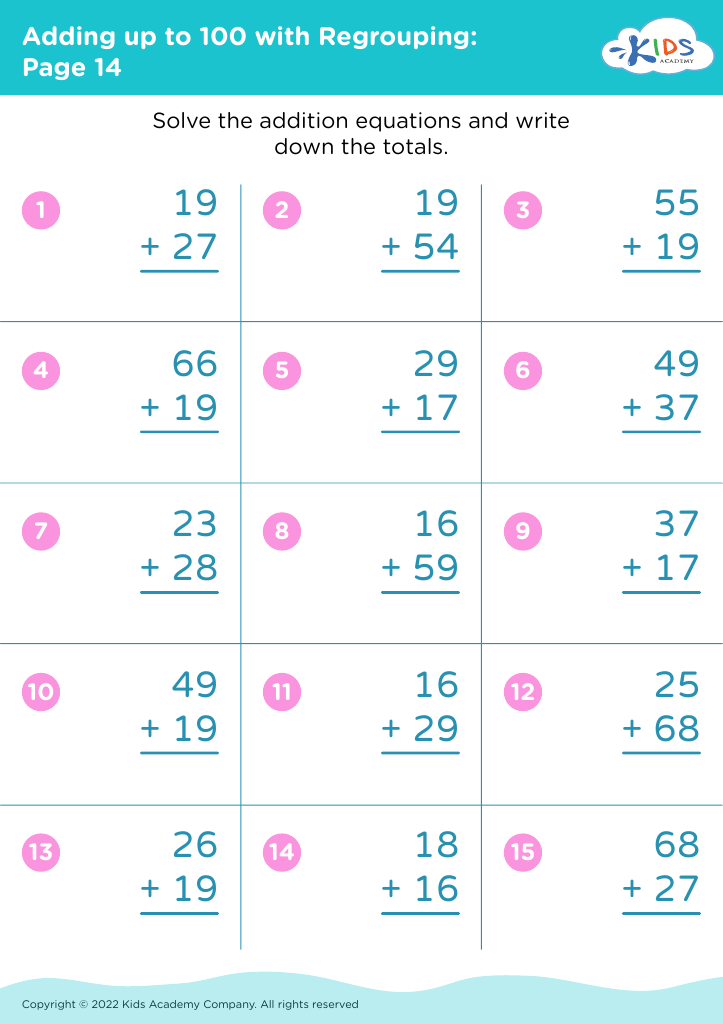
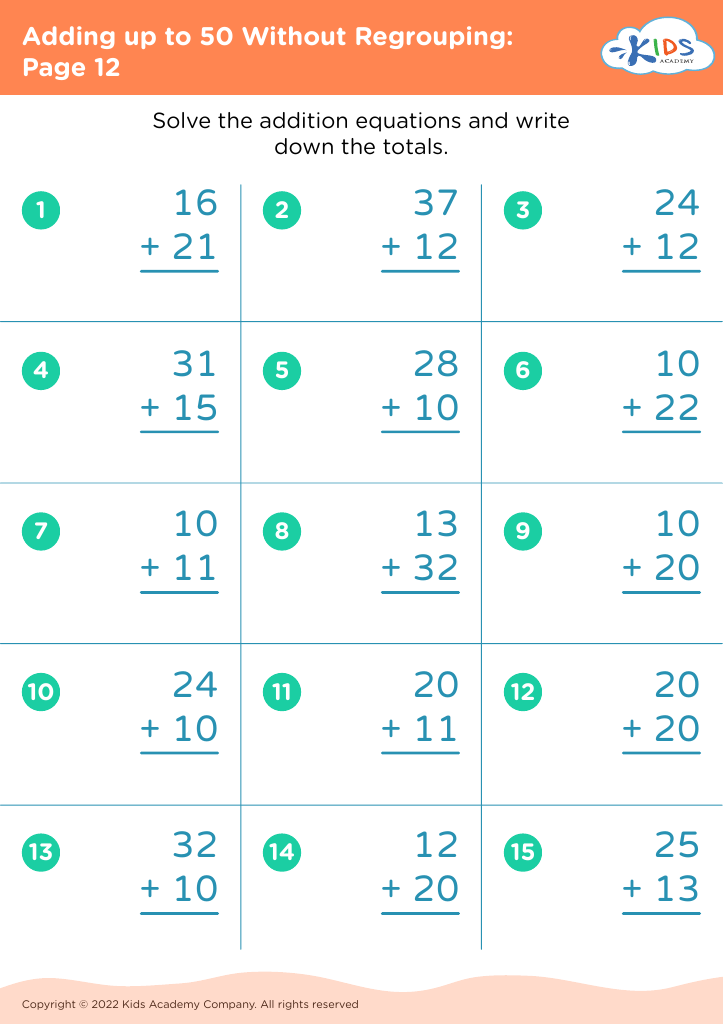
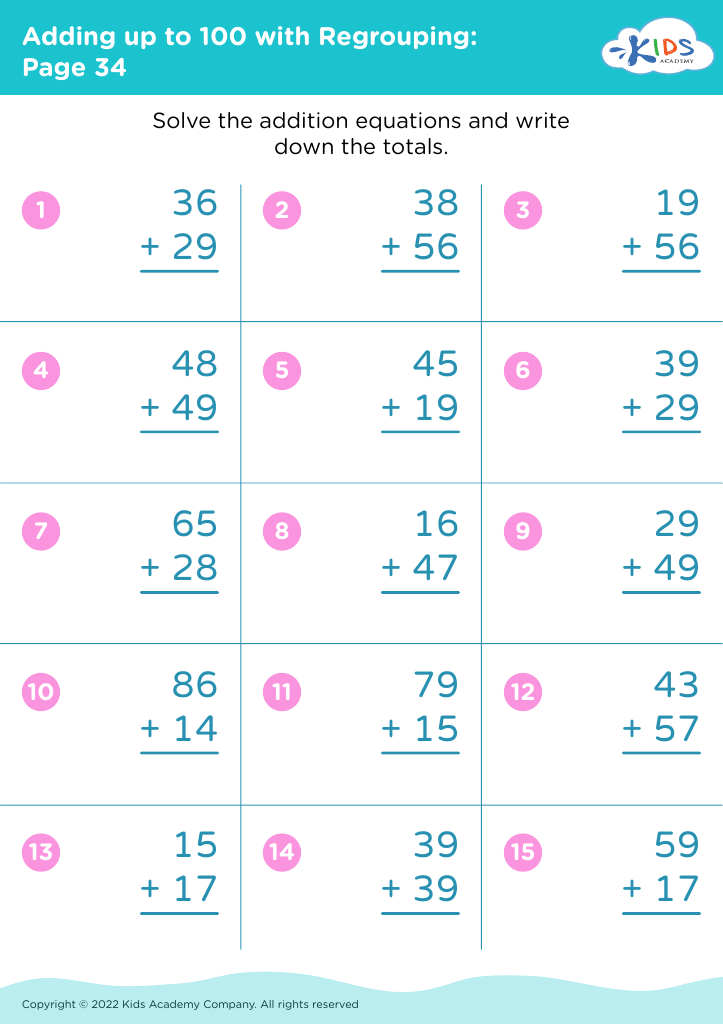
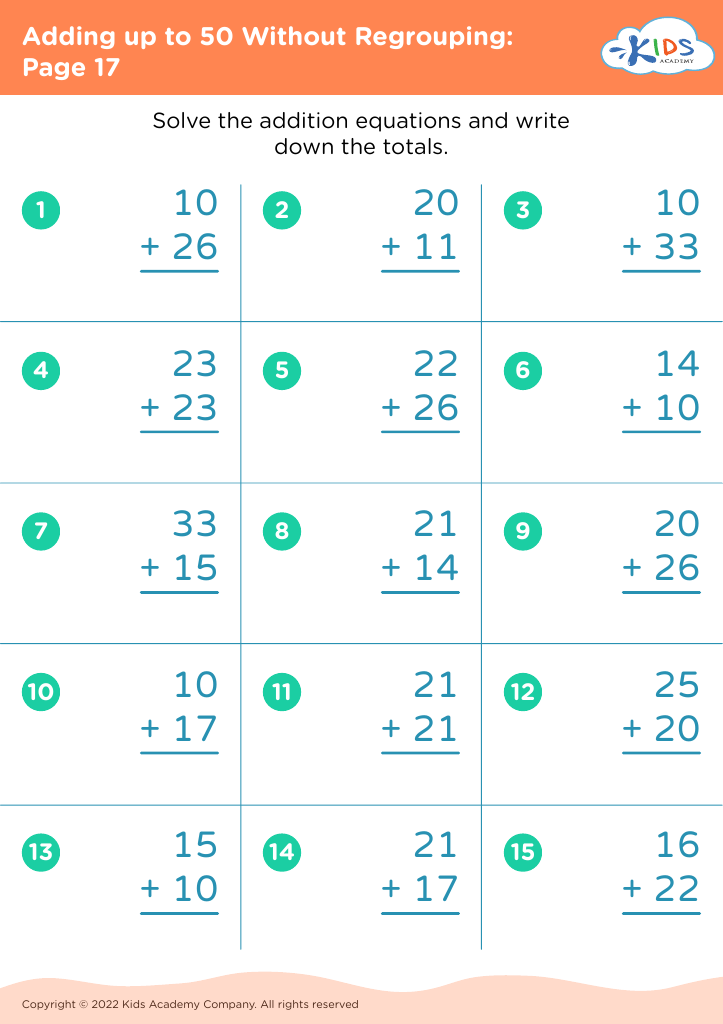
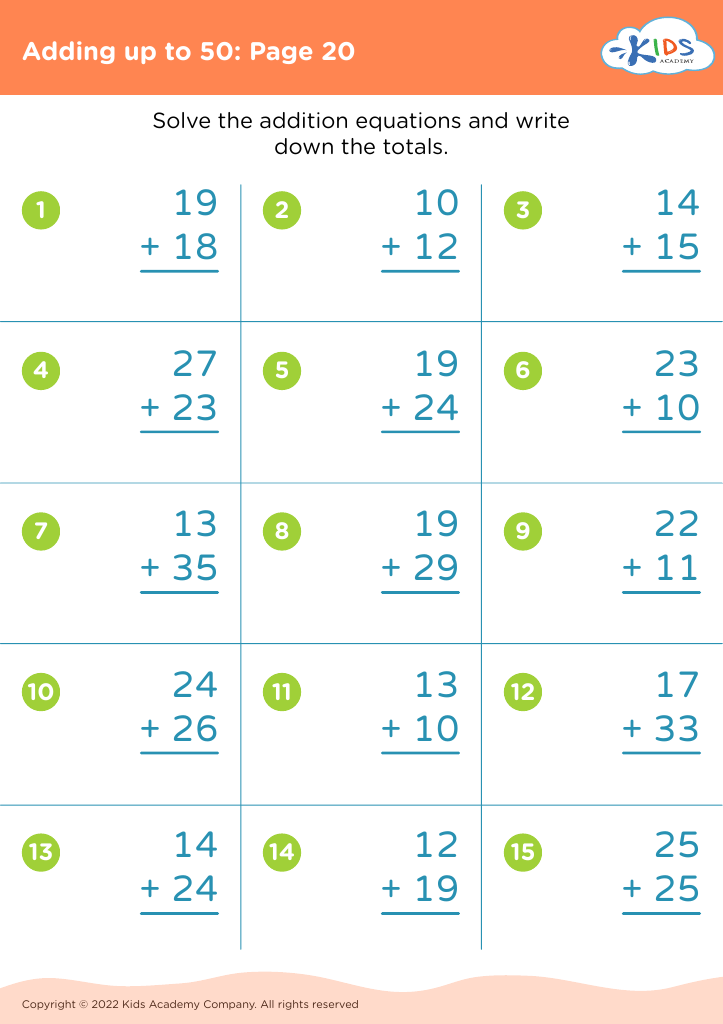
Boost your child's mathematical foundation with our "Enhance Number Recognition Addition Worksheets for Ages 4-7". Designed to make learning fun and engaging, these worksheets help young learners strengthen their number recognition and addition skills. Bright, colorful activities capture children’s interest, making it easier for them to practice counting, recognize numbers, and perform basic addition operations. Ideal for early learners, these printable worksheets encourage independent learning and build confidence in math. Perfect for classroom use or at-home practice, our worksheets make mastering early math concepts enjoyable and effective. Help your child excel in mathematics with our expertly crafted resources.
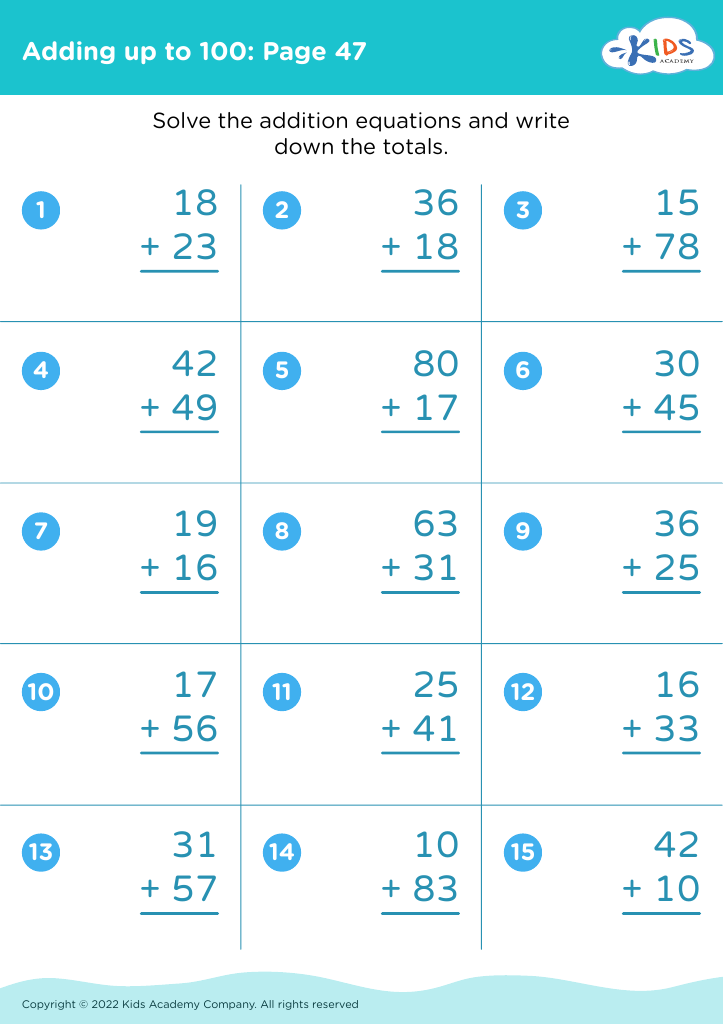
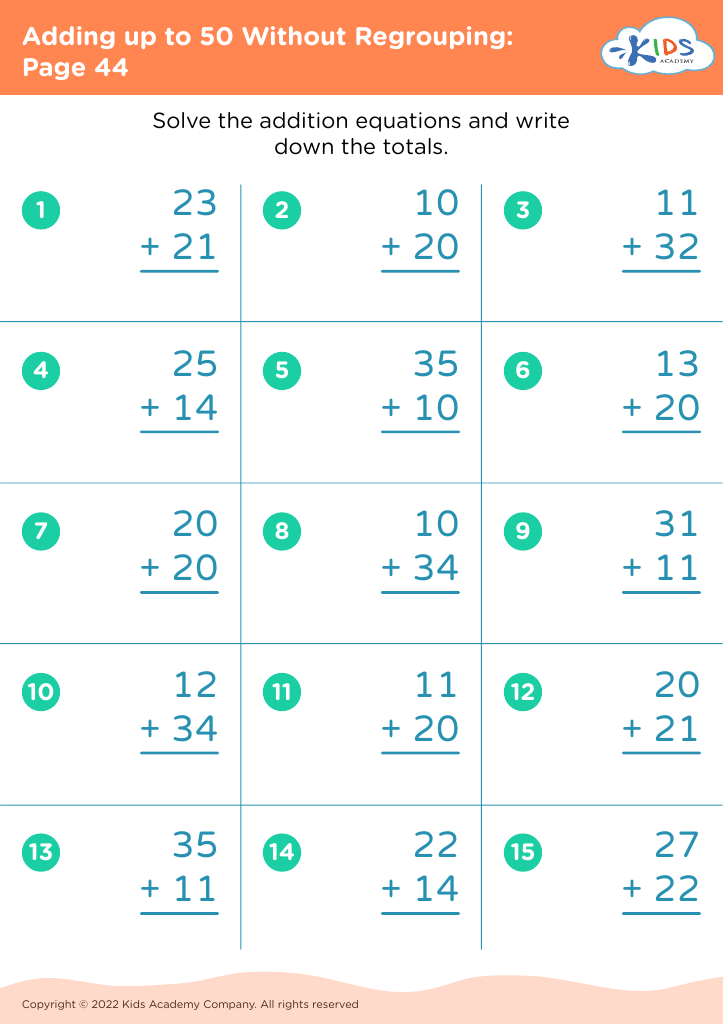
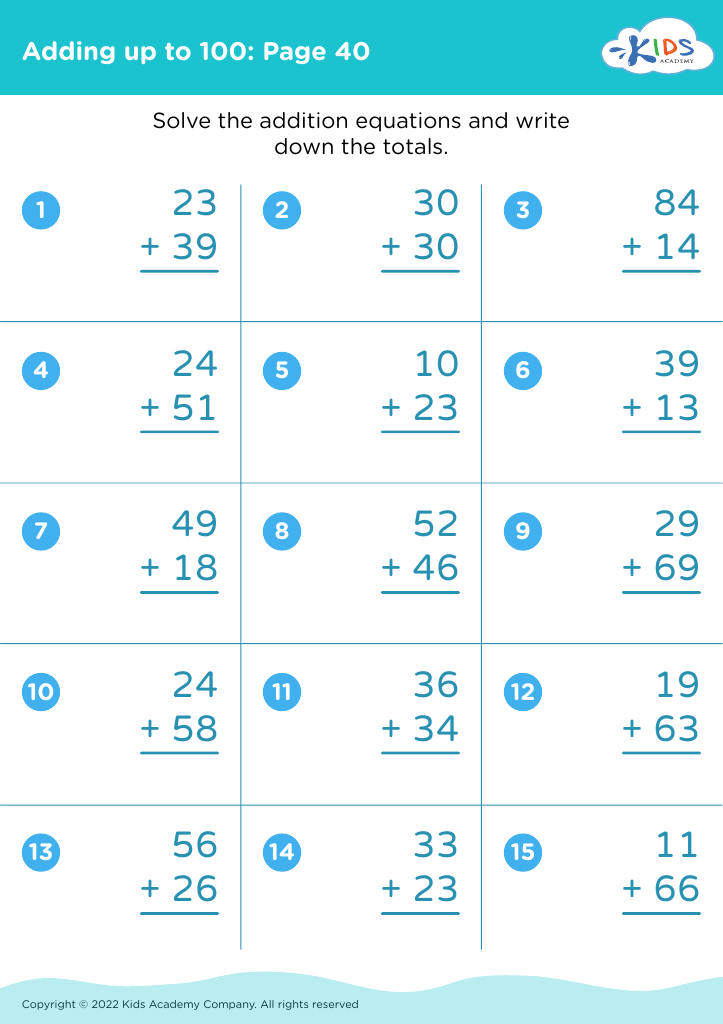
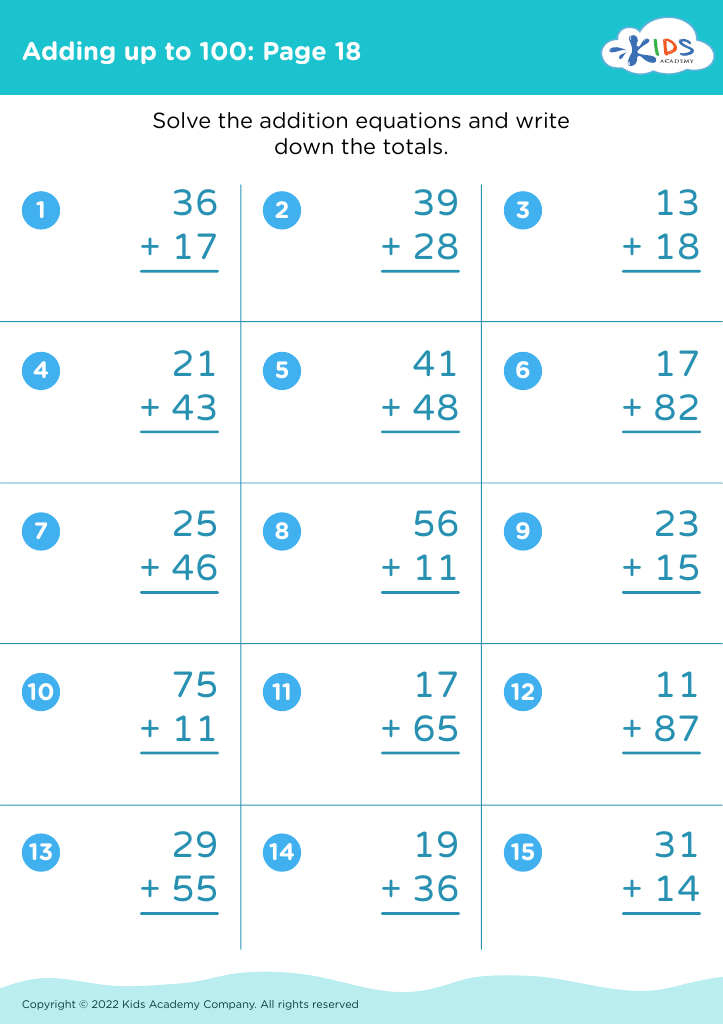
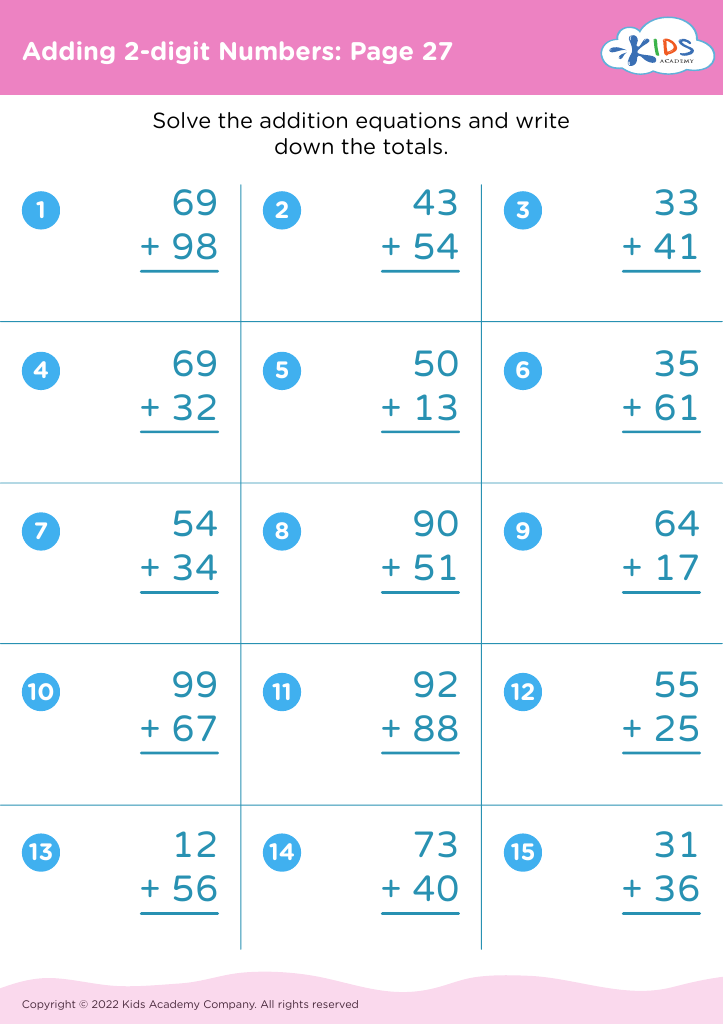








Parents and teachers should prioritize enhancing number recognition and addition skills in children aged 4-7 because these foundational competencies are crucial for their overall academic and future success. At this early stage, children's brains are highly receptive to developing cognitive and numerical abilities. Strong number recognition helps them identify and understand numbers, which is essential when they advance to more complex math concepts. It forms the basis for learning more sophisticated operations like subtraction, multiplication, and division.
Additionally, early proficiency in basic addition fosters problem-solving and critical thinking skills. When children learn to add, they engage in thinking patterns that help them make sense of the world around them, develop logical reasoning, and strengthen their memory. These skills are not only vital for mathematics but are transferable to other subjects and everyday situations, making them more competent and confident learners.
Moreover, consistent positive experiences with numbers and addition keep young children motivated and less likely to develop math anxiety, a common barrier to later academic achievement. Fun and engaging activities around number recognition and addition go a long way in nurturing a lifelong interest in mathematics. Therefore, parents and teachers should leverage this sensitive developmental period to build a strong numerical foundation.








