
Following instructions Addition Worksheets for Ages 4-7
18 filtered results
Difficulty Level
Grade
Age
-
From - To
Subject
Activity
Standards
Explore our engaging "Following Instructions Addition Worksheets" designed for children ages 4-7! These worksheets not only make learning addition fun but also foster essential skills in following directions. Each activity prompts young learners to carefully read and adhere to the instructions, reinforcing comprehension while they practice math fundamentals. Ideal for classroom or home use, our worksheets are colorful, interactive, and tailored to various learning styles. These resources help build confidence in basic math skills while promoting critical thinking. Perfect for early learners, our subtraction worksheets create a solid foundation for future mathematical success. Download now and watch your child's skills grow!
Favorites
With answer key
Interactive
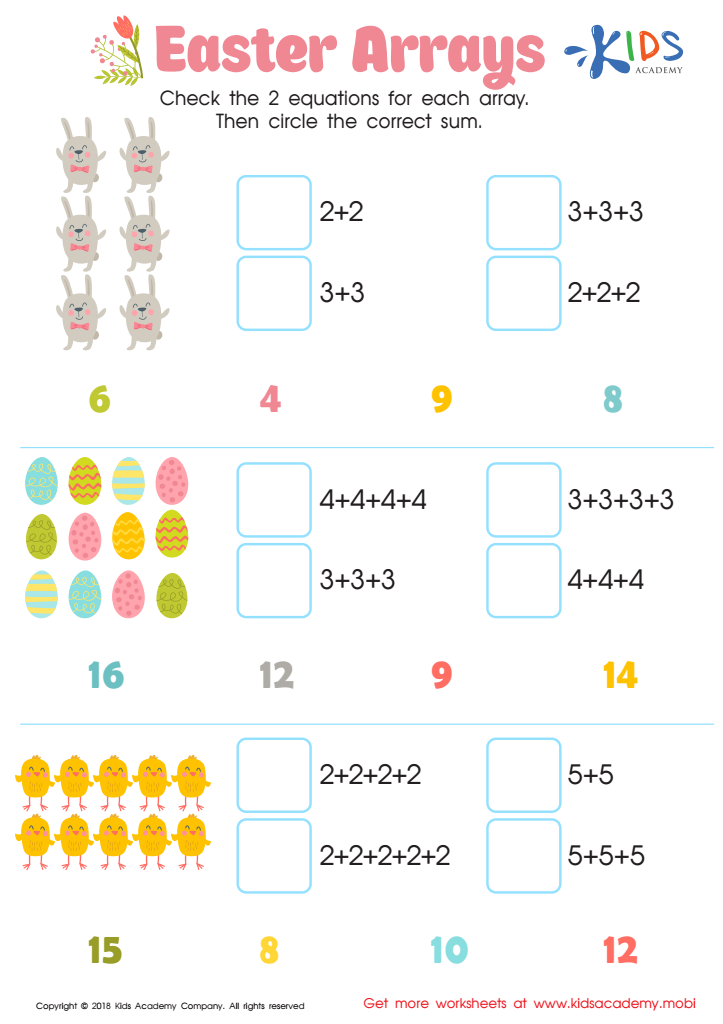
Easter Arrays Worksheet
Does your child love Easter? Do they adore the Easter bunny and egg hunts? Help them have fun with this worksheet! Go through it with them and check the equations for each array. Then, have them circle the correct sum. It's a great way to make the holiday extra exciting!
 Assign to My Students
Easter Arrays Worksheet
Worksheet
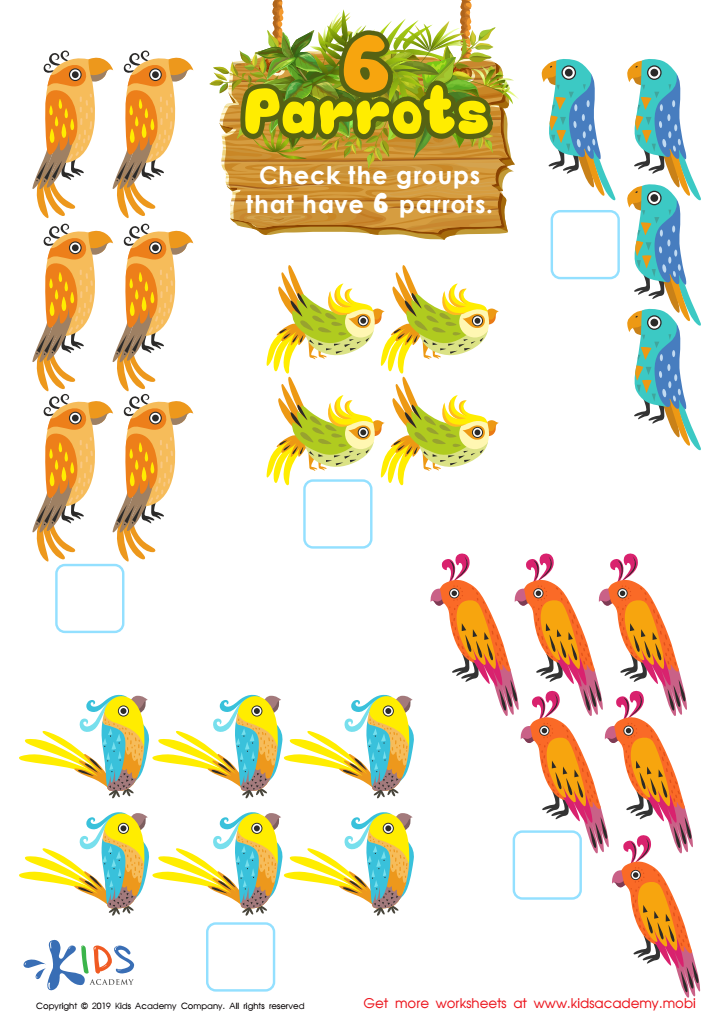
6 Parrots Worksheet
Love parrots? Here's a free worksheet to help your children practice counting to six with colorful parrot representations! Kids will adore counting the parrots and checking off groups of six - and it won't even feel like math! Just a fun way to make some new and exciting friends.
6 Parrots Worksheet
Worksheet
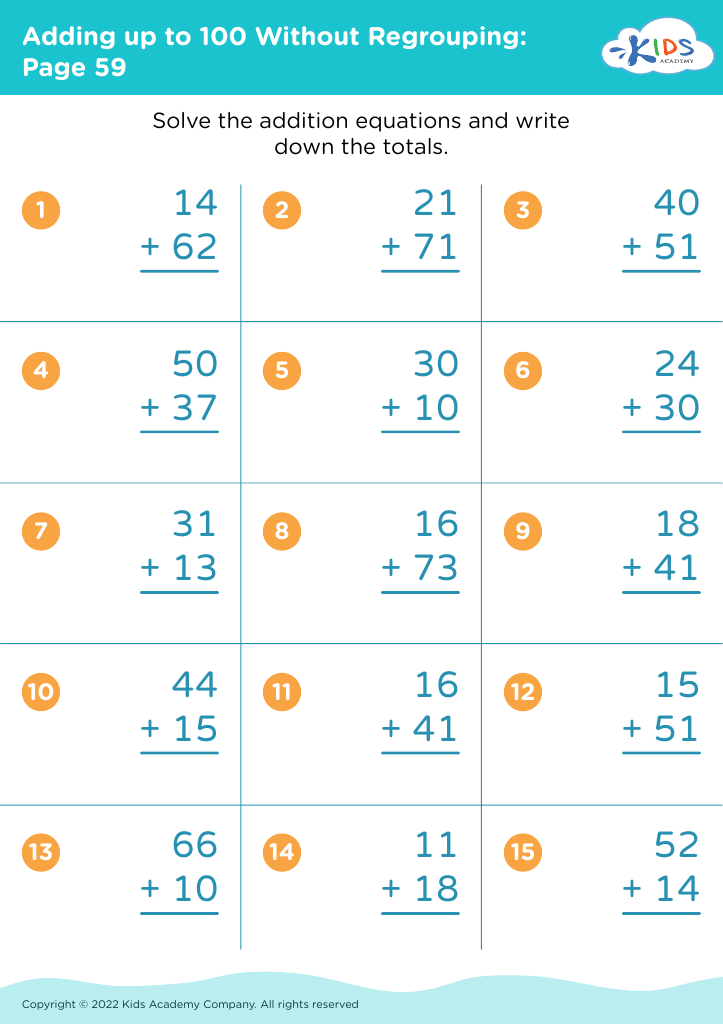
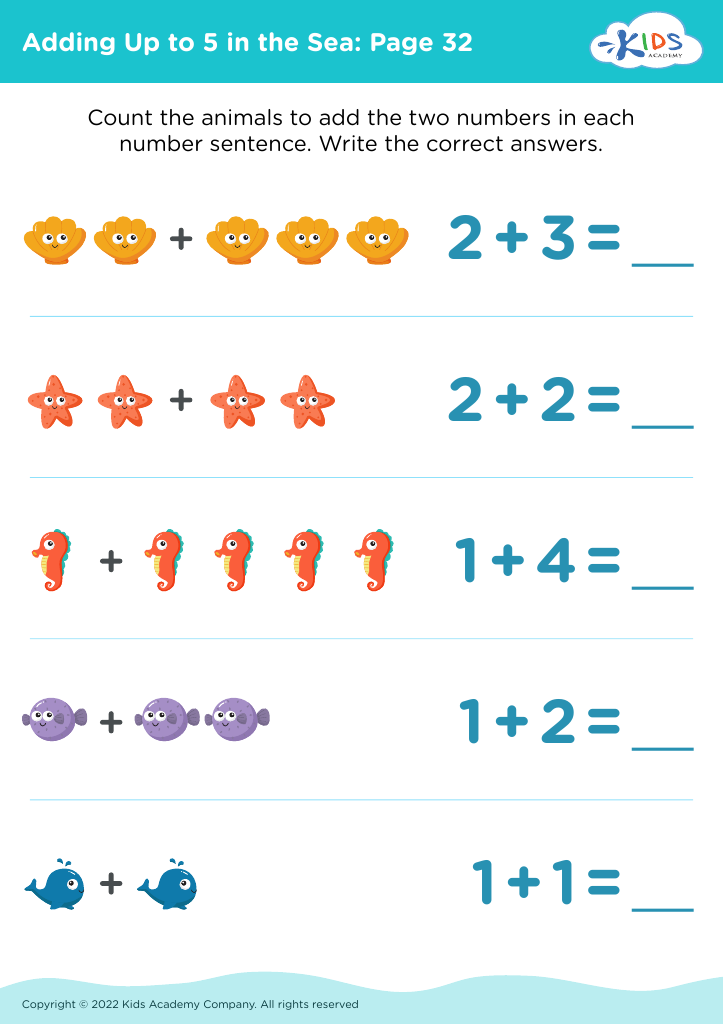
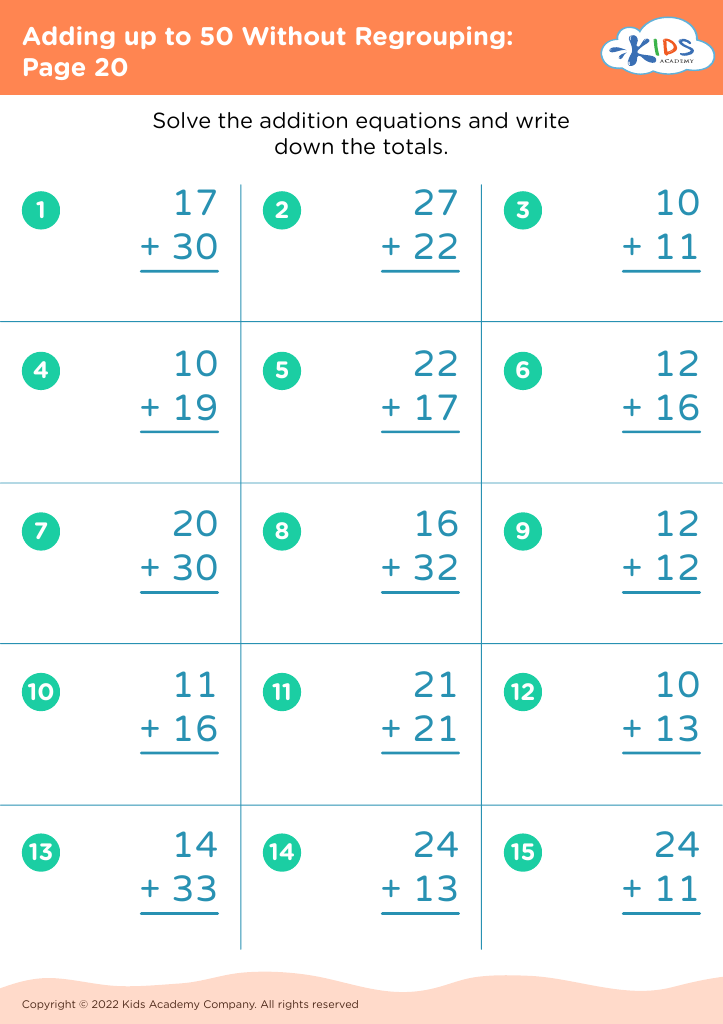
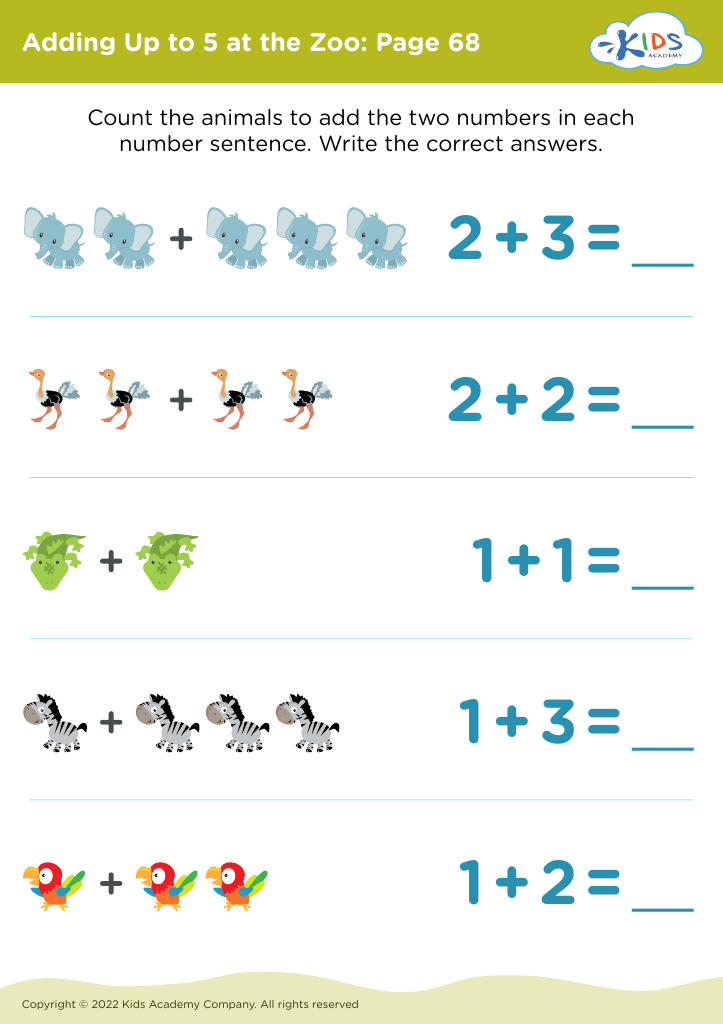
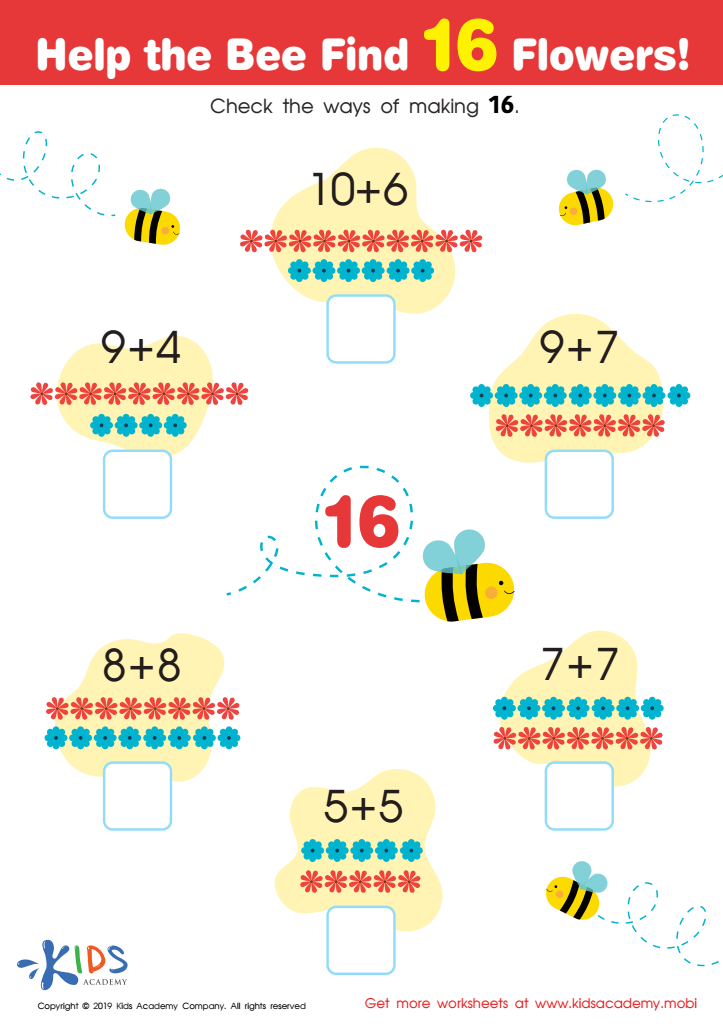
Help the Bee Find 16 Flowers Worksheet
Ask your students to count as high as they can. Show them that different numbers can equal the same figure with examples like 2+2=4 and 3+1=4. Ask for more examples, then help the bees find 16 flowers by checking the ways of making 16.
Help the Bee Find 16 Flowers Worksheet
Worksheet
Join Kids Academy for Free
Who is primarily going to use this learning content?





.jpg)


Following instructions in addition for children aged 4-7 is crucial for several reasons. First, it plays a significant role in developing foundational mathematical skills. Mastering addition at this early stage builds a strong base for future math concepts. When children follow instructions clearly, they learn how to break down problems into manageable steps, enhancing their critical thinking skills.
Moreover, learning to follow instructions promotes self-discipline and responsibility. By practicing this skill, children understand the importance of listening carefully and completing tasks as directed, traits that are essential not only in school but also in everyday life. Teachers and parents can guide children in cultivating patience and perseverance as they work through addition problems, fostering a growth mindset.
Working on following instructions also encourages effective communication between children and adults. It allows children to ask questions, seek clarification, and engage in constructive dialogue. This interaction enhances their social skills, helping them build confidence in collaborating with peers.
Finally, the excitement of mastering addition can bolster a child's motivation and love for learning. When children experience success through clear instructions, they are more likely to develop a positive attitude toward their education, setting the stage for lifelong learning.








